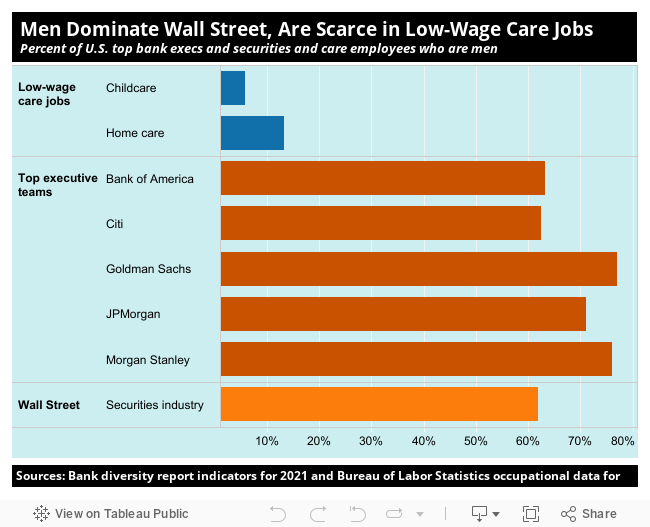
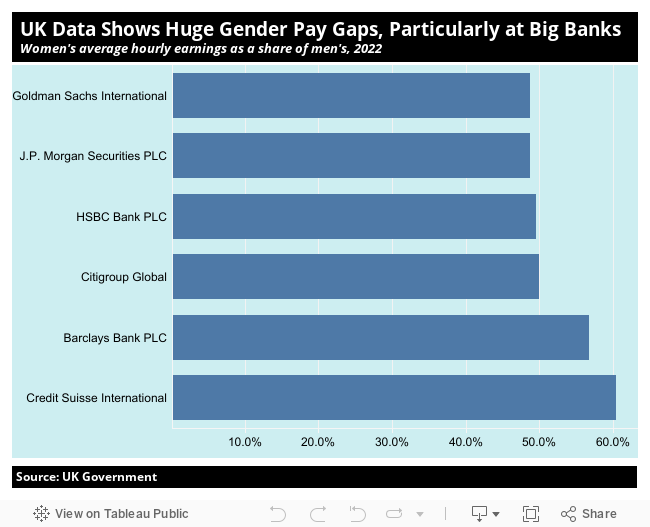
Because of the scarcity of women in top financial industry positions, large banks have some of the widest gender pay gaps. The UK government requires corporations with more than 250 employees to disclose the pay gaps between the men and women on their payrolls. In 2022, Goldman Sachs International reported the biggest gap in the financial sector. Women at the bank earn just 48.7 cents on average for every $1 earned by men.
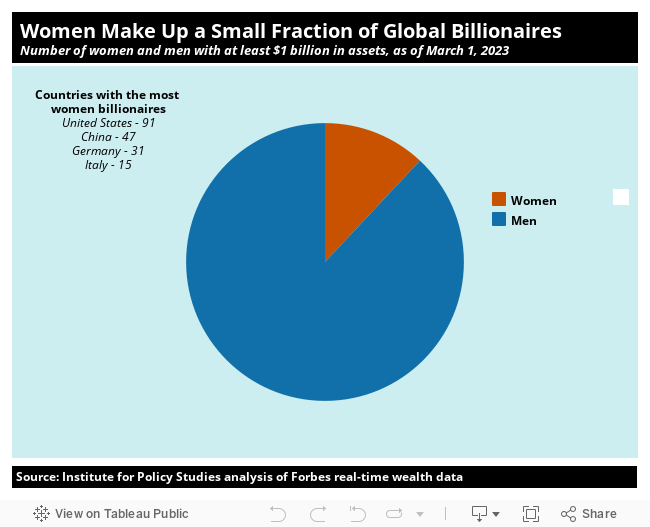
At the tippy top of the economic ladder, the global billionaire class has more than doubled since 2010. But women remain a small minority of the club. As of March 1, 2023, only 298 women ranked among the world’s 2,489 billionaires, accounting for less than 12 percent of the total.
Will replacing men with women make a difference?
These are just a few indicators of how economic power is highly concentrated and deeply entrenched at the top. Yes, some women manage to climb to the peak of the pyramid. But when they reach the top, they’re still part of a system designed to extract wealth from those on the bottom to benefit those with the most power and wealth.
Carly Fiorina, for example, was the first woman to lead a Fortune Top 20 company as the CEO of Hewlett-Packard from 1999 to 2005. As we reported at the time, the future Republican presidential candidate took a more cut-throat approach to the company’s workforce than the men who preceded her – and was generously rewarded for it. She laid off 25,700 workers in 2021 and then saw her pay jump 231 percent.
Today’s leading women CEOs have done little to change the top-heavy corporate model. In 2021, Jane Fraser became the first woman to lead a major U.S. bank. While she’s garnered headlines for speaking about work-life balance, Citi still pays their bank tellers an average of $15.86 per hour, according to Payscale estimates. Nationwide, more than 83 percent of bank tellers are women. Meanwhile, Fraser enjoyed a compensation bump from $20.5 million in 2021 to $22.1 million last year, despite a steep drop in the bank’s profits and calls for new layoffs.
It’s not right that we have so few women in leadership roles. But simply replacing more men with women at the top of our current system is not the solution to our inequality problem. If we want all workers to receive a fair reward for their labor — regardless of their gender or race – we need to rebalance our economy by boosting worker power and reining in the economic and political clout of those at the top.