
Why More Political Campaigns Should Unionize
Building better campaigns starts with better worker protections.
Political campaigns are powered by people who believe they can make a difference. Campaign workers organize their communities, connect with their neighbors, and help turn shared ideas into political change. That work takes dedication, skill, and often personal sacrifice. I believe that building a better future for our communities should also mean building better working conditions for the people who make that work possible.
This midterm election season, more campaign workers are taking steps toward that future by unionizing through the Campaign Workers Guild, negotiating for fair pay, stronger workplace protections, and greater stability. These efforts are helping make campaign work more sustainable and opening the door to careers that people can build over the long term.
As someone who has been part of a campaign staff union since 2020, I’ve seen firsthand how much these protections can change the experience of working on a campaign. I hope to see this momentum continue, with more campaigns recognizing that investing in their workers strengthens both their teams and the movements they work to build.
I first got involved with Alexandria Ocasio-Cortez’s campaigns during the 2018 election when I reached out to her about documenting her historic run as part of a photography series on the wave of women running for office after Trump was elected.
During that election, I coordinated volunteers with photography and videography skills to ensure every event Ocasio-Cortez attended was documented. With limited press interest and coverage before her primary win, this volunteer-led effort became an essential historical record of the campaign, preserving moments and events that would have otherwise gone undocumented.

When her 2020 re-election race came around I was formally brought on as campaign staff.
I knew the job would be challenging, but the 2020 cycle brought new hurdles to the role that no one could have predicted. Shortly after I was hired the COVID-19 pandemic hit and we became incredibly busy, shifting resources from electioneering to mutual aid work.
Amid that uncertain environment, we became one of the first campaign staffs to form a union.
Our first contract, ratified soon after Ocasio-Cortez voluntarily recognized our union represented by the Campaign Workers Guild, won staff a salary floor of at least $4,000 monthly and overtime pay after 40 hours a week.
People who work in campaigns care deeply about their work, and that leads them to often go above and beyond. While that commitment is a strength, it shouldn’t come at the expense of fair compensation. Staff should be paid appropriately for their time, dedication and effort.
Our first contract, which spanned two years, included unlimited sick time and salary ratio caps, limiting the highest salary to no more than three times that of the lowest-paid full-time employee. In campaigns it is often the workers doing the most demanding and consequential work, particularly knocking doors and talking directly to voters, who get paid the least. Establishing more equitable compensation across the staff was an important part of our effort to address that imbalance.
Unlike many campaigns, Ocasio-Cortez’s office maintains a year-round staff, though staffing varies by department. Field staff, for example, are typically offboarded between election cycles, while the communications and political teams remain employed full-time.
In our most recent contract we negotiated that election cycle staff would be kept on until the end of the year instead of ending their term right after election day. This adjustment guarantees them uninterrupted health insurance coverage and time to find a new position.
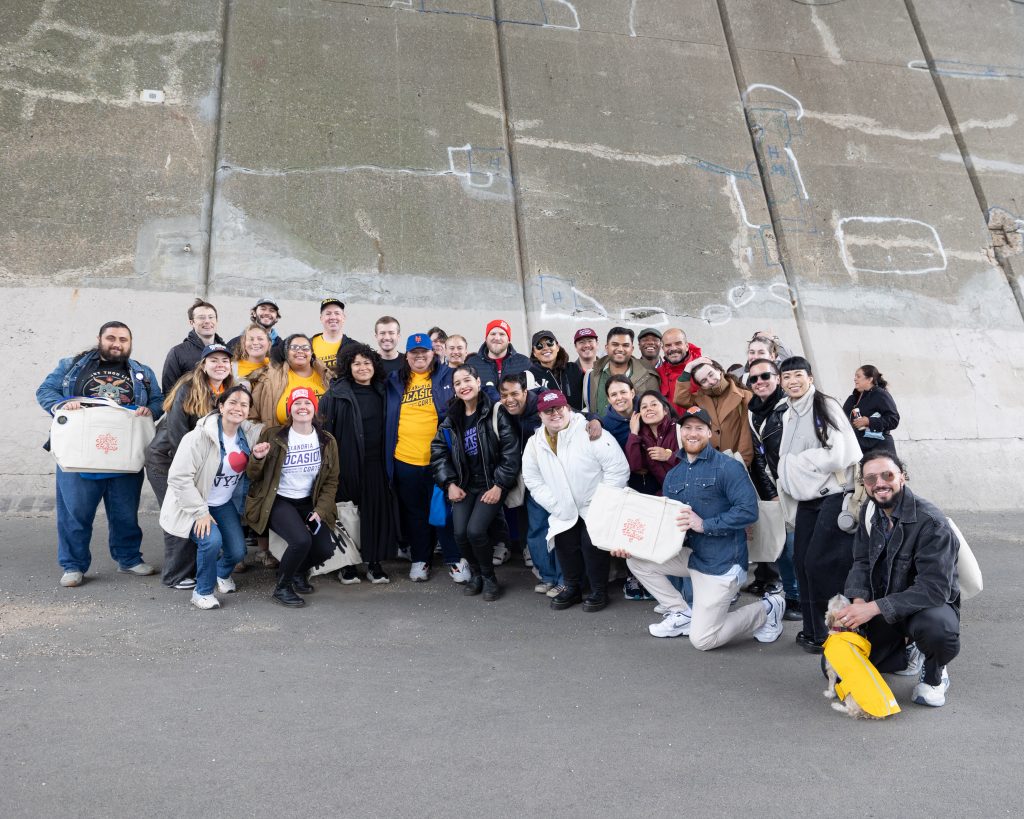
Securing strong worker protections on the Ocasio-Cortez campaign has transformed a job often defined by instability into one that is sustainable and predictable, making it more compatible with building a long term career.
The Campaign Workers Guild hopes to standardize and improve conditions across political and issue based campaigns.
Since launching in 2017 and helping workers on the House campaign of Wisconsin Democrat Randy Bryce become the first to unionize, the Campaign Workers Guild has organized dozens of units across electoral campaigns, Democracy Party offices, and consultant firms.
Despite these wins, campaign work remains largely underpaid and unstable.
Workers should continue to organize themselves, aiming to form bargaining groups early on in campaigns to ensure there’s time to reach collective bargaining agreements.
Campaigns also have a clear incentive to invest in improving their working conditions: more staff continuity and less burnout can only strengthen campaign success and build institutional knowledge.
Political candidates should make severance or extended employment when campaigns end commonplace and encourage unionization by signing card-check neutrality agreements with unions.
Working on a campaign should pay enough and provide enough stability to be a viable long-term career, realistic for people at every stage of life who are committed to making a difference.
If we want to improve working conditions and retain experienced campaign staff as they develop their skills, we need more campaigns to unionize. The work we do on the ground, in our communities, is stronger when passionate, skilled workers have the stability and support to keep doing it.
Building lasting power in our communities requires investing in the people who make that work possible.

Corey Torpie is a documentary photographer who has been on Alexandria Ocasio-Cortez’s staff since 2020.