A weekly newsletter from the Institute for Policy Studies |
|
|
Foundations failing to meet the moment, combating environmental racism,
and home goods greed
|
|
|
|
These days, with our United States veering toward authoritarian rule, we’re watching several sectors of our society engaging in what historian Tim Snyder calls “anticipatory obedience,” the silence and self-censorship of institutions ranging from the media and universities to law firms and private corporations.
Include in that list of institutions big philanthropy, the nonprofit sector’s main funders. What role are large charitable foundations playing at this pivotal political moment? Our new report, Gilded Giving 2026: Philanthropy Under Oligarchy, identifies the key big charity trends we now see operating.
Several exemplar foundations — like the Wallace Global Fund — are rising to the moment, digging deep, putting funding for social movements ahead of piling up assets. But many of our biggest foundations are now warehousing assets instead of accelerating grants.
The 144 U.S. foundations with endowments over $1 billion are paying out just 0.1 percent over the 5 percent of their assets they’re legally required to pay out. Are these foundations waiting for a rainy day? Have they looked out the window? “Even turning the dial modestly to require higher payouts from our philanthropic system,” our report co-author Bella DeVaan observes, “could unleash hundreds of billions of dollars for our common good.” All of us taxpayers, let’s remember, are subsidizing the charitable sector’s existence. We’re losing 73 cents in tax revenue for every $1 billionaires are putting into their own charitable foundations. We have every right to scrutinize our “tax dollars at work.” Chuck Collins
for the Institute for Policy Studies Inequality.org team |
|
|
|
INEQUALITY BY THE NUMBERS |
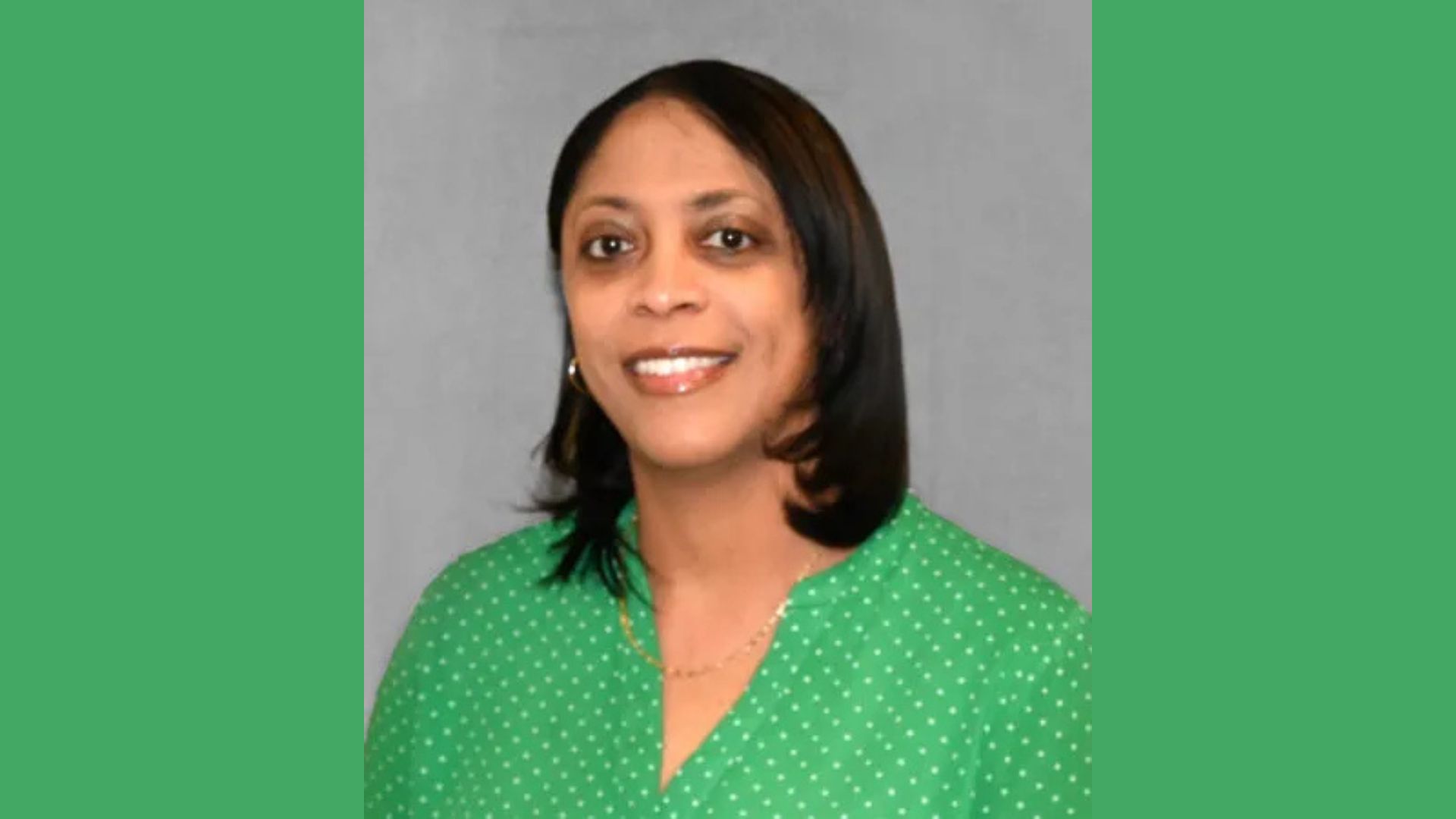
Fighting Back Against the Growing Pollution in America’s ‘Cancer Alley' This week’s frontline face: Shamell Lavigne, the chief operating officer of RISE St. James, a Louisiana-based environmental advocacy group. What she's doing to help create a more equal world: Lavigne and RISE are part of a coalition of community organizations in Louisiana's Cancer Alley fighting against a Formosa Plastics plan to build a giant chemical plant.
This legal battle is pitting Lavigne and RISE against a corporate titan and their own localities. The St. James Parish council has greenlit petrochemical development, for instance, while rezoning majority-Black areas for industrial use.
What makes this fight so important: “We’re going up against $1 billion companies with limited resources, so it can be pretty difficult," Lavigne recently told Inequality.org. "We rely on our faith that things will be better, and, if we keep fighting, we can stop some of these polluters from killing us."
To read more about the fight in Louisiana's Cancer Alley, click below to read a dispatch from Henry A. Wallace fellow Kennith RaShaun Woods II. |
What Should Donors and Foundations Be Doing To Dial Back Inequality?
The “solutions” sections of many think tank reports these days can feel like wishful daydreaming. The reports put forward slates of policy proposals that not even the report authors feel have any shot of making it through the gridlock and obstinance that so dominate contemporary Washington.
The newly released Guild Giving report offers something much more energizing: a list of voluntary actions that foundations and donors can take right now — without the need of government intervention — to help unlock our philanthropy system.
Funders, for example, could commit to paying out at least 10 percent of their assets in grants, double the 5 percent required minimum they now tend to hover around. For more voluntary fixes, as well as some structural ones, dive into the new Gilded Giving analysis by clicking below. |
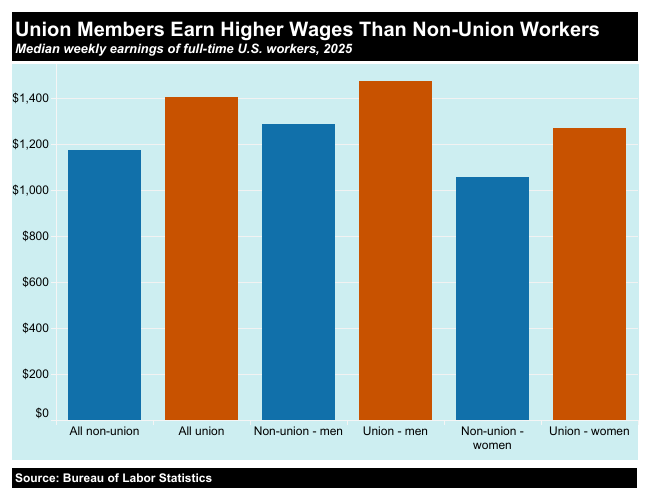
In 2025, 14.7 million workers — 10 percent of all U.S. wage and salary employees — belonged to a union, up from 9.9 percent in 2024. That modest increase marks a departure from years of declining union membership and comes as public support for unions reaches record highs.
Unionization continues to offer clear benefits. Unionized workers, Bureau of Labor Statistics data show, earn significantly more than their non-union counterparts. In 2025, for example, full-time unionized women earned median weekly wages of $1,270, $214 more than women without union representation. For an interactive version of this chart and more on income inequality, click the link to our Inequality.org Facts section below. |
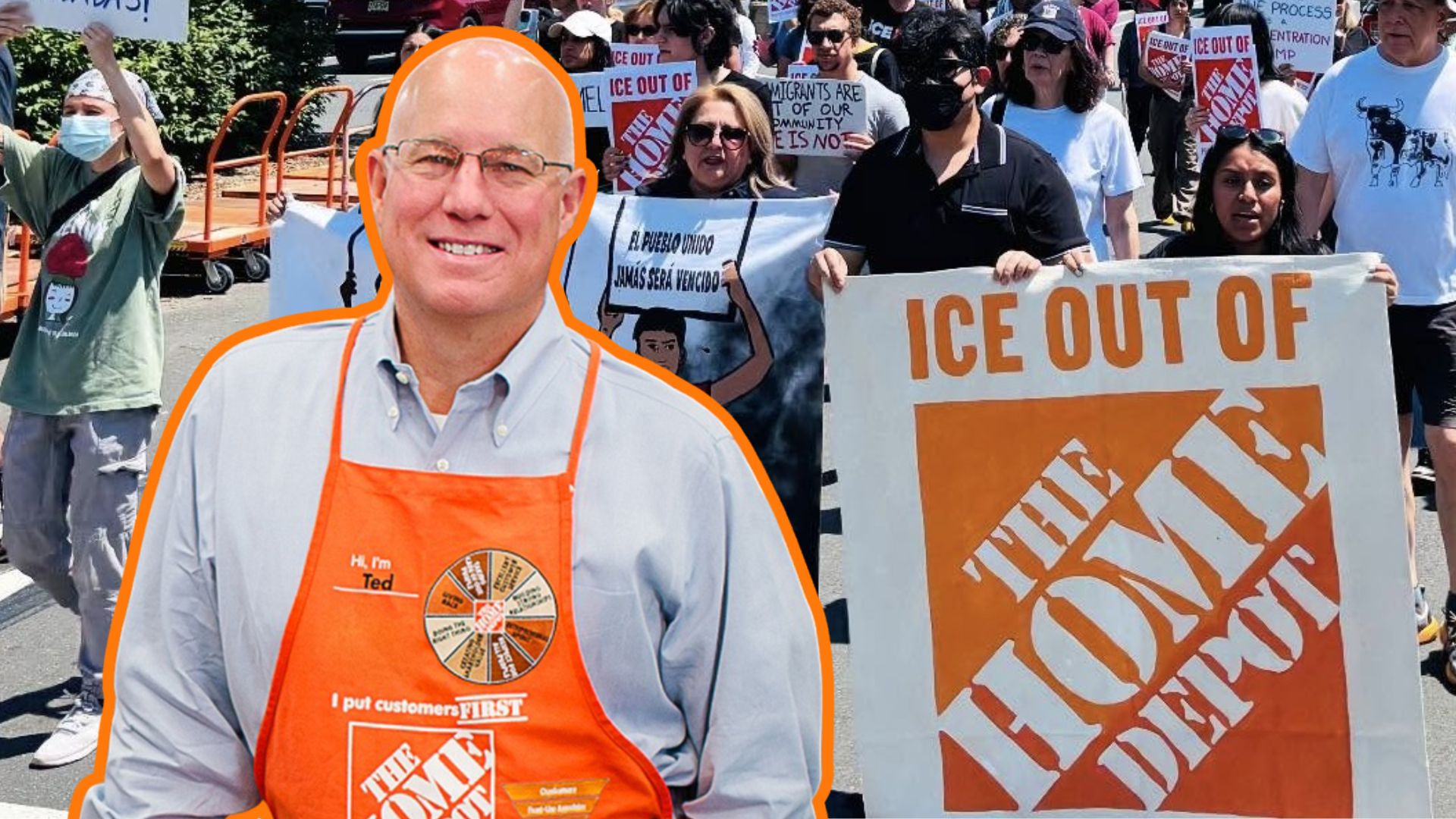
This week’s overpaid CEO: Ted Decker of Home Depot.
How Decker is driving inequality: In 2025, his compensation hit $16.2 million, 427 times the Home Depot median pay of $37,881. The home improvement chain has pumped up Decker’s stock-based pay through massive share repurchases. Since 2019, Home Depot has blown $37.9 billion on stock buybacks, enough to have given all 472,400 Home Depot employees an $11,449 bonus every one of the past seven years. Decker, meanwhile, has turned a blind eye to ICE actions against day laborers. These workers currently play a central role in the Home Depot business model. They offer their services to customers and contractors in store parking lots.
After White House deputy chief of staff Stephen Miller reportedly told ICE agents to target these vulnerable workers, the agency carried out a wave of raids at Home Depot stores in Los Angeles, Chicago, New Orleans, and other cities.
One day laborer was struck and killed when he ran onto a busy highway after fleeing a Home Depot raid in California. Home Depot officials declined to comment on the death. The company line: We “aren’t notified that immigration enforcement activities are going to happen, and we aren’t involved in them.”
The last word: “With its silence and inaction, Home Depot has become ICE’s passive partner,” notes the National Day Laborers Organizing Network. The Network is now sponsoring California state legislation to require all big-box home improvement stores to share with the public surveillance videos and other information about federal raids on their property.
|
|
|
|
Rebecca Crosby, A new low for American workers, Popular Info. U.S. workers are earning just 52.8 percent of the value they produce, the lowest share the Bureau of Labor Statistics has tallied since the Bureau began recording labor share in 1947. U.S. corporate profits grew by over $400 billion in 2026’s second quarter.
Julia Conley, Guess What Happened After New York Raised Taxes on the Rich? More Millionaires Moved In, Common Dreams. New York’s millionaire population, new IRS data show, kept climbing after the state raised taxes on top earners.
Dean Baker, California’s Wealth Tax Is Not Perfect: But It’s Damn Good, Beat the Press. If the tax-the-rich proposal on this November’s California ballot goes down, no other proposal to tax the state’s richest will likely come close to becoming law for quite some time.
Carly Thomas, Why Andrew Garfield Says Billionaires Should Be “Scared Sh**less” by ‘The Uprising,’ Hollywood Reporter. Actor Andrew Garfield hopes his new Robin Hood movie role “serves as a warning to the world’s richest.”
Matt Stoller, Just Stop the Anthropic IPO Already, BIG. Corporate chiefs shouldn’t be able to become super rich by building unsafe technology. The government has the authority to block the initial public stock offering that would turn Anthropic’s insiders into mega-billionaires. It should.
Susan Edmunds, We have a minimum wage – but should we have a maximum? RNZ. In New Zealand, an outrageously high paycheck for a top CEO has kindled debate over limiting how high the ratio between chief executive and worker pay should be allowed to go.
Joseph Stiglitz, Extreme inequality is not a given. It is a political choice, African Business. Since 2000, 41 percent of all new wealth created has gone to the world’s richest 1 percent. Creating an International Panel on Inequality, a global body modeled on the Intergovernmental Panel on Climate Change, could spotlight the ongoing successes and failures in addressing inequality worldwide.
Caleb Ecarma, The propaganda campaign to convince you to love data centers, Oligarch Watch. Tech billionaires are spending tens of millions to convince voters to stop worrying about data centers. Among the big funders: OpenAI president Greg Brockman, Palantir cofounder Joe Lonsdale, and venture capitalist Marc Andreessen, who has described AI “workers” as preferable to human.
Miles Kampf-Lassin, Tech Authoritarian Doomsayers, In These Times. The Silicon Valley hyper-rich elite are aiming to undo democracy — and modern society — for their own profit. The only problem? There are far more of us than them.
|
|
|
|
Monthly Donors Make This Read Possible! |
Inequality.org, an Institute for Policy Studies nonprofit project, depends on donations to keep this newsletter free and available to all readers. Your monthly gifts make all the difference in the world, whether you can donate $3 or $300 a month. Ready to give a few bucks a month? Sign up today. |
|
|
|
Inequality.org | www.inequality.org | inequality@ips-dc.org Institute for Policy Studies
1301 Connecticut Avenue Ste 600
Washington, DC 20036
United States
Managing Editor: Chris Mills Rodrigo
Co-Editors: Sarah Anderson, Chuck Collins, Bella DeVaan, Reyanna James, and Sam Pizzigati |
|
|
|
|