A weekly newsletter from the Institute for Policy Studies |
|
|
Mail voting at risk, gross inequality in Zimbabwe, and training up the movement
|
|
|
|
Anybody else so sick of the legal ping-pong on mail voting that you think your head might explode? For the third time, the Trump administration has now asked the Supreme Court to restrict mail voting in the midterms, despite the fact that proven cases of fraud account for just 0.000043 percent of all mail ballots.
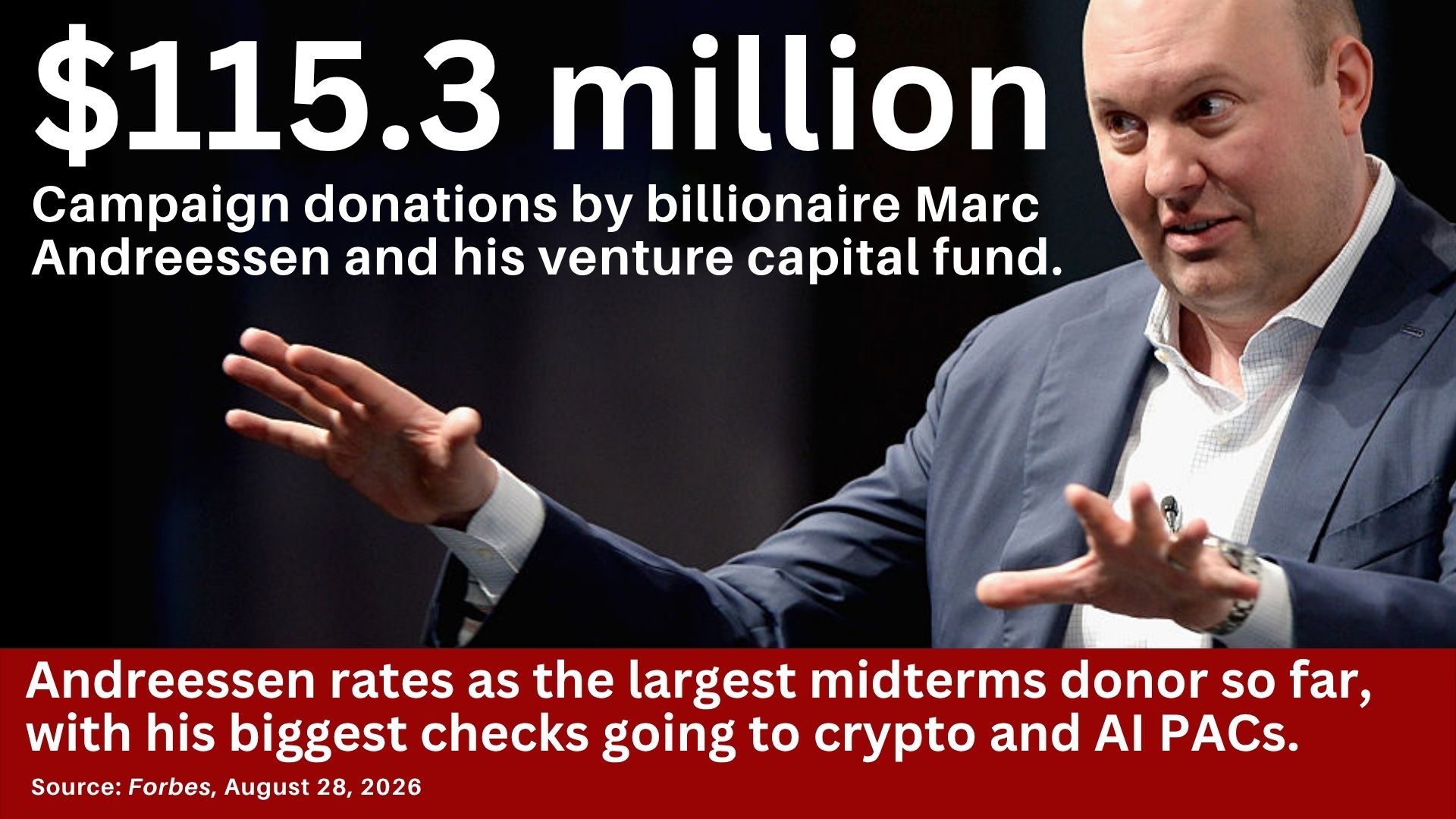
You know what’s actually distorting the legitimacy of our elections? The gusher of political spending that’s coming out of the pockets of America’s richest. Our top 10 current billionaire political donors, all by themselves, have already plowed more than $734 million into this year’s midterms.
If our high court lets Team Trump limit mail voting, millions of low-income voters will be facing higher hurdles to exercising their most basic democratic right. In-person voting just happens to be a lot more difficult if you don’t have a car or if you’re tied down by an inflexible work schedule or caregiving responsibilities.
Whatever the outcome of this continuing and confounding ping-pong match, the fight to unrig our political system and ensure democracy for all will continue. Sarah Anderson
for the Institute for Policy Studies Inequality.org team |
|
|
|
INEQUALITY BY THE NUMBERS |
The Struggle To Expose Gross Wealth Inequality in Zimbabwe
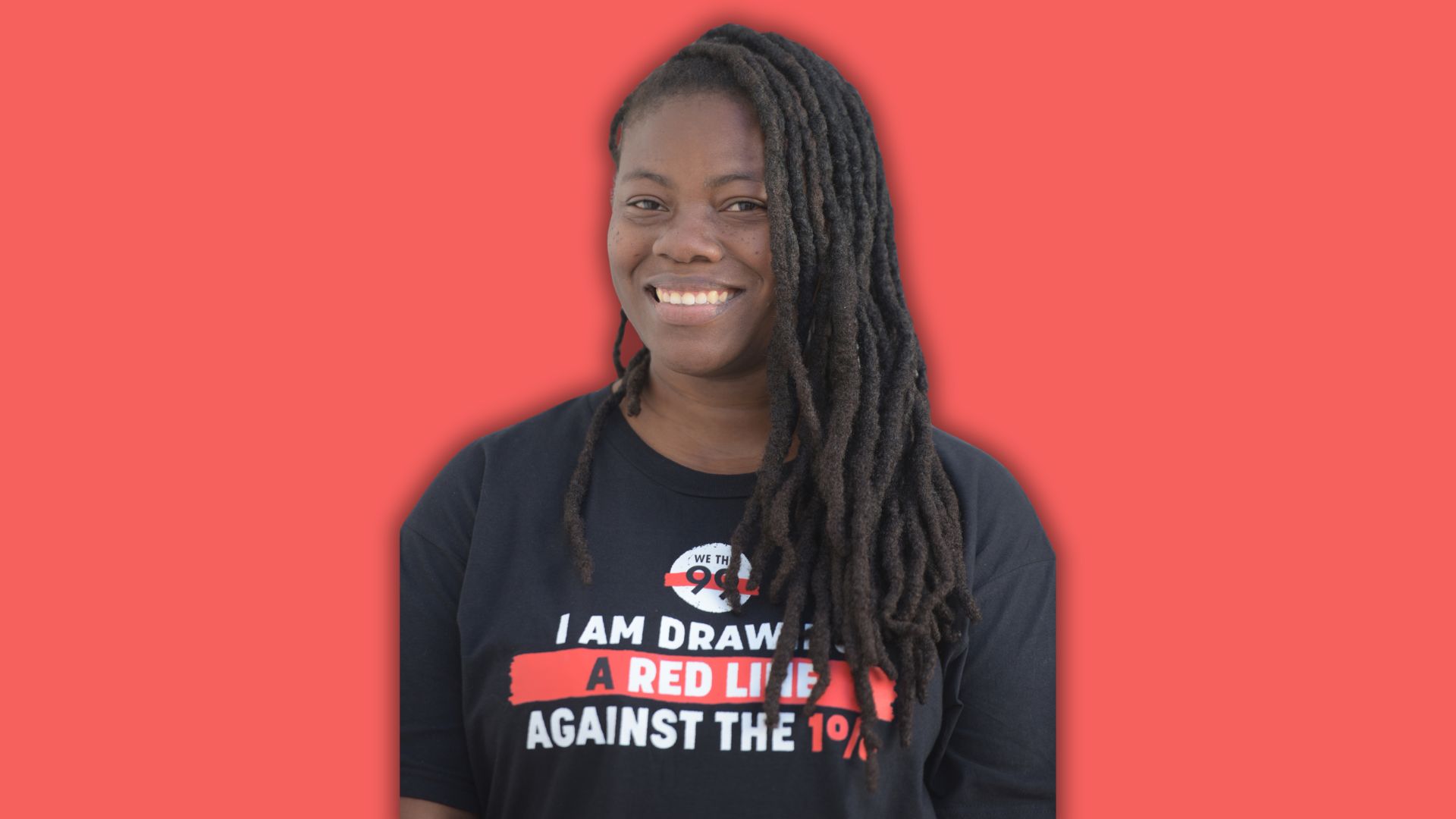
This week’s frontline face: Ellaine Manyere, the Fight Inequality Alliance communications and mobilization officer for Zimbabwe. What she's doing to help create a more equal world: Poverty remains endemic in Zimbabwe. At the same time, this African nation’s richest — totally oblivious to the plight of their compatriots — continue to exploit every opportunity to throw extravagant parties. Manyere is helping grow a grassroots campaign to more equitably distribute resources across Zimbabwean society. She’s working to implement a national progressive tax system that could raise funds for dilapidated public services like schools and hospitals while reining in excessive wealth concentration.
What makes this fight so important: “Zimbabwe does not lack wealth,” Manyere recently wrote for Inequality.org. “It lacks fair distribution of that wealth, accountable governance, and policies that put public well-being over privilege.”
“Closing the gap requires bold and deliberate action,” she adds. “We Zimbabweans must demand progressive taxation so the wealthy pay their fair share.”
|
How Fair Will the 2026 Elections Be? As Fair as We Work To Make Them!
In the face of ongoing and escalating threats on the sanctity of this year’s elections from the Trump administration, protecting ballot access is going to take a lot of people. And those people need to be prepared for whatever is coming.
That’s why the May Day Strong coalition has been organizing solidarity schools — efforts to spread fair election know-how — all across the United States. This nonprofit coalition is hoping that strong advance preparation will put movements for social change in a good position to capitalize on 2026’s election opportunities.
“We don’t know what the coming months will bring, including whether the Trump administration will respect the results of the midterm elections,” notes Neidi Dominguez from Organized Power in Numbers. “But we know we have to be more ready than we are right now.” |
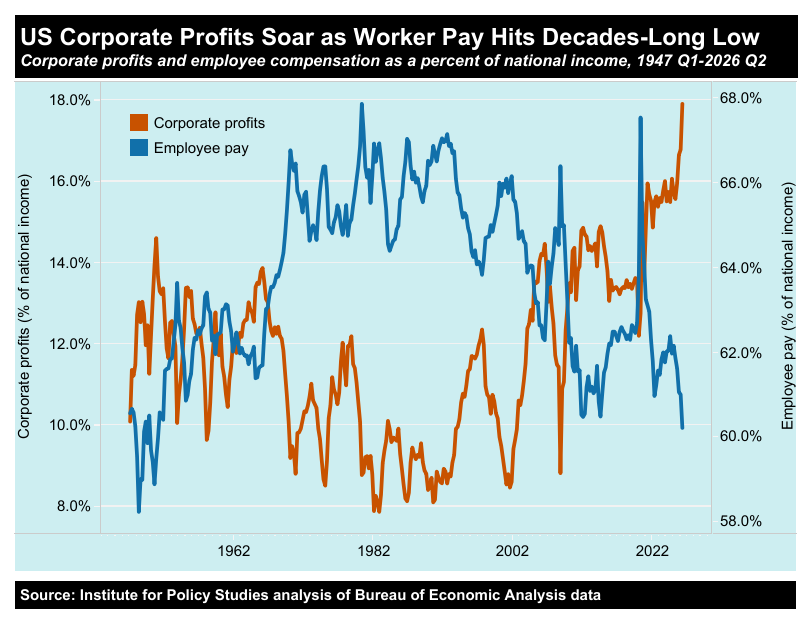
Corporate profits are booming, but workers are pocketing a shrinking share of our nation’s economic pie. U.S. pre-tax corporate profits reached an annualized $4.8 trillion in the second quarter of 2026, accounting for 18 percent of national income. Meanwhile, the employee share of national income from wages and benefits has fallen to 60 percent, its lowest level since the 1950s.
For an interactive version of this chart and more on income inequality, click the link to our Inequality.org Facts section below. |
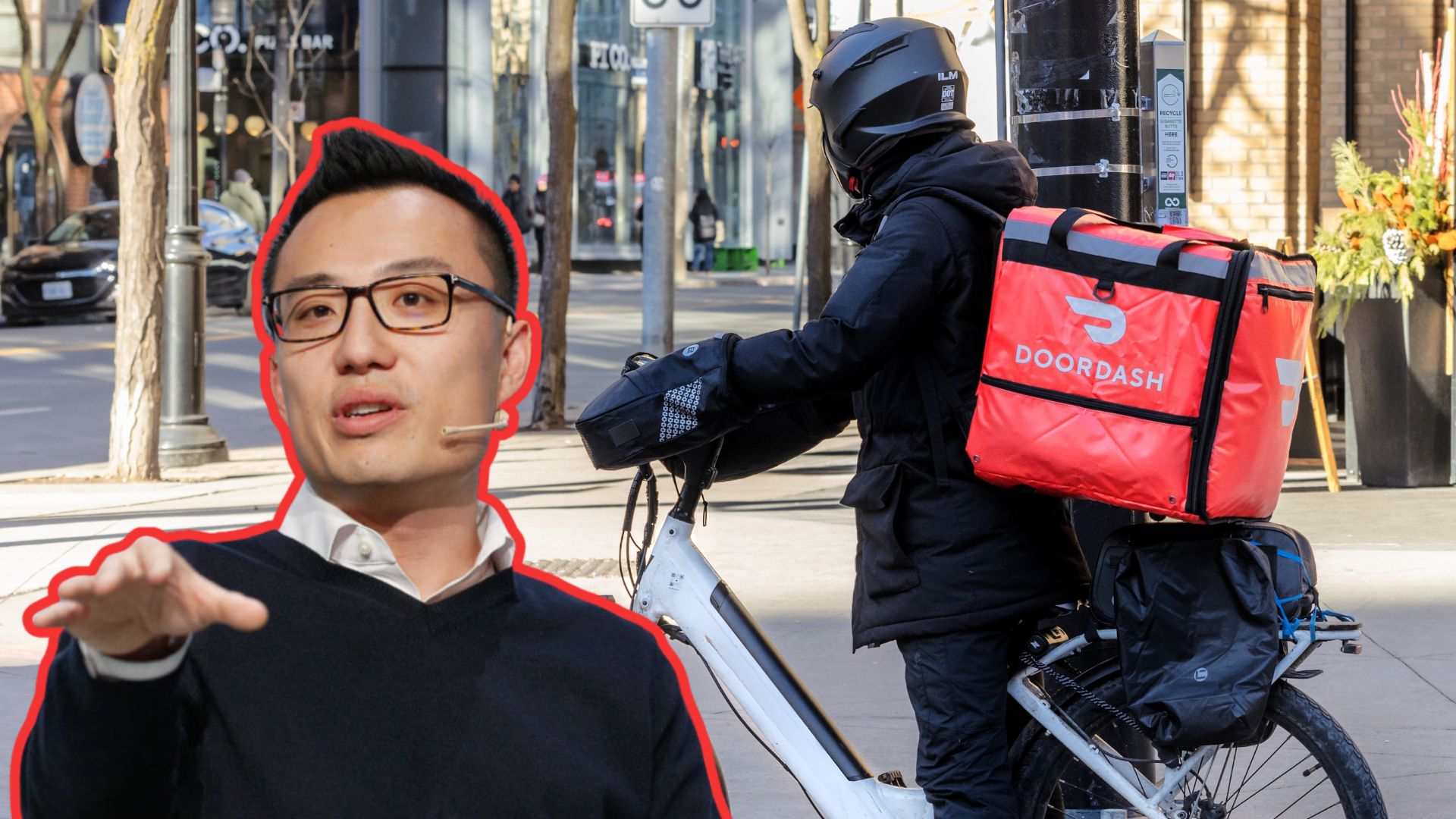
This week’s overpaid CEO: Tony Xu of DoorDash.
How Xu is driving inequality: As one of three DoorDash co-founders who became billionaires after the company’s 2020 launch, Xu’s personal net worth now stands at $2.1 billion. The drivers who deliver DoorDash food orders average just $12.43 in hourly earnings, including tips.
Xu has remained silent as ICE agents have attacked DoorDash drivers, even after the fatal shooting of a Colombian man in Maine authorized to work in the United States. Another ICE agent is facing criminal charges after he fired through the door of a home in Minneapolis, wounding a DoorDash driver.
Irresponsible ICE actions against DoorDash drivers have also proliferated in other cities. Yet a DoorDash spokesperson has told one media outlet that the firm had not even informed drivers of their constitutional rights if questioned or detained.
The last word: In the wake of the DoorDash driver killing in Maine, that state’s governor has called on Congress to reform or abolish ICE. Tony Xu, a billionaire off the backs of low-wage DoorDash labor, should support that demand. |
|
|
|
What's new on Inequality.org
Kennith RaShaun Woods II, The Struggle Against Industrial Expansion in Cancer Alley. Communities in Louisiana are fighting, including against their own governments, to block new polluting projects.
A.J. Schumann, The New Red Scare Is a Desperate Smoke Screen. The rise of the Democratic Socialists of America is helping build a broader struggle for a fair economy. Elsewhere on the web
Sarah Anderson, Corporations with big pay disparities have been silent as ICE detains their workers, Los Angeles Times. Why we so need government action to lift worker wages and bring CEO pay back into the compensation orbit of ordinary Americans.
Bob Lord, Adjusted Gross Income: The False Premise of Tax Apologists for the Ultra-Rich, Substack. Cheerleaders for America’s richest want you to believe that the “adjusted gross income” statistical category sits grounded in economics. It doesn’t.
Dean Baker, Dealing With the AI Productivity Boom: We Do Know How to Share the Wealth, Beat the Press. From 1947 to 1973, productivity in the United States grew rapidly. But those gains, instead of producing mass unemployment, resulted in major gains in wages and living standards. The reason: Unions then represented a much larger share of the nation’s workforce than they do now.
Joe Wilkins, Billionaires Pouring Money Into Ads About How AI Data Centers Are Actually Good, Futurism. A group bankrolled by AI industry billionaires is funding a massive campaign to sway public opinion in favor of data centers.
Matthew Gardner, The Only Winners from Trump’s Tariffs Are Big Corporations, Institute on Taxation and Economic Policy. Trump's tariffs have played out as a straightforward redistribution of income from ordinary Americans to corporate execs and shareholders.
Katya Schwenk and Freddy Brewster, Trump’s About To Let Wall Street “Pay To Play” With Your Pension, The Lever. Team Trump has opened the door to private equity kingpins — and potentially cryptocurrency interests as well — tapping into Americans’ retirement savings.
Hamilton Nolan, Capital Is Organizing the World to Its Advantage and Everything Else Is a Sideshow, How Things Work. American corporations are making more money than ever, and they don’t have to share it. Why? With unions representing just a tiny share of the private-sector workforce, workers don’t have the power to claim their fair economic share.
Rebecca Shaw, Billionaires hoarding wealth while the rest of us struggle need to ask themselves: what would Dolly do? The Guardian. Our planet’s richest people have enough to make our world a better place for everyone. We must not let them luxuriate in apathy as the world burns. We must demand more.
Anne-Françoise Hivert, Sweden, a 'paradise' for the ultra-rich, debates billionaire tax ahead of elections, Le Monde. Long considered an egalitarian pacesetter, Sweden has become a haven for the ultra-rich. Now, ahead of the September 13 elections, taxing the wealthy has become a major campaign issue.
|
|
|
|
Monthly Donors Make This Read Possible! |
Inequality.org, an Institute for Policy Studies nonprofit project, depends on donations to keep this newsletter free and available to all readers. Your monthly gifts make all the difference in the world, whether you can donate $3 or $300 a month. Ready to give a few bucks a month? Sign up today. |
|
|
|
Inequality.org | www.inequality.org | inequality@ips-dc.org Institute for Policy Studies
1301 Connecticut Avenue Ste 600
Washington, DC 20036
United States
Managing Editor: Chris Mills Rodrigo
Co-Editors: Sarah Anderson, Chuck Collins, Bella DeVaan, Reyanna James, and Sam Pizzigati |
|
|
|
|