A weekly newsletter from the Institute for Policy Studies |
|
|
A real Mother's Day gift, a visit
to Data Center Alley, and improving
gig work transparency |
|
|
|
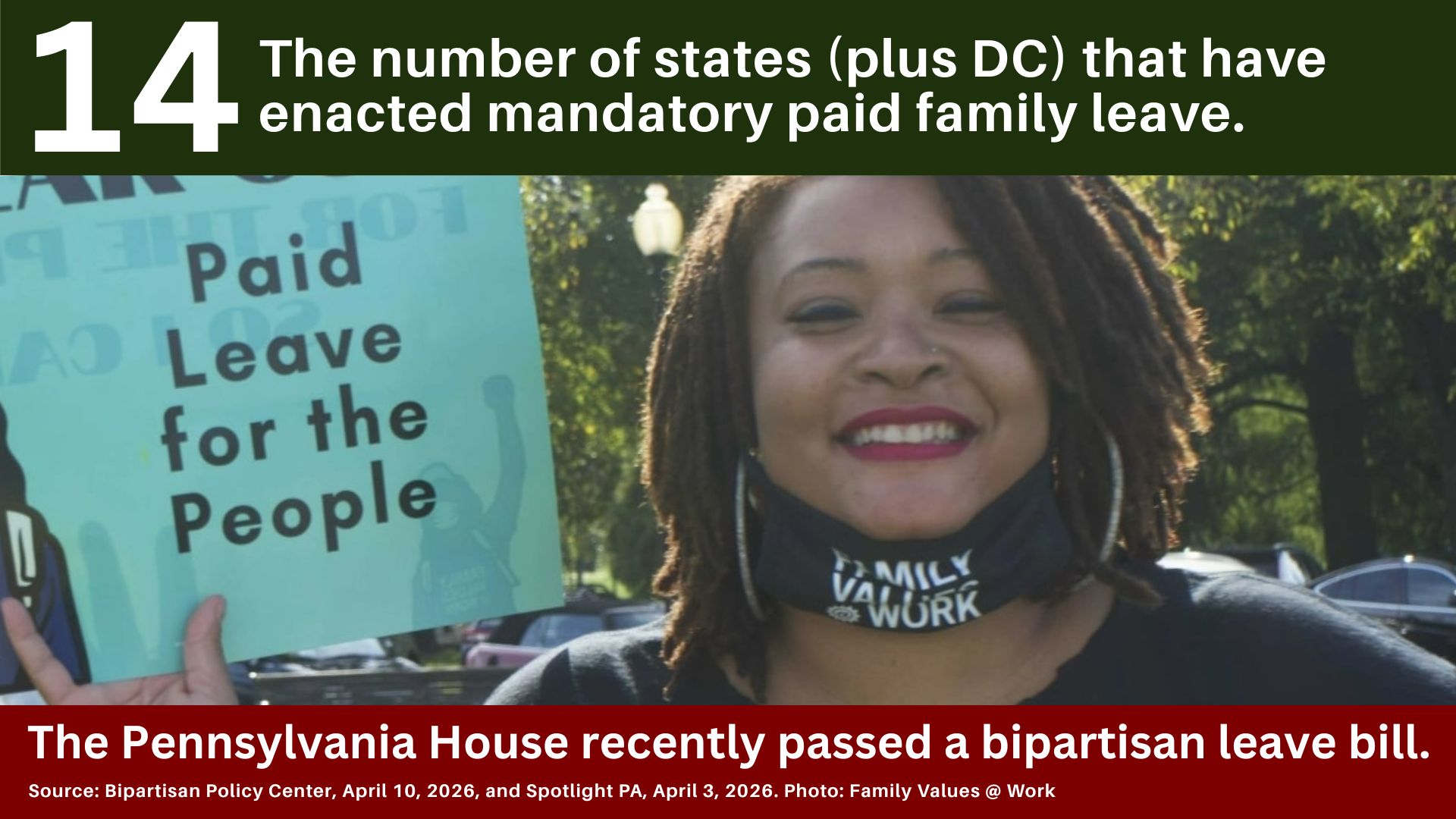
For Mother’s Day this Sunday, businesses are once again honoring moms with special deals on everything from Godiva truffles to Kate Spade handbags. Business lobbyists, meanwhile, are working to prevent America’s moms from acquiring something a bit more valuable: national paid parental leave.
The United States holds the dishonorable distinction of being the world’s only higher-income nation without paid leave for parents. Could this, perchance, have anything to do with who’s calling the shots in executive boardrooms and Congress? Men hold 89 percent of Fortune 500 CEO slots and another 72 percent of U.S. House and Senate seats.
Fortunately, at the state level, even in purple areas, things have been changing, The Family Values @ Work network has been beating back business and conservative political opposition and making real progress. The Pennsylvania House recently passed a bipartisan paid leave bill. If enacted into law, some 15 states, plus the District of Columbia, would have mandatory leave benefits.
These state-level victories should boost momentum for the long overdue federal action we need. Among OECD nations, let’s remember, paid leave is averaging 18 weeks. Most new moms would choose that leave over a fancy purse any day. Sarah Anderson
for the Institute for Policy Studies Inequality.org team |
|
|
|
INEQUALITY BY THE NUMBERS |
The Communities Sitting in the Shadow of the Data Center Boom
This week’s frontline face: Danny Caine, a former bookstore owner, author, and a content creator at the Institute for Local Self-Reliance. What he’s doing to help create a more equal world: Over the next few weeks, the ILSR will be releasing a new podcast series hosted by Caine that explores the lived realities of the massive surge in data center construction.
Caine has visited towns in Virginia and West Virginia where noise pollution has fundamentally reworked social dynamics. Centers have also threatened to worsen existing environmental catastrophes. Caine’s biggest takeaway from his work on the series: Resistance to this new era of extraction is building and can win!
What makes this fight so important: Vibrant and fearless coalitions are forming across the country, Caine notes in a new piece for Inequality.org, to resist the new wave of data center construction. “People of all stripes, across the political spectrum,” Caine points out, “resent the idea of tech corporations feeling entitled to their local resources.” |
The App Has Become Boss — But It Doesn't Need to Be
Gig work has become an essential part of our economy. But laws and regulations haven’t kept up. That reality has left gig workers — often poorer workers of color — without the protections other workers take for granted. In that oversight vacuum, the app becomes the boss.
In a recent survey of gig work in New York, the Community Service Society of New York found that workers are incentivized to work longer and faster at the whims of an opaque rating system. “Even access to work itself can disappear without warning,” the Society’s Rachel Swaner has found. “For workers relying on this income, even a short disruption can have immediate consequences.”
Swaner is proposing several steps to increase transparency. Among them: establishing minimum pay standards, shared governance, and due process rights. For more bold solutions, check the analysis below. |
|
|
|
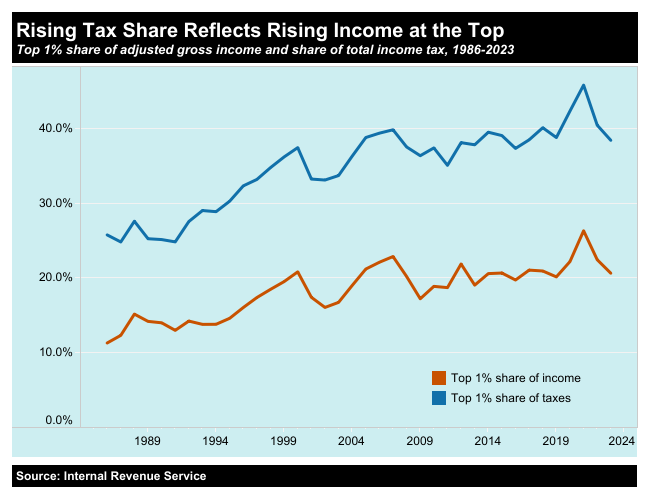
The U.S. tax system, the corporate-friendly Tax Foundation likes to claim, is working just as intended: High-income taxpayers pay the highest average tax rates and account for a large share of total income taxes paid.
But this framing leaves out a critical part of the real tax story. The top 1 percent’s share of income has climbed substantially, from 11.3 percent in 1986 to 20.6 percent in 2023. But that elite’s average effective tax rate has actually declined over the same period, from 33.1 percent to 26.3 percent.
In other words, the increase in taxes paid by the rich largely reflects the larger slice of total income these rich are collecting, not the progressivity of our tax system. For an interactive version of this chart and further analysis, check the Inequality.org link below. |
|
|
|
PETULANT PLUTOCRAT OF THE WEEK |
How Cruel: Denying an Aging Billionaire a U.S. Senate Seat This week’s dour deep pocket: Harold Hamm, the 80-year-old oil and gas tycoon who holds an $18 billion personal fortune — and a reputation as Donald Trump’s “energy whisperer.”
What has Hamm sour: Oklahoma this past March gained a U.S. Senate vacancy when Trump appointed one of the state’s current senators to a just-vacated cabinet slot. Hamm quickly phoned the Republican Oklahoma governor Kevin Stitt, a past recipient of Hamm’s campaign cash, and asked for the temporary appointment to the open Senate seat.
Governor Stitt would go on to appoint another Oklahoma fossil-fuel executive to the vacant seat, an exec with nowhere near Hamm’s hefty political clout. Why would the governor not pick Hamm, the close Trump buddy? A PBS report has surfaced one possibility: Not long before the appointment, Trump had fiercely “lashed out” at Stitt, the current chair of the National Governors Association, after a dispute between the two over the NGA annual meeting.
The last word: Hamm may now never ever get to sit in the Senate, but he can take comfort from the climate reality he has done so much to help create: Trump II climate reg rollbacks figure to add 7.6 billion tons of greenhouse gases into the atmosphere over the next decade, notes a Princeton University study, the equivalent of what 150 million gas-powered cars will emit over the same period.
|
|
|
|
What's new on Inequality.org
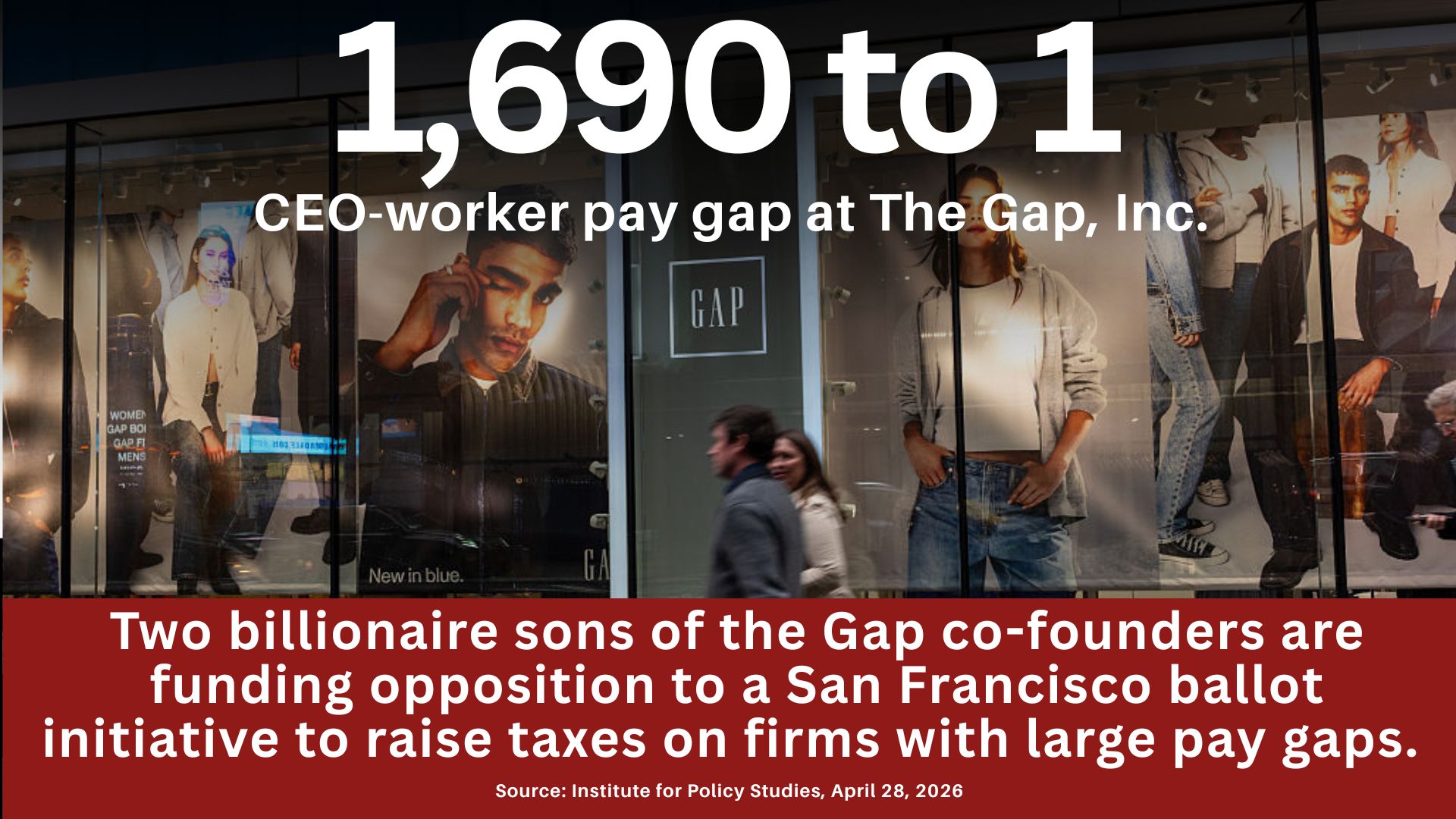
Sarah Anderson, The Corporate and Billionaire Opponents of San Francisco’s Overpaid Executive Tax. Five billionaires and corporations with huge pay gaps are funding a war chest against Proposition D on the city's primary ballot. Manuel Pérez-Rocha, Re-Opening Mexico to Fracking Could Lead to More Corporate Lawsuits. In any battle over fracking, transnational corporations would be well-positioned to overpower local resistance.
Take a reading break
Listen to Chuck Collins on the What's What podcast discussing growing wealth concentration and billionaire power. And Chris Mills Rodrigo has hosted a discussion on the "gig-ification" of nursing with Katie Wells for Tech Policy Press.
Elsewhere on the web
Scott Wallace and James Roosevelt Jr., It’s official: Trump is the anti-FDR, The Philadelphia Inquirer. Descendants of FDR and his Vice President, Henry Wallace, argue that while the Roosevelt administration focused on helping ordinary people, the Oval Office today is focused almost exclusively on serving the 1%.
Nikolas Anderson, The $8.4 Million Question: Why CEO Compensation Jumped 11% While Workers Got 0.5%, CEOWorld. The average global worker would have to work 490 years to match what the average CEO of a top-1,500 global corporation pocketed last year, calculates a new analysis from the International Trade Union Confederation and Oxfam.
David Sirota, Inside the Democratic Civil War Over Billionaire Power, Lever. Adhering to the strict anti-corruption and anti-super PAC standards that Bernie Sanders is pushing doesn’t risk losing resources for general election fights against Republicans. It only risks reducing the power of billionaires.
Dean Baker, Purdue Pharma Bites the Dust: Can We Learn Anything? Beat the Press. Patent monopolies — especially in pharmaceuticals — redistribute income upward. Just the Covid vaccine alone created five Moderna billionaires. But an alternative most certainly does exist.
Judd Legum, The Zuckerberg Rules, Oligarch Watch. Mark Zuckerberg, the world’s sixth richest soul, isn’t leaving the public image of his corporate giant Meta to chance. Over one recent four-month span, TV ads boosting the firm’s public spirit ran 3,500 times, at a cost of as much as $700,000 a pop.
Jessica Vela, The Washington Post Is Wrong: Many Rich Americans Are Not Paying Their Fair Share, Institute on Taxation and Economic Policy. Those many rich Americans include the Post’s mega-billionaire owner Jeff Bezos.
Robert Reich, The AI Job Apocalypse Is Already Happening, Substack. How can the stock market be rising to record levels when jobs and wages are going nowhere and most Americans are paying more for goods and services? The market is hitting records because jobs and wages are going nowhere and most people are paying more for goods and services.
Jeremy Ney and Zoe Siegel, Why Philanthropy Is Silent in the Golden Age of Wealth, American Inequality. America’s ultra-rich are increasingly prioritizing family needs and legacy preservation over charitable donations.
Clara Molot, Inside the Enhanced Games, Where Athletes Compete on Steroids. And Growth Hormones. And Adderall, Vanity Fair. Billionaire Peter Thiel and pals — including little Donnie Trump — are now launching the “Enhanced Games,” a challenge to the Olympics that has athletes using performance-enhancing drugs to set records and make Thiel and his pals even richer.
|
|
|
|
MONTHLY DONORS MAKE THIS POSSIBLE |
Did you know that Inequality.org is a nonprofit project, part of the Institute for Policy Studies’ Program on Inequality? We depend on donations to keep this project free and available to all readers. Small monthly gifts are a huge part of that, whether you can donate $3 or $300 a month. Ready to give a few bucks a month? Sign up today. |
|
|
|
Inequality.org | www.inequality.org | inequality@ips-dc.org Institute for Policy Studies
1301 Connecticut Avenue Ste 600
Washington, DC 20036
United States
Managing Editor: Chris Mills Rodrigo
Co-Editors: Sarah Anderson, Chuck Collins, Bella DeVaan, Reyanna James, and Sam Pizzigati |
|
|
|
|