A weekly newsletter from the Institute for Policy Studies |
|
|
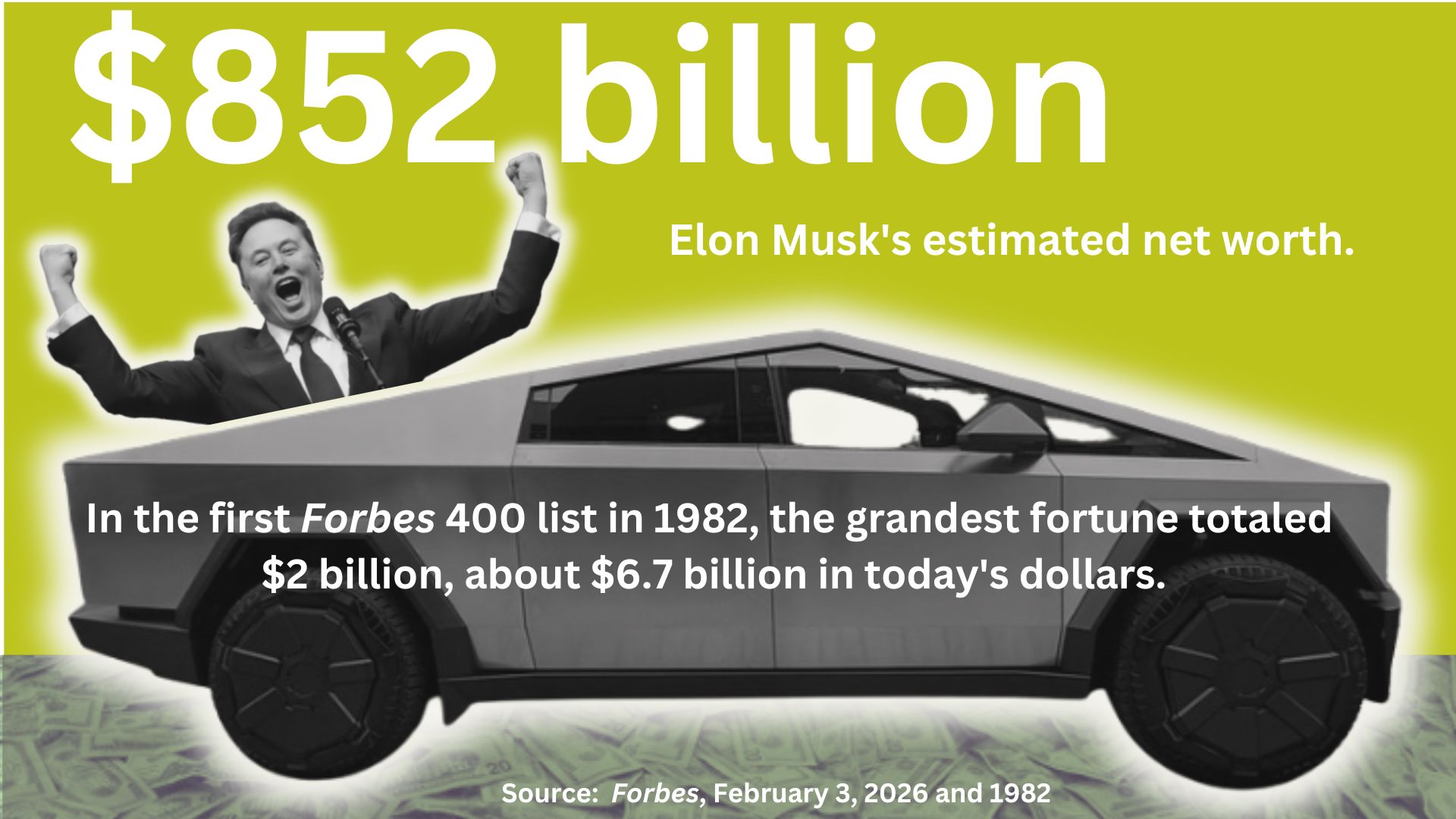
Very few people can expose the absurdity of our modern financial system quite as blatantly as Elon Musk. SpaceX, Musk's satellite and rocket company, is now acquiring xAI, his artificial intelligence company best known for the Grok chatbot. xAI already acquired the parent company of X (formerly Twitter) last year. Musk now has one company, SpaceX, that builds rockets, develops chatbots with a penchant for generating sexual images of children, and runs a social media platform.
If you squint, as many financial reporters have since the merger news broke, you might be able to envision a futuristic sci-fi company that develops space-based, solar-powered data centers to drive an AI revolution and make Musk's Mars colonization dreams come true. Personally, all I can see is a financial maneuver. The xAI start-up has been burning $1 billion a month. Although Musk has enormous wealth across his companies, it's not that easy to move capital between them to cover that much spend.
And it looks like the maneuver might just be working — at least for Musk. The deal reportedly priced SpaceX at $1 trillion and xAI at $250 billion, a valuation that, according to Forbes, brings his personal wealth to a jaw-dropping record $852 billion. The world's first trillionaire could well be in sight. Chris Mills Rodrigo
for the Institute for Policy Studies Inequality.org team |
|
|
Bringing Bottom-up Solutions to the Global Elite
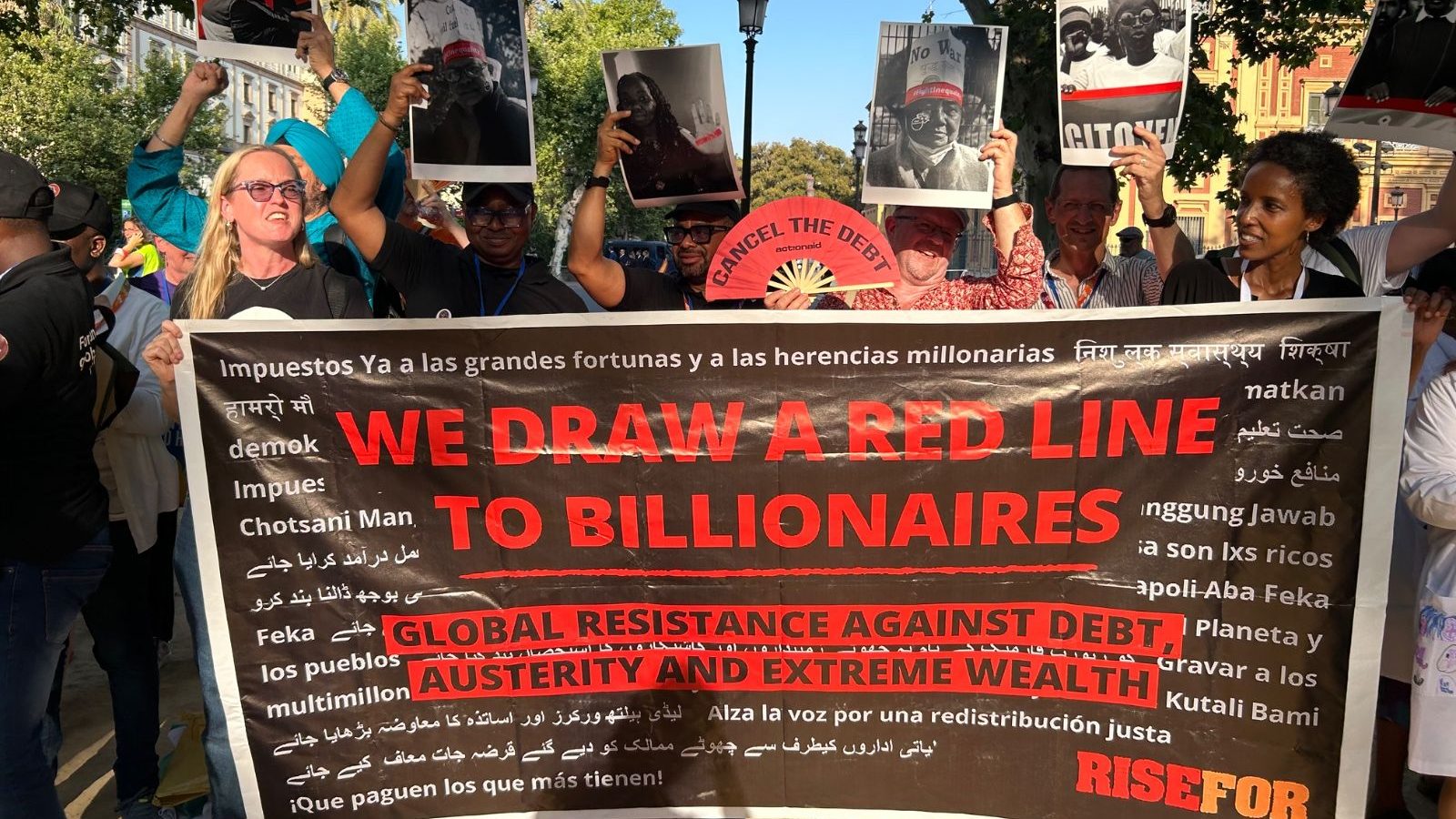
This week’s frontline face: Jenny Ricks, general secretary of the Fight Inequality Alliance, a coalition of more than 500 social movement, labor, environmental, and other organizations in over 50 countries that are mobilizing against the excessive concentration of power and wealth in the hands of a few.
What she's doing to help create a more equal world: Ricks and her organization are working to push the concerns and visions of people on the frontlines of the global inequality crisis into the center of public debates.
The Alliance recently took aim at the World Economic Forum at Davos, denouncing this annual elite gathering at a Swiss ski resort for excluding the voices of those most harmed by current global economic policies. This past November they also convened thousands of grassroots activists from around the world for a We the 99% People’s Summit in South Africa as a counterpoint to the G20 summit in that country.
What makes this fight so important to her: “The future will not be decided at the bottom of a ski run in Switzerland,” Ricks recently wrote for Inequality.org. "Legitimacy doesn’t come from wealth or exclusive invitations. It comes from people. From participation, truth, accountability, and collective power." |
|
|
Fund Family Needs, Not Tax Cuts for the Rich and Militarization
As pretext for its assault on Minnesota, the Trump administration seized on a deceptive, politically motivated YouTube video alleging benefit fraud in Minnesota’s child care system. The video’s specific claims quickly proved to be untrue, but Trump still froze federal child care and family assistance funding for Minnesota and four other Democrat-run states while launching a vicious immigration operation.
A federal judge has since unfrozen the funds, pending further investigation. But St. Paul-based kindergarten teacher and mother Kate Schuett knows the problem of child care funding is not over. Conservatives have been “taking money from programs that support families, like Medicaid and SNAP, and shoveling it into tax cuts for the wealthy and into entities like ICE, which is wreaking havoc in our streets,” Schuett writes. What if we reversed those priorities? |
|
|
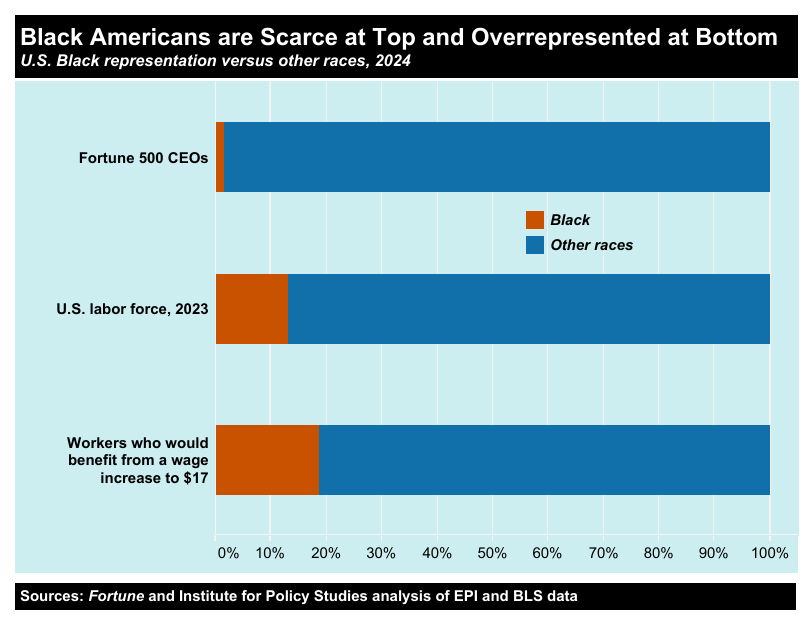
This Black History Month (and every month), we need to demand real policy solutions to our country's obscenely wide racial wealth divide. In 2024, just eight Fortune 500 CEOs (1.6%) were Black. By contrast, Black Americans made up 19 percent of U.S. workers who would directly benefit from raising the federal minimum wage to $17 per hour by 2030, according to Institute for Policy Studies analysis of Economic Policy Institute data.
For an interactive version of this chart and more on racial inequality, click the link to our Inequality.org Facts section below. |
|
|
PETULANT PLUTOCRAT OF THE WEEK |
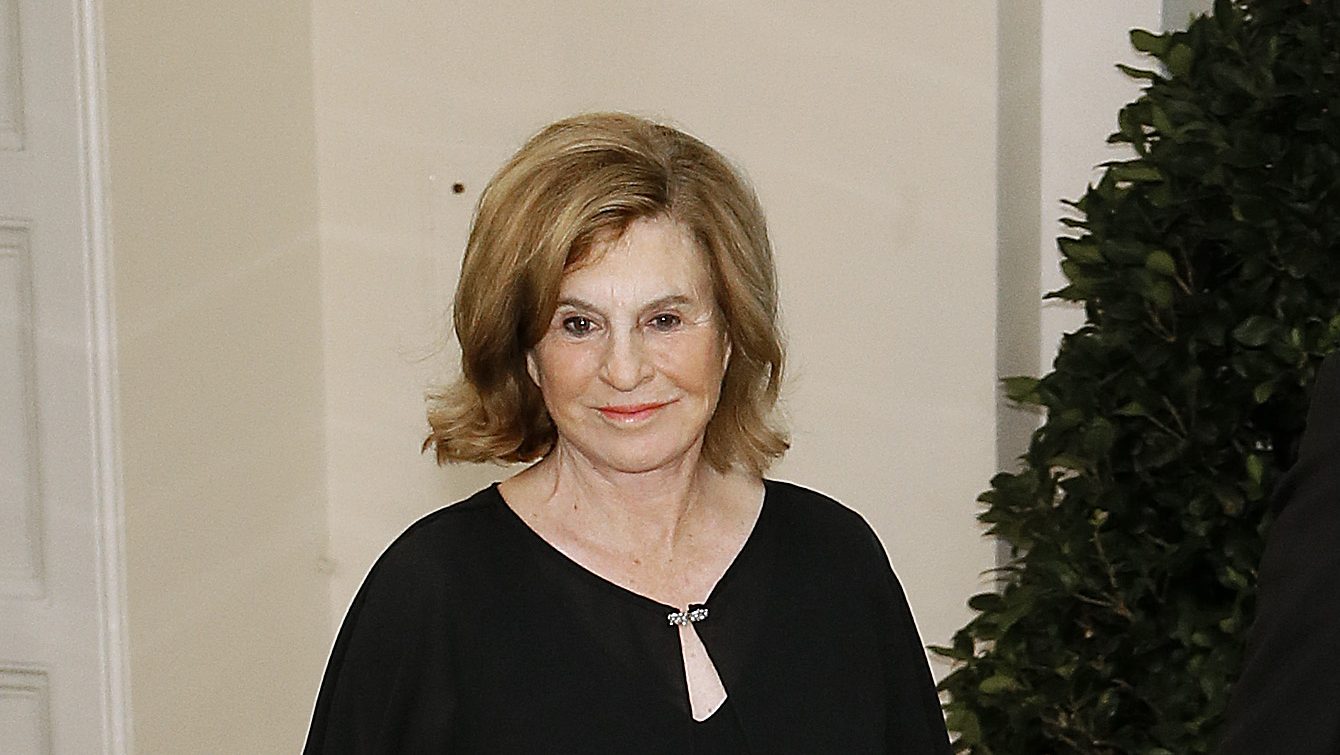
How Dare My Government-Coddled Workers Have the Nerve To Quit! This week’s dour deep pocket: Elizabeth Uihlein, the billionaire president of the Wisconsin-based Uline, a giant distributor of shipping and industrial supplies that she and her husband Richard — an heir to the Schlitz Brewing Company fortune — founded in 1980.
What has Uihlein sour: Employees with the gall to leave Uline’s employ within two years after their hiring. In her letter to customers that appears regularly in Uline’s thick product catalogues, Uihlein has blasted these employees for wasting the “precious resources” used to train them. She blames Obama’s Affordable Care Act for encouraging young people — who can stay on their parents’ health insurance until age 26 — to “go where the grass looks greener.”
Uline’s 9,000 employees have helped Liz Uihlein to a $6.1-billion personal fortune. She and her husband Dick have given some $400 million to right-wing candidates over the years, making the couple, Forbes notes, “one of the top” political donors in the United States.
The last word: Workers at the privately held Uline are buzzing about a resignation letter that an up-and-coming 32-year-old employee shared last week via an email that circulated company-wide. Noted the resigning Laura Wittmann: “As America descends rapidly into fascism, I can no longer work to grow the personal fortunes of people who helped make it so.” Uline management had Wittman’s email erased 40 minutes after she shared it. |
INEQUALITY BY THE NUMBERS |
|
|
Chris Brooks, Four Lessons From the UAW’s Turn Toward Class Struggle, Jacobin. Shawn Fain's previous chief of staff shares lessons for building a militant labor movement.
Rodger Sherman, The Permanent Overclass, The American Prospect. Yes, our favorite pro football teams have become the playthings of unqualified billionaires. But then again, what in America today doesn’t depend on the whims of unqualified billionaires? At least with football, we can boo them.
Brian Galle, How to Tax the Ultrarich, Roosevelt Institute. America’s richest 0.1 percent now holds $1 of every $6 of private U.S. wealth. Their vast fortunes shape our core civic institutions — and sit insulated from tax. A new report looks at how we could fix that situation.
Carlos Brown Solà, Democracy at risk: Resisting the rule of the richest, London School of Economics. The fortunes of the world’s 3,000 billionaires last year expanded by $2.5 trillion, an amount equivalent to the entire wealth held by the poorest half of humanity.
Amy Hanauer and Igor Volsky, America Needs a Wealth Tax, Democracy. In a democratic society, we need a wealth tax “to prevent a tiny elite from wielding coercive power over everyone else’s lives.”
Caleb Ecarma, The billionaire boys fight the wealth tax, Oligarch Watch. The proposed Billionaire Tax Act that California labor activists are working to get on this November’s ballot would only impact the state’s richest 200. Guess who’s going all out to stop this one-time 5 percent levy?
Mark Kreidler, Are California’s Billionaires Crying Wolf? Capital & Main. The state's uber-rich say they’ll flee if a tax on their fortunes ever becomes law. History suggests otherwise.
Carl Davis, An Anti-Affordability Agenda: Trump’s Advisors Call on States to Raise Taxes on the Working Class and Drastically Cut Taxes for the Rich, Institute on Taxation and Economic Policy. Trump’s Council of Economic Advisors wants states to raise sales tax rates and use the revenue to end taxes on income, a plan that would amount to America's largest-ever legislated transfer of wealth from working to rich people.
Clare Moriarty, No, objecting to the enormous wealth of billionaires is not begrudgery, Irish Times. We often talk about plans to alleviate poverty without discussing inordinate wealth, perhaps because institutions corrupted by wealth work hard to impose narratives that tell us the two have little to do with one another.
Peter Hart, Is Trump’s Move to Rein in Private Equity For Real? Center for Economic and Policy Research. Don’t bet on it. But the private equity danger remains quite real. Before 2011, no single U.S. investor owned over 1,000 single-family homes. By 2021, thanks to private equity kingpins, 446,000 homes sat in private investor hands — with catastrophic results for families struggling to afford to buy a home of their own.
Mubarak Zeb Khan, Luxury on display, taxes under scrutiny: How FBR’s Lifestyle Monitoring Cell tracks the rich, Dawn. In Pakistan, the gap between "visible wealth" — like Lamborghinis — and the income the owners of those Lamborghinis declare has become so wide that the nation’s Federal Bureau of Revenue has been tracking down those who lead luxury lifestyles to identify wealthy tax cheats.
Take a reading break to join our own Chuck Collins this Saturday, February 7, at 7 pm PT/10 pm ET for an online discussion of his newest book Burned by Billionaires. |
|
|
ON BILLIONAIRES AND THE REST OF US |
This newsletter and the whole Inequality.org project are powered by donations. We’re not raking in cash from the billionaire class, though. We’re counting on people to see why this reporting, research, and advocacy matters, and then to become paid subscribers, by making a recurring monthly donation of any amount. Make a monthly gift as a paid subscriber. Start your paid subscription today. |
|
|
Inequality.org | www.inequality.org | inequality@ips-dc.org Institute for Policy Studies
1301 Connecticut Avenue Ste 600
Washington, DC 20036
United States
Managing Editor: Chris Mills Rodrigo
Co-Editors: Sarah Anderson, Chuck Collins, Bella DeVaan, Reyanna James, and Sam Pizzigati |
|
|
|