A weekly newsletter from the Institute for Policy Studies |
|
|
Last week’s Bureau of Labor Statistics figures on job growth did not offer up a pretty economic picture. The nation added only 73,000 jobs in July, and the BLS also sharply revised downward its May and June job figures. None of these numbers came as huge surprises. The BLS regularly updates previously reported stats, and, given Trump’s tariffs and recent budget cuts, observers have been predicting more signs of a struggling economy. But Donald Trump, predictably, didn’t see the new BLS numbers as any sign that his economic policies are backfiring. For Trump, instead, the new numbers suggested conspiracy. Last Friday, he tagged the BLS commissioner, the long-term government employee Erika McEntarfer, as part of that “conspiracy” and canned her.
The analysts who produce BLS job projections, long considered the labor data gold standard, will now inevitably be feeling the political pressure to bend their numbers more to Trump's liking or risk being fired — just like McEntarfer.
Comparisons between this latest Trumpian data coup and the dystopia of George Orwell’s 1984 do and will come easy. With a federal government hijacked by an authoritarian with a fear of bad press, after all, who can we trust? Chris Mills Rodrigo
for the Institute for Policy Studies’ Inequality.org team |
|
|
INEQUALITY BY THE NUMBERS |
|
|
Fighting Against Medicaid Cuts and For Disability Justice
This week’s frontline faces: Sloan Meek, Suvya Carroll, and Wendy Lincicome are fighting against Medicaid cuts and reimagining what community and care rooted in disability justice could look like.
What they're doing to help create a more equal world: Donald Trump’s so-called “Big Beautiful” budget bill slashes $1 trillion in Medicaid funding. Meek and Carroll have been protesting that cut at Moral Monday rallies in Washington, D.C. They’ve highlighted the danger the Trump budget poses to people with disabilities, and Carroll has been arrested for praying in protest in the Capitol Rotunda.
In a recent Inequality.org interview with Meek, Carroll, and Lincicome, Meek’s caregiver of 31 years, the three spoke about how Medicaid has been sustaining full and meaningful lives for people with disabilities and their caregivers, people typically excluded and isolated from the rest of the world. Medicaid and their unique North Street Neighborhood home in Durham, North Carolina enable them to advocate for disability rights across the country.
Why the fight matters to them: “My whole life – not just my healthcare – is supported by Medicaid. The way I move around in the world. The way I communicate. The people who help me do all the things I want to do in my life,” Meek said. “Without Medicaid support, I will be forced into a nursing home to spend the rest of my life in a hospital bed.”
Check out Karina Smith's piece for Inequality.org below. |
|
|
City-Owned Grocery Stores Could Make Our Nation a Healthier Place
Millions of Americans currently live stranded in what have become known as “food deserts,” urban or rural neighborhoods with inadequate access to grocery stores. One of the main drivers behind this lack of access: the profit incentive structure of our current private grocery industry. Why open a store in poor neighborhoods when you can make big money off rich customers elsewhere?
City-owned grocery stores — one of the main planks of Zohran Mamdani's surprise mayoral campaign in New York — offer a promising alternative to this status quo. By offering a grocery “public option” that doesn’t have to turn a profit, note Henry A. Wallace fellow Maya Khadr and Institute for Policy Studies analyst Omar Ocampo, cities can get healthy food directly to the areas that need it most.
Learn more about the city-owned grocery store option by clicking the link below. |
|
|
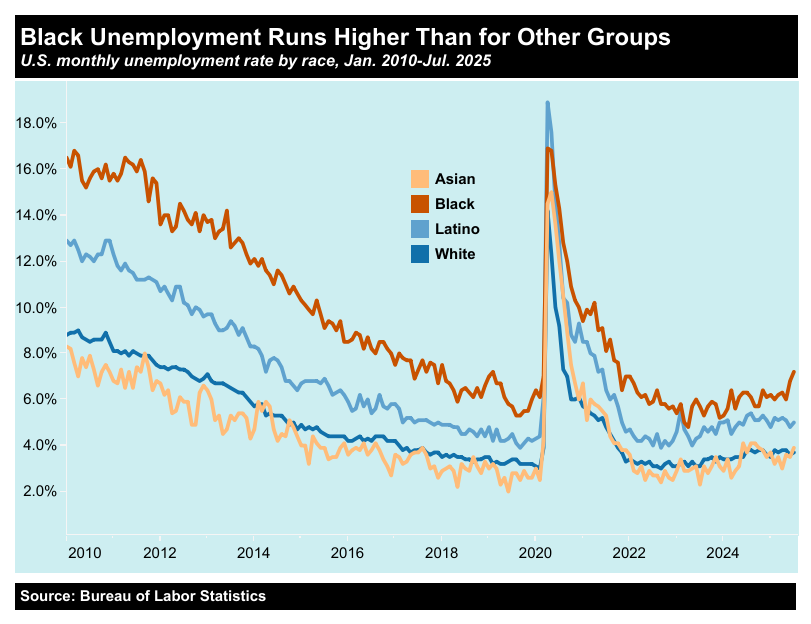
The Black unemployment rate has surged from 6.0 percent in May to 7.2 percent in July, the highest level since the Covid pandemic. That higher new rate nearly doubles the 3.7 percent jobless rate for white workers. What’s driving this new joblessness? The Trump administration’s decimation of the federal workforce has hit Black workers particularly hard, as has the erosion of on-the-job civil rights protections. But this new unemployment doesn’t just reflect racial bias. This jobless upsurge should also serve as a warning. Sharp spikes in Black unemployment have historically often preceded broader economic downturns.
|
|
|
PETULANT PLUTOCRAT OF THE WEEK |
Trump’s New Top Gun at the SEC Shoots Crypto Bullets This week’s dour deep pocket: Paul Atkins, the veteran Wall Street mover-and-shaker Donald Trump named chair of the Securities and Exchange Commission this past spring. Atkins, notes Bloomberg, now rates as the SEC’s wealthiest-ever top official.
What has Atkins sour: federal regulations designed to protect average investors from what his predecessor at the SEC, Gary Gensler, dubbed the “Wild West” of crypto, an asset class “rife with fraud, scams, and abuse.”
In a speech last week to the America First Policy Institute, Atkins announced a new “Project Crypto” initiative with an “innovation” exemption that would, Reuters reports, help crypto “become more enmeshed with traditional finance.” The financial services firm Atkins sold last month, Patomak Global Partners, enjoys close crypto industry ties.
The last word: Thanks to a tax code loophole for private citizens entering public service, notes a Lever analysis, Atkins will be able to “indefinitely defer capital gains tax” on his mega-million earnings from the Patomak sale. Atkins has refused to identify Patomak’s buyer. Observed senator Elizabeth Warren at his Senate confirmation hearing: “You know, some people may call that a pre-bribe.”
|
|
|
Paul Krugman, Oligarchs and the Rise of Mega-Fortunes, Stone Center on Socio-Economic Inequality. Extreme wealth has expanded in two waves since the 1980s. The first saw corporate takeovers and leveraged buyouts, with the second tottering on high-tech. Today’s richest owe their fortunes to de facto monopolies.
Kate Pickett, A Fair Future? How Equality Will Define Europe’s Next Chapter, Social Europe. Inequality fuels crisis for people and planet. A look at two fundamental solutions: wealth taxes and a universal basic income.
Amitabh Behar and Mads Christensen, The Planet Can’t Afford Billionaires, Time. New initiatives to tax extreme wealth are building momentum. But we need more. We need a new rulebook for the global economy, one that democratizes power and money.
Matthew Gardner, Excessive CEO Pay Makes Inequality Worse. Shareholders and the Public Deserve to Know About Compensation Disparities, Institute on Taxation and Economic Policy. Income inequality begins in the workplace. Team Trump is now opposing the regs that require firms to disclose their CEO-worker pay ratios.
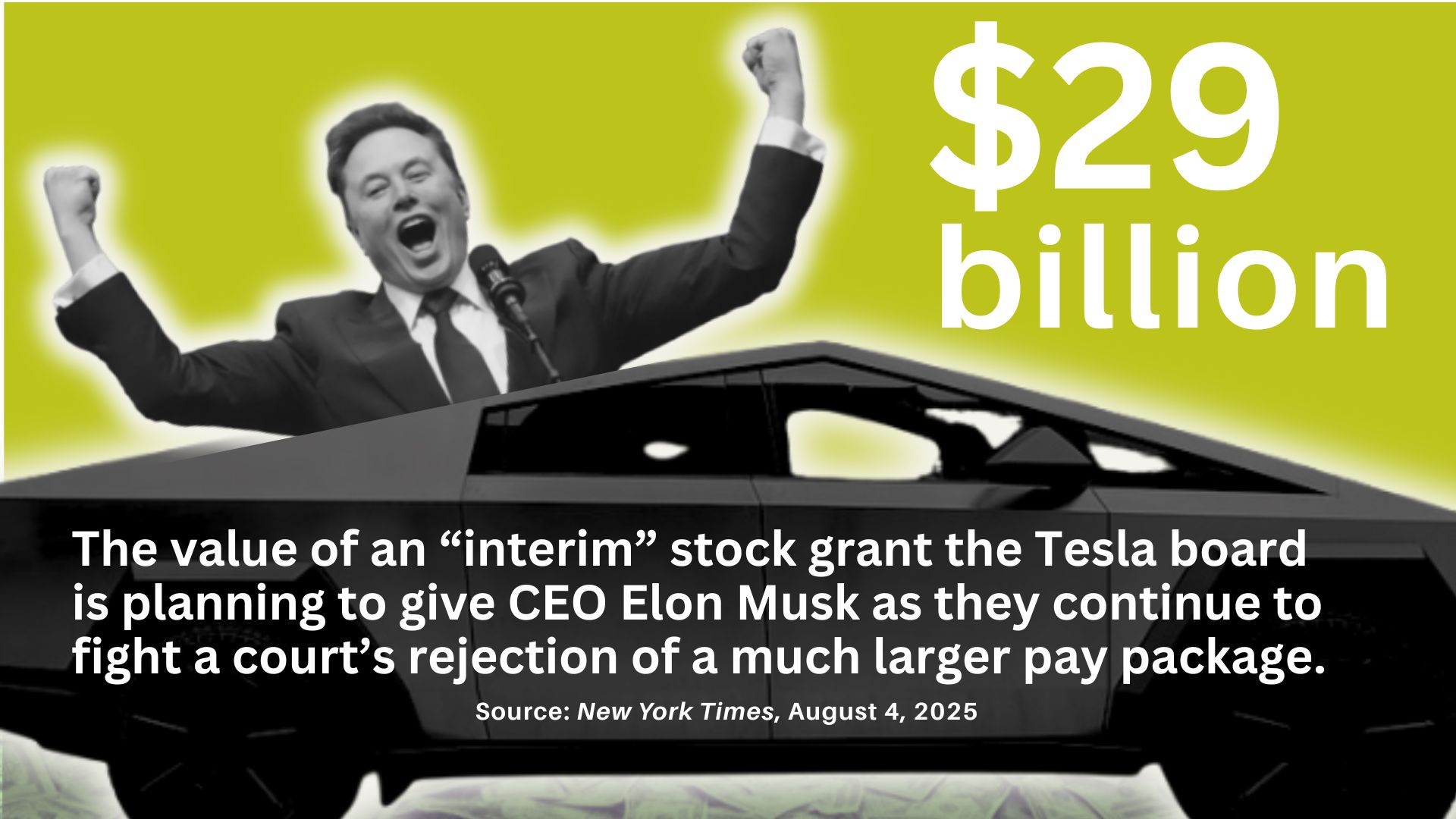
Robert Reich, Why the Hell is Musk getting a $29 billion raise? Substack. What Musk is doing to Tesla reflects exactly what Trump is doing to America: fleecing it while running it into the ground. Damian Carrington, ‘Self-termination is most likely’: the history and future of societal collapse, Guardian. An epic new analysis of 5,000 years of civilization sees a global collapse unless we vanquish economic inequality.
William Hartung, Entering a Golden Age for War Profiteers, TomDispatch. The “garrison state” Dwight Eisenhower warned against has arrived, with negative consequences for nearly everyone but the top execs of America’s giant weapons conglomerates and their emerging military tech sector competitors like Peter Thiel’s Palantir and Elon Musk’s SpaceX.
Skip Mark and Stephen Bagwell, Strengthening collective labor rights can help reduce economic inequality, Alton Telegraph. A study of economic life in 145 countries suggests that workers free to advocate for higher wages and better benefits for themselves end up also benefiting society as a whole.
Matt Novak, Jeff Bezos Reportedly Eyes Purchase of CNBC as Tech Billionaires Gobble Up Media, Gizmodo. What happens when pro-Trump oligarchs buy up every major media outlet?
Paul Brandus, How America’s rising oligarchy and ‘pay-to-play’ politics could sink the stock market, Morningside. Given Trump’s penchant for deregulation and tax cuts skewed towards the mega-wealthy, more than a few American oligarchs are wishing the president could serve a third term after 2028. |
|
|
Our research, editorial, and publishing team depends on hundreds of paid subscribers who make monthly gifts. Some give $3 each month. Others give $200! All told, this support enables our team to stay focused on identifying causes and solutions to our deep economic inequality. Paid subscribers have contributed more than $20,000 in the past year. Ready to become a paid subscriber? Sign up today. |
|
|
Inequality.org | www.inequality.org | [email protected] Institute for Policy Studies
1301 Connecticut Avenue Ste 600
Washington, DC 20036
United States
Managing Editor: Chris Mills Rodrigo
Co-Editors: Sarah Anderson, Chuck Collins, Bella DeVaan, Reyanna James, and Sam Pizzigati |
|
|
|