A weekly newsletter from the Institute for Policy Studies |
|
|
Philanthropy will never be an adequate substitute for an effective tax system. Yet the media remains obsessed with the giving habits of our billionaires, especially those who’ve signed the Giving Pledge. Founded in 2010 by Melinda and Bill Gates and Warren Buffett, this pledge encourages billionaires to give away at least half their wealth during their lifetimes and upon their passing.
The inspiration for the pledge came from Chuck Feeney, the reluctant billionaire who advocated “giving while living” and gave away over $8 billion during his lifetime, relinquishing his billionaire status along the way.
Over 250 billionaires have so far signed the Giving Pledge. How has all that pledging fared? Our new Institute for Policy Studies report, The Giving Pledge at 15, examines that question. Few billionaires, we found, are following in Feeney’s footsteps. If trends continue, the Giving Pledge will lead to massive trillion-dollar private foundations that wield the power and influence of small nation states.
The good news? In our current hot mess political moment, the fight back against oligarchy is burning bright. Check out my new Oligarch Watch column at The Nation profiling the pillaging health care oligarch Ralph de la Torre.
Chuck Collins
for the Institute for Policy Studies’ Inequality.org team |
|
|
INEQUALITY BY THE NUMBERS |
|
|
Sounding the Alarm: The Trump Budget Means Rural Hospital Closures This week’s frontline face: Tamie Cline, the president of the Oregon Nurses Association and a longtime nurse at Good Shepherd Medical Center in Hermiston, Oregon.
What she’s doing to help create a more equal world: To ensure more tax breaks for America’s wealthiest, the latest Trump-GOP federal budget — the so-called “Big Beautiful Bill” — slashes Medicaid funding by more than $1 trillion over 10 years. That cut will devastate our nation’s rural hospitals and patients and likely leave up to 17 million Americans without health insurance.
Cline knows exactly how a cutback this severe will play out: long travel times and crowded ERs for patients, burnout and depression for nurses.
Why the fight matters to her: “The first people on the chopping block are not going to be upper administration,” Cline explains an interview with Inequality.org fellow Karina Smith. “It’s going to be the workers.”
Check out Karina's piece, first published in the Oregon Capital Chronicle, below. |
|
|
A Return to Economic Populism Can Reunite America’s Working People
One of the buzzwords of the 2024 general election was “class dealignment,” the notion that American working people are splitting their votes across the two major parties. Class, the argument goes, no longer reliably predicts partisan affiliation.
Why does this shift matter? Any progressive movement needs a united working-class base to have any chance of beating back oligarchy. How best to build that united base? A new study from the Center for Working-Class Politics suggests that embracing economic populism would be the best way to unite and mobilize working families.
Championing egalitarian policies, the study’s meta-analysis of polling finds, can win back blue-collar voters. America’s working-class households, the study also notes, have actually become less conservative on social issues in recent years, despite what TV talking heads may be claiming.
Sean Mason of the Center for Working-Class Politics lays out the results of his group’s new study — and how these results can guide political decision-making — in the new piece for Inequality.org linked below. |
|
|
Donald Trump’s big, ugly bill will make it harder for low-income Americans, particularly low-income Black Americans, to manage their student debts. Black borrowers take on more student debt than their white peers — 11 percent more for Bachelor’s degree holders and 20 percent more for Associate’s. The most popular current repayment plan, Saving on a Valuable Education, or SAVE, caps borrowers' monthly federal student loan bills at a portion of their income. A median Black college graduate enrolled in this plan will see monthly payments jump from $41 to $150 under the new system. For an interactive version of this chart and more on racial inequality, check our Inequality.org Facts section below.
|
|
|
PETULANT PLUTOCRAT OF THE WEEK |
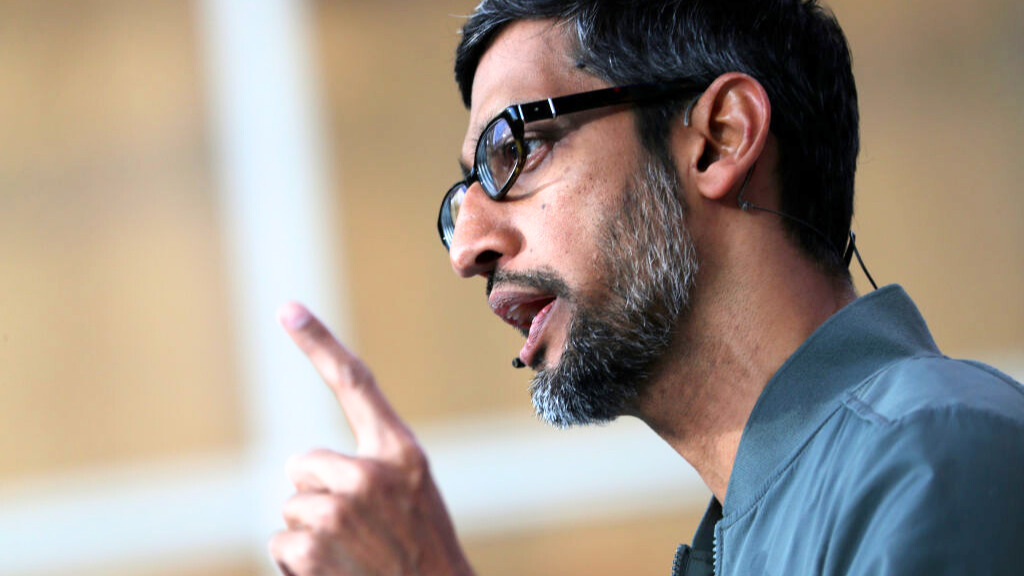
This Billionaire Feels Every Bit as Worthy as Any Other This week’s dour deep pocket: Sundar Pichai, the CEO of Alphabet, Google’s parent company. With Alphabet shares closing last week at an all-time high, Pichai has become America’s newest billionaire.
What has Pichai sour: Unlike America’s most well-known high-tech billionaires, Pichai doesn’t owe his fortune to a founder’s equity stake. He didn’t become Google CEO until 2015, well after “to google” had already become an everyday phrase. That reality seems to have Pichai on the defensive, and he takes every opportunity to stress how innovative Alphabet has been under his direction.
“One of the first things I did as CEO,” Pichai told Bloomberg last October, “was to pivot the company to be focused on AI.”
But analysts like journalist Cory Doctorow and economist Paul Krugman have detailed how high-tech execs like Pichai actually owe their billions to calculatingly leveraging the networks the Internet enables. To build up their networks, these execs at first offer users “really good value,” then soak them via everything from “charging higher prices” and “reducing quality” to “forcing people to watch ads.”
The last word: Today’s monopolists, sums up Krugman, “start out being very good to their customers, then switch to ruthless exploitation.” |
|
|
Bob Lord, Yes, America Is an Oligarchy, Rolling Stone. Since 2012, the increasing concentration of our nation’s wealth has almost entirely benefited just our richest 0.01 percent. Kate Pickett, Uneven ground: Inequality and planetary health, London School of Economics. The higher the level of inequality within a developed nation, new stats show, the greater the environmental danger.
Jeff Stein, They’re rich. They’re anti-Trump. And they don’t want their big tax cut, The Washington Post. Trump’s latest tax act devotes about $1 trillion in tax cuts to those annually pocketing over $400,000. Not all our rich are cheering that trade-off, and the Patriotic Millionaires are leading the critical charge.
Emily McCloskey, Millionaires won’t leave if you tax them, Patriotic Millionaires. Time to puncture the myth of “millionaire tax flight.” The stats show no grand exodus out of jurisdictions that raise tax rates on their richest.
Kristin Toussaint, The gap between CEO and worker pay keeps increasing — and Trump’s policies are making it grow faster, Fast Company. Ten years ago, Donald Trump termed U.S. CEO pay “disgraceful.” Now his SEC chair is considering loosening CEO pay disclosure requirements.
Frances Moore Lappé and Corinna Rhum, We Don’t Face Crisis of Scarcity or a Population, But a Crisis of Capitalism, Common Dreams. The real culprits behind our climate catastrophe and conditions hostile to children and families? Corporate power and concentrated wealth.
Hamilton Nolan, First, Kill The News, How Things Work. The more power billionaires have, the more they want a media that tells them that they do good. Because they don’t do good, they end up quashing real journalism.
Dylan Gyauch-Lewis, An Altogether Different Kind of Abundance Agenda, The New Republic. Today’s champions of an “abundance agenda” display a dismissive skepticism toward campaigns against oligarchs. The champions of abundance in 1935, by contrast, sought showdowns with oligarchs.
Carol Schaeffer, Want to Understand Global Inequality? Visit the Dump, The Nation. Where garbage goes remains, at best, an afterthought to policy makers. The poor pay the price for that shortsightedness.
Jesse Drucker, He Helped Big Companies Dodge Taxes. Now He’s Writing the Rules, The New York Times. A tax lobbyist who worked for some of the world’s largest corporations is now running the U.S. Treasury Department’s office that will administer Trump’s new tax law. |
|
|
Our research, editorial, and publishing team depends on hundreds of paid subscribers who make monthly gifts. Some give $3 each month. Others give $200! All told, this support enables our team to stay focused on identifying causes and solutions to our deep economic inequality. Paid subscribers have contributed more than $20,000 in the past year. Ready to become a paid subscriber? Sign up today. | |
|
Inequality.org | www.inequality.org | inequality@ips-dc.org Institute for Policy Studies
1301 Connecticut Avenue Ste 600
Washington, DC 20036
United States
Managing Editor: Chris Mills Rodrigo
Co-Editors: Sarah Anderson, Chuck Collins, Bella DeVaan, Reyanna James, and Sam Pizzigati |
|
|
|