A weekly newsletter from the Institute for Policy Studies |
|
|
With the assassination of Minnesota state representative Melissa Hortman and her husband Mark this past weekend, we haven’t just lost a pair of loving parents and active community residents. We’ve lost a champion of egalitarian policies.
Melissa Hortman helped drive the “Minnesota Miracle” of 2023. Under her speakership, the Minnesota House of Representatives ushered into law pro-labor reforms ranging from minimum pay and benefits for nursing home staff to wage-theft protections for construction workers.
Hortman also helped secure the right of teachers to negotiate over class sizes, and her legislative activism has given nurses a greater say in staffing levels. The bills she championed to ban employer-friendly “non-compete” pacts and “captive audience” meetings will no doubt boost many future union campaigns. May Melissa and Mark’s memory be an inspiration for fighting everywhere for a more equitable distribution of the wealth that worker labor creates.
Chris Mills Rodrigo
for the Institute for Policy Studies’ Inequality.org team |
|
|
INEQUALITY BY THE NUMBERS |
|
|
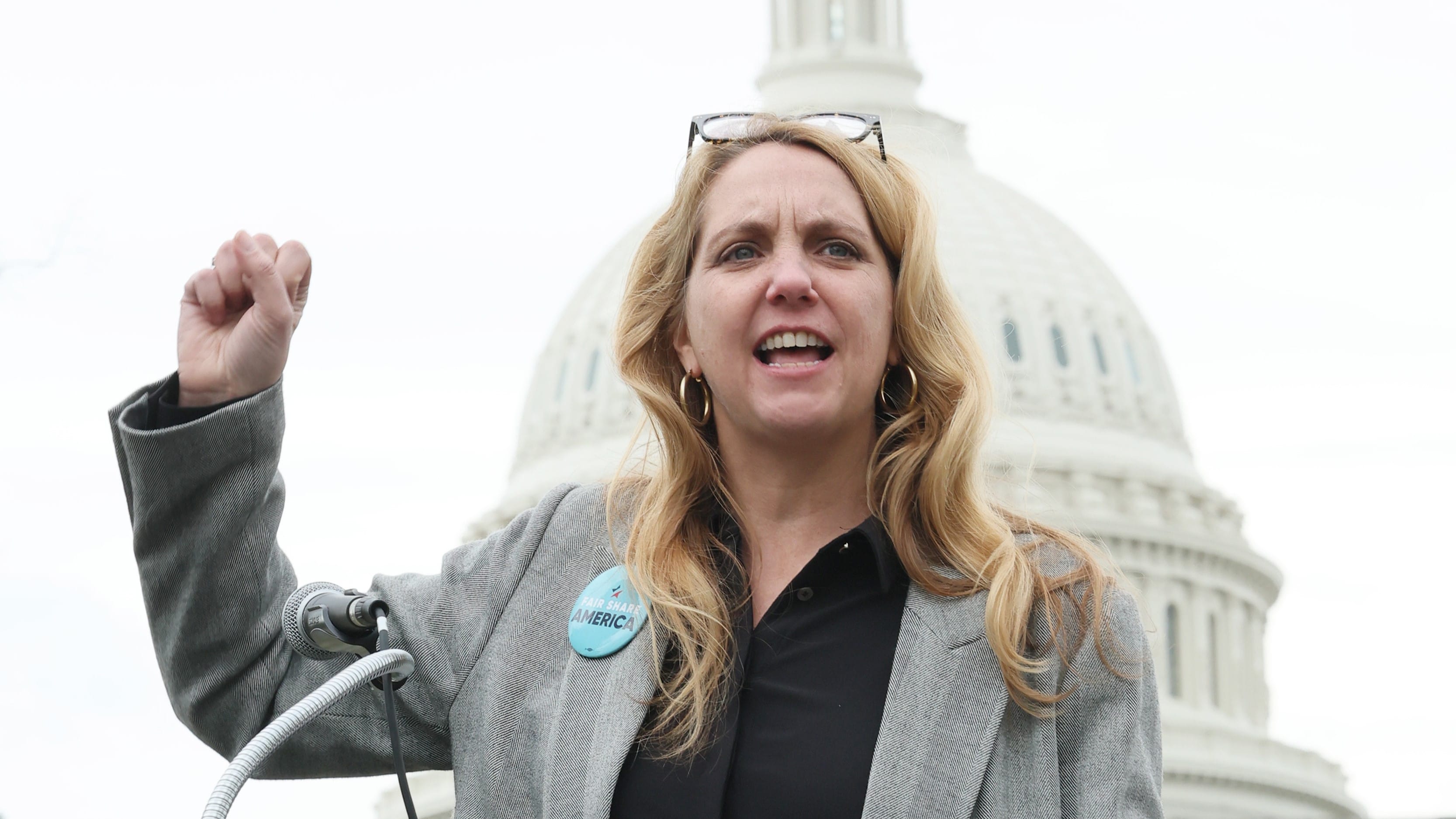
Hitting the Road in the Ongoing Struggle for Tax Fairness This week’s frontline face: Kristen Crowell, the executive director of Fair Share America, a new organization supporting efforts to make wealthy individuals and the profitable corporations they run pay what they really owe.
What she’s doing to help create a more equal world: Crowell is now heading off on a 14-state “Stop the Billionaire Giveaway” bus tour to publicize the high stakes in the current federal budget debate.
What makes this fight so important to Crowell: Over recent months, while knocking on doors and holding in-person and online town halls, she’s encountered widespread anger about the deep cuts to social programs and tax giveaways for billionaires in the pending GOP budget plan.
“Getting to be with people who are scared and hurting but doing something powerful together to make change,” Crowell has told Inequality.org co-editor Sarah Anderson, “keeps me going.”
Several of Crowell’s children will be joining her on the bus tour, and Crowell is hoping the experience will give them “a strong example of what it means to stand up for our values.”
How Crowell will keep up her energy covering 4,000 miles in three weeks: “I’ve been working in the tax justice space for a long time and look forward to seeing old friends and new allies along the route. It truly will be one of the greatest months of my life. And my love of strong, black coffee doesn’t hurt!” For the full Crowell interview, click the link below. |
|
|
America’s Homeless Families Need Housing, Not Jail Stays
The U.S. Supreme Court last year ruled in Grants Pass v Johnson that localities can criminalize people for sleeping outside, even if no local shelters for the homeless exist. That decision came as people working full-time across the country are finding themselves increasingly unable to afford safe living spaces.
Many cities, meanwhile, are choosing to ramp up sweeps of the encampments that homeless people have set up, and those local government sweeps are cutting access to services and destabilizing already difficult situations. The solution? We don't need criminalization, writes Farrah Hassen in a new Inequality.org analysis, we need adequate housing for all.
“The Grants Pass decision may have opened the door to new cruelties, but local governments still have a choice to do what’s right," Hassen argues. "Now, more than ever, we must demand real housing solutions." |
|
|
On May 22, 2025, the U.S. House of Representatives passed a budget bill that features tax breaks for the rich and the largest cuts ever to Medicaid and SNAP food assistance. This House budget, if enacted, would lower average household resources for the poorest 10 percent by 3.9 percent, or $1,600, over the next decade. Resources for our nation’s richest 10 percent, by contrast, would jump 2.3 percent, or $12,000, according to the Congressional Budget Office. For an interactive version of this chart and more on taxes and inequality, click the link to our Inequality.org Facts section below.
|
|
|
PETULANT PLUTOCRAT OF THE WEEK |
Profiteering Off Scapegoated Migrants Can Sometimes Get Tricky This week’s dour deep pocket: George Zoley, the executive chair and founder of the GEO Group, the private firm that runs Delaney Hall, a 1,000-bed immigration detention center in Newark, New Jersey.
What has Zoley sour: how media coverage of protests last week by Delaney detainees — migrants getting held for deportation — has highlighted the jail’s horrible living conditions. Detainees, the New York Times reported Saturday, have been sleeping on floors, getting slices of bread instead of meals, and finding the facility’s faucet water “sometimes scalding or foul tasting.”
Zoley’s GEO Group in February won a 15-year, $1-billion national contract from the Trump administration to house migrants targeted for deportation. Local officials in Newark have maintained that the company has not allowed inspectors to properly check out the Delaney Hall facility.
Summed up U.S. senator Andy Kim this past Friday: “We are paying billions of dollars for for-profit prisons” that “are skirting” their responsibilities and trying “to pocket as much of that money as possible.”
The last word: George Zoley has done an ample share of that pocketing. He collected $3.9 million in compensation last year and, right before last week, held a net worth of at least $101.5 million. |
|
|
What's new on Inequality.org?
Chris Mills Rodrigo, A Just Transition for All: A Q&A with J. Mijin Cha. The climate policy researcher lights our winding path out of the climate crisis and into a greener future. Eric Morrison-Smith and Gustavo Lopez, What Does It Mean to Build a Country That Was Never Meant for You? We need to create a world free from the clutches of empire. That starts with organizing and resisting.
Elsewhere on the web
Gabriel Zucman, The Trump-Musk feud exposes America’s wealth-hoarding crisis, Guardian. Under our current federal income tax system, over half the real-world income available to the top 0.1 percent — those worth at least $62 million — goes totally untaxed.
Alex Hemingway, Designing a Wealth Tax for Today’s Robber Barons, Jacobin. To be effective, a wealth tax must apply to all types of assets equally, target the super rich, and not rely on the wealthy to report their own wealth.
Max Lawson, Want to end poverty? Then reduce inequality, Equals. Oxfam’s top inequality analyst highlights the latest eye-opening stats on how much reducing global concentrations of wealth could contribute to the struggle against extreme global poverty.
Joon Lee, $4,785. That’s How Much It Costs to Be a Sports Fan Now, New York Times. How sports teams have become an ever more powerful vessel for wealth extraction — at the expense of America’s average-income households.
Amy Hanauer, The ‘big, beautiful’ bill creates a $5 billion tax shelter for private school donors, The Hill. The budget reconciliation bill passed by the House last month establishes an unprecedented tax shelter that will shift resources from public schools to wealthy people and their favorite private schools.
Jill Suttie, Why We Have Trouble Supporting Greater Income Equality, Greater Good. Helping people understand how much others have contributed to their success can encourage greater support for a fairer distribution of income and wealth.
Fatima Hussein, Ex-congressman Billy Long confirmed as commissioner of the IRS, an agency he once sought to abolish, AP. The just-confirmed Trump choice to head the IRS, a former auctioneer, has no experience whatsoever in tax administration.
Venkat Narayanan, Some economists have called for a radical ‘global wealth tax’ on billionaires. How would that work? Conversation. Most high-net-worth individuals do not receive huge gobs of income directly. They “store” their wealth in corporate structures instead. But we can tax that wealth.
Joe Conason, Donald Trump’s Dirty Self-Dealing: The Audacity of His Rapacity, New Republic. Trump has already grabbed billions during his years in the White House —and now appears likely, by the time he exits, to make off with tens of billions. |
|
|
Our research, editorial, and publishing team depends on hundreds of paid subscribers who make monthly gifts. Some give $3 each month. Others give $200! All told, this support enables our team to stay focused on identifying causes and solutions to our deep economic inequality. Paid subscribers have contributed more than $20,000 in the past year. Ready to become a paid subscriber? Sign up today. | |
|
Inequality.org | www.inequality.org | inequality@ips-dc.org Institute for Policy Studies
1301 Connecticut Avenue Ste 600
Washington, DC 20036
United States
Managing Editor: Chris Mills Rodrigo
Co-Editors: Sarah Anderson, Chuck Collins, Bella DeVaan, Reyanna James, and Sam Pizzigati |
|
|
|