A weekly newsletter from the Institute for Policy Studies |
|
|
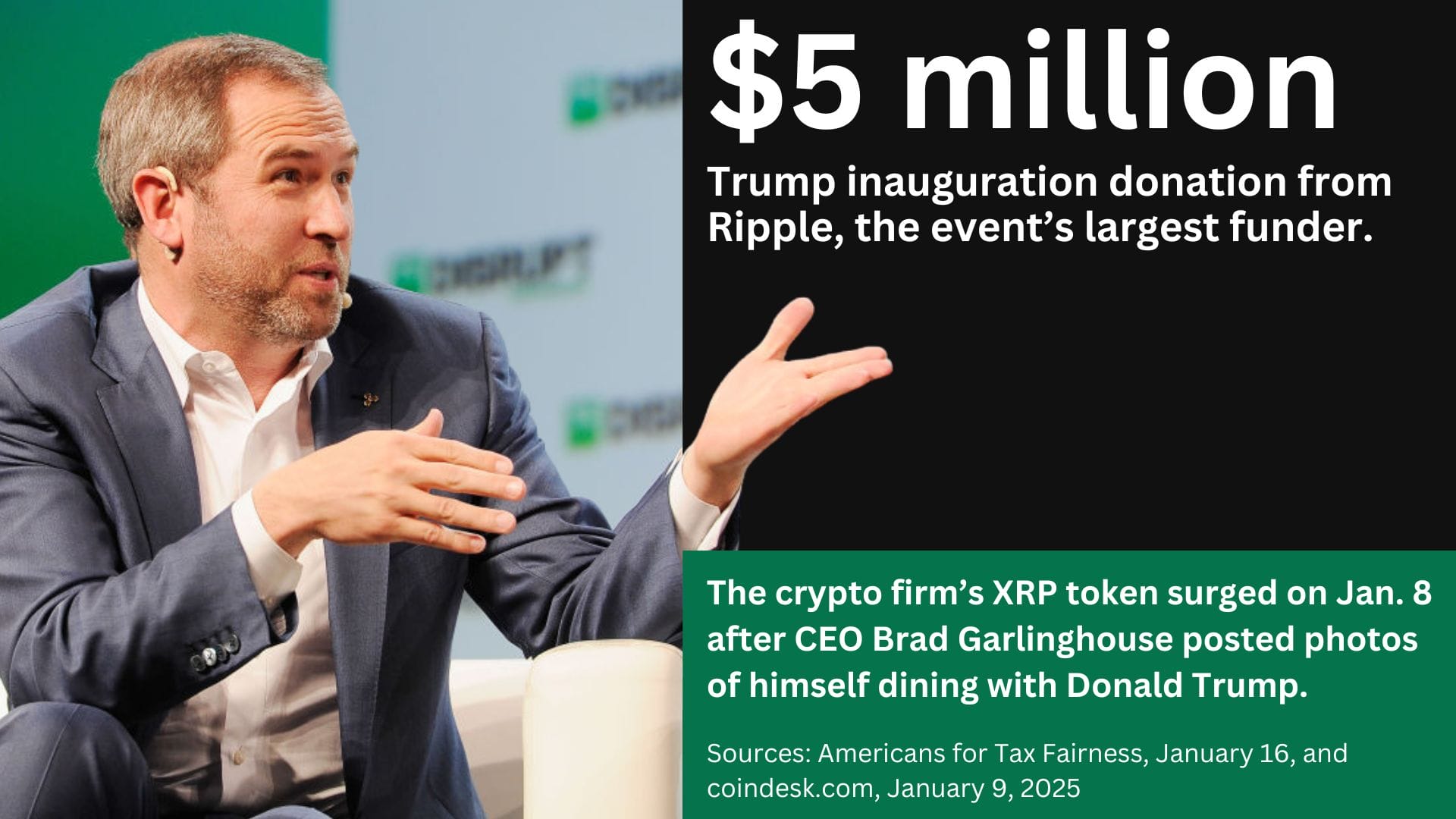
The freezing cold in Washington, D.C. earlier this week forced some difficult decisions. The cold moved Donald Trump's second inaugural inside the Capitol Rotunda, leaving limited spots for all the guests Trump had invited to watch his swearing in. Notables like governors Ron DeSantis and Greg Abbott and social media influencers Jake and Logan Paul found themselves relegated to the Capitol's visitor center. So who did make the cut? America's richest! Billionaires Elon Musk, Jeff Bezos, and Mark Zuckerberg — the three wealthiest individuals in the world — all sat close by Trump during the ceremony, with the latter two even getting plus-one invites. The Big Tech presence didn't end there. Google's Sundar Pichai and Apple's Tim Cook sat just a row back.
Our tech oligarchy has, of course, been flexing its clout long before this week. And that clout comes from more than just Republican leadership. President Obama, after all, gave Musk’s Tesla nearly half a billion dollars in his 2009 stimulus, and Biden bailed out the troubled Silicon Valley Bank just last year. But Monday’s Inaugural seating stands as the clearest proof yet that a handful of billionaires, enriched by a roaring tech market, now enjoy enormous political heft.
Chris Mills Rodrigo
for the Institute for Policy Studies’ Inequality.org team |
|
|
INEQUALITY BY THE NUMBERS |
|
|
Exposing the Greed and Grasping of America’s Health Insurance Giants
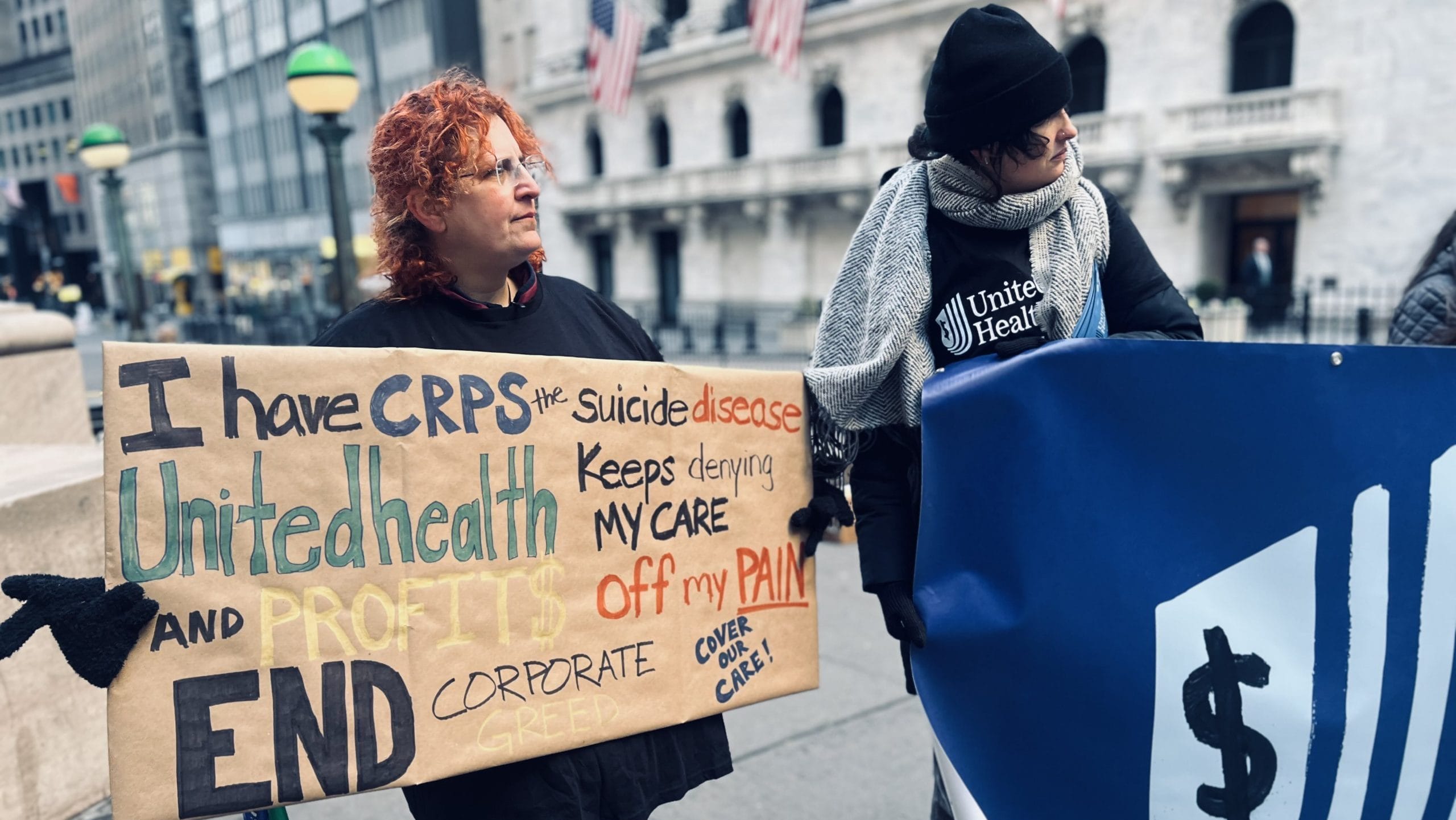
This week’s frontline face: Jenn Coffey, a retired EMT and an advocate for a national healthcare program.
What she's done to help create a more equal world: Coffey developed a series of rare debilitating conditions — including complex regional pain syndrome and small fiber neuropathy — after battling breast cancer. Her experiences trying to get UnitedHealthcare to cover the infusions she needs to live without overwhelming pain have radicalized this former Republican lawmaker.
Coffey has channeled her pain into activism through People’s Action’s Care Over Costs campaign, an effort that’s pressuring private health insurers to end denials and onerous prior authorization requirements.
What makes equality so important to her: “UnitedHealthcare would rather leave me in torture than grant me the peace my infusions bring,” Coffey noted at a protest in New York last week. “I’m asking for a life worth dignity. I’m left begging for a life worth living.” |
|
|
How Can Anyone Accept the Trump Tax Agenda as 'Populist'?
Most of Donald Trump's populist bona fides rest on his campaign promises to lower taxes for average Americans. But his 2017 tax legislation — set to expire at the end of this year — overwhelmingly benefited America’s richest. They gained massive tax breaks at the expense of working-class Americans. Now extending — and expanding — those cuts has become a prime Trump priority.
But just pointing out the hypocrisy of Trump's populist messaging and pro-billionaire policies is never going to be enough. We need to be organizing to call out the Trump charade and challenge how the new administration operates. We also need to be offering an alternate vision for America’s tax future. What would an American society with fair taxes look like? A glance at our options below. |
|
|
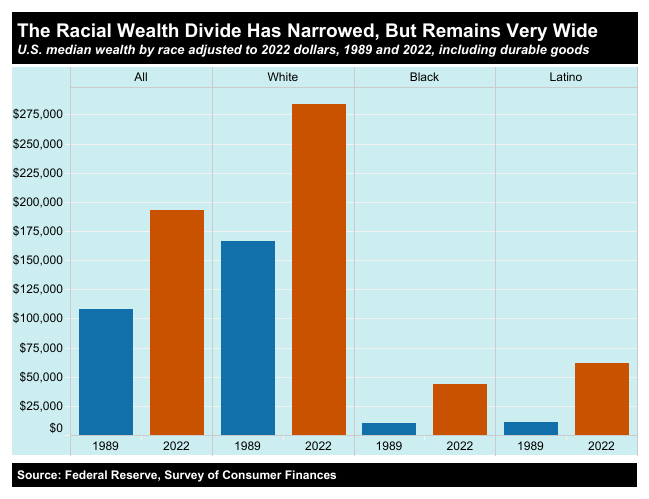
The racial wealth divide has narrowed slightly since 1989, but remains extremely wide. The median Black family has a net worth, including cars and other durable goods, of $44,100, just 15.5 percent of the $282,310 median white wealth. The typical Latino family, with $62,120, owns just 21.8 percent of the wealth of the median white family. For an interactive version of this chart and more on racial economic inequality, click the link to our Inequality.org Facts section below. |
|
|
What Americans Now Need Most: A Farewell to Grand Fortune Over three score years ago, President Eisenhower had a warning for America. “We must guard against the acquisition of unwarranted influence, whether sought or unsought, by the military-industrial complex,” Eisenhower exhorted in his 1961 farewell address.
Eisenhower’s warning would, sadly, go almost totally unheeded. In the years since his farewell, the “military-industrial complex” he so feared has morphed into an even more worrisome concentration of wealth and power.
Last week, in his own farewell address, President Joe Biden gave that concentration a chilling label. An “oligarchy” of “extreme wealth, power, and influence,” Biden intoned, now “literally threatens our entire democracy, our basic rights and freedoms, and a fair shot for everyone to get ahead.” How can progressives meet that threat? Inequality.org co-editor Sam Pizzigati has more. |
PETULANT PLUTOCRAT OF THE WEEK |
A Conspiracy-Mongering Billionaire Sees a Glimmer of Hope
This week’s dour deep pocket: the mega-billionaire venture capitalist Peter Thiel, a co-founder of PayPal and the host this past Saturday of a lavish D.C. party that vividly symbolized, the New York Times reports, “the tech industry’s new excitement” over Donald Trump’s return to the White House.
What has Thiel sour: Just about everything and everybody responsible for keeping the “truth” from the American people. Thiel’s list of truth-deniers includes, he makes plain in a just-published Financial Times op-ed, the “media organizations, bureaucracies, universities, and government-funded NGOs” that drive what Thiel calls the “Distributed Idea Suppression Complex.”
Thiel now sees, with Trump back in the White House, an administration committed to exposing the truth on dark secrets ranging from whether U.S. tax dollars birthed Covid to the 2019 prison death of child sex offender Jeffrey Epstein, a Trump-friendly financier over halfway to his first billion.
The last word: Thiel’s latest conspiratorial musings, notes American Prospect managing editor Ryan Cooper, read “like an edited version of one of those lunatic emails journalists get sometimes with like 8 different fonts in 9 different colors.” |
|
|
What's new on Inequality.org
Helen Flannery, DAFs and Foundations Could Be Eating Up Half of U.S. Individual Donations by 2028. With more charitable giving coming from our country’s wealthiest, money has become more likely to enter charitable intermediaries like private foundations and donor-advised funds. Manuel Pérez-Rocha, Crisis in North America, Opportunities for Change. Civil society should take advantage of instability in US-Mexico-Canada relations to fight corporate power.
Chuck Collins, Fossil Fuel “Oil-Garchs” Reap Billions in Payback for Trump Support. A new report tracks the monthly wealth of fossil fuel billionaires, a group already getting rewarded for investing massively in Trump's 2024 campaign. Elsewhere on the web
Isabella M. Weber, The Governments That Survived Inflation, Foreign Affairs. A deep dive into how progressive governments in Mexico and Spain avoided the fate of other incumbents worldwide.
Natascha Elena Uhlmann and Sarah Lazare, How Labor Can Fight Back Against Trump’s Mass Deportation Agenda, Labor Notes. Organizing can provide a bulwark against anti-immigrant policies.
Patrick King, Underneath the Banners and Flags, Long-Haul Magazine. A history of the anti-imperialist Arab labor movement of the French 1970s. Karen Dolan, How Trump’s Promises Will Become Betrayals, Progressive. No crumbs will be left for the rest of us once Trump has helped the wealthy gorge themselves.
Jenna Ruddock, Mark Zuckerberg and the Internet for Billionaires, Tech Policy. The extreme inequality that makes billionaires possible also requires the scapegoating of vulnerable populations. Without that scapegoating, people looking for somebody to blame might find plenty of culprits at the top. Will Dunn, America’s new plutocracy, New Statesman. The second Trump administration will be the wealthiest democratically elected government in history.
Robert Reich, The LA fire and the common good, Substack. What happens if the wealthy don't just hire their own firefighters, but reject public schools and send their kids to private ones and stop relying on public police officers in favor of private security guards?
Beth Kowitt, Mark Zuckerberg Signals the End of 'Making the World a Better Place,' Bloomberg. The corporate CEO make-the-world-a-better-place discourse has mostly disappeared.
Jennifer Shutt, Trump nominee for Treasury opposes higher taxes on billionaires, decries federal spending, Alabama Reflector. Hedge fund manager Scott Bessent claims higher tax rates on people making between $400,000 and $1 million a year would likely “capture an inordinate amount of small business people.”
Dave Zweifel, All of a sudden, $1 billion looks like pocket change, Capital Times. For most Americans, a personal fortune of a mere $1 billion remains utterly unimaginable. An American with a job that pays $75,000 a year would have to work over 13,000 years to reach that one billion. |
|
|
Our research, editorial, and publishing team depends on hundreds of paid subscribers who make monthly gifts. Some give $3 each month; others give $200! All told, this support enables our team to stay focused on identifying causes and solutions to our deep economic inequality. Paid subscribers have contributed more than $20,000 in the past year. Ready to become a paid subscriber? Sign up today. |
|
|
Inequality.org | www.inequality.org | inequality@ips-dc.org Institute for Policy Studies
1301 Connecticut Avenue Ste 600
Washington, DC 20036
United States
Managing Editor: Chris Mills Rodrigo
Co-Editors: Sarah Anderson, Chuck Collins, Bella DeVaan, and Sam Pizzigati |
|
|
|