A weekly newsletter from the Institute for Policy Studies |
|
|
Two of the catastrophic fires that have torn across Los Angeles remain out of control as of this Wednesday morning. The Eaton and Palisades fires — the most destructive in Southern California history — have now claimed at least 25 lives and destroyed entire communities. Our thoughts are with our readers in the area.
The California fires, like all disasters, have exposed our society’s stark inequalities. The damage has not discriminated between rich and poor neighborhoods. But those rich neighborhoods have the means to rebuild. Those poor now face the prospect of post-destruction gentrification.
The celebration of first responders, meanwhile, has overlooked how California continues to abuse prison labor. Over 1,000 incarcerated people have been fighting the deadly flames. They risk serious injury for less than $15 a day.
At the same time, the fires have shown the power of community. Donations are flooding into families who’ve lost their homes, and robust mutual-aid networks are helping those affected stay afloat. The task ahead: to ensure that this ethos of communal care stays central once the fires flicker out and the rebuilding begins. Chris Mills Rodrigo
for the Institute for Policy Studies’ Inequality.org team |
|
|
INEQUALITY BY THE NUMBERS |
|
|
From Washington State, a Roadmap for Defending Progressive Taxes
This week’s frontline faces: Eli Taylor Goss, the executive director of the Washington State Budget and Policy Center, a research and policy organization that works to advance economic justice, and Treasure Mackley, the executive director of Invest in Washington Now, an organization working to build support for progressive revenue and remake the state’s tax code so it works for everyone
What they've done to help create a more equal world: This past November, Taylor Goss and Mackley played pivotal roles in the successful campaign to defend Washington state's still new capital gains tax on the ultra-wealthy.
The two focused their efforts on explaining how tax revenues directly facilitate popular initiatives in areas ranging from child care and education to parks and safety net protections. They exposed just how much tax codes in Washington state have historically favored the wealthy and shifted public opinion enough to defeat a repeal of the state’s capital gains tax, winning 64 percent of the vote.
What makes equality so important to them: "Our win — which many thought impossible a decade ago — was a bright spot nationally this fall," Taylor Goss and Mackley note. "We still have a long way to go towards a just tax code, but we hope you take heart that it’s possible to flip the script and build public support for progressive revenue. We hope your state is next in making that happen." |
|
|
For Greater Equality, Let's Start Taking the Minimum Wage Global
Inequality.org has told this story a thousand times: The exorbitantly wealthy are seeing their fortunes soar while the pay that goes to the workers who make their companies tick stagnates. How can we rectify that imbalance? A good place to start: raising the minimum wage that employees must be paid.
Most nations — some 90 percent — have domestic minimum wage laws. But the growth of multinational corporations, the historian Lawrence Wittner points out, has sped the exploitation of the gaps that exist between national pay floors. A global minimum wage could end that exploitation, raise living standards, and curb the wealth of the billionaire class. Read more on the case for a global minimum. |
|
|
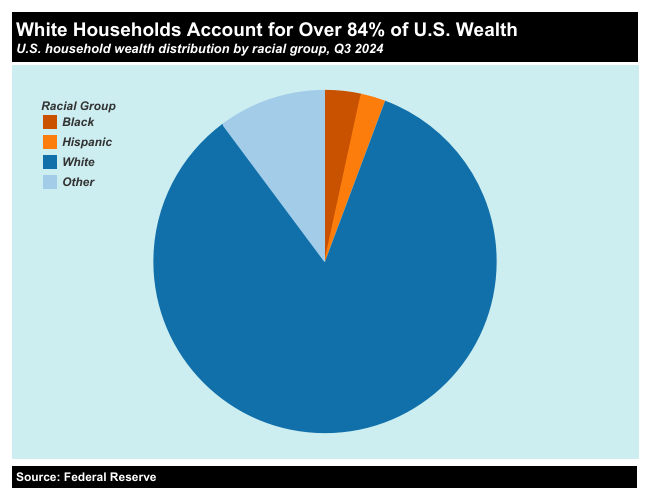
Public policies that favor white Americans and the wealthy have perpetuated both an extreme concentration of wealth and an extreme racial wealth divide. White households, Federal Reserve data show, held 84.2 percent of all U.S. wealth as of the fourth quarter of 2023. They made up only 66 percent of households.
By contrast, Black households held only 3.4 percent and Latinos held only 2.3 percent of national wealth. To achieve Rev. Martin Luther King Jr.’s dream, closing the persistent racial wealth divide, already a matter of social justice, must become a higher economic policy priority. For an interactive version of this chart and more on race inequality, click the link to our Inequality.org Facts section below. |
|
|
Of the Plutocrats, By the Plutocrats, and For the Plutocrats “Every morning,” the billionaire Marc Andreessen smiled a few weeks after Donald Trump’s re-election this past November, “I wake up happier than the day before.”
The stoked Andreessen, with Trump’s re-entry into the White House only days away, must by now be sitting in seventh heaven. He no doubt has plenty of deep-pocket company. We’ve never before had an incoming president as openly committed to stocking his administration with the already super rich. Inequality.org co-editor Sam Pizzigati has more. |
PETULANT PLUTOCRAT OF THE WEEK |
Still Another Billionaire Rushes to Curry Donald Trump’s Favor
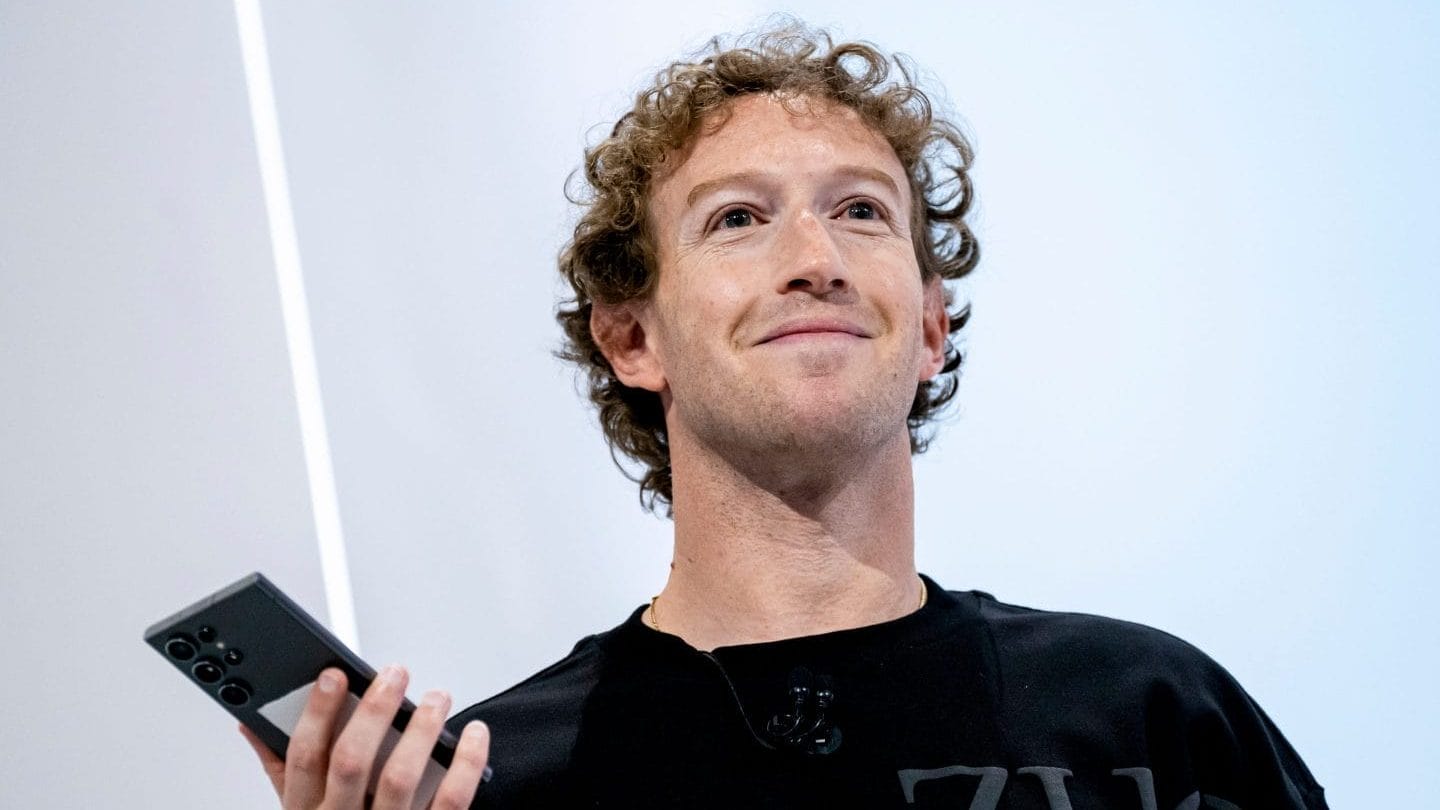
This week’s dour deep pocket: Mark Zuckerberg, the 40-year-old chief exec of Meta, the parent company of Facebook, Instagram, and WhatsApp.
What has Zuckerberg sour: These days, just about anything that irritates Donald Trump seems to irritate Zuckerberg, the world’s third-richest man. Last week he announced that his online empire would be axing its fact-checking team to “dramatically reduce the amount of censorship” on his platforms.
From now on, Zuckerberg pledged, Meta would “work with Donald Trump” and “get rid of a bunch of restrictions on topics like immigration and gender that are just out of touch with mainstream discourse.”
Zuckerberg did his pledging in a video message that captured him wearing a Swiss hand-made watch that retails for $895,500. Zuckerberg’s net worth at the end of last week: $216 billion.
The last word: “Fact-checkers have not been biased in their work,” noted Angie Drobnic Holan, the director of the international body that certifies fact-checkers, after Zuckerberg’s announcement. “That attack line comes from those who feel they should be able to exaggerate and lie without rebuttal or contradiction.” |
|
|
What's new on Inequality.org
Aastha Uprety, The ‘Uber Model’ Comes for Nursing. On-demand nursing is endangering workers and patients alike, a new report finds.
Chuck Collins, Fossil Fuel “Oil-Garchs” Reap Billions in Payback for Trump Support. A new report tracks the monthly wealth of fossil fuel billionaires, who are already being rewarded for investing in Trump's campaign. Chuck Collins, A Discussion on the Viability of ‘Sustainable’ Aviation Fuels. Watch and read about a recent webinar on alternatives to polluting jet fuels. Elsewhere on the web
Robert Kuttner, Blowback, The American Prospect. Estimated firestorm damage cost to L.A. homes: $150 billion. Elon Musk could cover the total cost of that catastrophic damage and still have $300 billion of his own personal fortune left.
Joe Gill, Elon Musk and Peter Thiel: The billionaires fomenting a global race war, Middle East Eye. The common origin story of Donald Trump’s biggest far-right billionaire backers: Both Elon Musk and Peter Thiel grew up in South Africa, where their fathers grew rich in the mining sectors at the core of the apartheid economy.
Rebecca Fishbein, The Trump Administration Will Function as an Oligarchy of Billionaires and Tech Bros, Teen Vogue. Donald Trump’s second administration will be ushering in a grim new form of power. Let’s call it a bro-ligarchy.
Robert Reich, There is little the US can do to constrain Elon Musk. But here are some ideas, The Guardian. This may be the first time so much power rests concentrated in the hands of one unelected megalomaniac.
Sean Murray, World's super-rich have already used their share of carbon for 2025, says Oxfam, Irish Examiner. Top 1 percenters, just ten days into the new year, have already used the same amount of carbon that the world’s poorest 50 percent will take over three years to use.
Grace Blakeley, When billionaires go rogue, it’s time to organize, Good Law Project. Economic policies that fuel inequality do not win elections. Right-wingers have realized they have a much better way to win elections: start culture wars.
Priti Kalsi and Zachary Ward, The Gilded Age and Beyond: The Persistence of Elite Wealth in American History, National Bureau of Economic Research. Having a rich grandparent exponentially increases the likelihood of reaching the top 1 percent.
Samuel Bowles and Mattia Fochesato, What we can learn from the inequality revolution in prehistory, CEPR. Thanks to a culture of “aggressive egalitarianism,” wealth disparities in Neolithic western Eurasia over 5,000 years ago ended up less substantial than the inequalities of more recent millennia.
Enoch Ellis and Siddhu Pachipala, College Can’t Be Only for the Rich, The New York Times. Funding for Pell grants — the largest federal need-based financial aid program — has failed badly to keep up with the costs of attending college. |
|
|
Our research, editorial, and publishing team depends on hundreds of paid subscribers who make monthly gifts. Some give $3 each month; others give $200! All told, this support enables our team to stay focused on identifying causes and solutions to our deep economic inequality. Paid subscribers have contributed more than $20,000 in the past year. Ready to become a paid subscriber? Sign up today. |
|
|
Inequality.org | www.inequality.org | inequality@ips-dc.org Institute for Policy Studies
1301 Connecticut Avenue Ste 600
Washington, DC 20036
United States
Managing Editor: Chris Mills Rodrigo
Co-Editors: Sarah Anderson, Chuck Collins, Bella DeVaan, and Sam Pizzigati |
|
|
|