A weekly newsletter from the Institute for Policy Studies |
|
|
May Day greetings from the Bay! We’re wrapping up our visit to the West Coast to attend the Excessive Wealth Disorder Institute’s first-ever Fixing Philanthropy Summit.
This Summit has brought together thoughtful people from every corner of the philanthropic sector, from the heads of established foundations boldly experimenting with new tactics to directors of scrappy nonprofits and resourceful-yet-fairly-exasperated grantees. We all stand committed to making meaningful change in charitable giving’s status quo — and leveraging our collective power.
The need for charitable change has now become more urgent than ever. With inequality peaking, overextended working charities are doing their best to patch our disinvested social safety net. Meanwhile, 41 cents out of every dollar donated to charity is landing in private foundations or donor-advised funds, the poorly regulated go-betweens shortchanging working charities and our nation’s tax base.
We’ve launched the Donor Revolt for Charity Reform to change all this, to boost payouts and transparency and democratize giving. Is it morally justifiable, as former long-time Wallace Global Fund director Ellen Dorsey asked during the Summit, for foundations to disburse just 5 percent of their assets annually when their endowment returns far surpass that rate? What are we squirreling our acorns away for?
If you want to join the 270 — and counting! — signatories of the Donor Revolt for Charity Reform, we’d love to have you. Or if you, like the vast majority of us, don’t use charitable intermediaries but would like to see philanthropy take more equitable shape, you can join our call to Stop Hoarding Charity Dollars. In solidarity,
Chuck Collins and Bella DeVaan
for the Institute for Policy Studies’ Inequality.org team |
|
|
INEQUALITY BY THE NUMBERS |
|
|
A Southern Organizing Breakthrough that Workers Are Leading
This week’s frontline face: Quichelle Liggins, one of the many workers now campaigning to organize a Mercedes-Benz facility in Birmingham, Alabama. What she’s doing to help create a more equal world: Workers at the facility will be voting on whether to form a union with the United Auto Workers between May 13 and 17. Their workplace could become the second car plant in the same number of months to unionize in the South.
Organizing auto facilities in the South, Marc Bayard of the Institute for Policy Studies and Alabama Rise’s Dev Wakeley noted for Inequality.org this past week, could inject a real needed spark into local economies. “We need a New South economic structure based on fairness and equity,” Bayard and Wakeley point out. “Organized labor is an essential partner in that mission.” What makes equality so important to her: At a recent Labor Notes conference, Liggins spoke to her own turning point, the moment she decided to get involved in organizing to improve the working conditions she and her co-workers face.
“I had scheduled half a vacation day, my son was in the Little League playoffs,” she explained. “I got my time approved, but when I went to leave, there was no one there to relieve me. I had to leave anyway.” The next Monday morning, Liggins found herself called into her manager’s office. She was told she needed to understand that her job trumps her family. “I’m now getting back at him,” Liggins noted, “in a different way.”
|
|
|
Don't Let the Digital Divide Widen: The Case for Affordable Connectivity
The federal Affordable Connectivity Program has been a huge success story. The effort, since its launch in 2021, has provided over 23 million families with free or reduced-rate Internet access. But Congress has yet to renew this key initiative, and the program, unless renewal comes, will expire next month.
That expiration wouldn't just put Internet access out of the reach of millions of families. Expiration would likely end the building of broadband infrastructure in the places that need that infrastructure most.
Internet providers, notes Claude Cummings Jr., the president of the Communication Workers of America, too often overlook low-income and rural communities when they determine where to upgrade and expand high-speed service. These providers, he has just noted on Inequality.org, see these communities as a customer base that can’t afford to pay the going rate.
Letting the Affordable Connectivity Program expire, Cummings sums up, would rob us of one of our best tools for bridging the digital divide. |
|
|
Some People Have All the Luck — and Far Too Much Wealth
Becoming fabulously rich has always taken much more than hard work and talent. Getting rich has always taken oodles of luck. But our richest have always tended to downplay the impact of sheer serendipity. They would rather we credit the wealth of our wealthiest to their superior work ethic and wisdom. Grand fortunes, they insist, do not in any significant way depend on the good fortune of being in the right place at the right time. The rich have earned their wealth. They deserve every bit of it. Or do they? Inequality.org co-editor Sam Pizzigati has more.
|
PETULANT PLUTOCRAT OF THE WEEK |
A Hedge Fund Billionaire Keeps Playing the Same Old Dirty Record
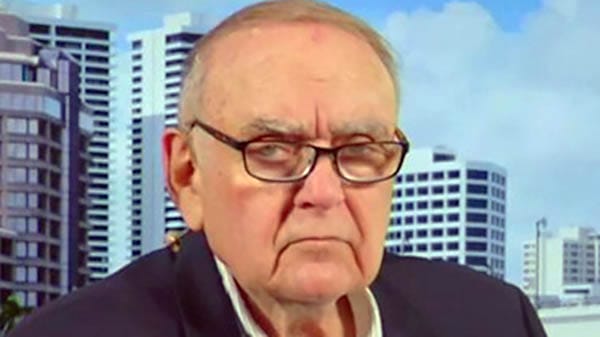
This week’s dour deep pocket: Leon Cooperman, the 81-year-old “Wall Street legend” who built up the Goldman Sachs asset management division before launching his own hedge fund in 1991.
What has him sour: the Columbia University students demonstrating against the Israeli government assault on Gaza that has left over 34,000 dead. “These kids” have gone “out of control,” the billionaire Cooperman, an alum of Columbia’s business school, declared last week.
“They have,” he added, “sh-- for brains.”
Cooperman, in years past, has blasted Senator Elizabeth Warren for “sh---ing on” the American dream — by calling for a wealth tax — and assailed Hillary Clinton for pointing out that “hedge fund managers pay a lower tax rate than truck drivers or nurses.”
“I don’t need anybody,” Cooperman back then sneered, “crapping all over what I do for a living,”
The last word: The protest wave on Gaza, one Columbia student has told CNN, has always been “about highlighting the disproportionate response the Israeli regime has unleashed with no regard for international law.” Added the student: “These students are not the ones with ‘sh--- for brains,’ they’re simply trying to clean up the violent mess previous generations have left for our world today.”
|
|
|
What's new on Inequality.org
Heidi Shierholz, Looking for a Better Paying Job? Good News. The Biden administration is cracking down on the “noncompete clauses” that employers use to bar their workers from finding better opportunities.
Sarah Anderson, House Progressives Unveil 2025 Agenda to Inspire Action for a More Equitable Nation. With over 100 members, the Congressional Progressive Caucus has a track record of pushing the policy debate towards bold solutions.
Elsewhere on the Web
Svenja Schulze, Fernando Haddad, Enoch Godongwana, María Jesús Montero, and Carlos Cuerpo, Ministers of Germany, Brazil, South Africa, and Spain: why we need a global tax on billionaires, Guardian. Higher taxes on the rich remain the key to successfully confronting both global inequality and the climate crisis.
Elizabeth Pancotti, To Put Trickle-down Economics to Rest, We Need a New Tax Code, Roosevelt Institute. America’s tax reform debate next year need not be confined to the boundaries of the expiring 2017 Trump tax cut. We need to do more on taxes than simply return to our pre-2017 tax status quo. Gil Duran, The Tech Baron Seeking to ‘Ethnically Cleanse’ San Francisco, New Republic. Billionaires are applauding a plan that would have our plutocrats establish new sovereign territories.
Brakeyshia Samms, Tax History Matters: A Q&A with Professor Andrew Kahrl, Author of ‘The Black Tax,’ Institute on Taxation and Economic Policy. How the U.S. property tax system and its structural defects have led to widespread discrimination against Black Americans.
Arielle Samuelson, Nobel Prize-winning economist calls for climate tax on billionaires, Heated. At the recent Group of 20 summit, Esther Duflo called for taxing the world’s richest — and the corporations they run — to raise funds for the nations the climate crisis is impacting the most.
Robert Reich, Elon Musk’s grotesque distortion of capitalism, Substack. Musk is demanding the largest pay package in corporate history while at the same time he’s extorting shareholders and firing workers. Tesnim Zekeria and Judd Legum, A historic victory for unions, Popular Information. Billionaire Charles Koch is spending a fortune trying to frustrate the UAW organizing drive across the nonunion South.
Lauren Irwin, Billionaire tax to bolster Social Security popular in swing states, The Hill. More than three-fourths — 77 percent — of voters across seven key swing states support raising taxes on billionaires to extend Social Security coverage.
Pam Martens and Russ Martens, Billionaire-Owned Media Has Gone Full Throttle to Save Fellow Billionaire Jamie Dimon, Wall Street on Parade. If you’ve been getting your info about the soundness of Wall Street megabanks from billionaire-owned media, you might want to rethink your sources.
Felicity Bradstock, What Does Billionaires Dominating Space Travel Mean for the World? OilPrice.com. Concerns are rising about the geopolitical implications of billionaires holding immense power in space. |
Nick Hanauer and Nick Romeo, How to Build a Just Economy, Pitchfork Economics. How worker cooperatives, public-option marketplaces, and job guarantee programs could help build a more equitable tomorrow. |
|
|
The world’s wealthiest country hosts numerous communities that have been poor for generations, from parts of Appalachia and the Mississippi Delta to the southern border and Chicago’s South Side. A new Economic Innovation Group report finds that people of color are far more likely to live in “persistently poor” communities — defined as those with poverty rates of 20 percent or higher for at least 30 years — than white Americans. For an interactive version of this chart and more on race and inequality, check out the link below.
|
|
|
Inequality.org runs on the loving labor of a small team of researchers, writers, and advocates. More than anything, all of us involved believe deeply in the power of everyday people to come together to accomplish something big! We’ve built this operation around our weekly newsletter, and our paid subscribers make this newsletter possible with monthly donations. Join the ranks of our paid subscribers: Start today. |
|
|
Inequality.org | www.inequality.org | inequality@ips-dc.org Institute for Policy Studies
1301 Connecticut Avenue Ste 600
Washington, DC 20036
United States
Managing Editor: Chris Mills Rodrigo
Co-Editors: Sarah Anderson, Chuck Collins, Bella DeVaan, and Sam Pizzigati |
|
|
|