A weekly newsletter from the Institute for Policy Studies |
|
|
The Pope’s historical inequality fight,
the rich who love to pollute,
and an ousted AI CEO |
|
|
|
Here at Inequality.org, we’ve welcomed and followed closely the U.S.-born Pope Leo XIV’s reflections about extreme wealth inequality. At a time of “peak oligarchy,” the need for people of faith to speak prophetically about wealth and its distribution — as our close friend Rev. William Barber II and the Poor People’s Campaign have been doing — could hardly be any greater.
All our great faith traditions clearly articulate prohibitions on wealth idolatry and hoarding and exhort the faithful to deploy wealth for the common good. Senator-elect James Talarico drew from these teachings in his successful run in Texas.
Leo XIV, in his November pastoral, prays for the “proper use of wealth” and “not succumbing to the temptation of selfishness.” May wealth, he urges, “always be put at the services of the common good.” Could someone please fly those sentiments on a banner over the World Economic Forum in Davos this January? Born in Chicago as Robert Prevost, Leo XIV chose a name that invokes the papacy of Leo XIII, the Pope during the savagely unequal original Gilded Age.
Leo XIII authored the encyclical Rerum Novarum in 1891, a landmark treatise on the condition of the global working class, the rights of labor, and the need for a living wage. I’m a Catholic social teaching nerd and dove into that encyclical in my 2008 book, The Moral Measure of the Economy.
Leo XIV is following in Leo XIII’s footsteps. He’s articulating moral teachings for our new era of AI and extreme wealth inequality. As he noted in closing his latest pastoral prayer: “Make us witnesses of a wealth transformed into service and mercy.” We can all say amen to that. Chuck Collins
for the Institute for Policy Studies Inequality.org team
|
|
|
|
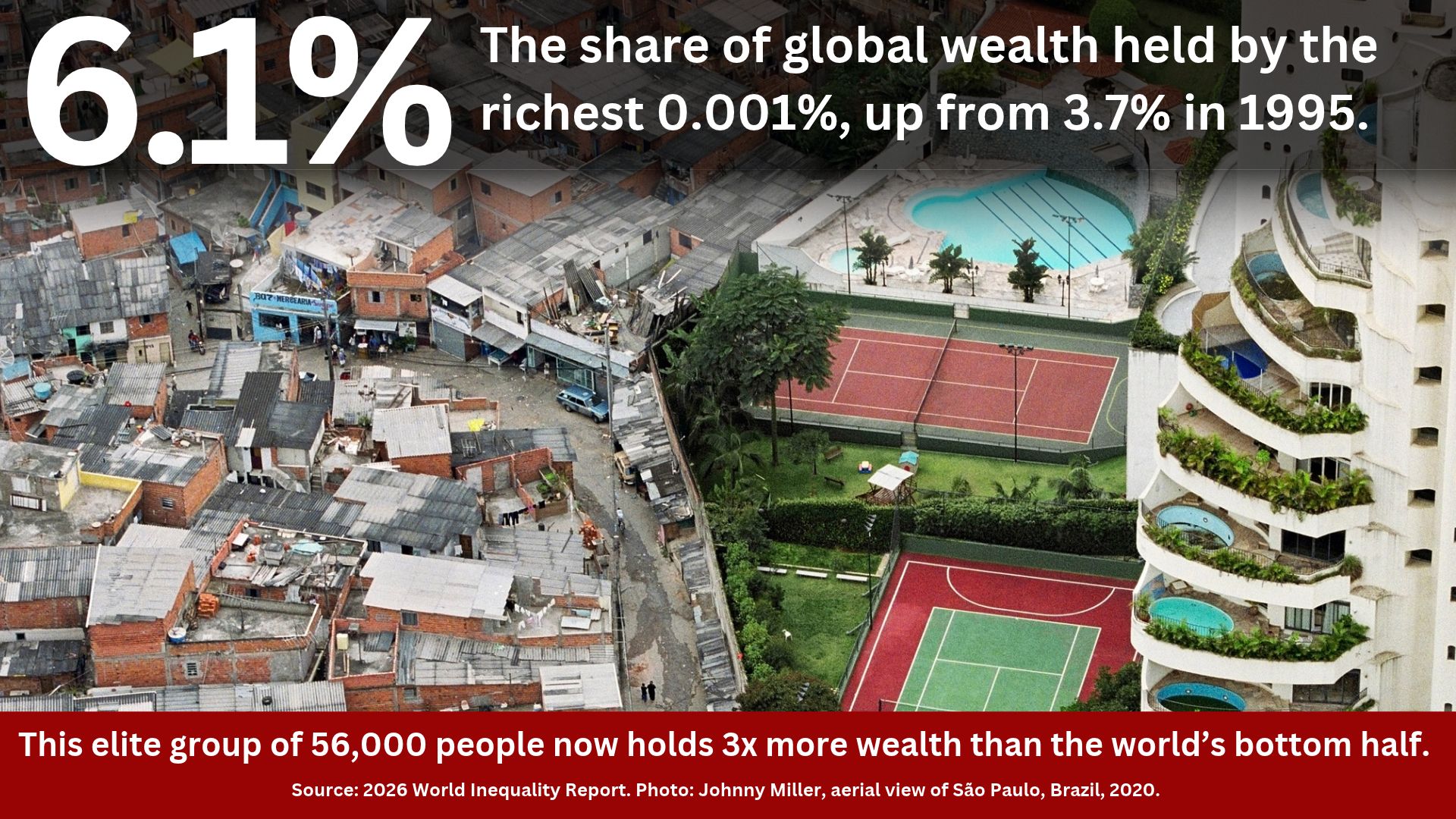
INEQUALITY BY THE NUMBERS |
Let’s Corral the Big Tech Highwaymen and Center Women in AI Regulation Men chasing their own personal jackpots, with little regard for the social costs, are dominating the new unregulated technological frontier of AI, just as they dominated the lawless American Wild West of the 19th century.
That reality puts women at particularly high risk. With the expansion of AI, we’ve seen an exponential growth in online misogyny and violence. One glaring example: Elon Musk recently succeeded in getting a federal judge to strike down a Minnesota law that would have been the first state measure to ban the so-called “nudification” apps and their fake AI-generated nude images.
AI technologies also amplify gender bias in workplaces and health systems. Female-dominated occupations, the International Labor Organization reports, have been twice as likely to be exposed to generative AI as male-dominated occupations and five times more likely to be targets for automation.
“It’s past time to put the digital economy at the service of people, through binding laws, regulations, and sanctions for harms,” writes Bama Athreya of the International Center for Research on Women in a new commentary for Inequality.org. Click below to read her ideas on how governments around the world should collaborate to rein in the Big Tech highwaymen. |
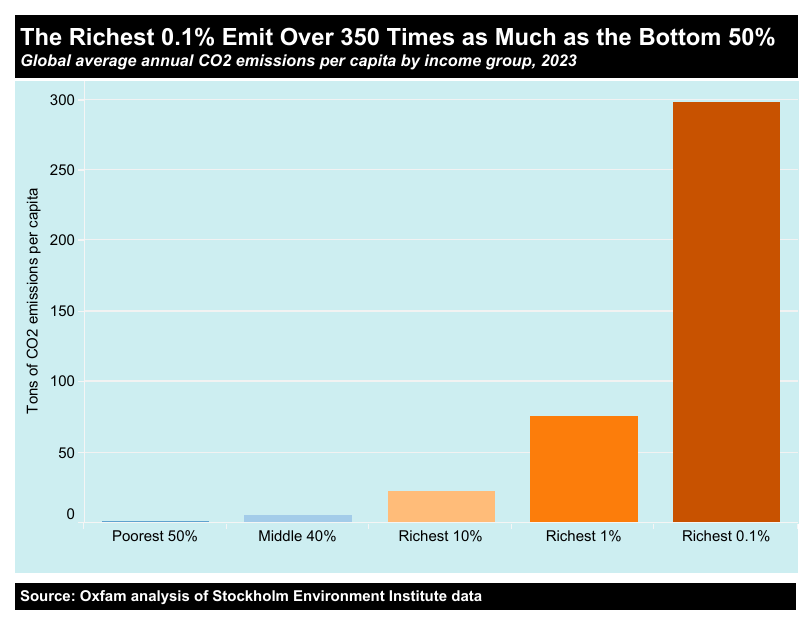
World leaders are now gathering in Turkey’s Antalya for the 2026 United Nations Climate Change Conference. At this COP31, cutting emissions will be sitting at the heart of the global agenda. But tackling climate change raises more than environmental issues. Climate change has become a prime inequality concern.
Oxfam research shows that the average top 0.1 percenter emits 298 tons of carbon dioxide per year, compared with just 0.8 tons for someone in the bottom half of the income distribution. For an interactive version of this chart and more on global inequality, click the link to our Inequality.org Facts section below. |
A Real-World End to the Roguish Reign of America’s AI King
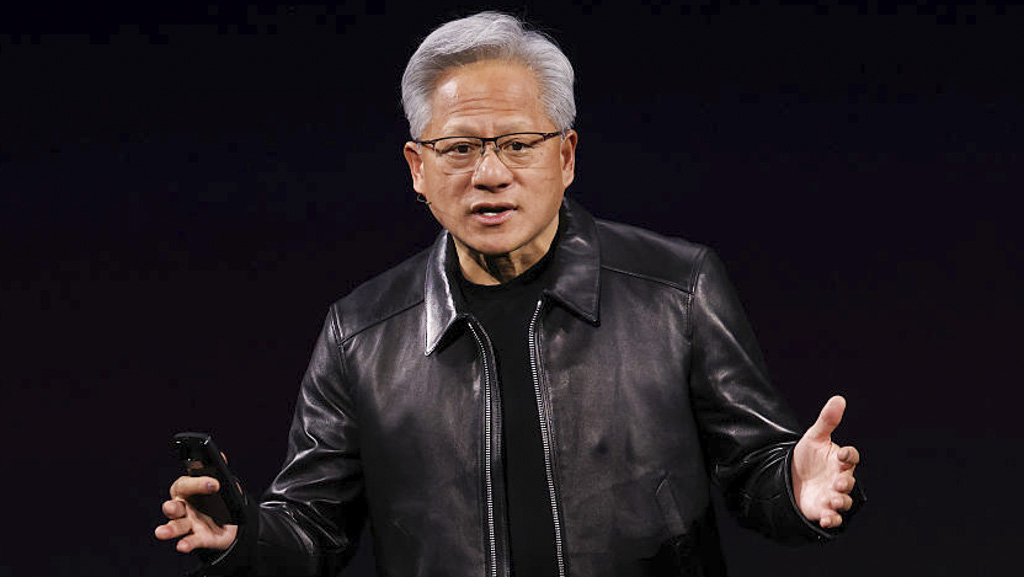
This week’s dour deep pocket: The mega-billionaire Jensen Huang, the just-canned CEO of Nvidia, the corporate colossus that holds about 90 percent of the global market for advanced AI chips. The data centers that use those chips have over the past two years driven half of the growth in U.S. GDP.
What has Huang sour: Until last week, this “Godfather of AI” ruled over the global “circular financing” that had turned Nvidia into Wall Street’s most valuable company. Huang’s Nvidia soared to the AI summit selling chips to tech firms, investing in those same firms, and renting back the product they produced, making Nvidia, in effect, AI’s top supplier, investor, and customer “all at once.”
Huang basked in the cheering for his carefully crafted public image as a hands-on exec never too busy to share credit. But behind that “humble” image lay the reality of an imperial CEO whose harangues at his 60 direct reports “could last an hour or more.” His temper had his underlings laughing sycophantically in his presence and muttering outside it, always staying silent about the Huang marital infidelity that had become “common knowledge” within high staff circles.
After his sacking, Huang at first struck a penitent pose, “using phrases like ‘whatever.’” Days later, with his Silicon Valley allies plotting his comeback, Huang announced he’d be “honored” to return. The last word: What can we learn from the Huang horror? Maybe, The American Prospect’s Ryan Cooper muses, that “it simply should not be the case that one horny guy in a leather jacket is the only one who can build a computer chip.” |
|
|
|
What's new on Inequality.org
Yolander Millin, Debt and Austerity Are Wrecking Zimbabwe’s Health System. Spending restrictions imposed from abroad are starving the nation's public health system, leaving it at the whim of donors. Haris Khan, How IMF Austerity Is Pricing Pakistani Students Out of University. Debt payment obligations are forcing Pakistan to cut critical scholarships.
Elsewhere on the web
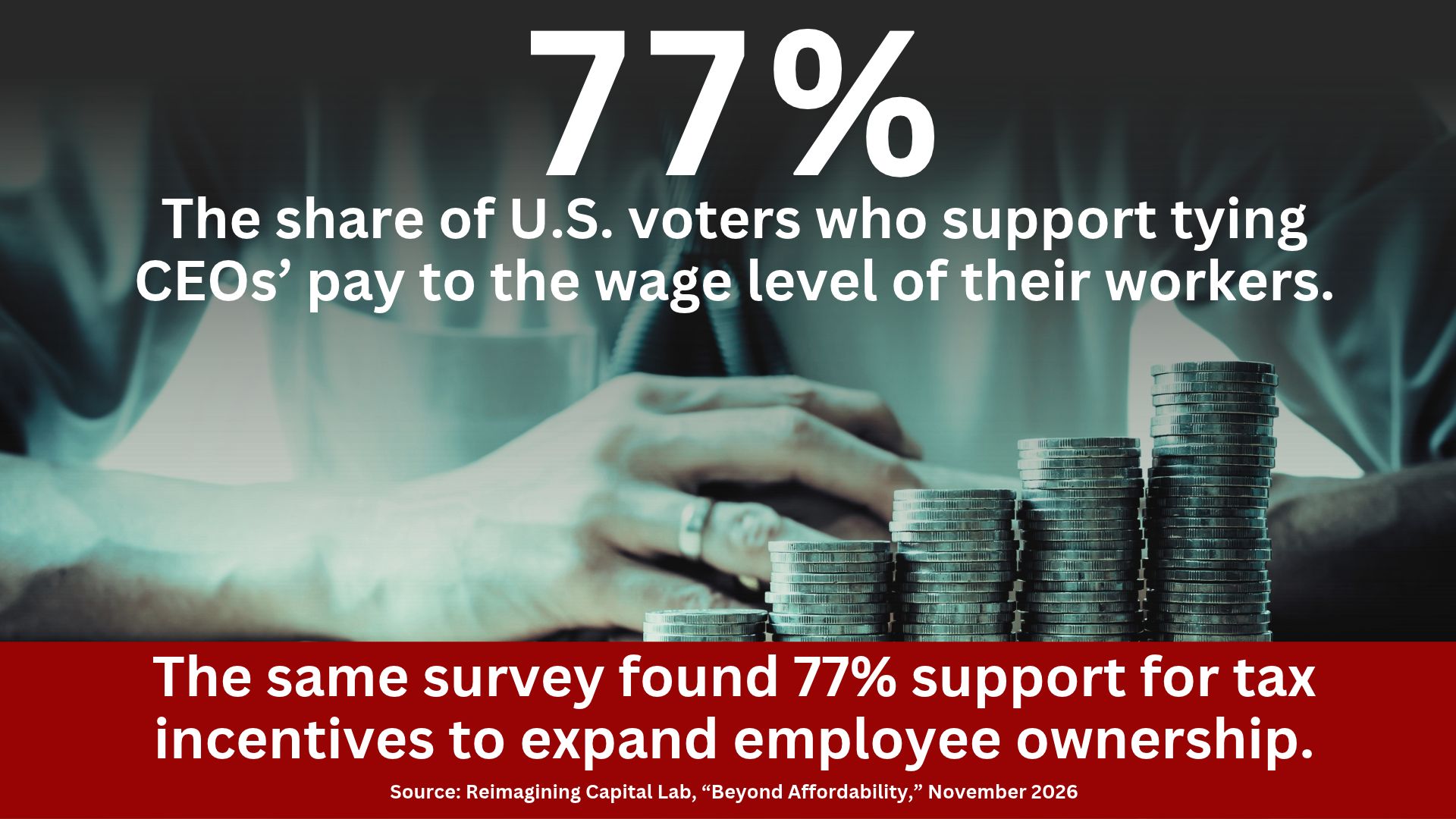
Brian C. Johnson, Beyond Affordability: Moving From A New Gilded Age To An Era of Democratic Capitalism, Reimagining Capitalism Lab. A case for a reorganizing capital to serve the people.
Sarah Anderson and Steve Silberstein, Taxing Corporations With Huge CEO-Worker Pay Gaps is Good For Workers and Businesses, Portland Mercury. In 2016, Portland adopted the world’s first tax penalty on firms that pay their CEO over 100 times their median worker pay. A pending new move to strengthen that levy would steeply hike the tax penalty on firms with ratios over 50 to 1.
Benjamin Schiffrin, The SEC — Really the Shareholder Exploitation Commission — Proposes Hiding Executive Compensation Information from Investors, Better Markets. CEO pay has increased 20.4 times faster than worker wages over the last year. Yet the Trump administration now wants to make is easier for corporations to hide how much their executives are making.
Naomi Klein, ‘The many v the money’ should frame the next US Congress, Guardian. If Democrats want to keep the blue wave going into 2028, they have to take on the billionaire class.
Bob Lord, More Tax Flight Deception from the Washington Post Ed Board, Substack. The Washington Post regularly runs intellectually dishonest editorials urging readers to oppose measures that might meaningfully reduce the net worth of Post owner Jeff Bezos. A look at the paper’s latest such effort.
Heidi Shierholz and Josh Bivens, Wages, Inequality, and the Roots of America’s Affordability Crisis, American Educator. The post-1979 period in the United States has seen an assault on worker-friendly policies, a blitz that has led directly to a steep rise in the incomes of America’s richest.
Hamilton Nolan, Push the National Wealth Tax Right Now, How Things Work. Why do we so need to go after oligarchic wealth stashes? Simple. The existence of those enormous stashes is creating a power imbalance large enough to destabilize our entire democracy.
Sarah Ellison and Adam Wren, The Murdoch Billions Behind the Democrats’ Centrist Turn, Politico. Media magnate Rupert Murdoch’s estranged son and his wife see their massive political giving as “radical centrism.” They’re engineering a pro-business politics more to their liking. Rupert would recognize the strategy, if not the politics.
Rebecca Riddell, The California billionaire wealth tax was voted down. Now what? Oxfam. A well-funded opposition — fueled by some of the wealthiest billionaires in the world — raised more than $330 million to stop the initiative.
Aidan Davis and Dylan Grundman O'Neill, Colorado Voters Ditch Flat Tax, Opt to Tax the Rich and Corporations, Institute on Taxation and Economic Policy. The state’s flat 4.4 percent income tax will soon morph into progressive tax rates that range from 3.7 percent on modest incomes to 8.4 percent on the state’s highest.
Vojtech Sverák, Why we should blame the super-privileged polluter elite for climate change, Equals. Some deep musings on how we should morally assess the activities of our ultra-rich polluter elite. |
|
|
|
Monthly Donors Make This Read Possible! |
Inequality.org, an Institute for Policy Studies nonprofit project, depends on donations to keep this newsletter free and available to all readers. Your monthly gifts make all the difference in the world, whether you can donate $3 or $300 a month. Ready to give a few bucks a month? Sign up today. |
|
|
|
Inequality.org | www.inequality.org | inequality@ips-dc.org Institute for Policy Studies
1301 Connecticut Avenue Ste 600
Washington, DC 20036
United States
Managing Editor: Chris Mills Rodrigo
Co-Editors: Sarah Anderson, Chuck Collins, Bella DeVaan, Reyanna James, and Sam Pizzigati |
|
|
|
|