A weekly newsletter from the Institute for Policy Studies |
|
|
The economic impacts of ICE's Minnesota assault, a labor first at Walmart, and coming together against the rich
|
|
|
|
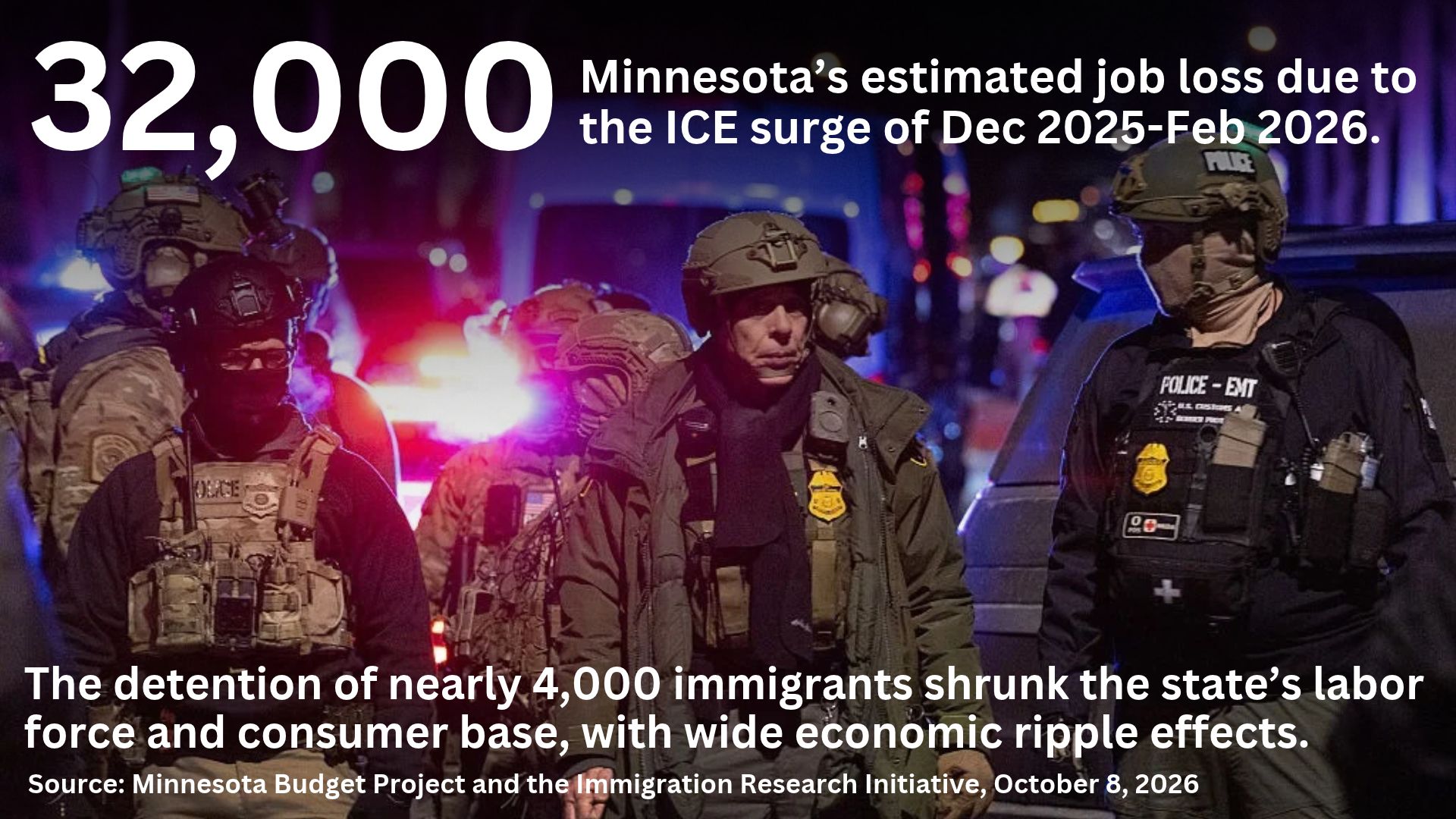
I'm writing to you all from Minnesota, a state still reeling from the economic effects of this past winter’s ICE surge.
A new report estimates that Minnesota has 32,000 fewer jobs today than the state would have had without the negative ripple effects of massive ICE detentions. Minneapolis municipal officials have calculated that the aggressive ICE actions have cost the area $700 million worth of economic activity.
I could see these effects at El Tapatio, a restaurant in the small town of Willmar where four ICE agents had lunch last January 14 and then returned, after closing time, to arrest the two owners and a dishwasher. I found this once-lively Mexican cantina nearly empty when I stopped by for dinner last weekend.
Meanwhile, billionaire Richard Uihlein, whose Uline business supply firm has relied heavily on Mexican labor, has donated nearly $14 million to support the Republican candidate for Minnesota governor. Uihlein’s huge gift has made the 2026 gubernatorial race the most expensive in state history — and we've still got more than two LONG weeks to go.
Hang in there everyone! Sarah Anderson
for the Institute for Policy Studies Inequality.org team |
|
|
|
INEQUALITY BY THE NUMBERS |
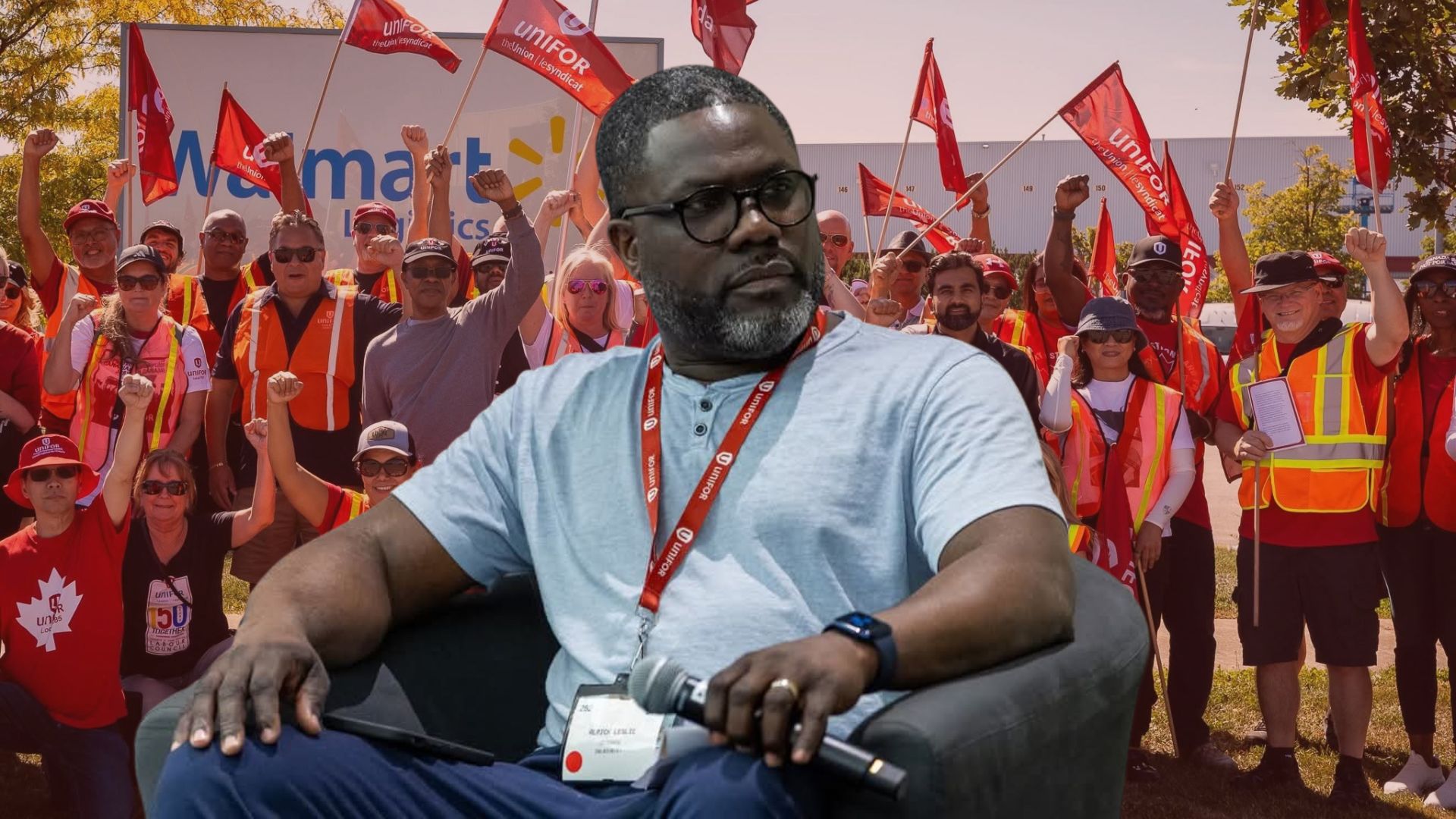
Winning the First Union Contract at Walmart in North America This week’s frontline face: Alrick Leslie, a noncompliance clerk at the Walmart Regional Distribution Center in Mississauga, Ontario and chairperson for the warehouse’s trailblazing union.
What he’s doing to help create a more equal world: Leslie and his colleagues ran an incredibly impressive union organizing campaign at a company infamous for adhering at all costs to an anti-union playbook.
Leslie and his 800 or so co-workers in Ontario don’t rate as the first workers at Walmart to gain bargaining rights. But they have become the first in North America to actually secure a contract. What happened to the others? Walmart crushed their bargaining campaigns, sometimes before they even started.
What makes this fight so important: The first contract that Leslie’s local bargained won the approval of 93 percent of the facility’s workers. Among the contract gains: a grievance procedure and full wage parity with all other Walmart facilities in Canada. To stall union organizing efforts, Walmart had previously given every facility in Canada — except the Mississauga center that had unionized — a pay bump.
The new contract also includes a back-pay lump sum to make up for the raise Walmart illegally withheld from the Mississauga workers. |
Beauty Does Not Lie in the Eyes that Behold the ‘One Big Beautiful Bill’
Almost ever since Donald Trump signed his “One Big Beautiful Bill” into law on the Fourth of July last year, Kristen Crowell, the executive director of Families Over Billionaires, has been traveling the nation to better understand how that legislation is impacting average Americans.
The short answer: not well. Across the 22 states she has visited, Crowell has found people who were already struggling to make ends meet now having to bear cuts to social services that are only making their situation worse. But Crowell has also encountered cause for optimism.
“Over the last 15 months, I’ve watched people without enough food share what they have,” she notes in a new Inequality.org appraisal. “I’ve watched parents carrying unimaginable grief fight for other people’s children. I’ve watched people with every reason to give up keep showing up for one another.” Her conclusion? The great divide shaping American politics has become “the very rich versus everyone else.” |
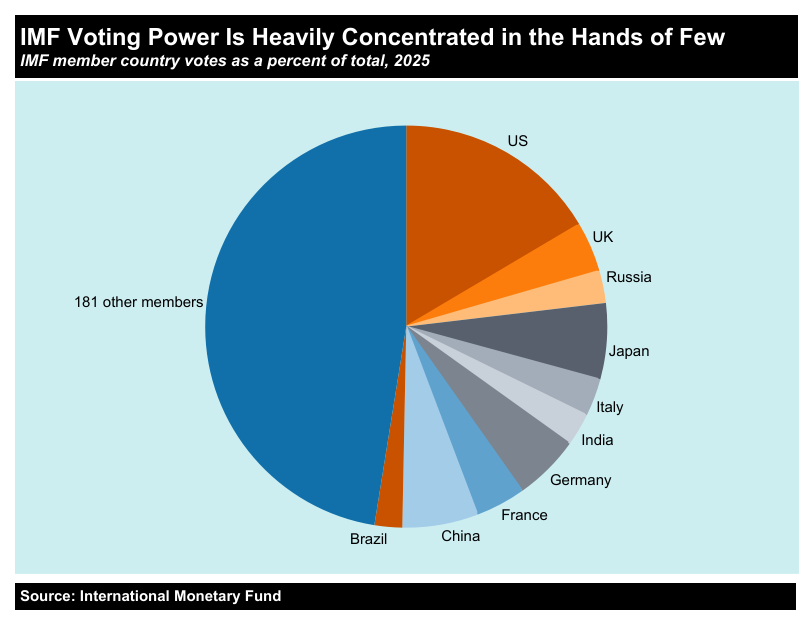
As the International Monetary Fund and World Bank hold their annual meetings in Bangkok, Thailand, austerity once again looms large on the agenda. IMF programs often require countries to cut public spending, weakening in the process safety nets and placing added burdens on nations and people already struggling under the weight of global inequality.
These demands reflect a deeper imbalance in the global economic system: The countries most affected have the least say in the institutions shaping their policies. Despite accounting for just 4 percent of the world’s population, the United States holds nearly 17 percent of IMF voting power. Meanwhile, more than 180 developing countries together hold less than half of the IMF votes.
For an interactive version of this chart and more on global inequality, click the link to our Inequality.org Facts section below. |
|
|
|
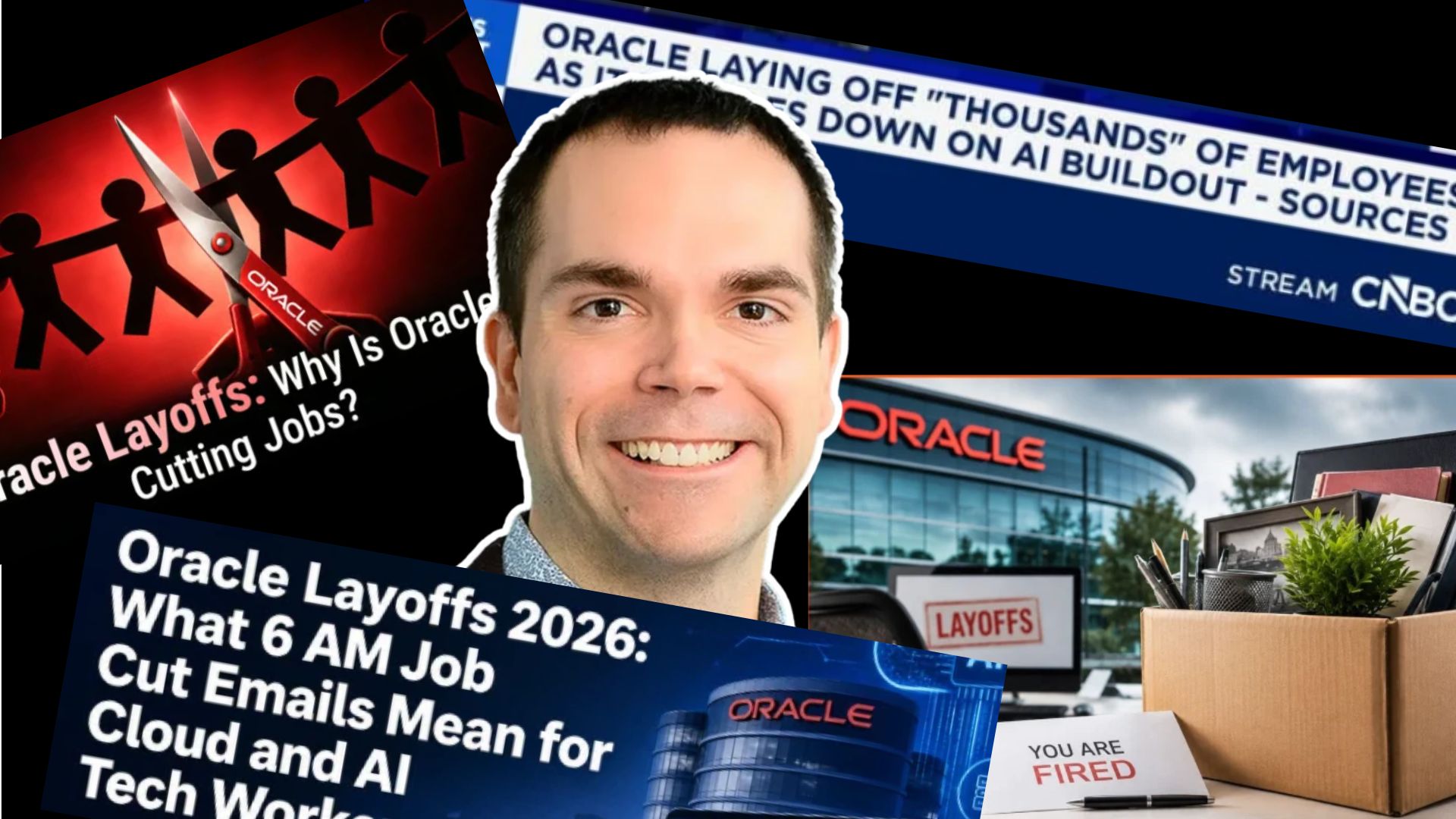
This week’s overpaid CEO: Oracle Co-CEO Clay Magouyrk.
How he’s driving inequality: Magouyrk’s total compensation for fiscal 2026 came to $627 million, a staggering 6,623 times Oracle’s median pay. That’s a wider pay chasm than at any S&P 500 corporation except Elon Musk’s Tesla.
Magouyrk’s huge award, mostly in stock options, came as he was taking a chainsaw to Oracle’s workforce. In the 12 months leading up to May 31, the company’s employee count shrunk by 21,000, or 13 percent. Oracle’s execs acknowledge that they made these cuts to help pay for massive investment in AI infrastructure and data centers. The tech giant has taken on $48 billion in debt to finance its huge AI gamble.
The last word: Oracle’s proxy statement claims that Magouyrk’s nine-figure paycheck will prevent rivals from poaching Magouyrk — reinforcing the view that the man in the corner office almost single-handedly creates corporate value. Oracle’s thousands of laid-off employees might have a different point of view. |
|
|
|
What's new on Inequality.org Lena Simet, AI Has a Labor Problem. The World Bank is bullish on AI. Experiences in the gig economy give us good reason to doubt that confidence absent strong regulations. Julian Villa, New York Is Getting Richer. Most New Yorkers Aren’t. Data shows that New York City has grown richer since the pandemic, but the gains have flowed overwhelmingly to the top.
Take a reading break and join Shelterforce — and panelists, Margy Brown of Urban Homesteading Assistance Board, Deyanira Del Rio of New Economy Project, Cea Weaver of New York City Mayor’s Office to Protect Tenants, Ben Wetzler of Open New York, and Barika Williams of the Association for Neighborhood & Housing Development — next Wednesday, October 21 at 3 p.m. ET for a free, in-depth 90-minute webinar conversation on early lessons from Mamdani's housing agenda. Reserve your spot here.
Elsewhere on the web
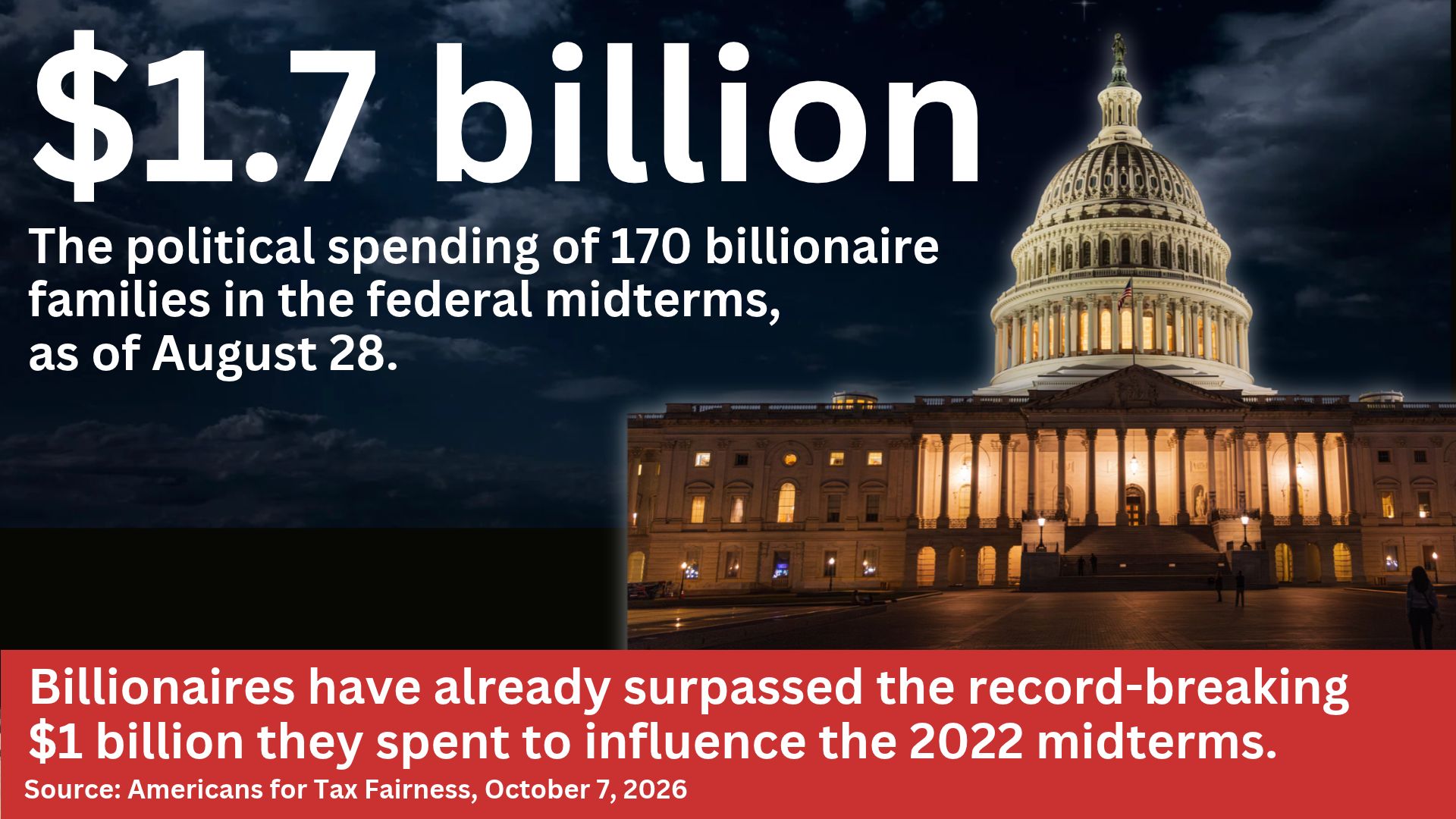
Jake Johnson, 172 Billionaire Families Have Spent Record $1.7 Billion on 2026 Midterms So Far, Common Dreams. Billionaires are systematically buying up our democracy.
The Oligarchy’s Bench: Ten Federal Judges Rewriting the American Economy, Demand Justice and Groundwork Collaborative Research. Over four decades, quietly and deliberately, a new cohort of pro-corporate judges has remade the federal bench. A once small-“c” conservative institution has become a shameless protector of the Oligarchy with a capital “O.”
Paul Krugman, Elon Musk Shows Us Why Oligarchy is a Danger, Substack. Billionaires pose a much bigger threat to democracy than the merely rich.
Vasili Varlamos, City council debates higher taxes on big corporations, expanding small business exemptions, KATU. In Oregon’s Portland, city councilors are pushing to raise their city’s groundbreaking tax on CEO pay over 100 times median worker pay.
Steve Wamhoff, Impact of Key Trump Policies on Taxes and Costs: National and State Estimates, Institute on Taxation and Economic Policy. Trump policies during his second term have had the net effect of raising taxes and costs for the typical American in every income group except for the richest 1 percent.
William Lazonick and Matt Hopkins, NVIDIA’s $150-Billion Protection Payoff: How much looting of the corporate treasury will Jensen Huang do to protect his job? Institute for New Economic Thinking. Behind the AI boom lies a system that rewards executives and investors while starving productive investment.
Dean Baker, Crazy Lies from the Anti-Tax Gang, Beat the Press. Our super rich can get enormously inventive when facing attempts to tax their good fortune.
Alex Clark, ‘The crime fiction I’m interested in is political’: Ian Rankin on his new novel about the super-rich, The Guardian. This British novelist takes inspiration from the 1970s American TV detective Columbo, who came into rich people’s lives and tore them apart, without them even knowing what he was doing.
Arthur MacEwan, From Nixon’s wage controls to today’s interest rate hikes, the fight against inflation has targeted labor, Dollars & Sense. Tax cuts for the wealthy and military spending go conveniently ignored. |
|
|
|
Monthly Donors Make This Read Possible! |
Inequality.org, an Institute for Policy Studies nonprofit project, depends on donations to keep this newsletter free and available to all readers. Your monthly gifts make all the difference in the world, whether you can donate $3 or $300 a month. Ready to give a few bucks a month? Sign up today. |
|
|
|
Inequality.org | www.inequality.org | inequality@ips-dc.org Institute for Policy Studies
1301 Connecticut Avenue Ste 600
Washington, DC 20036
United States
Managing Editor: Chris Mills Rodrigo
Co-Editors: Sarah Anderson, Chuck Collins, Bella DeVaan, Reyanna James, and Sam Pizzigati |
|
|
|
|