A weekly newsletter from the Institute for Policy Studies |
|
|
A super polluter party, houseplant growers deserve more, and Dollar General’s don
|
|
|
|
The Monaco Yacht Show begins today, and, sad to say, I’ll once again be missing this annual gala. I guess I’ll just have to console myself with a kayak paddle.
If you didn’t think a parade of polluting super yachts was bad enough, feast on this: Hundreds of billionaires and centi-millionaires will be flying their private jets into the tiny tax haven of Monaco to take in this yachting extravaganza. These super-emitters bear a wildly disproportionate responsibility for the burning up of our planet. We’ll be tracking who’s flying in on the Institute for Policy Studies' Private Jet Emissions Tracker.
We’re also teaming up with French activists from Nice, not far from Monaco, to protest all this private jet excess. Together, we’re calling on the Prince of Monaco to cancel his nation’s annual yachting spectacle. The world has had enough with these global carnivals of profligate consumption.
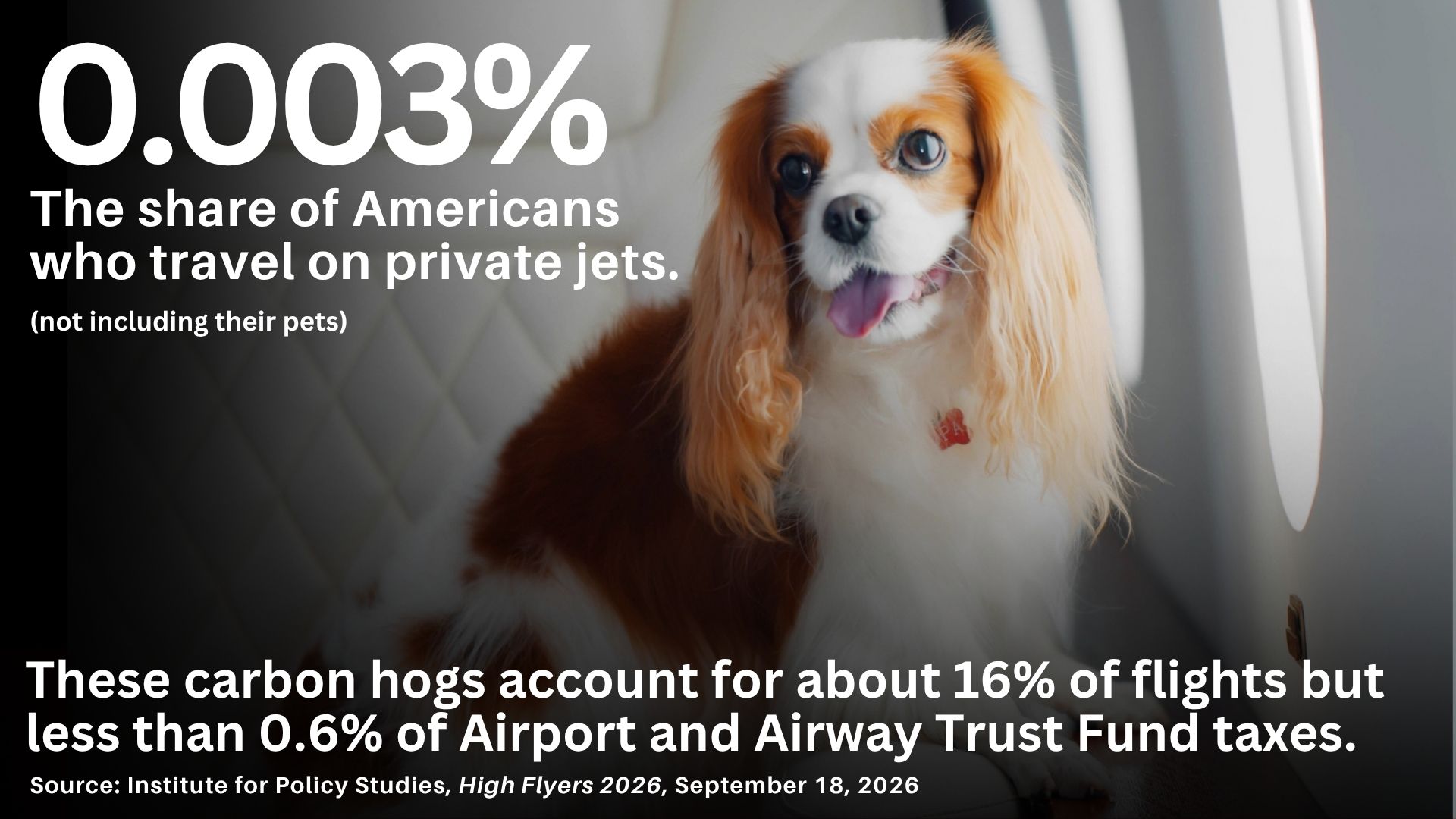
To help spotlight that consumption, we’ve just released a new report, High Flyers 2026: The High Cost of Private Jet Excess, that’s gained some great coverage in the Guardian, Fast Company, and a host of other outlets. High Flyers 2026 details the multiple ways that U.S. taxpayers and commercial travelers are subsidizing the collectors of luxury private jets.
What's the best way to end the subsidizing of private jets, super yachts, and the pollution excesses of our billionaires? We can start by eliminating their massive tax breaks. Chuck Collins
for the Institute for Policy Studies Inequality.org team |
|
|
|
INEQUALITY BY THE NUMBERS |
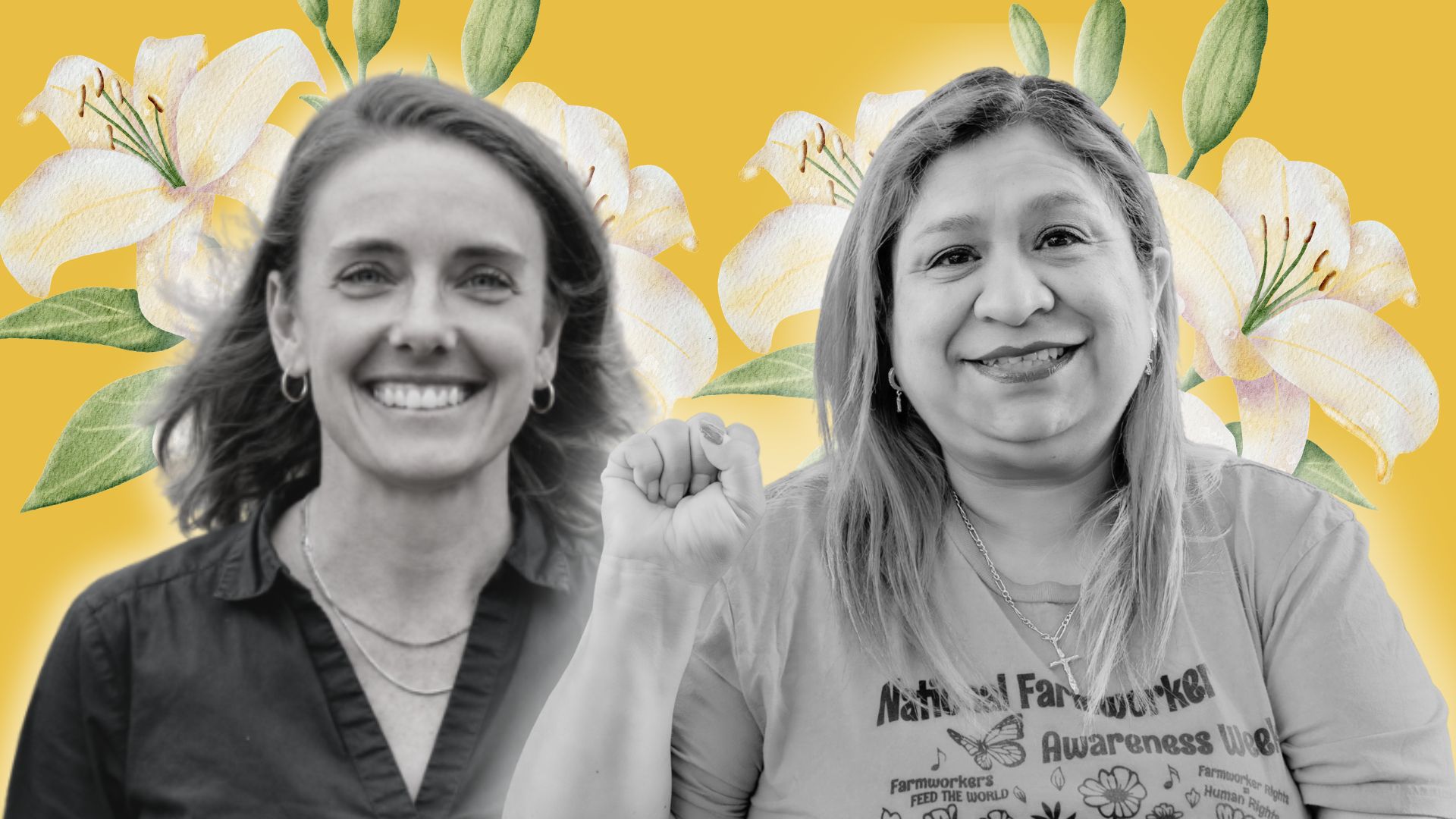
Demanding Dignity for the Workers Who Grow Our Houseplants This week’s frontline faces: Kathleen Wood and Elizabeth Rodriguez of the National Farm Worker Ministry, a group that has spent more than five decades organizing people of faith and conscience to support worker justice.
What they’re doing to help create a more equal world: Wood and Rodriguez are supporting a campaign to improve conditions for houseplant nursery workers. In a just-published op-ed for Inequality.org, the pair admit they didn’t know about the harsh working conditions behind sacred plants like Christmas poinsettias and Easter lilies until well into their adulthood.
Houseplant nursery workers, Wood and Rodriguez note, “spend long hours in intense heat, often for poverty-level wages.” In fact, in Miami-Dade County, over 20 percent of these workers have labored for under the minimum wage.
The Miami-based organization WeCount!, a National Farm Worker Ministry partner, is now leading a campaign targeting Costa Farms, the top U.S. houseplant producer. The campaign is calling on Costa to adopt a high-road code of conduct and agree to independent monitoring and enforcement.
What makes this fight so important: “As people of faith and conscience,” Wood and Rodriguez explain, “we believe our role is to listen when workers speak about the conditions they face, stand alongside them as they organize for change, and use our own voices to call for the justice and dignity they are demanding.” |
An International Panel on Inequality? How Could This Make a Difference?
South Africa is now pushing to create an International Panel on Inequality. This panel, the South Africans envision, would pull together the evidence of earnings and wealth gaps in one place and bring that evidence before world leaders. For this effort to be effective, notes Jenny Ricks, the general secretary of the Fight Inequality Alliance, the panel will have to directly engage with the movement that made inequality a salient issue in the first place.
Ricks points to the experience of the Intergovernmental Panel on Climate Change, the agency that has for years been compiling evidence that our Earth is warming. But this panel’s research only really managed to break through when activists mobilized for actions like confronting the Keystone XL pipeline.
“Inequality is in the same place as the climate crisis now — the evidence is not the thing we are short of,” Ricks notes. “Give that movement the authoritative evidence a body like this can provide, and you do not only get a better report. You get a sharper weapon in the hands of the people already fighting.” |
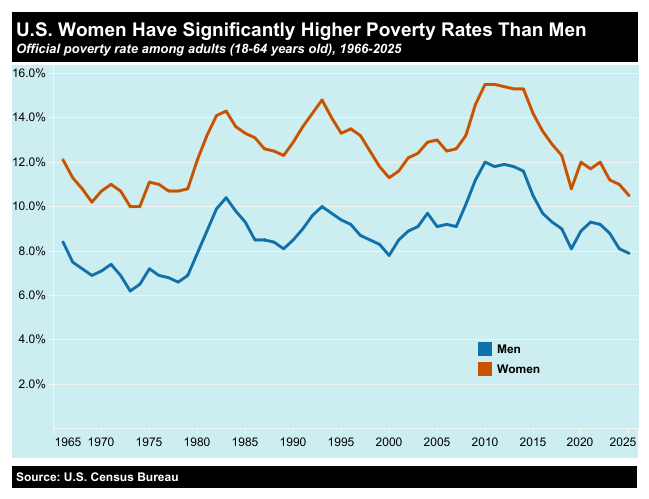
New U.S. Census poverty data show how little progress has been made in closing the gender poverty gap. In 1966, 12.1 percent of women and 8.4 percent of men lived below the official poverty line. In 2025, the gap remained wide, with 10.5 percent of women and 7.9 percent of men living in poverty.
These figures do not yet capture the effects of the steep cuts to safety net programs in the “One Big Beautiful Bill” that Donald Trump signed into law last year. This budget legislation will disproportionately impact women. For an interactive version of this chart and more on income inequality, click the link to our Inequality.org Facts section below. |
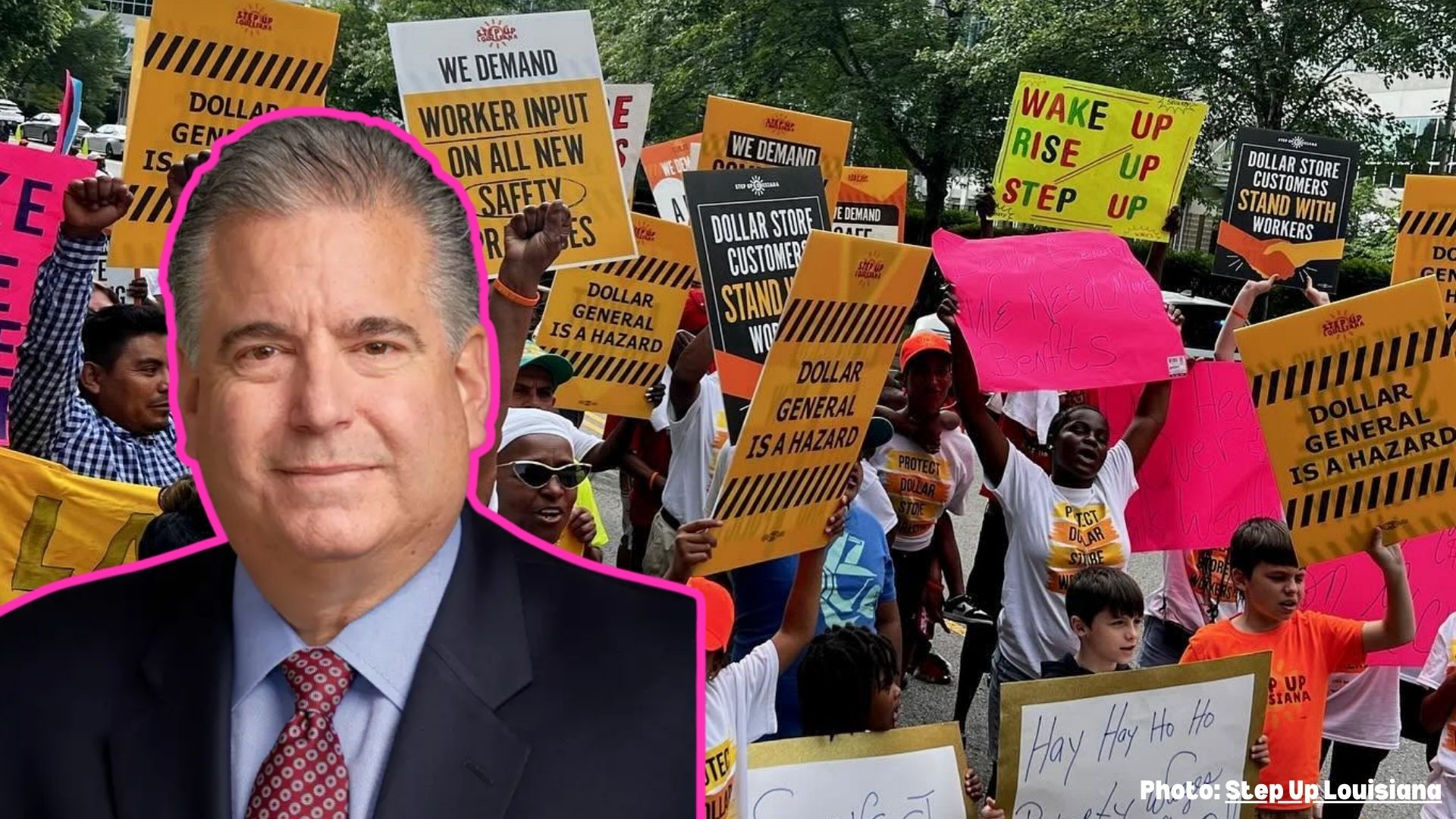
This week’s overpaid CEO: Todd Vasos of Dollar General.
How Vasos is driving inequality: Dollar General’s chief raked in $8.2 million in 2025, 432 times as much as his company’s median pay of $18,876. A Government Accountability Office analysis has found that 5,197 Dollar General workers in nine states are making so little that they qualified for SNAP benefits. The company has also faced heavy fines for workplace safety violations.
Dollar General employees are now struggling with both poverty wages and management pressure to cooperate with ICE. Dollar General top management last year sent a memo to its 20,000 stores on what to do if ICE agents show up.
“Please allow the agent to speak with the employee,” the Dollar General memo instructed. “Ask the agent to meet with the employee outside the store and away from customers and other employees if possible.”
The last word: By pressuring local stores to subject employees to ICE interrogation, Dollar General is undermining the constitutional right to refuse to speak with enforcement agents. The National Immigration Law Center advises employers to train staff not to talk to agents to protect against self-incrimination. |
|
|
|
What's new on Inequality.org Manuel Pérez-Rocha, American Mining Corporation Wins Partial Victory in Lawsuit Against Mexico. A global tribunal has awarded only a fraction of the firm’s original claim, but Mexico’s struggle against corporate legal threats continues.
Deepak Xavier and Janet Mudzviti-Zhou, 15 Years on from Occupy, the Long Fight of the 99% Continues. Gen Z-led protest movements are building on a long legacy of struggle against economic inequality.
An in-person Bay Area opportunity: This October 5, a day-long convening, US vs. Billionaires, will explore how excessive wealth is destabilizing the nation and articulate solutions for reducing billionaire wealth and power. The RSVP link. Among the co-hosts: Excessive Wealth, Patriotic Millionaires, Progressive Change Institute, Inequality.org, and the People’s Action Institute.
Elsewhere on the web
Bob Lord, No Tax on Everything: The Tax Mess Trump Has Left Us, Substack. The solution: Congress must choose sound tax policy over vote pandering.
Elise Gould and Josh Bivens, CEO pay surged in 2025: CEOs are paid 325 times as much as the typical worker, Economic Policy Institute. CEO pay at the top 350 U.S. firms rose 14 percent last year to an average of $27.9 million. In 1965, CEO pay outpaced worker take-homes by only 21 times.
Marina Dunbar, Private jets pollute up to 14 times as much as commercial planes and are undertaxed in US, report says, Guardian. Noncommercial private jet flights represent 7 percent of airspace activity, notes a new Institute for Policy Studies report, but contribute less than 0.6 percent of the taxes flowing into the trust fund that helps finance federal airport operations.
Michael Taffe and Stephen Foley, Nobel economists throw support behind California billionaire tax, Financial Times, September 19, 2026. Six Nobel laureates are backing the proposed one-time 5 percent levy on billionaires on this November’s California ballot. The tax, they note, may well kickstart a movement that introduces the notion of taxing wealth across America and the world.
Amaris Encinas, Who are the richest Americans today? Forbes drops 2026 ranking, USA Today. A record 590 U.S. billionaires ended up too “poor” to make the 2026 Forbes top 400, up from 500 billionaires too “poor” to make the Forbes 400 in 2025.
Matt Stoller, AI Is an Elite Crime Spree, BIG. A panic over the dangerous consequences from AI is sweeping through our media and politics. This panic’s weirdest aspect: We already have laws in place that prohibit the harm AI execs are doing. But in America laws that inconvenience the powerful go unenforced.
Judd Legum, Is AI safety a smokescreen? Oligarch Watch. America’s AI giants may now be using AI safety as a pretext to strangle their upstart competitors.
Michael Hiltzik, Why are workers feeling so stressed? Maybe because labor’s share of the economy is at a record low, Los Angeles Times. The shrinking worker share reflects growing wealth inequality, a tax system that gives capital earnings a pass, and an explosive growth in corporate profits.
Les Leopold, Why the Corporate AI Machine is Out of Control, Wall Street’s War on Workers. Years ago, nobody proposed asking corporate CEOs to go off and get the dangers of the nuclear arms race under control. Yet that’s close to what we’re doing with AI. |
|
|
|
Monthly Donors Make This Read Possible! |
Inequality.org, an Institute for Policy Studies nonprofit project, depends on donations to keep this newsletter free and available to all readers. Your monthly gifts make all the difference in the world, whether you can donate $3 or $300 a month. Ready to give a few bucks a month? Sign up today. |
|
|
|
Inequality.org | www.inequality.org | inequality@ips-dc.org Institute for Policy Studies
1301 Connecticut Avenue Ste 600
Washington, DC 20036
United States
Managing Editor: Chris Mills Rodrigo
Co-Editors: Sarah Anderson, Chuck Collins, Bella DeVaan, Reyanna James, and Sam Pizzigati |
|
|
|
|