A weekly newsletter from the Institute for Policy Studies |
|
|
SpaceX's stock volatility, Mexico reclaiming the World Cup, and the myth of wealth flight in Massachusetts |
|
|
|
Dear readers, I hope you haven’t been shedding too many tears for Elon Musk.
As of the stock market’s close Tuesday, SpaceX shares had dropped 39 percent from their initial peak. That collapse strips Elon of his celebrated trillionaire status, but I’m confident he can readjust to life as a mere centibillionaire.
Wall Street bankers are doing just fine as well. The $500 billion in fees they grabbed from the SpaceX launch ranks as the largest Initial Public Offering windfall of all time. JPMorgan CEO Jamie Dimon, clearly savoring the moment, has declared his bank’s latest quarterly profits as “close to as good as it gets.”
Working families, meanwhile, now have to worry about what the highly volatile SpaceX stock might mean for their 401(k) index funds. We have more below, from my friend Natalia Renta at Americans for Financial Reform, on ideas for protecting everyday investors from our financial market’s ongoing flimflam.
Tomorrow, our far-flung Inequality.org team — Chuck Collins from Vermont, Chris Mills Rodrigo and Bella DeVaan from New York, Omar Ocampo from Miami, and Sam Pizzigati, Marc Bayard, and I from D.C. — will all be here in Washington at our Institute for Policy Studies “Forging a Democracy That Works for All” event.
Interested in joining us, either in person or via livestream? You can register here. Hope you can make it! Sarah Anderson
for the Institute for Policy Studies Inequality.org team |
|
|
|
Making the World Cup an Opportunity To Call for Social Justice This week’s frontline faces: The activists, unionists, and everyday Mexicans who capitalized on Mexico’s co-hosting of the World Cup to push for justice.
What they're doing to help create a more equal world: Activists coordinated dozens of actions during the weeks that the World Cup called Mexico home. In a new piece for Inequality.org, Aline Zunzunegui highlights the most powerful.
The National Coordinating Committee of Education Workers, for instance, organizing encampments near the inauguration ceremony demanding pension protections and wage raises. In other protests, transport workers and farmers blocked major roadways over rising fuel prices and lack of security, and thousands marched to the Zocalo, Mexico City’s main square, calling for search efforts, justice, and international visibility for disappeared people.
What makes this fight so important: “The World Cup filled the stadiums,” Aline Zunzunegui notes. “It could not contain what happened outside them: a society that demands that celebration must also be possible in everyday life.” |
How to Protect Working Family Nest Eggs from the SpaceX Scam SpaceX — a firm that has never come close to even turning a profit — went public in June at a record sky-high valuation. In the past, a company like Elon Musk’s SpaceX would have had to demonstrate its financial health and stability before it could become part of shareholder index funds. But most major index fund providers have changed their rules and now allow the fast-tracking of firms like SpaceX into their funds.
This fast-tracking, explains Natalia Renta of Americans for Financial Reform, can deliver huge payouts for top execs and corporate insiders while putting ordinary retirement savers at risk.
Americans for Financial Reform is calling on policymakers and financial regulators to tighten controls on index funds, curb the power of corporate insiders, and take additional steps to protect working family nest eggs. Congress also needs to ban bailouts for powerful financial players in the event that the market bubble they’ve helped inflate eventually bursts.
After the 2008 crash, Renta notes, the banks got bailed out and the people got sold out. Read more below about how to prevent that from ever happening again. |
Critics of the Massachusetts Fair Share Amendment — a 4 percent surtax on incomes over $1 million that voters approved in 2022 — claimed the measure would drive wealthy residents and businesses out of the state.
The evidence so far tells quite a different story. Returns from the tax have consistently exceeded revenue projections, generating more than $8.6 billion since taking effect in 2023. With $3.1 billion already collected in this fiscal year’s first three quarters, the surtax has already surpassed last year's revenue total. Inequality.org has more, including an interactive chart, at the link below. |
PETULANT PLUTOCRAT OF THE WEEK |
Freedom of the Press Still Only Belongs to Those Who Own One
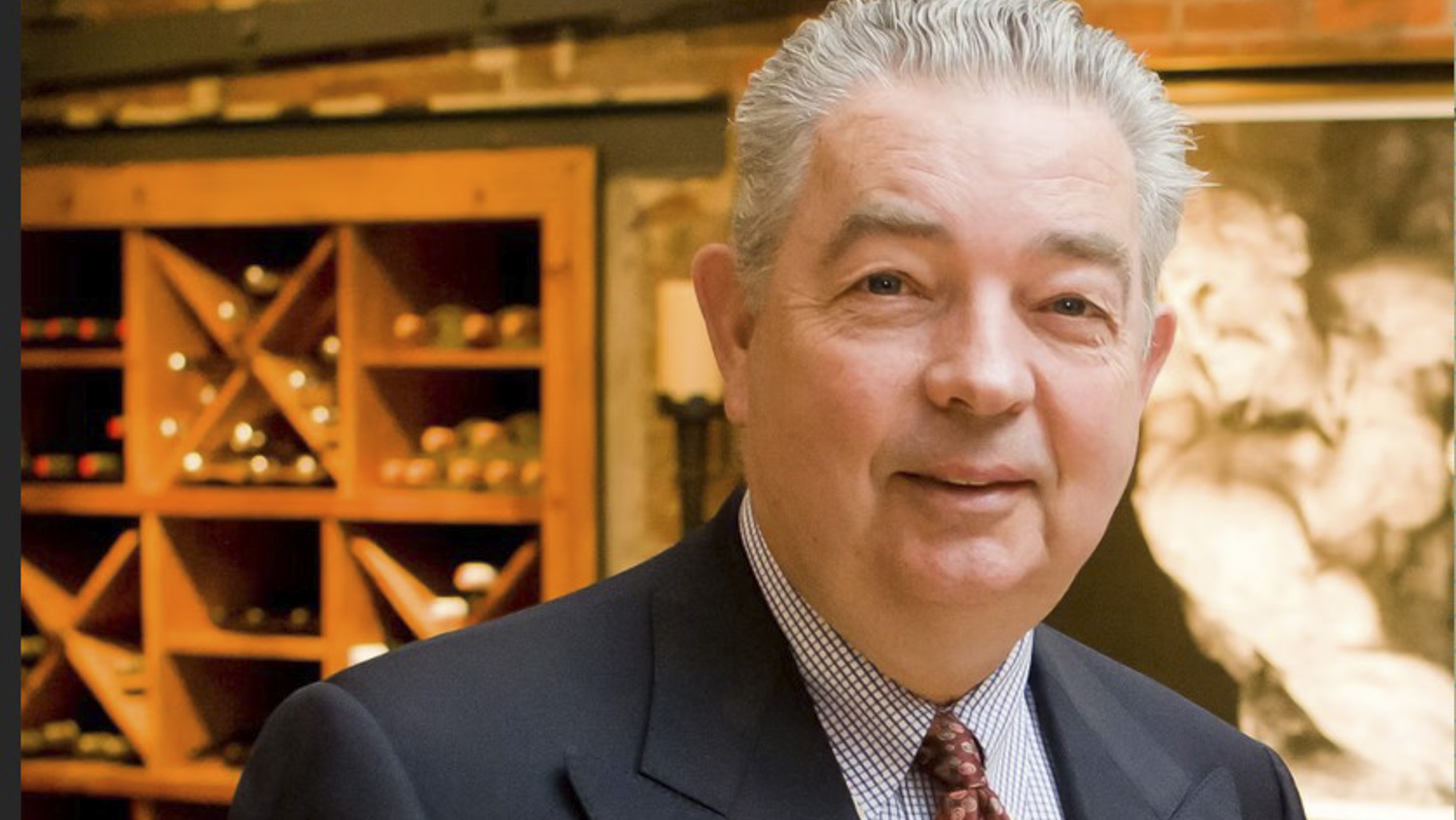
This week’s dour deep pocket: David Smith, the executive chair of the Sinclair Broadcast Group, America’s largest owner of local TV stations, and, since 1974, the owner of his hometown daily, the Baltimore Sun. Smith’s Sun and over 175 TV stations all follow a consistent right-wing line.
What has Smith sour: nationally televised comments last month by Maryland governor Wes Moore that have focused public attention on the link between Smith and the late Jeffrey Epstein, the New York financier and child sex offender whose investments have helped fuel Smith’s media empire.
Smith’s attorney has denied any Smith relationship with Epstein, investment or otherwise, and threatened to sue Moore for defamation. But records released by the U.S. Department of Justice show that Epstein-controlled investment firms had indeed purchased stakes in Smith’s Sinclair Broadcasting.
Smith himself, the Columbia Journalism Review points out, has been personally involved in an “extraordinary” torrent of Baltimore Sun articles, produced outside the paper’s normal procedures, that have attacked Moore’s military record.
The last word: Smith jumped on the Donald Trump bandwagon early on. As the media mogul assured Trump during his first campaign for the White House: “We are here to deliver your message. Period.” |
|
|
|
INEQUALITY BY THE NUMBERS |
|
|
|
New on Inequality.org
Aidan Rozema and Omar Ocampo, Where is Massachusetts’ Millionaire Exodus?Massachusetts proves that progressive taxes do not cause ultra-wealthy flight.
Eli Taylor Goss and Jason Bailey, Federal Tax Cuts for the Wealthy Are Bankrupting States. Some Are Fighting Back. From Washington to Kentucky, states stand united: The wealthy must pay their fair share.
Danaka Katovich, Robin Hood in Reverse: How the Pentagon Makes Us Poorer. SNAP recipients who have lost benefits — and the farmers who feed them — are now being asked to shell out $1.5 trillion for the Pentagon. Elsewhere on the web
Steve Wamhoff, Congress Should Reject Proposed Tax Breaks for Crypto, Institute on Taxation and Economic Policy. Why? Start here: Crypto amounts to nothing more than a speculative asset that redistributes wealth from ordinary people to the already wealthy.
Paolo Natali, Who Should Own the Robots? The New Republic. Deployed correctly, AI could enable shorter hours, higher wages, and broad prosperity, in the same way as previous technological shifts. The reason that’s not happening today: our continuing failure to keep wealth concentration in check.
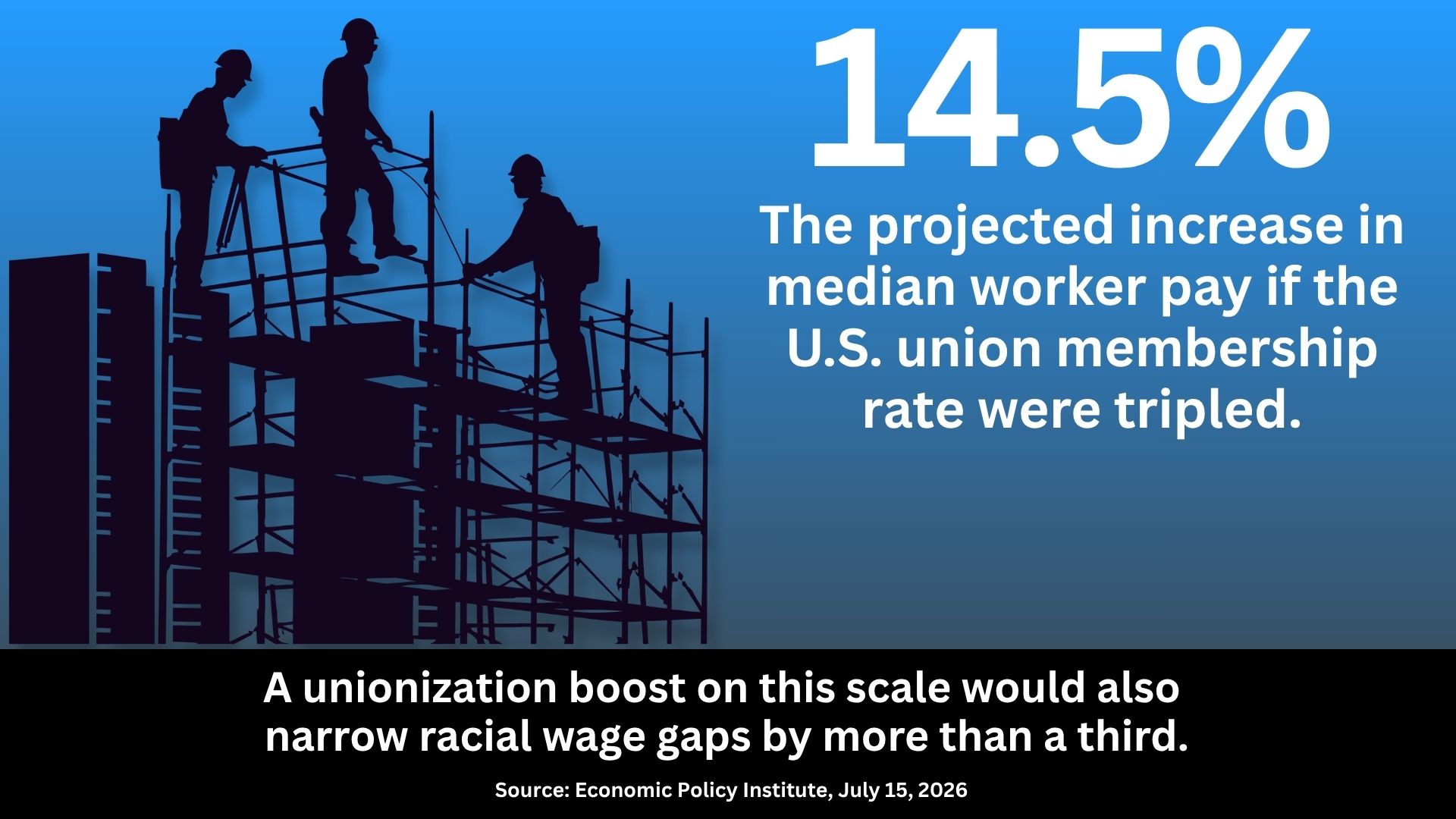
Heidi Shierholz, Celine McNicholas, Josh Bivens, Jennifer Sherer, Ben Zipperer, and Margaret Poydock, The case for tripling union membership, Economic Policy Institute. When did the United States rate as most economically equal? In the middle of the 20th century, when one of every three private-sector workers belonged to a union.
Hamilton Nolan, Union Density Is the Cause of and Solution to Our Problems. How Things Work. America’s decline in union density — the percentage of the work force represented by unions — goes a long way to explaining our rising economic inequality and our plutocratic politics.
Derek Jenkins, The Growing Gap Between Hospital CEO and Direct Care Pay, Baker Institute for Public Policy. Chief executive pay, even at “nonprofit” hospitals, can now reach many millions of dollars a year. Amid this soaring CEO compensation, physicians and nurses are suffering increased stress and burnout.
Robert Reich, Trump’s National Socialism, Substack. Donald Trump is berating the young people who call themselves democratic socialists. His own brand of socialism, meanwhile, is giving the federal government a share of corporate profits and upping rewards for top corporate execs.
Jim Hightower, Beware of Billionaires, Creators. Even plutocracy has become too democratic for monarchical billionaires like Elon Musk. SpaceX CEO Musk only holds about 40 percent of SpaceX shares of stock, but he’s rejiggered the company’s bylaws to give himself over 80 percent of shareholder votes.
Stephen Foley, Billionaires fleeing California wealth tax risk strict residency audit, Financial Review. Billionaires living in California as of January 1, 2026 will face a 5 percent levy on their fortunes if voters pass the wealth tax on the state ballot this November. Some billionaires faked a flee from the state right before that January 1 deadline. But the state stands poised to have the last laugh.
We’re winning the fight to tax the super-rich, Equals Bulletin. The growing global momentum for tax the rich: In Denmark, the prime minister of the party that abolished the nation’s wealth tax 30 years ago ran an election campaign on a promise to reintroduce that tax. |
|
|
|
Monthly Donors Make This Read Possible! |
Inequality.org, an Institute for Policy Studies nonprofit project, depends on donations to keep this newsletter free and available to all readers. Your monthly gifts make all the difference in the world, whether you can donate $3 or $300 a month. Ready to give a few bucks a month? Sign up today. |
|
|
|
Inequality.org | www.inequality.org | inequality@ips-dc.org
Institute for Policy Studies
1301 Connecticut Avenue Ste 600
Washington, DC 20036
United States
Managing Editor: Chris Mills Rodrigo
Co-Editors: Sarah Anderson, Chuck Collins, Bella DeVaan, Reyanna James, and Sam Pizzigati
|
|
|
|
|