A weekly newsletter from the Institute for Policy Studies |
|
|
Tracking private jet super-polluters
from the ground up |
|
|
|
With sadness, I took off my Mexico jersey last week after my favorite team played valiantly but found itself eliminated from the World Cup.
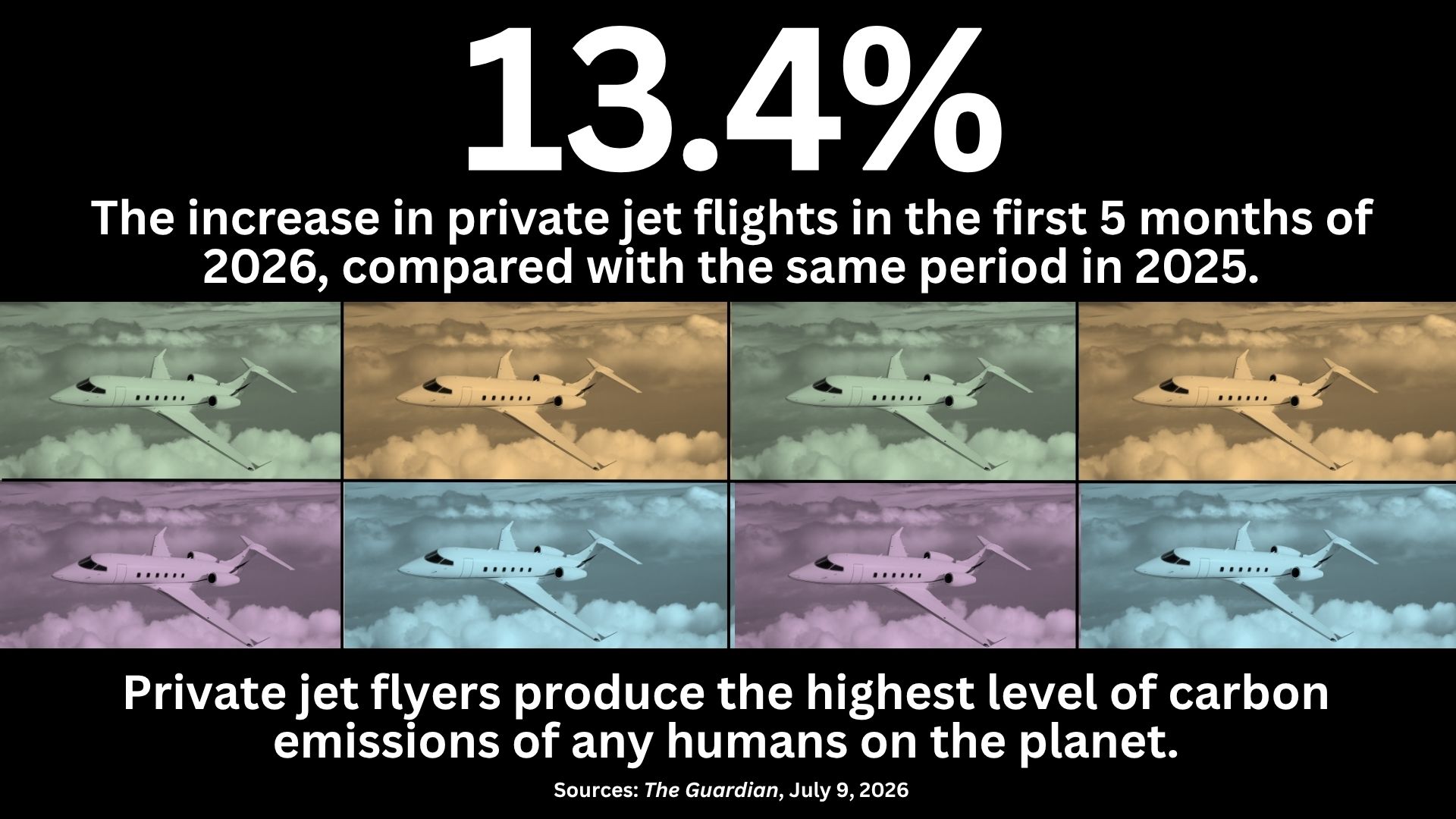
But my disappointment with this summer's tourney goes deeper: The 2026 World Cup may well be the most polluting sports event ever, thanks to the thousands of luxury private jets that have been crisscrossing the three host countries of the United States, Mexico, and Canada.
With the world’s finest players suffering in the extreme heat, the billionaire private jet class has been soaring above it all. For the July 10 match between Spain and Belgium, an incredible 2,077 private jets traveled to Inglewood, California!
Since 2007, our Institute for Policy Studies inequality program has been researching the economic and ecological costs of the private jets that the rest of us subsidize. This week, we’re formally launching a new Private Jet Accountability Project and an amazing tool that can track private jet emissions.
Tomorrow, we’ll be documenting surplus carbon emissions from the two World Cup semi-final matches in Dallas and Atlanta. Check out our “Red Card for Private Jets” at taxprivatejets.org for more. Next week, we’ll report on private jet activity from Sunday’s final match in New Jersey.
Our new tracker tool will eventually become an open-source sousveillance — surveillance from below — program that allows anyone to measure jumps in private jet-travel that accompany big-time annual events ranging from the Masters golf tournament and the Kentucky Derby to the Super Bowl. Stay tuned as we build a global movement to rein in private jet excess. Chuck Collins
for the Institute for Policy Studies Inequality.org team |
|
|
|
Sounding the Alarm on the Trump Administration’s Cuba Squeeze This week’s frontline face: Liz Oliva Fernández, a Cuban journalist at the outlet Belly of the Beast.
What she's doing to help create a more equal world: Oliva Fernández and her colleagues have been sounding the alarm about the ongoing and escalating Trump administration pressure that’s impoverishing the people of Cuba.
Since the beginning of the year, the United States has functionally cut off the island from oil — triggering rolling blackouts and hamstringing health services — and also moved to indict former president Raúl Castro. What makes this fight so important: “The decision to indict Raúl Castro is a pretext that’s prompting fears of a Venezuela-like scenario via leadership decapitation,” Oliva Fernández recently told Inequality.org editor Chris Mills Rodrigo in an interview for In These Times.
Here in the United States, where working people face a soaring cost of living while Trump wages war in Iran and pushes for a massive Pentagon budget hike, opening another war front with Cuba would be devastating to working people on both sides of the Florida Strait. More from Oliva Fernández below. |
Helping Families Access Healthy Food: Taking the Seattle Model National
In 2012, the city of Seattle launched an initiative to give food insecure families the money needed to afford healthier groceries. The Fresh Bucks program has now been a success for over a decade, with roughly 17,000 income-qualified households each month getting benefits to purchase fruits and vegetables. Participating families have experienced a 31 percent higher rate of food security than comparable households without the benefit. Now at the federal level, with cuts to critical programs like SNAP leaving more and more Americans without secure access to food, lawmakers are considering taking Seattle's model nationwide. The pending Fresh Bucks for Fresh Produce Act would provide households earning 80 percent or less of their area’s median income with $60 each month to purchase fresh fruits and vegetables.
Read more from 2026 Henry A. Wallace Fellow Julian Villa at the link below. |
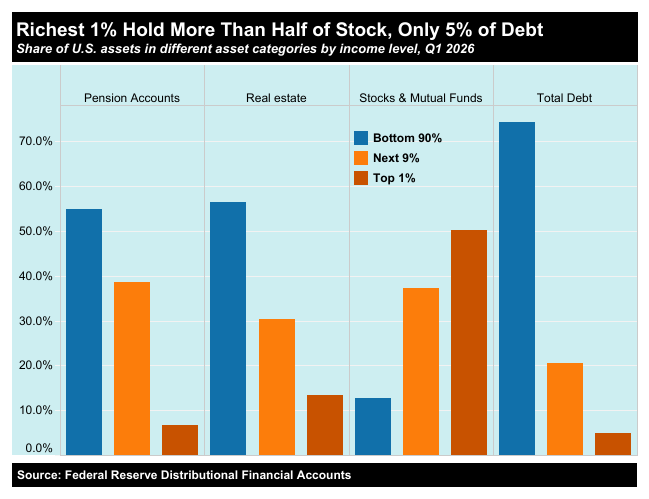
Donald Trump frequently points to the stock market as proof of a strong economy. Last week, Trump even touted his own market gains, telling reporters, “You know why I’m profiting? Because the stock market’s going up, everybody’s profiting.”
But not everybody is sharing in the market’s upside. According to the latest Federal Reserve data, the top 1 percent of Americans own about 50 percent of all corporate equities and mutual fund shares, while the bottom 90 percent collectively hold just 12.7 percent of that wealth. At the same time, those same 90 percent of households carry roughly three-quarters of the nation’s debt.
For an interactive version of this chart and more on wealth inequality, click the link to our Inequality.org Facts section below. |
PETULANT PLUTOCRAT OF THE WEEK |
To Fast Track CEO Success, Make Friends at the White House!
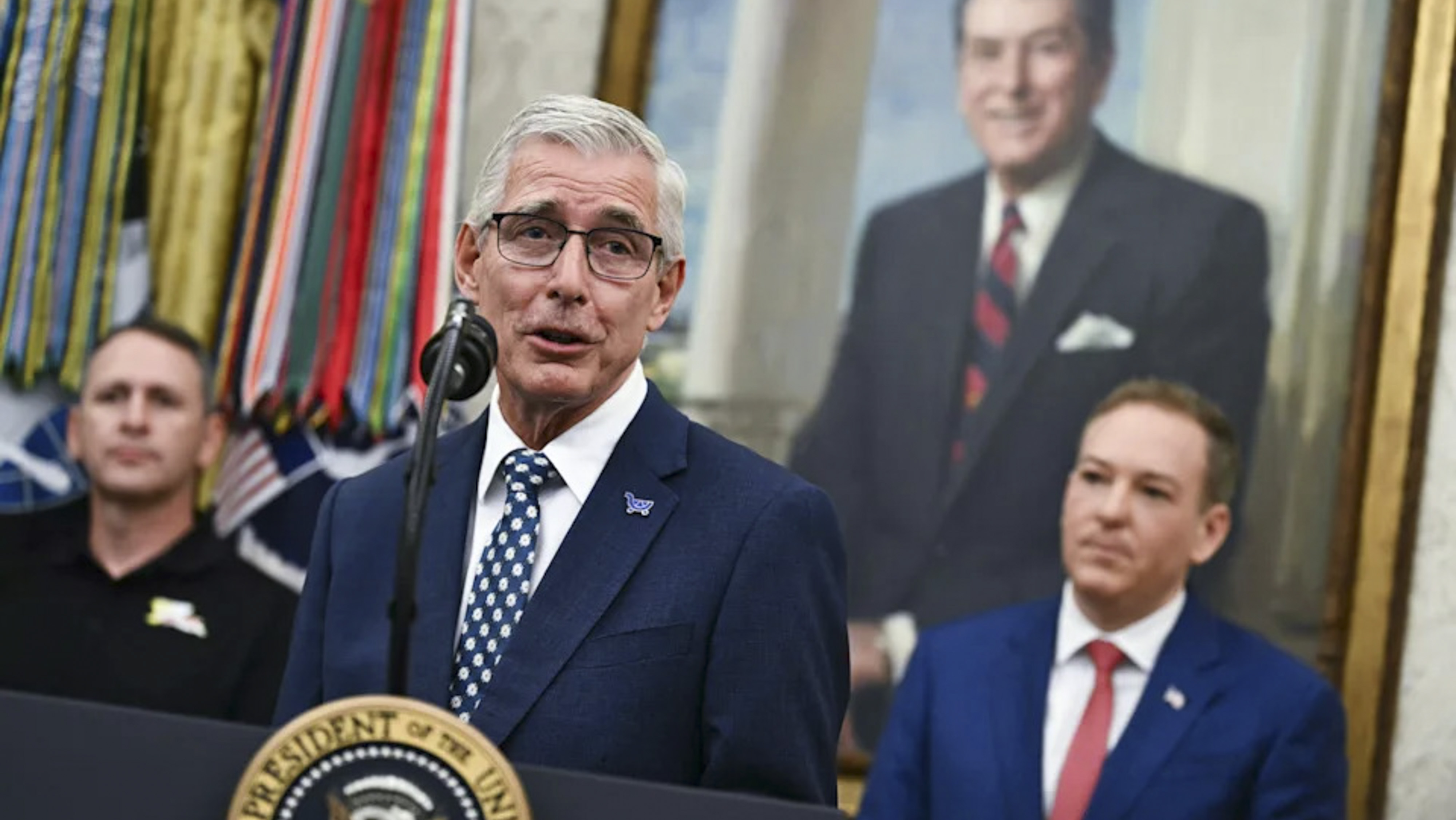
This week’s dour deep pocket: Greg Foran, the CEO since February of Kroger’s, the nation’s largest supermarket chain. A former chief exec of Walmart’s U.S. operations, Foran stands to make $17 million or more this year. What has Foran sour: the 2024 federal environmental rules aimed at cutting super-polluting hydrofluorocarbon leaks from supermarket refrigeration and air conditioning systems. This past May, Foran joined with Donald Trump to announce a six-year pause in putting the new rules into effect.
The reprieve, Foran told reporters, would let Kroger stores avoid “having to outlay more capital” to “change” their equipment. The result, Foran and Trump claimed, would be lower prices for consumers.
But the trade group for the cooling industry points out that the 2024 EPA standards don’t compel supermarkets to buy new equipment. They only compel chains “to buy more climate-friendly models when they made new purchases.”
The last word: Kroger earlier this month triumphantly announced a $1.65 billion purchase of the Giant Eagle supermarket chain, an outfit that rates even worse than Kroger in addressing climate emissions from refrigerants. Notes Green America: “If Kroger has $1.65 billion to buy a competitor, they have the money to move all their stores to natural refrigerants by 2030.”
|
|
|
|
INEQUALITY BY THE NUMBERS |
|
|
|
New on Inequality.org
Chuck Collins, Meet Our New Private Jet Tracking Initiative. The new Tax Private Jets campaign from the IPS Private Jet Accountability Project will keep the heat on wealthy polluters — and track their emissions. Daud Kayisi, The Electricity Divide Is Keeping More than Half a Billion from Enjoying World Cup. Debt obligations are keeping the Global South from electrifying, holding back development and blocking millions from watching this summer’s tournament. Emma Buretta, This Deadly Heat Wave Has a Culprit. As people die in this heat, it’s time to kick the fossil fuel industry out of our politics.
Layla Sayed, SNAP Cuts Take More than Food Away. For many families, SNAP meant one less impossible choice at the end of the month. Millions are now losing that lifeline.
Elsewhere on the web
Paul Krugman, Oligarchy in Action: The Case of Corporate Tax Cuts, Substack. The whopping decline in corporate tax rates since 1970 has amounted to a huge indirect tax cut for the wealthy individuals who own the bulk of corporate stock. That huge cut has fueled America’s spiral into oligarchy.
James Livingston, Ruling Class Clowns, Project Syndicate. At a time of unprecedented wealth concentration — when a single person’s assets equal 1 percent of world GDP — providing for the general welfare becomes impossible.
Dan Merica, The left sees a billionaire backlash — and an opening for a wealth tax, The Washington Post. Political appetite for a national wealth tax is bolstered by extreme wealth.
Lew Blank and Abby Springs, The Swing Voters of the 2026 Midterms Want Democrats to Tax the Rich, Data for Progress. Swing voters nationally overwhelmingly support raising taxes on the wealthy.
Aidan Davis, 2026 Sessions in Review: States Move to Tax the Rich and Corporations, Institute on Taxation and Economic Policy. Four states this year have raised tax rates on high-income households to fund crucial services and make progress toward remedying the regressive tilt of their tax codes.
Dean Baker, Social Security is a Problem of Income Distribution, not Demographics, Beat the Press. The current debate over the future of Social Security aptly reflects how America’s rich so dominate the nation’s political discourse.
Joanna LeFebvre and Clara Wilson, More States Jeopardizing Local Services With Property Tax Cuts and Caps, Center on Budget and Policy Priorities. To help fund vital public services, states ought to be considering measures like mansion taxes and increased tax rates on second homes.
David Weil, The Dangerous Myth of Flexibility, The American Prospect. Uber’s billionaires continue to wrongfully insist their company’s business model somehow “benefits” their drivers. Robert Reich, Who’s Gonna Buy All the AI Stuff? Substack. Without a major redistribution of the productivity gains that can come from artificial intelligence, a healthy consuming public will cease to exist.
Rachel Lerman, Boomers’ massive wealth will mostly be passed down to people who are already rich, The Washington Post. Those households in the richest Boomer 90th to 99th percentiles hold some $44 trillion in wealth. The bottom 90 percent of Boomer households hold just $16 trillion.
Liezel Once, The Mamdani effect? Manhattan luxury just posted its best quarter in years, MPA News. New York City’s first-ever pied-à-terre tax — an annual surcharge on non-primary residences valued at $5 million or more — took effect July 1, after months of feverish warnings that wealthy buyers would flee the city if the tax ever went into effect. They haven't.
|
|
|
|
Monthly Donors Make This Read Possible! |
Inequality.org, an Institute for Policy Studies nonprofit project, depends on donations to keep this newsletter free and available to all readers. Your monthly gifts make all the difference in the world, whether you can donate $3 or $300 a month. Ready to give a few bucks a month? Sign up today. |
|
|
|
Inequality.org | www.inequality.org | inequality@ips-dc.org Institute for Policy Studies
1301 Connecticut Avenue Ste 600
Washington, DC 20036
United States
Managing Editor: Chris Mills Rodrigo
Co-Editors: Sarah Anderson, Chuck Collins, Bella DeVaan, Reyanna James, and Sam Pizzigati |
|
|
|
|