A weekly newsletter from the Institute for Policy Studies |
|
|
Three organizers behind May Day, a questionable Kennedy Center donor, and skyrocketing incomes at the top |
|
|
|
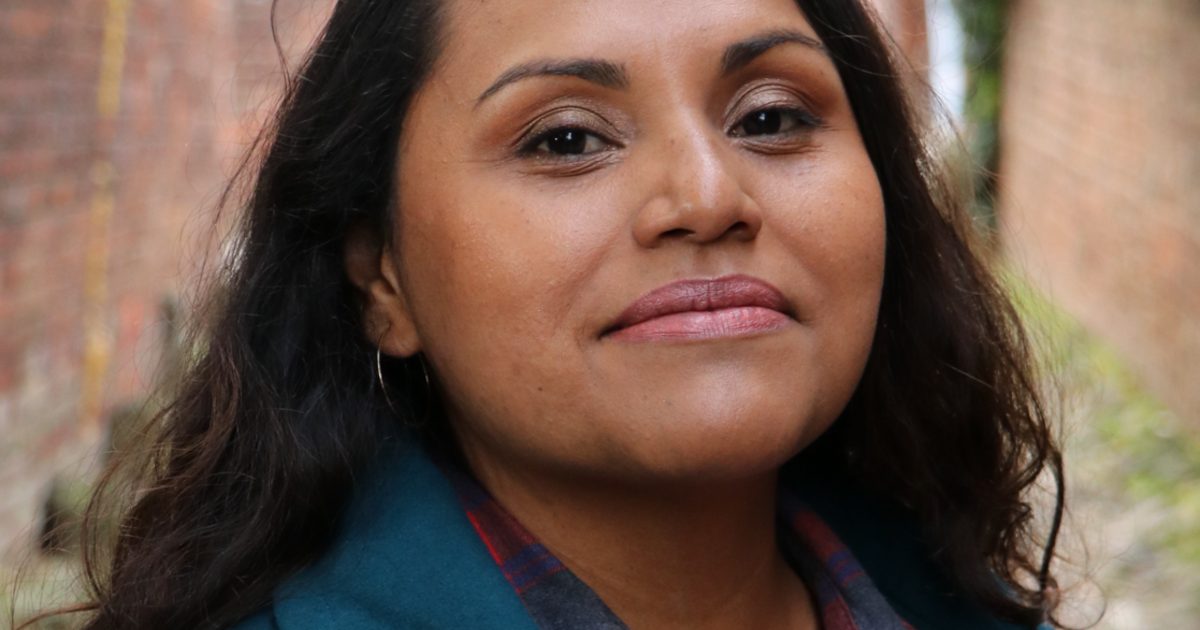
In this week’s special May Day edition, we’re highlighting three of our nation’s top champs in the fight against inequality. The three have plenty to say: Sulma Arias, an activist with People’s Action and the Organizing Revival, is urging everyone to march peacefully on Friday, May 1, and join in on a new version of a general strike — with no work, no school, and no shopping.
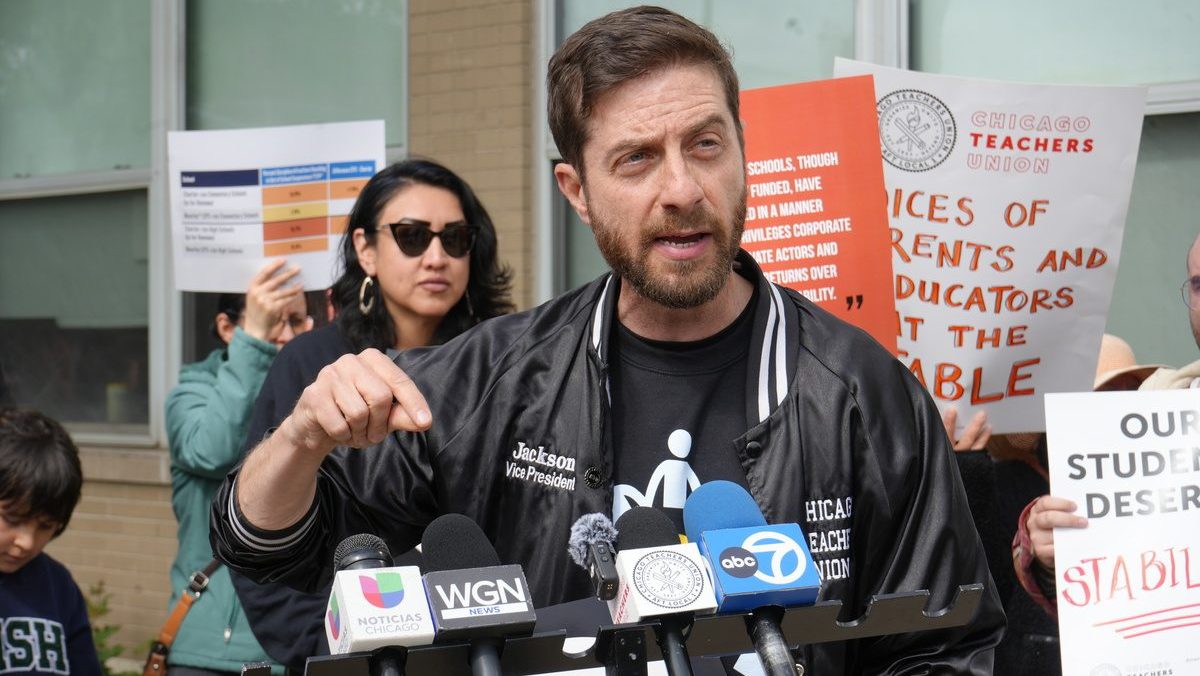
Jackson Potter, vice president of the Chicago Teachers Union, explains in an Inequality.org Q&A how his union will be showing public school students this May Day that effective civic action requires more than just what textbooks can offer.
Neidi Dominguez, executive director of Organized Power In Numbers, emphasizes the importance of building on this week’s rallies through sustained organizing efforts that meet working people where they are.
Meanwhile, in advance of Friday’s May Day, the Congressional Progressive Caucus is launching a “New Affordability Agenda” today to support working families. That agenda features proposals that would double overtime pay, cut household utility bills, and provide America’s workers with universal childcare and mandatory paid vacation. An exciting week! Check this map to find a May Day action near you. Sarah Anderson
for the Institute for Policy Studies Inequality.org team |
|
|
|
INEQUALITY BY THE NUMBERS |
Sulma Arias: Time To Redefine Our Historic May Day Tradition
Our sense of what May Day represents, Sulma Arias of People’s Action is urging us to understand, needs to expand beyond the traditional May 1 conception of International Workers’ Day. May Day needs to include all of society, and that means that not just workers, but consumers and students, have key roles to play.
“I find inspiration,” Arias writes on Inequality.org, “in everyone who has marched before me and in all those across the country who are finding their voices as we step into the streets at this dark moment. Because it truly is up to us." |
Jackson Potter: A Day for Building the Foundation for Real Change Chicago gave birth, generations ago, to what we now know as May Day. Way back in 1886, near the city’s Haymarket Square, a peaceful labor rally to support workers striking for an eight-hour day escalated into a confrontation that led to over a dozen deaths — and the unjust persecution of hundreds of labor activists. This May 1, Potter and the Chicago Teachers Union want to channel the urgency of those protests so long ago into a coordinated day of action that builds the foundations for deeper organizing.
“May Day is not the destination, it is a test of the infrastructure we are building,” he tells Inequality.org. "After May Day, go back to your workplace and organize your union. Connect with the community organizations in your neighborhood.” |
Neidi Dominguez: An Opportunity To Build Our Organizing Muscle
Pulling off a coordinated, nationwide day of action like May Day takes a lot more than just announcing a day for demonstrations. Neidi Dominguez and her colleagues at Organized Power in Numbers have spent months building up to this week, meeting workers and communities where they’re at. Their aim: to help develop the deep relationships needed to extend activism beyond this week.
“May Day is not just a show of force. It is a test of everything we have been building,” Dominguez notes on Inequality.org. “May Day is how we build the muscle to keep fighting from May 2 onward.” |
|
|
|
As we turn our attention to worker rights this May Day, one central challenge facing workers today could hardly be clearer: the need to overcome decades of worker wage stagnation.
Over the past 40 years, income growth has concentrated overwhelmingly at the top. Between 1979 and 2022, the average income of our richest 0.01 percent, a group that today represents just over 13,000 households, grew over 12 times as fast as the income of the bottom 20 percent of earners.
Without collective bargaining power, workers have little leverage to push back against stagnating pay and secure a fairer share of the economic gains they help create. For an interactive version of this chart and more on income inequality, click the link to our Inequality.org Facts section below. |
|
|
|
PETULANT PLUTOCRAT OF THE WEEK |
A Billionaire’s Heartfelt Call for the Freedom to Bet on the Future
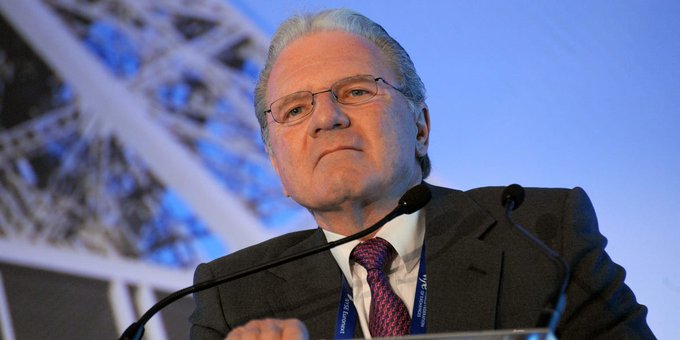
This week’s dour deep pocket: Thomas Peterffy, the founder and chairman of Interactive Brokers Group, the financial industry giant that has blessed him with a personal fortune now worth just under $92 billion, enough to make Peterffy, earlier this week, the 20th-richest person on the planet.
What has Peterffy sour: All the media chatter about the danger of insider trading in the world’s rapidly growing and already huge “prediction markets.” Peterffy’s Interactive Brokers Group just happens to own ForecastEx, a prediction platform that lets users wager on everything from global temperatures next December to the interest rate banks will charge each other for overnight loans.
“I’m in favor of not having any rules against insider trading,” Peterffy opined earlier this month. “I think the best thing we could do about inside information is just to get the news out there as fast as possible and forget about persecuting people.”
The last word: Peterffy’s ForecastEx doesn’t let people make the sorts of geopolitical bets — on topics like what will Donald Trump do next — that have proved popular on other prediction platforms and also raised fears over insider profiteering. But Peterffy appears to be moving in that bet-on-anything direction. His business empire now has in the works a new prediction platform, Lumina, that GamingAmerica has dubbed “a play to capitalize on the prediction market boom.”
|
|
|
|
What's new on Inequality.org
Sarah Anderson, The Corporate and Billionaire Opponents of San Francisco’s Overpaid Executive Tax. Five billionaires and corporations with huge pay gaps are funding a war chest against Proposition D on the city's primary ballot. Rachel Swaner, The App Is the Boss — And It’s Deepening Inequality in New York. Gig workers are finding themselves under unprecedented surveillance. Algorithmic transparency has become critical to protecting their rights. Elsewhere on the web
Robert Reich, The Worst Neo Robber Baron of Them All, Substack. Amid some stiff competition, this new analysis gives our era’s top plutocrat dishonor to Amazon’s Jeff Bezos.
Josh Bivens, Hilary Wething, and Ben Zipperer, Rising inequality is the root of affordability problems, Working Economics Blog. Income inequality has skyrocketed since 1979. Driving that trend: intentional policy choices that suppress wages for typical families to accelerate income growth at the top.
Anand Giridharadas, Rich Brain, The Ink. What do the ultra-rich spend their time thinking about? They’re not dreaming up ideas to make the world a better place. They’re thinking about, the already disclosed Epstein files show, how to maintain their wealth and make sure their offspring can stay super rich, too.
Gabriel Zucman, Where are the profits of the war going? Substack. Back in 1942, the United States taxed excess corporate profits at 95 percent. The over-the-top profits that wars and other major upheavals make possible, Americans agreed back then, should not accrue to top corporate execs and shareholders.
Ryan Nixon, Scottish Greens want 10:1 pay ratios to tackle “obscene” inequality, Deadline. Scotland’s Green Party has just proposed a ban on awarding government grants and contracts to firms where the highest-paid executive makes over 10 times the pay that goes to firm’s lowest-paid worker.
Karl Bode, “CEO Said A Thing!” Journalism, The Fine Print. A look at how our media monopolies hyper-mythologize our corporate chief execs by regularly parroting whatever they claim, with absolutely no context or challenge.
Caleb Ecarma, An oligarch’s dystopian scheme to discredit journalism with AI, Oligarch Watch. A Peter Thiel-funded startup launched this month will use an “AI jury” to “subject the media’s claims to systematic investigation and judgment.
Freddy Brewster, How a Tax Loophole Drained Schools and Enriched a Trump Megadonor, The Lever. Billionaire GOP donor Jeffrey Yass scored millions in private-school tax credits while he bankrolled the lawmakers who expanded them.
Noah Hawley, What I Learned About Billionaires at Jeff Bezos’s Private Retreat, The Atlantic. For our richest, everything comes free and nothing really matters. |
|
|
|
MONTHLY DONORS MAKE THIS POSSIBLE |
Did you know that Inequality.org is a nonprofit project, part of the Institute for Policy Studies’ Program on Inequality? We depend on donations to keep this project free and available to all readers. Small monthly gifts are a huge part of that, whether you can donate $3 or $300 a month. Ready to give a few bucks a month? Sign up today. |
|
|
|
Inequality.org | www.inequality.org | inequality@ips-dc.org Institute for Policy Studies
1301 Connecticut Avenue Ste 600
Washington, DC 20036
United States
Managing Editor: Chris Mills Rodrigo
Co-Editors: Sarah Anderson, Chuck Collins, Bella DeVaan, Reyanna James, and Sam Pizzigati |
|
|
|
|