A weekly newsletter from the Institute for Policy Studies |
|
|
Five signs of hope, green extraction tensions, and Earth Day inequality |
|
|
These are dark times. But a wise community organizer once told me that people mobilize out of hope, not despair. So let’s start today with five spirit-lifters:
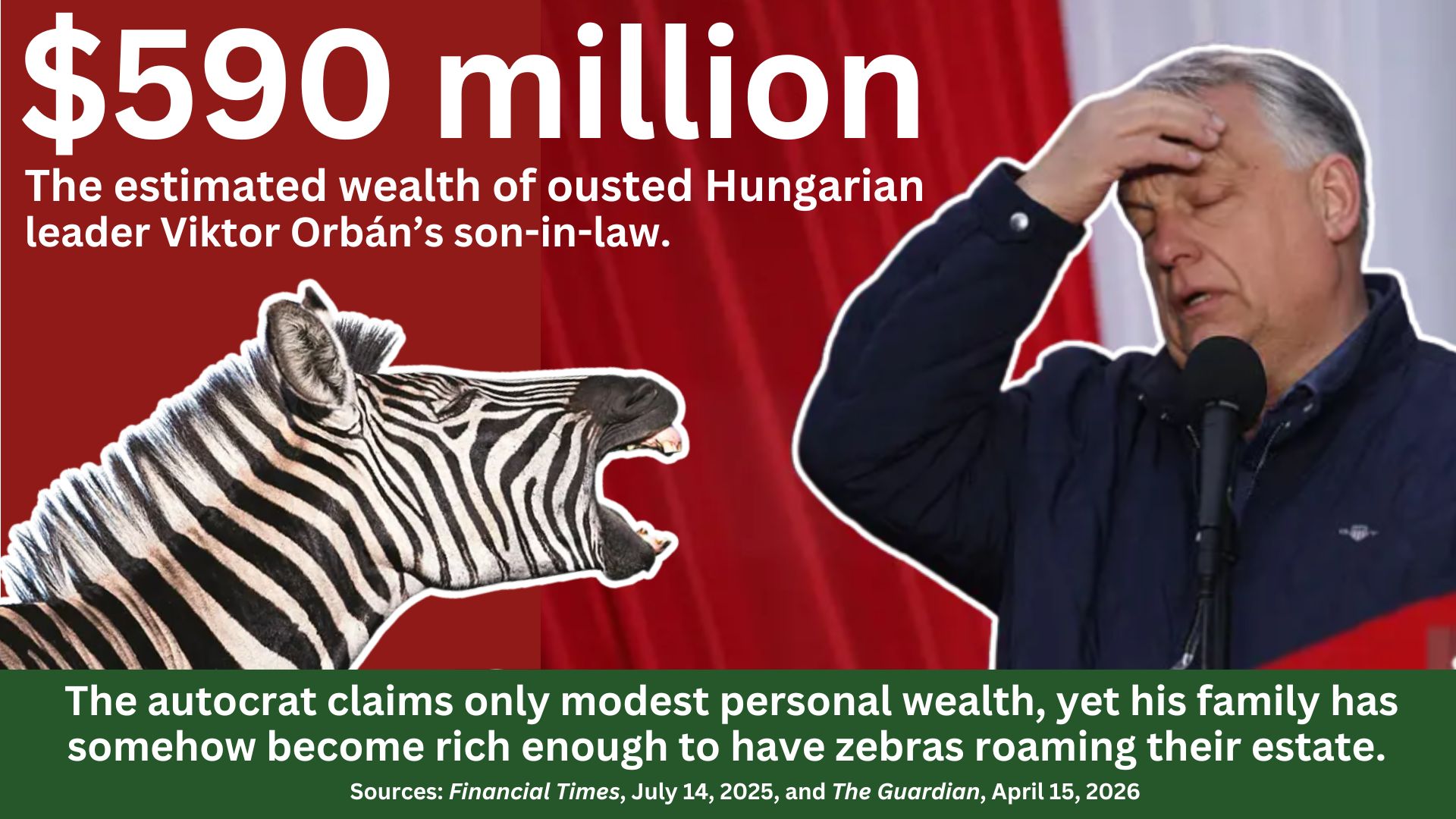
Victory over Viktor: Hungarian voters have proved that a people, united, can unseat a crony capitalist despot. During his 16-year rule, Viktor Orbán funneled $24 billion in EU aid to 13 oligarchs while worker wages were stagnating.
Jury declares Live Nation/Ticketmaster a monopoly: This ruling will be even sweeter if the CEO of this corporate giant, Michael Rapino, ends up having to face some personal accountability. Rapino’s exploiting of music fans and club employees has amassed him a fortune of nearly $1 billion.
Maine puts a pause on data centers: This groundbreaking moratorium could boost similar pending moves in at least 12 other states. Massive data centers are spiking electricity rates and polluting communities to enrich AI investors.
Justice can prevail, even under Trump’s weakened NLRB: Five women fired for organizing activities at filter manufacturing plants in suburban Chicago have just won a $220,000 settlement.
May Day Strong actions in every state: Check out this map to find an opportunity near you to rally next week on May 1 (aka International Workers Day) for an economy that puts workers over billionaires. What’s boosting your spirits? Send us hopeful signs by responding to this email!
Sarah Anderson
for the Institute for Policy Studies Inequality.org team |
|
|
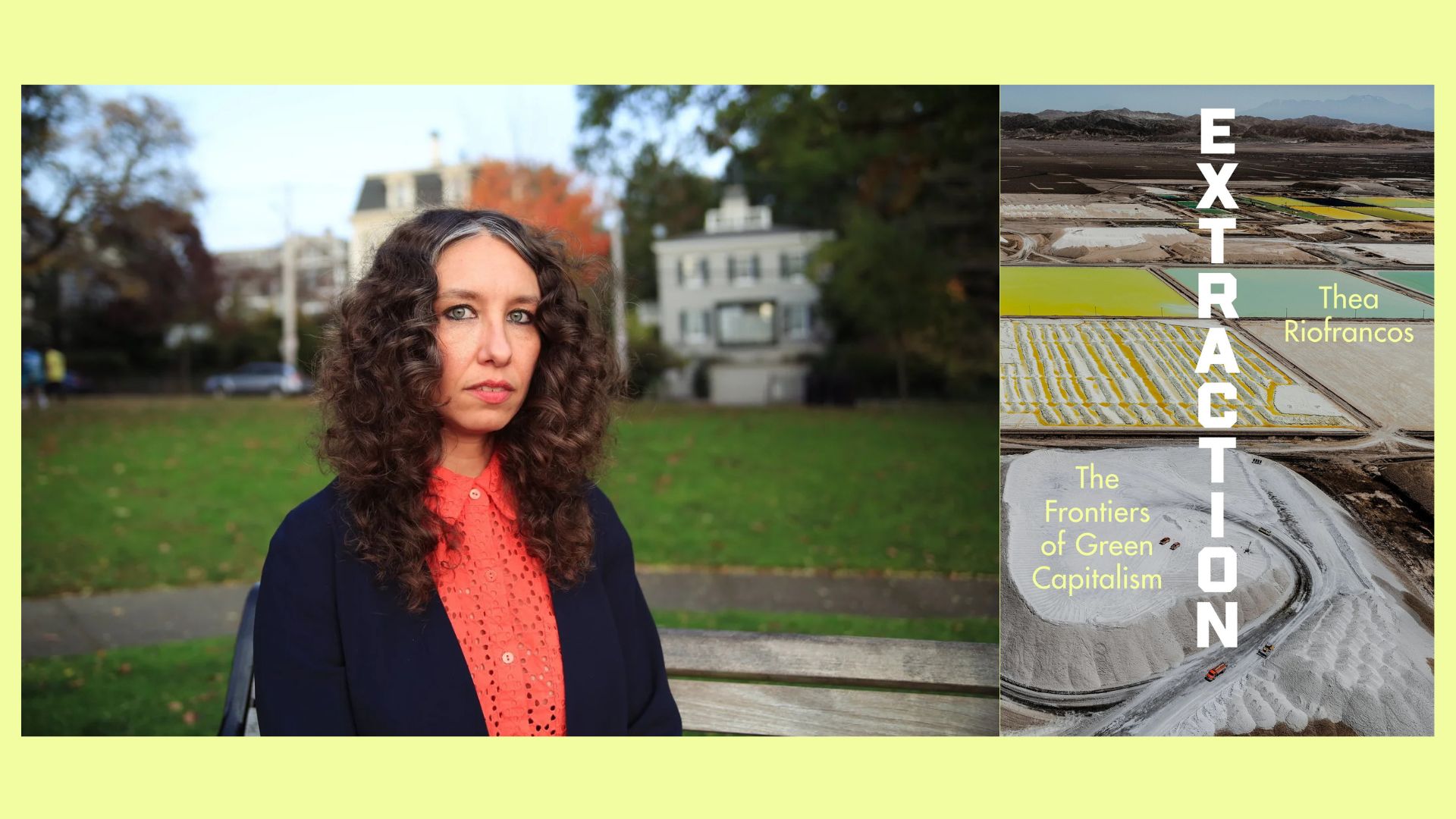
A Deep Dive into the Green Transition’s Lithium Question Inequality.org’s Chris Mills Rodrigo spoke with political scientist Thea Riofrancos last week about Extraction: The Frontiers of Green Capitalism, her new book tracing how the extraction of lithium, a key input for the batteries so essential for a green transition, affects communities and local environments. Here's an excerpt of their conversation. You can click the link below to read the rest.
Where did you land on the supposed tension between extraction and fighting climate change? In writing the book and through research I did with the Climate and Community Institute, I became more convinced that there is not a zero-sum conflict between wanting to preserve landscapes and protect communities from violent forms of extraction on the one hand and making progress on our climate goals and the energy transition on the other. A lot of the same approaches we need to take for a rapid and just energy transition would also result in less extraction needed to furnish the inputs.
An energy transition that focuses on mass transit, on affordable, dense, and green social housing, on publicly managed grids — all pillars of a more just transition, or a Green New Deal as we used to call it — would be less resource intensive than privatized forms of individual consumption like exurbs and the hulking vehicles that many Americans can’t afford anyway. |
|
|
War Profiteers Are Getting Richer: Time To Really Tax Their Corporations
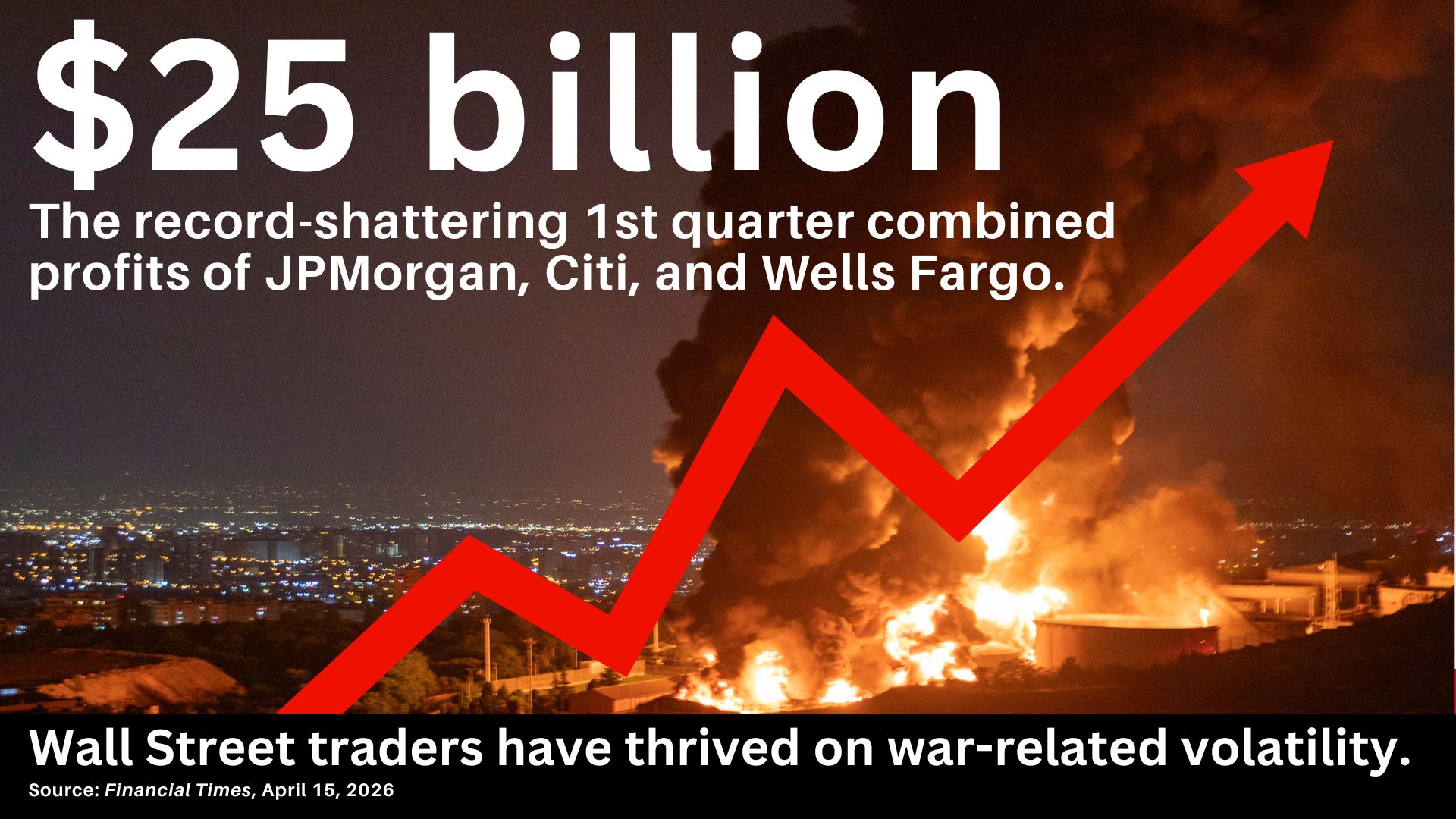
Americans this spring are suffering from spiking gasoline and food prices. Corporate execs, meanwhile, have been having a field day with the U.S.-Israeli war on Iran. Defense contractors are selling more weapons, and oil giants are celebrating higher prices at the pump.
All this war profiteering is exacting a terrible cost. How can we stop these profiteering gains from death and destruction? One way, Meghan Schneider and Cass DiPaola argue in a new Inequality.org analysis, would be to put in place a significant windfalls profit tax.
“Under the Trump administration, war profiteering has reached new extremes,” the pair point out. “Confronting corporate power and taxing the ultra-wealthy isn’t just about economic fairness — it’s a national security imperative.” More below. |
|
|
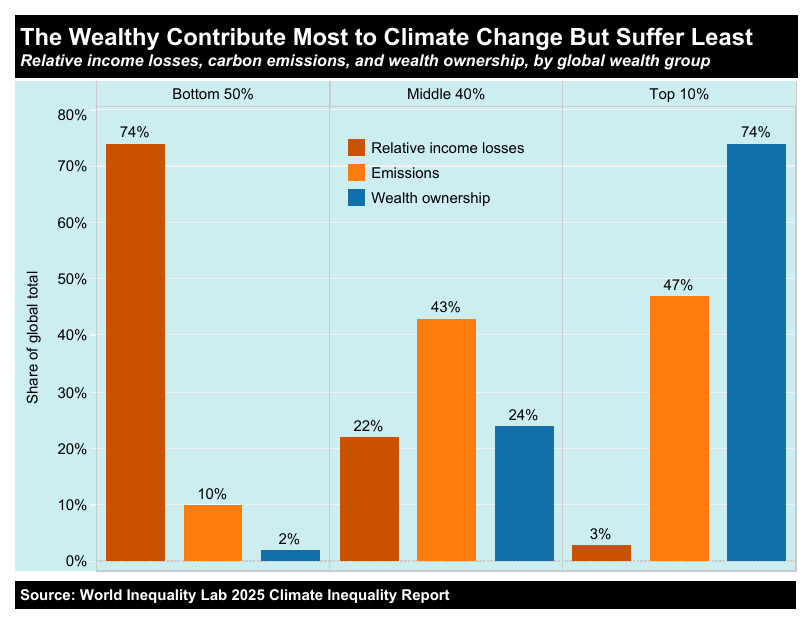
Climate change, let’s remember this Earth Day, has always been an inequality issue. The people who contribute the least to polluting our planet are paying the highest price for the damage that polluting is doing.
The poorest half of our world’s population is causing just 10 percent of global carbon emissions but is facing 74 percent of climate-impacted income losses. By contrast, notes the World Inequality Lab, the richest 10 percent generate nearly half of all emissions but experience only about 3 percent of income losses. For an interactive version of this chart and more on global inequality, click the link to our Inequality.org Facts section below. |
|
|
PETULANT PLUTOCRAT OF THE WEEK |
This Billionaire Is Hoping Ridicule Helps Rally His Billionaire Troops This week’s dour deep pocket: Daniel Loeb, the founder of the New York-based Third Point hedge fund. What has Loeb sour: New York governor Kathy Hochul’s proposed tax surcharge on second homes in New York City worth over $5 million. Her proposal would raise taxes on some 13,000 luxury properties and has won the enthusiastic support of New York mayor Zohran Mamdani. Hochul’s surcharge has also sparked a firestorm of billionaire opposition. Deep pockets — led by Loeb — have been deriding the new tax as a dumb gesture that would, if ever implemented, have the rich selling off their New York “drop-in” abodes and taking their leisure to tax havens like Florida.
Governor Hochul, Loeb has sneeringly announced, is “vying for Florida Realtor of the year.”
The last word: The proposed new surcharge, the Mamdani team calculates, would annually raise about $500 million, with big chunks of that coming from mega-billionaires like Ken Griffin, who owns a $238 million penthouse on Central Park South. If most of Griffin’s fellow super rich ever did choose to exit New York to avoid a tax surcharge, as Loeb claims they would, the sales value of their properties in the city would take an immediate and colossal nose-dive. |
INEQUALITY BY THE NUMBERS |
|
|
Chuck Collins, The case for blaming billionaires, Inside Philanthropy. The wealthy worth over $50 million — the top 0.1 percent — aren’t just buying mansions and boats. They’re buying senators, media outlets, and the political clout that can block popular reforms.
Dean Baker, We Don’t Need Billionaires, and We Can Structure the Market So We Don’t Have Them, Beat the Press. The polio vaccine. Insulin. The computer mouse. We didn’t need rich people to get any of these innovations. We don’t need them now.
Laura Nahmias, Nacha Cattan, and Ben Steverman, NYC’s Second-Home Tax Unites Mamdani, Hochul After Budget Fights, Bloomberg. New York’s governor and mayor have agreed on a new initiative to tax New York City’s rich. The move they’re backing would slap owners of second homes worth over $5 million with an annual tax surcharge on top of the property taxes these owners already owe.
Katherine Van Dyck, Wall Street is Turning Sports Into a Luxury Good For the Wealthy, New Report Details, American Economic Liberties Project. A new report examines what most threatens sports today: the power of the rich to treat athletes as commodities, children as profit centers, and fans as captive consumers.
Peter Dreier, Will Baseball’s Billionaire Owners Go on Strike? The Nation. Major League Baseball has 30 teams. Billionaires own 29 of them.
Joseph Stiglitz, Gabriel Zucman, and Zohran Mamdani, Tax day is a reminder of America’s unequal tax system. But we can fix it, The Guardian. In the 1960s, the 400 richest Americans paid about half of their income in taxes across all levels of government. Today, they pay less than a quarter. A Weakened IRS Has Substantial Consequences, Yale Budget Lab. Federal budget cuts have devastated the IRS capacity to audit America’s richest.
Gabriel Zucman, It’s Time to Tax Extreme Wealth in Mexico & Latin America, Mexico Solidarity Media. Over the last quarter century, the fortunes of the region’s billionaires have increased over sixfold.
Gabe Kaminsky, Billionaires, dark money fuel questions ahead of 2026 midterms, CBS News. Republican Party committees, super PACs, and assorted Trump-related groups had over $600 million in cash on hand in February. Democratic Party committees and super PACs held under $200 million. |
|
|
ON BILLIONAIRES AND THE REST OF US |
This newsletter and the whole Inequality.org project are powered by donations. We’re not raking in cash from the billionaire class, though. We’re counting on people to see why this reporting, research, and advocacy matters, and then to become paid subscribers, by making a recurring monthly donation of any amount. Make a monthly gift as a paid subscriber. Start your paid subscription today. |
|
|
Inequality.org | www.inequality.org | inequality@ips-dc.org Institute for Policy Studies
1301 Connecticut Avenue Ste 600
Washington, DC 20036
United States
Managing Editor: Chris Mills Rodrigo
Co-Editors: Sarah Anderson, Chuck Collins, Bella DeVaan, Reyanna James, and Sam Pizzigati |
|
|
|