A weekly newsletter from the Institute for Policy Studies |
|
|
Wealthy tax cheats, an oil exec's war windfalls, and a people's G20 agenda |
|
|
Greetings from Capitol Hill in Washington, D.C., where temperatures are now running over 90 degrees. For this Vermonter — who was shoveling snow only last week — it's all a bit jarring.
I’m here in D.C. with a wide array of national tax fairness activists for a news conference to support some promising new “tax the wealthy” initiatives. We’re also pushing lawmakers to restore IRS funding for chasing down tax cheats and bring back the free IRS Direct File program. This Americans for Tax Fairness toolkit has more details.
Who killed the enormously popular Direct File? Private tax preparation companies led by Intuit, the corporate home of Turbotax. Maybe we should be calling the money people have to shell out for help on their taxes the “Intuit Tax.”
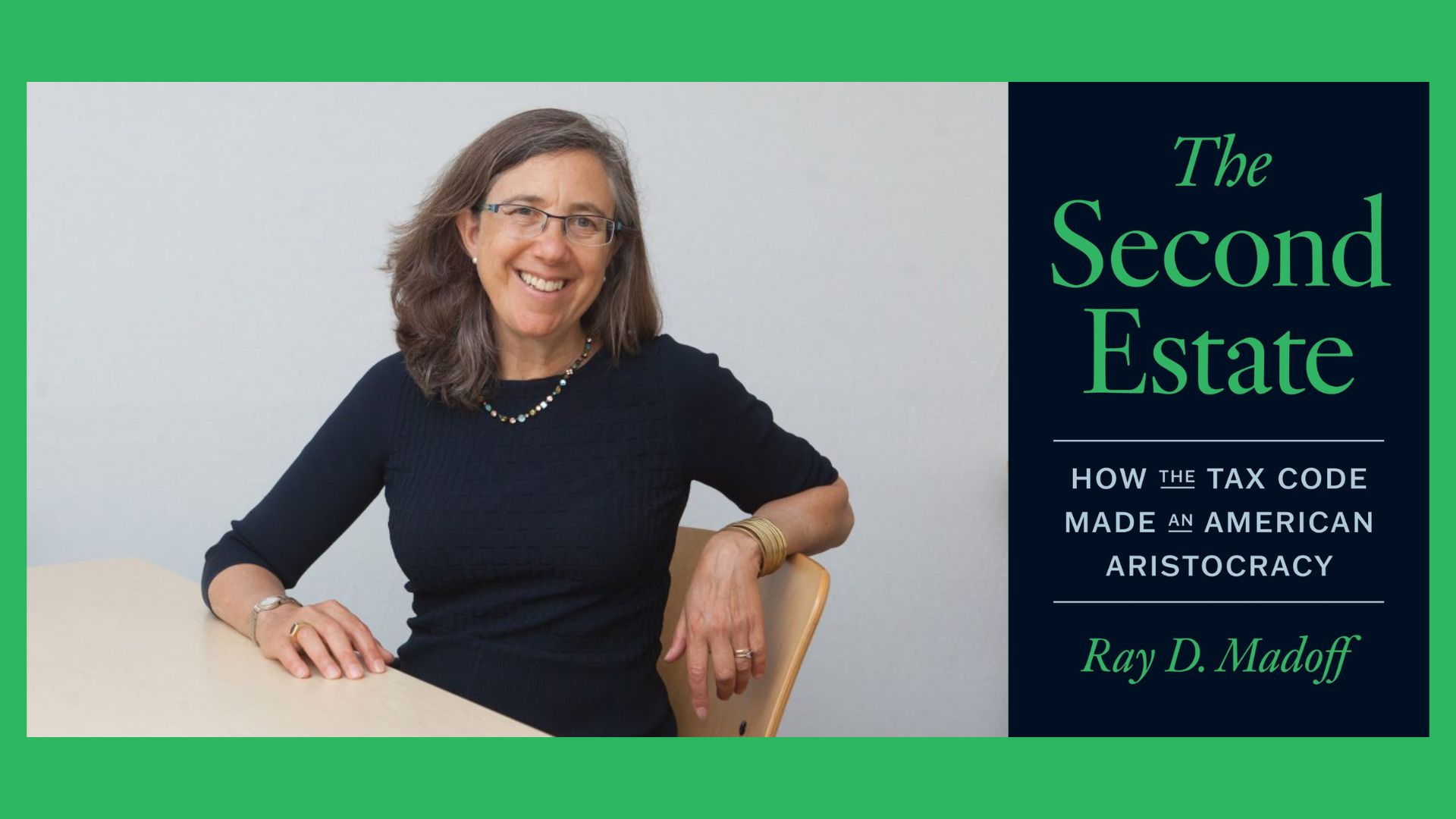
This past week I also had the opportunity to talk to my friend Ray Madoff about her new book, The Second Estate, a close-up look at how our billionaire class is opting out of taxes entirely and what we can do about it. More in our Q&A below.
New data from the Yale Budget Lab is backing up Madoff’s analysis. IRS funding cuts and layoffs, the Yale folks show, have cost the federal government $861 billion in lost revenue. Most of that loss comes from taxes our richest don’t pay.
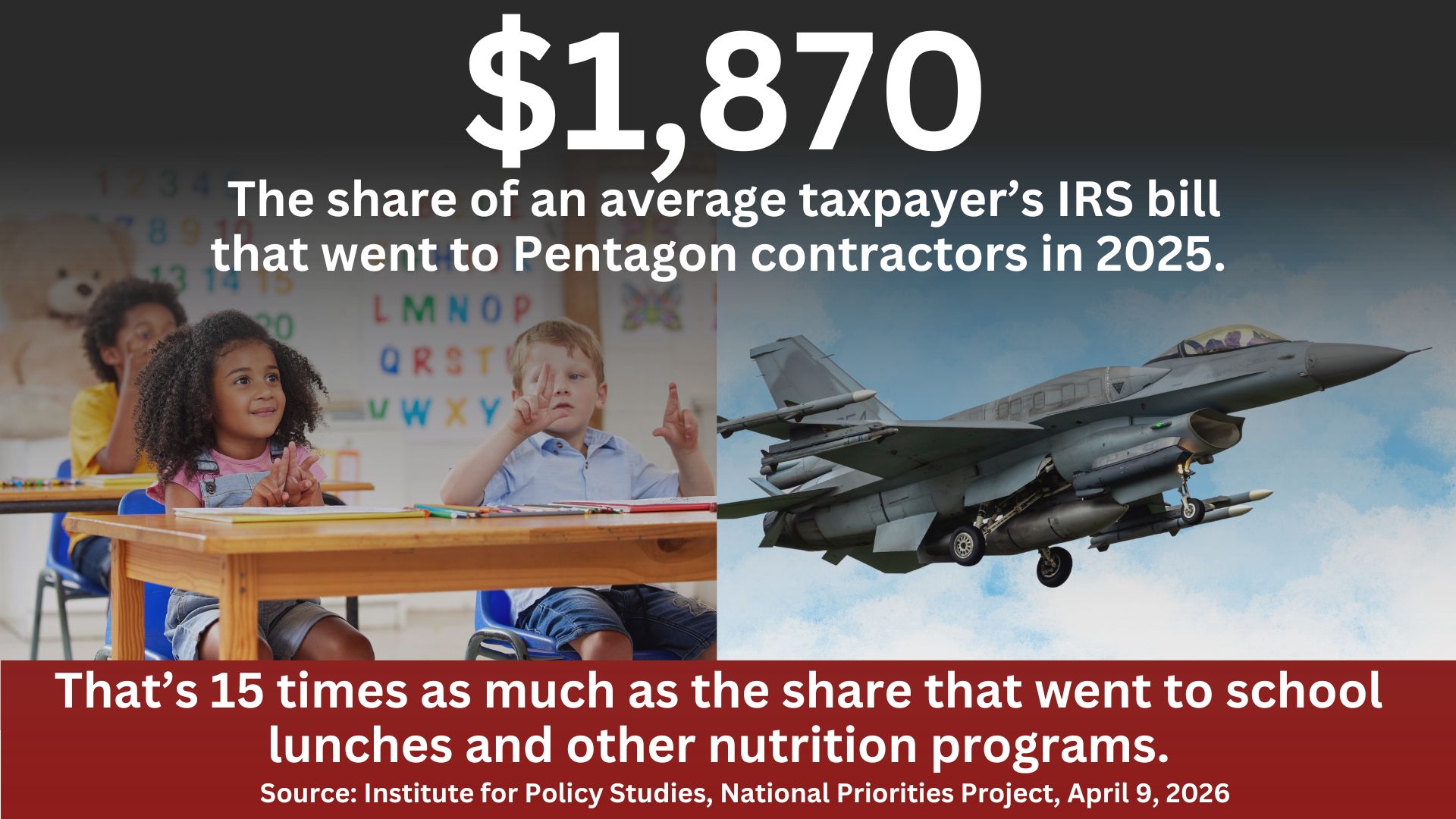
All this top 0.1 percent tax dodging has the rest of us stuck picking up the tab for everything our tax dollars underwrite, including Trump’s wars. Federal outlays for weapons and war, our colleagues at the National Priorities Project estimate, last year cost the average American taxpayer about $4,000. Chuck Collins
for the Institute for Policy Studies Inequality.org team |
|
|
Exposing How the Rich Take Advantage of the Tax Code with Ray Madoff
Inequality.org’s Chuck Collins last week spoke with Boston College Law School professor Ray Madoff about her new book chronicling how our ultra-wealthy are bending the tax code to their own advantage. We have a portion of their conversation below. Just click the link after this excerpt to read the rest. In your book, you talk about how the tax code constantly needs to be enforced and updated to address avoidance and loopholes. Yes, any tax system requires enforcement. It’s been well proven that a small investment in IRS enforcement produces tremendous revenue for the country. There is absolutely no justification for the current state of our defunded IRS. This only provides an additional benefit to the wealthiest who would otherwise be required to pay taxes. It’s troubling for the country that we would allow flagrant tax avoidance to occur due to a lack of enforcement. Our tax system also needs constant legislative and regulatory oversight. I would say that the income tax has been somewhat regularly revised, but where we really see the problem is with the estate tax.
Wealthy Americans can avoid taxable income because they don’t take salaries and they don’t sell their assets. They instead borrow, and then, on top of that, they inherit great wealth. Under our just basic tax rules, any money received by inheritance is free of income taxes, entirely free. You don’t even have to report it. Somebody who inherits $10 million or $100 million doesn’t have to tell anyone that they’ve received that money. |
|
|
People-Powered Alternatives to a Billionaire-Driven G20 Agenda
Donald Trump will this year assume the presidency of the G20, a major platform where world leaders address global economic issues. Over the past two years, Brazil and South Africa have used their terms at the helm of the G20 to address the key challenges of our times, including inequality, debt, and climate change.
Instead of building on this progress, Trump plans to prioritize the interests of elites and corporations, particularly Big Tech and Big Oil. He’s also closing traditional channels that enable women’s groups, labor unions, youth representatives, and other stakeholders to engage in the official process.
In an Inequality.org exclusive, Oxfam America’s Charlotte Friar is calling on civil society to seize this moment to create openings for a different kind of global leadership, for organizing across borders for an agenda that puts people first. “Now is the time for people, institutions, and movements to unite and champion bold new forms of multilateral cooperation that serve billions, not billionaires,” Friar writes. Read more below. |
|
|
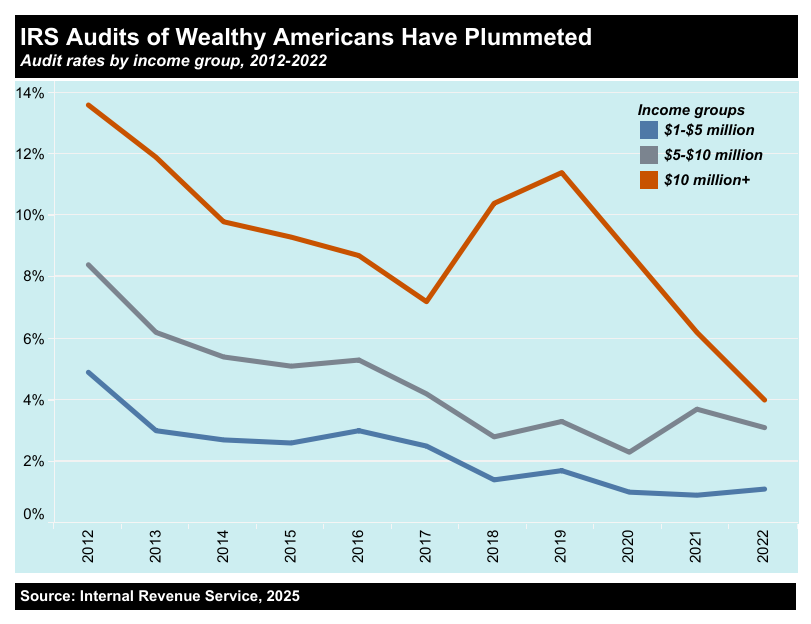
Congress recently passed a federal budget that delivers yet another blow to tax enforcement, slashing IRS funding by $1.1 billion and clawing back the increased money for tax enforcement approved in 2022 under the Inflation Reduction Act.
These new cuts — championed by Republicans and the Trump administration — continue a years-long push to weaken the agency. The predictable result: ever fewer audits of the tax returns our wealthiest file. Even before these latest rollbacks, audit rates for people earning over $1 million had already plummeted. |
|
|
PETULANT PLUTOCRAT OF THE WEEK |
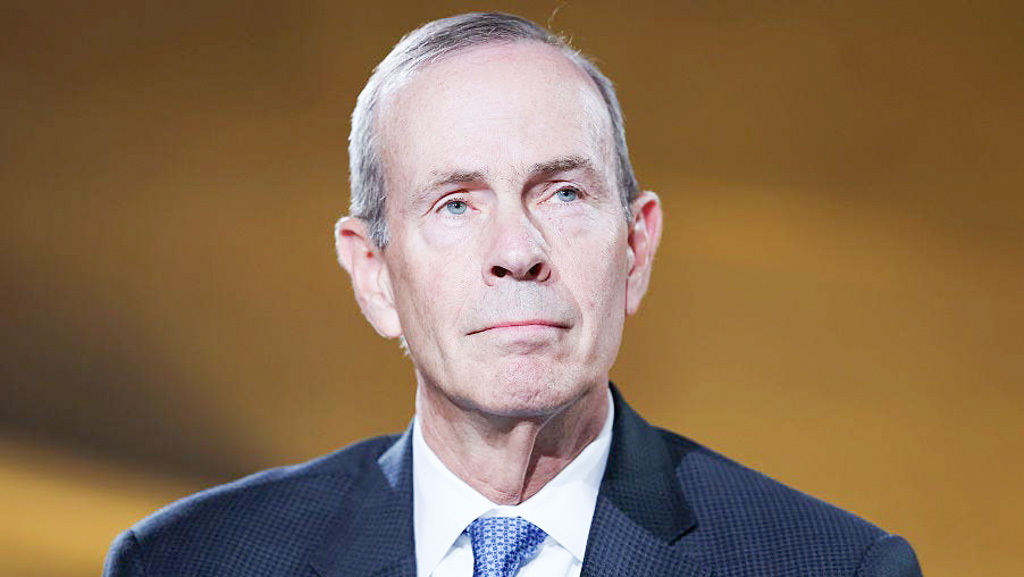
Sometimes Even Our Wealthiest Fossil-Fuel Execs Need a Pick-Me-Up This week’s dour deep pocket: Michael Wirth, the 65-year-old CEO of the Big Oil giant Chevron.
What has Wirth sour: his “sinking” annual compensation. Wirth pocketed a mere $26.8 million last year, an official filing with the federal Securities and Exchange Commission revealed last week, a total down a whopping 18 percent from his 2024 take-home.
But life here in 2026 has turned a little bit brighter for the Chevron chief. So far this year, the Wall Street Journal has just reported, Wirth has reaped a $104 million personal profit selling shares of the Chevron stock he owns, a windfall the Journal credits to “Trump’s bombing campaign against Iran.”
What’s Wirth have in the works for an even more lucrative tomorrow? By 2027, under current Chevron plans, his fossil-fuel colossus will have up and running in west Texas a gas-fired power plant for artificial intelligence data centers.
The last word: The cash windfalls oil execs like Wirth are making from the war on Iran, notes climate journalist Emily Atkin, “won’t go primarily toward yachts and private jets (they already have those).” Their new millions will be going instead “toward political campaigns and lobbying organizations dedicated to fighting climate regulation, blocking clean energy policy, and fueling authoritarianism.”
|
INEQUALITY BY THE NUMBERS |
|
|
What's new on Inequality.org
Chris Mills Rodrigo, Exploring Extractive Frontiers: A Q&A with Thea Riofrancos. In Extraction, the researcher and organizer chronicles the tensions between resource extraction and the lithium demands of a green transition. Elsewhere on the web
Bob Lord, The American Experiment Has Been Infected by Oligarchs, Mother Jones. How our tax system guarantees extreme wealth concentration.
Hamilton Nolan, How To Put Money Directly Into Union Power, How Things Work. What has fueled the enormous rise in economic inequality that has produced our modern American oligarchy? The decline in America’s trade union presence. A new national group aims to change that.
Conor Lynch, To Tax the Ultra-Rich, We Need to Go After Their Wealth — Not Just Income, In These Times. The alternative: an ever-more-powerful billionaire class that threatens democracy itself. Timothy Noah, A Ridiculous New Book Says We Don’t Love the Rich Enough, The New Republic. Sure, our wealthiest have more power than ever. But don’t worry, they’re better than we are!
Jessica Forden, How Long-Term Care Costs Drain the Middle Class and Deepen Intergenerational Wealth Inequality, Roosevelt Institute. Only the richest Americans can recover from the financial toll that long-term care — the eldercare assistance that Medicare doesn’t cover — exacts on over half of older Americans.
Atlanta CEOs’ Pay Ratios Expose Wide Worker Gaps, Atlanta Today. Envious CEOs nationwide have Georgia on their mind. The Atlanta-based chief exec at Coca-Cola last year pulled down 1,739 time more than the typical Coke worker.
Paul Waldman, Think People Hate Billionaires? We're About to Get Trillionaires, Substack. Oil magnate J. Paul Getty once rated as the world’s richest man. The $2 billion he held at his 1976 death would be worth $11.5 billion today — and place him 265th on the current Forbes 400.
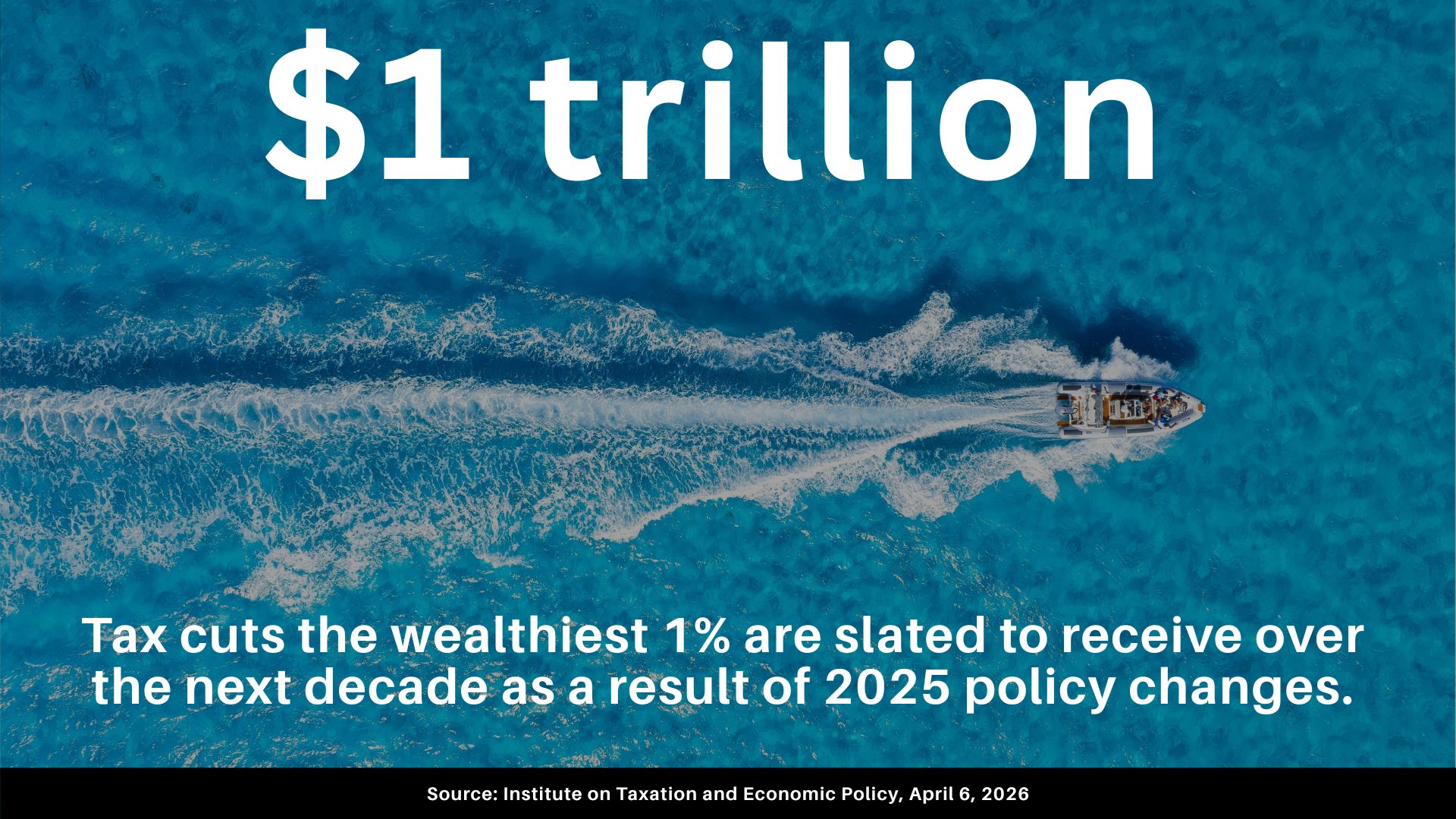
Steve Wamhoff, Despite Any Refunds, You’re Probably Paying More Taxes Under Trump While Richest Pay Less, Institute on Taxation and Economic Policy. Average taxpayers who focus only on the federal income tax may think they’re paying less in taxes than they did pre-Trump. They’re most certainly not. |
|
|
ON BILLIONAIRES AND THE REST OF US |
This newsletter and the whole Inequality.org project are powered by donations. We’re not raking in cash from the billionaire class, though. We’re counting on people to see why this reporting, research, and advocacy matters, and then to become paid subscribers, by making a recurring monthly donation of any amount. Make a monthly gift as a paid subscriber. Start your paid subscription today. |
|
|
Inequality.org | www.inequality.org | inequality@ips-dc.org Institute for Policy Studies
1301 Connecticut Avenue Ste 600
Washington, DC 20036
United States
Managing Editor: Chris Mills Rodrigo
Co-Editors: Sarah Anderson, Chuck Collins, Bella DeVaan, Reyanna James, and Sam Pizzigati |
|
|
|