A weekly newsletter from the Institute for Policy Studies |
|
|
The world’s richest man just happened to pop up on a call the other day between the leaders of the United States and India. The White House isn’t saying why Elon Musk dialed in to the Trump-Modi convo on Iran. But with the world’s richest billionaire aiming to expand operations in India, it’s hardly surprising that he’d try to grease the wheels by horning in on this high-level tête-à-tête.
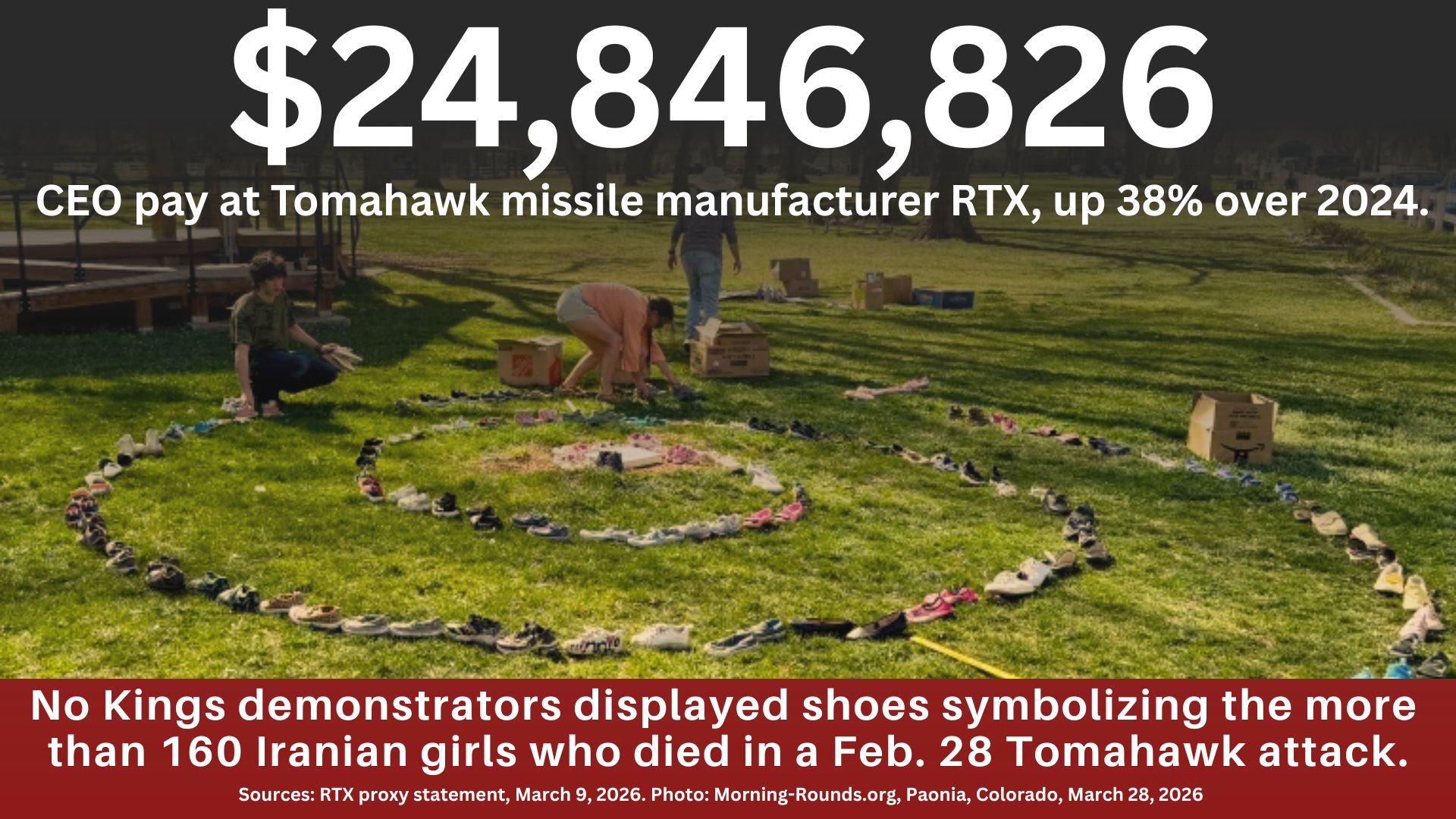
Rich men certainly do have a knack for turning war to their advantage. Look at billionaire Jared Kushner. His father-in-law made him a Mideast envoy, and, ever since, he’s been busily using that gig to hit up Arab leaders for private equity investments. And military contractor CEOs are pocketing even fatter paychecks, thanks to our bloated Pentagon budget.
Meanwhile, with the Iran conflict death tolls climbing, the war’s sky-high economic costs are slamming ordinary Americans.
Our colleague Chisom Okorafor points out that Gen Zers like her were already less financially secure than previous generations. Now the Iran “excursion” is making a tough job market even more brutal. You can read Chisom’s commentary and related Institute for Policy Studies analysis in our new Iran Reader. Sarah Anderson
for the Institute for Policy Studies Inequality.org team |
|
|
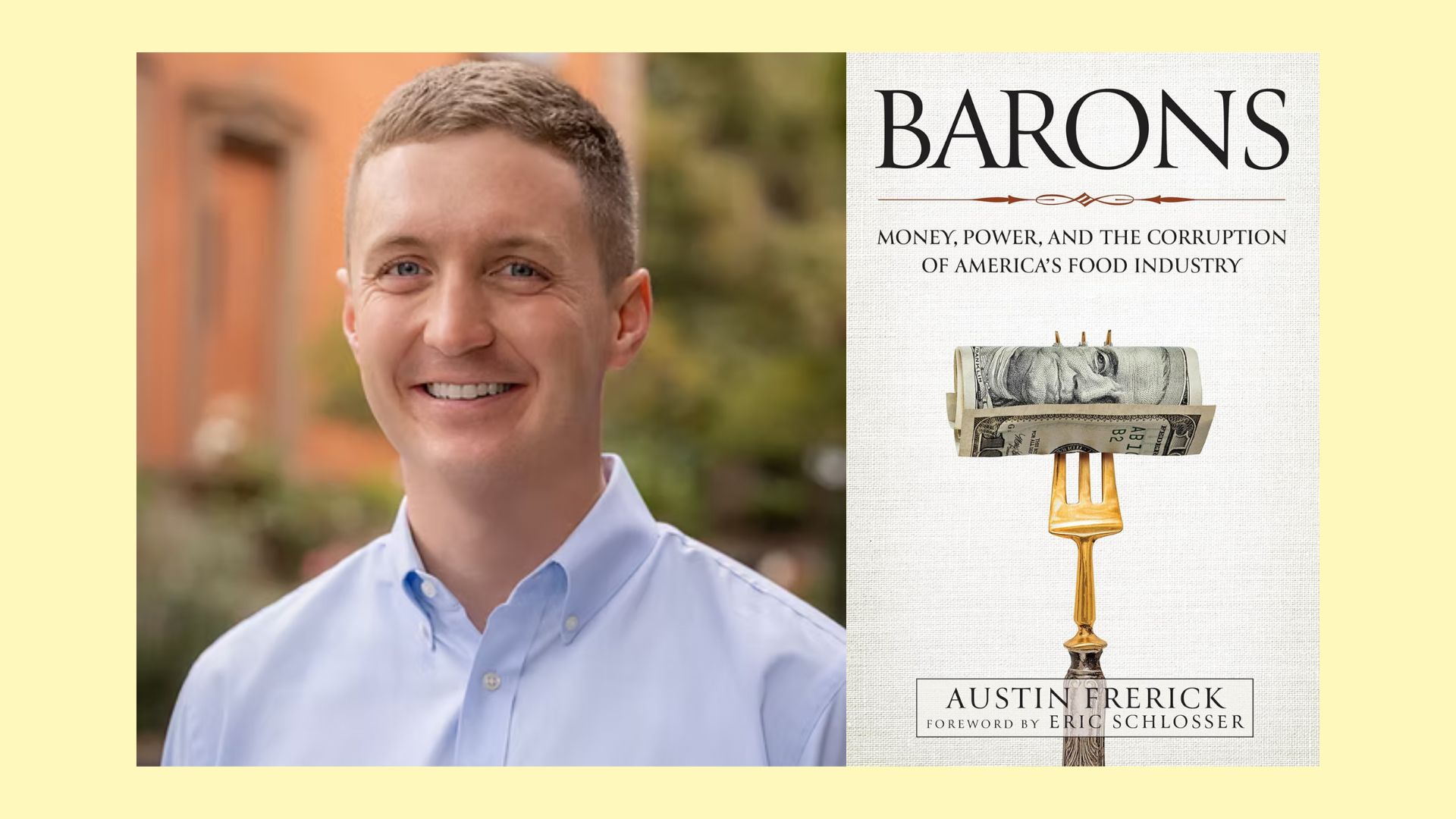
Naming and Shaming America’s Food Barons with Austin Frerick Inequality.org spoke with researcher and author Austin Frerick earlier this week about Barons, his 2024 book that documents eight cases of extreme corporate consolidation across the American food industry. Below: a portion of our conversation. Click the link below to read the rest.
Corporations are buying up more and more of America’s food supply chain. How is this affecting how much money American families are spending on food and the quality of that food?
Frerick: They’re paying more for lower quality food. To me, the best silver lining for hope here is that everyone is seeing that the system does not work. There’s even the cliche of the yuppie that lives in Manhattan who visits Europe and comes back saying that the food just tastes better and is cheaper.
My first few times talking about this book I could see people agreeing with me, but then, in the back of their minds, thinking I was asking them to pay more for their food. So now one of the first things I show — and this is something I added in the paperback version — is how much more average Americans spend on groceries than their western peers.
Concentrated markets price gauge. I want people to understand that they’re paying more for lower quality. |
|
|
Make America Healthy Again? Start by Breaking Up Big Ag
Despite Donald Trump’s promises on the campaign trail, he has done little to help Americans get healthier. In fact, he has sided with factory farms and pesticide producers at every turn. Through steady corporate consolidation, Big Ag continues to poison Americas farms and produce while driving up profit margins.
If Trump — and Robert F. Kennedy Jr. — really wanted to take making our country healthy again seriously, they would be moving to break the stranglehold that corporate titans hold over food production. They would directly confront power, writes food researcher Amanda Claire Starbuck, and diminish Big Ag’s power to dodge regulations and evade culpability for making us all sick. |
|
|
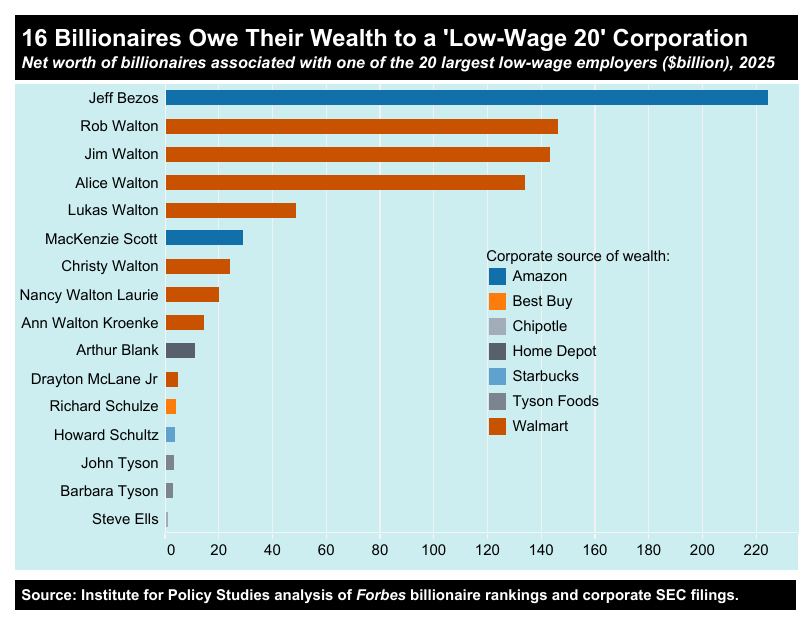
At least 16 U.S. billionaires owe their wealth to one of America’s 20 largest low-wage employers — corporations where a significant share of workers earn so little they have to rely on public assistance. Eight of these billionaires owe their good fortune to Walmart. Amazon and Tyson Foods have two members in this elite club, while Home Depot, Best Buy, Starbucks, and Chipotle each have one.
Median worker pay at these firms ranges from $14,674 at Starbucks to $43,417 for Tysons meat processors. Learn more in the article below by our Inequality.org co-editors Sarah Anderson and Reyanna James. |
|
|
PETULANT PLUTOCRAT OF THE WEEK |
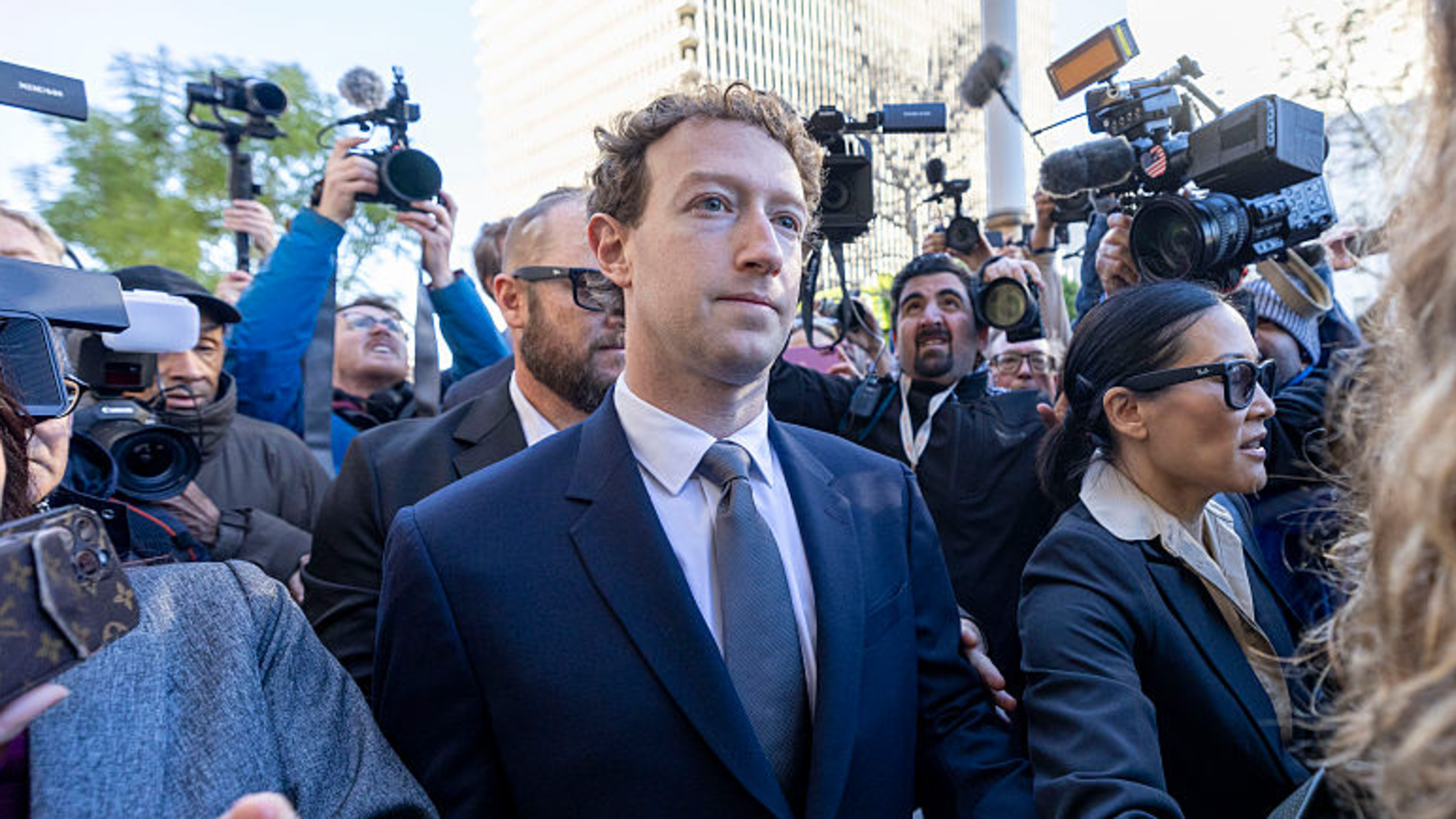
This CEO Had a Shot at Justifying His Corporate Value — and Blew It This week’s dour deep pocket: Mark Zuckerberg, the chief exec of Meta, the home of Facebook and Instagram, two of the world’s three biggest social media apps, with over six billion active users.
What has Zuckerberg sour: his sinking personal fortune and his abject failure — at a just-concluded landmark courtroom trial — to turn that sinking around.
The verdict in that trial came last week. A Los Angeles jury found in favor of a now 20-year-old woman, known by the initials KGM, who charged that Meta had deliberately designed Facebook and Instagram to hook kids as young as six into using the apps compulsively. In her own case, that compulsive use ranged up to 16 hours in a single day and led to depression and self-harm.
At one point in the six-week trial, KGM’s attorneys revealed a Zuckerberg memo that openly encouraged his execs to make increasing the time teens spend on the company’s apps a top priority.
Zuckerberg testified last month — unconvincingly — in his own company’s defense. Young people, he insisted, spend time on Meta apps because they appreciate the value the apps offer: “If people feel like they’re not having a good experience, why would they keep using the product?”
The last word: Zuckerberg’s personal fortune peaked at $264 billion last October and then began dropping. Last week ended with his net worth down to $187 billion. KGM’s victory over Meta, analysts note, “will almost certainly open the floodgates” to more litigation — and sink his wealth even further.
|
INEQUALITY BY THE NUMBERS |
|
|
Take a break from reading to watch our own Bella DeVaan, the new director of the Charity Reform Initiative, in conversation with Brad Smith, the leader of the Philanthropy Network, and Glen Galaich, CEO of the Stupski Foundation.
Mark Kreidler, More States Are Taxing the Ultra-Rich — Washington Is the Latest, Capital & Main. Washington state’s governor has signed into law legislation that applies a 9.9 percent tax rate to personal income above $1 million. The state estimates the new levy will impact 20,000 of Washington’s richest households.
Troy Wolverton, Billionaire-tax author pushing for bigger, broader levy on the ultrawealthy, San Francisco Examiner. A University of California-Berkeley tax expert is proposing an innovative new approach to taxing the wealth of America’s wealthiest that could avoid a U.S. Supreme Court veto.
Giovanni Legorano, The World’s Tax-the-Rich Debate Is Heating Up, Foreign Policy. Efforts to combat income and wealth inequality are advancing across the United States and Europe. Usamah Andrabi, AI Is the New AIPAC, The Nation. Artificial intelligence industry billionaires have now created our nation’s latest corporate lobbying giant.
David Sirota, Even Oligarchs Know The System Is Rigged, Lever. That even Wall Streeters like Anthony Scaramucci and Lloyd Blankfein are now blasting away at wealth inequality shows just how far our political conversation has shifted.
Louisa Clarence-Smith, American billionaires prepare for ‘tax the rich’ wildfire, The Times. Billionaires like Alex Karp, the CEO of Palantir, are starting to see pitchforks in America’s future: “The country could blow up politically — and none of us are going to make any money when the country blows up.”
John Miller, The Undertaxed Rich, Dollars & Sense. Mitt Romney’s call to raise the taxes the rich like him pay has rendered the Wall Street Journal editors apoplectic. They claim that America’s rich are bearing an unreasonably high tax burden, a claim that immediately collapses under anything near close scrutiny.
Ariana Bindman, Hundreds of millionaires are trying to escape the US, SFGate. Growing numbers of Americans are obtaining “golden visas,” an extremely expensive — and highly controversial — form of residency abroad inaccessible to average Americans.
Livia Giannotti, ‘Rich people won’t give their money unless you reward them’: Brian Eno on redistributing wealth and using his art to make connections, Spears. The super rich, charges globally famed artist Brian Eno, have so far been “incredibly useless” in supporting philanthropic causes. |
|
|
ON BILLIONAIRES AND THE REST OF US |
This newsletter and the whole Inequality.org project are powered by donations. We’re not raking in cash from the billionaire class, though. We’re counting on people to see why this reporting, research, and advocacy matters, and then to become paid subscribers, by making a recurring monthly donation of any amount. Make a monthly gift as a paid subscriber. Start your paid subscription today. |
|
|
Inequality.org | www.inequality.org | inequality@ips-dc.org Institute for Policy Studies
1301 Connecticut Avenue Ste 600
Washington, DC 20036
United States
Managing Editor: Chris Mills Rodrigo
Co-Editors: Sarah Anderson, Chuck Collins, Bella DeVaan, Reyanna James, and Sam Pizzigati |
|
|
|