A weekly newsletter from the Institute for Policy Studies |
|
|
American economic growth slowed in the fourth quarter of 2025 to a feeble 0.7 percent. But at least the economy is still growing, right? Unfortunately, a look under the hood presents a much more worrying picture.
Almost the entirety of GDP growth came from AI firm spending on server capacity and computer chips. The rest of the economy's contribution? Around 0.04 percentage points, or, put more casually, nothing. The virtual entirety of economic growth is coming from data centers, which local communities deeply revile, and chips to power AI agents that are at best frustrating and at worst directly threatening American jobs.
That the fate of the American economy — and with it, most of our retirement accounts — is so deeply entwined with one industry is almost certainly bad news. Where does that leave us? One thing to remember: as consumers, we do have choices to make. Could refusal to use ChatGPT at work or interface with AI customer service agents slowly deflate the AI industry before it implodes? It's worth a try. Chris Mills Rodrigo
for the Institute for Policy Studies Inequality.org team |
|
|
INEQUALITY BY THE NUMBERS |
A Worker-Led Plan for Taxes on Firms With Huge CEO-Worker Pay Gaps
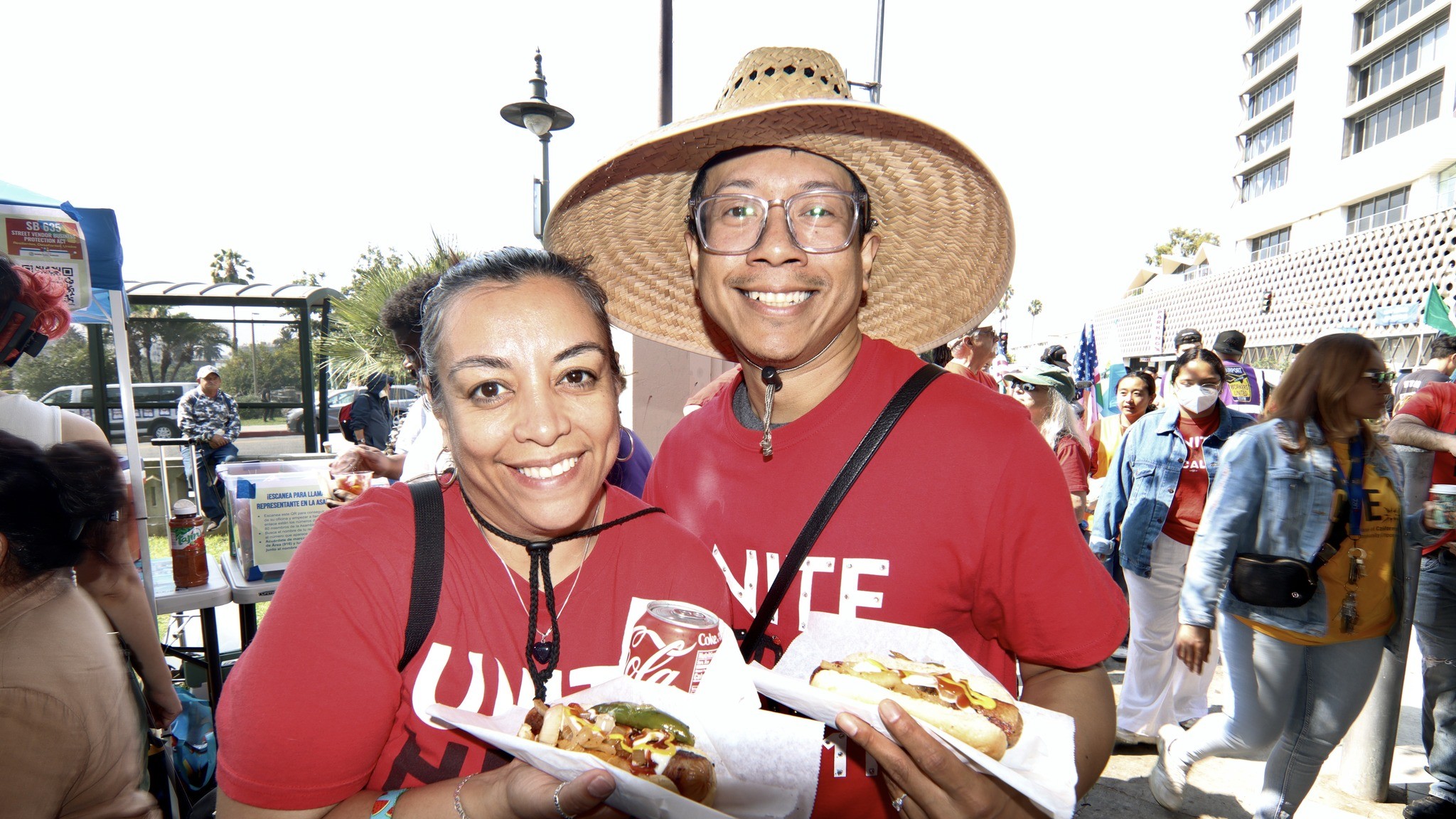
This week’s frontline face: Lisandro Preza, pictured on the right above, works as a cashier in Los Angeles for Paradies Lagardère, a company that operates retail stores and restaurants at airports around the world.
What he’s doing to help create a more equal world: Preza is mobilizing support for a November ballot measure in LA that would hike taxes on companies with huge gaps between their CEO compensation and their median worker pay.
Dubbed an “Overpaid CEO Tax,” this proposal would impose a surtax on LA’s local gross-receipts tax, kicking in at pay ratios of more than 50 to 1. The tax would generate an estimated $500 million in annual revenue, with the funds going to affordable housing, after-school programs, and wider access to healthy food.
What makes this fight so important to him: Preza works full-time and still feels just “one rent increase away” from losing his apartment.
“Between skyrocketing housing costs and paying for the medication that keeps me alive, there’s nothing left at the end of the month,” says Preza. “If an Overpaid CEO Tax means big corporations finally pay their fair share so workers like me can afford housing and healthcare, that’s not radical — that’s survival.”
For more on Overpaid CEO Tax ballot initiatives in Los Angeles and San Francisco, check our co-editor Sarah Anderson’s just-published Nation article. |
|
|
Washington State Offers a Bold New Model for Millionaire Taxes
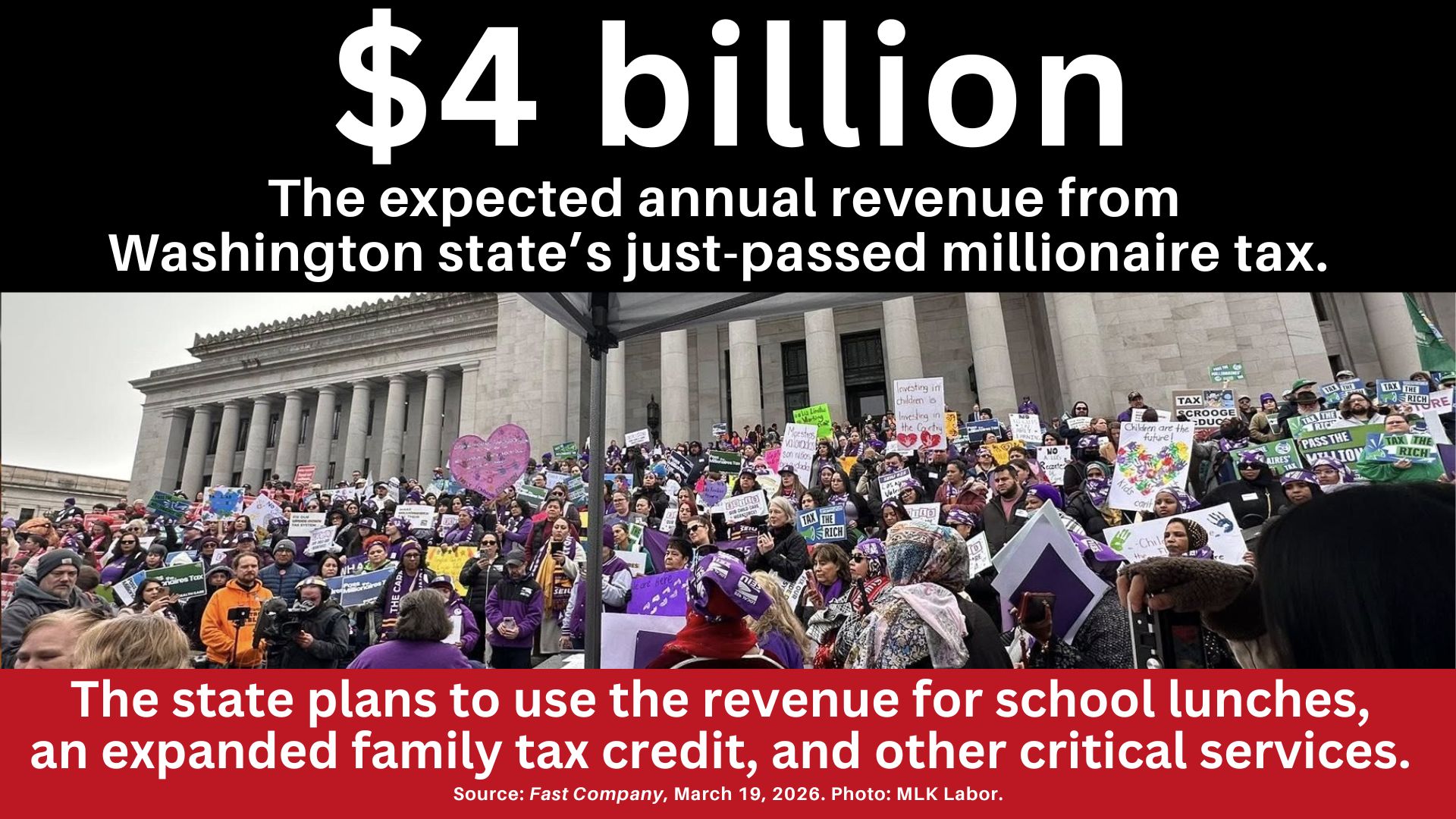
Washington is one of a handful of states that do not charge its residents a state income tax. That's going to change in 2028 — but just for those making over $1 million a year. Starting January 1 of that year, all income over $1 million will face a 9.9 percent tax that may raise as much as $4 billion in revenue. Those dollars, governor Bob Ferguson notes, could fund free and reduced school lunches.
Washington's new millionaire tax, approved by state lawmakers last week, comes amid a flurry of city, state, and federal efforts to rein in the ultra-rich. Washington state, Institute for Policy Studies analyst Omar Ocampo points out in Fast Company, could be a “trailblazer” for advancing targeted taxes on our wealthiest.
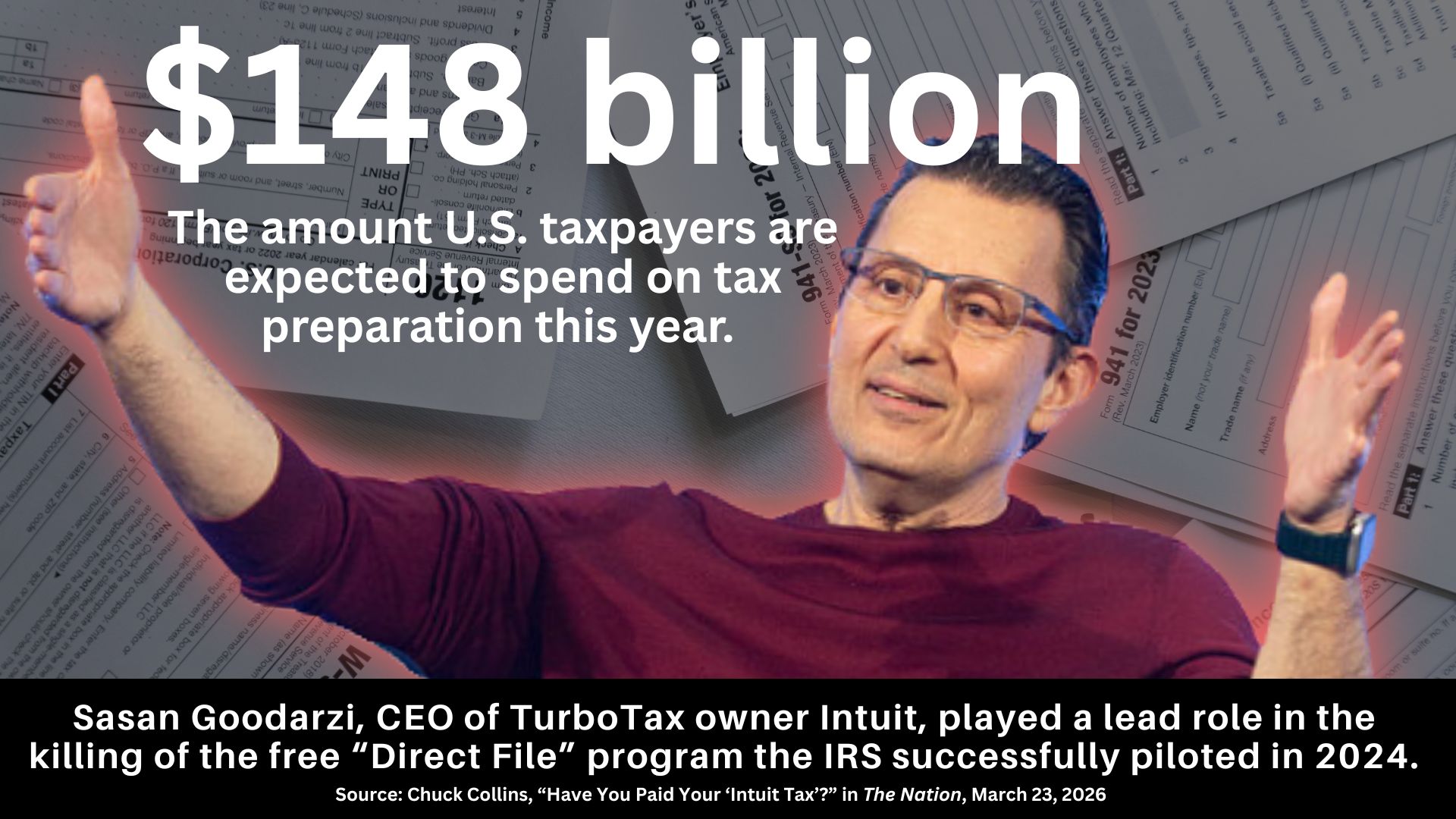
Sellouts to America’s billionaire class at the federal level, Chuck Collins recently explained in Capital and Main, make state action that much more important. To read more on Washington state’s new millionaire tax, click below. |
|
|
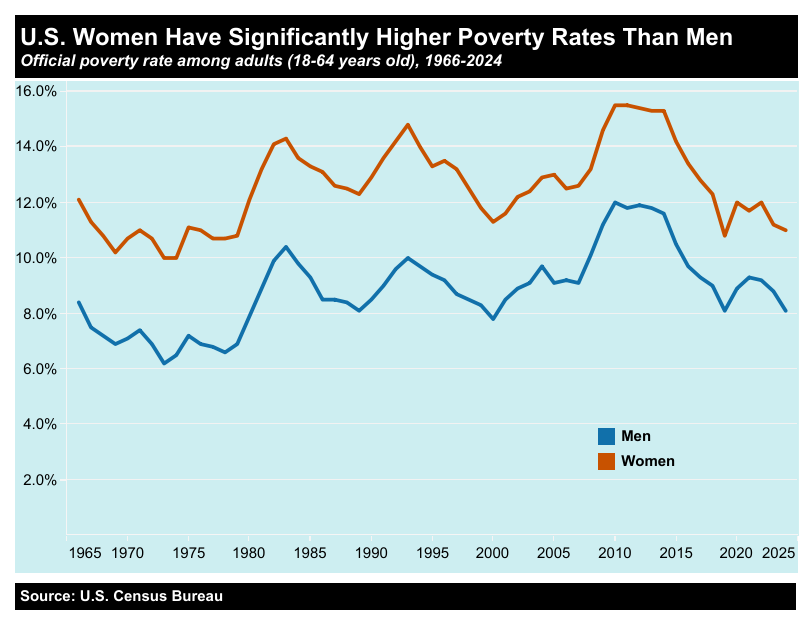
This Women's History Month, many are celebrating the vital contributions women make across our society. Yet women continue to be scarce at the top of the income ladder, making up, for example, just 11 percent of Fortune 500 CEOs.
Meanwhile, women experience significantly higher poverty rates than men. In 2024, 11 percent of women aged 18-64 were living below the poverty line, compared with just 8.1 percent of men in the same group. For an interactive version of this chart and more on gender economic inequality, click the link below. |
|
|
PETULANT PLUTOCRAT OF THE WEEK |
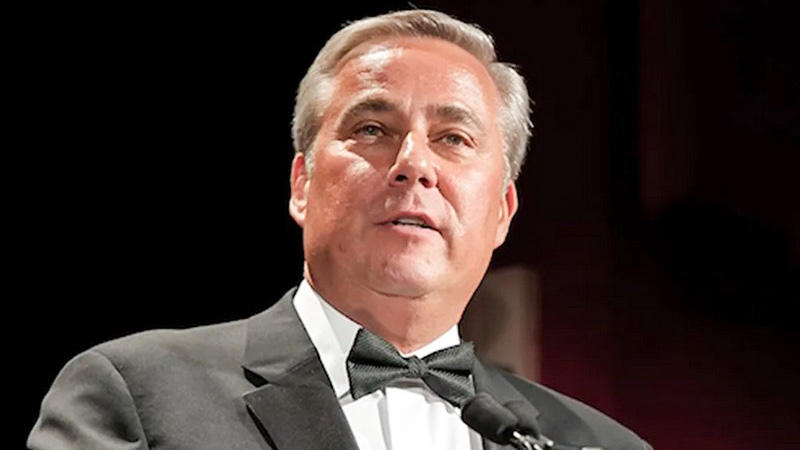
Who Better To Run Local TV News Than a National Corporate Goliath? This week’s dour deep pocket: Perry Sook, the CEO of Nexstar, the media giant that’s rapidly monopolizing America’s local TV station market. Sook’s annual personal pay hit $35.9 million in 2024.
What has Sook sour: the broad opposition to the $6.2-billion deal he cut last year to buy TEGNA, his top rival for control over America’s local broadcast TV stations. That deal violated a Federal Communications Commission rule that prohibits any media giant from owning local stations that reach over 39 percent of U.S. households. Sook’s 265 stations, with TEGNA, would reach 80 percent.
Just like Donald Trump, Sook declared last November, we want to end “antiquated constraints on local television ownership.” In the meantime, he indicated, a waiver from the FCC rule would do just fine.
Public interest groups have labeled Sook’s TEGNA deal an extension of the Trump assault on press freedom. Nexstar, Common Cause points out, already has local stations airing identical conservative news scripts and corporate content. Last Wednesday, eight state attorneys general filed suit to block Nexstar’s TEGNA embrace. The next day the FCC granted the merger a waiver.
The last word: State attorneys general have now filed a motion for a temporary restraining order to stop Nexstar from swallowing up TEGNA’s stations. Pledges the California AG Rob Bonta: “I will not let these corporate behemoths merge without a fight.” |
|
|
What's new on Inequality.org
Sarah Anderson and Reyanna James, Sixteen Billionaires Who Made Their Fortunes Off the Backs of Low-Wage Workers. Such obscene inequality is spurring actions to use tax policy to shrink billionaire fortunes. Elsewhere on the web
Mark Kreidler, More States Are Taxing the Ultra-Rich — Washington Is the Latest, Capital & Main. Washington’s governor will soon be signing into law legislation that applies a 9.9 percent tax rate to personal income above $1 million. The state estimates the new levy will impact 20,000 of Washington’s richest households.
Troy Wolverton, Billionaire-tax author pushing for bigger, broader levy on the ultrawealthy, San Francisco Examiner. A UC Berkeley tax expert is proposing an innovative new approach to taxing the wealth of America’s wealthiest that could end run a possible U.S. Supreme Court veto.
Giovanni Legorano, The World’s Tax-the-Rich Debate Is Heating Up, Foreign Policy. Efforts to combat income and wealth inequality are advancing across the United States and Europe. Usamah Andrabi, AI Is the New AIPAC, The Nation. Artificial intelligence industry billionaires have now created our nation’s latest corporate lobbying powerhouse.
David Sirota, Even Oligarchs Know The System Is Rigged, Lever. That even Wall Streeters like Anthony Scaramucci and Lloyd Blankfein are now blasting away at wealth inequality shows just how far our political conversation has shifted.
Louisa Clarence-Smith, American billionaires prepare for ‘tax the rich’ wildfire, The Times. Billionaires like Alex Karp, the CEO of Palantir, are starting to see pitchforks in America’s future: “The country could blow up politically — and none of us are going to make any money when the country blows up.”
John Miller, The Undertaxed Rich, Dollars & Sense. Mitt Romney’s call to raise the taxes the rich like him pay has rendered the Wall Street Journal editors apoplectic. They claim that America’s rich are bearing an unreasonably high tax burden, a claim that immediately collapses under anything near close scrutiny.
Ariana Bindman, Hundreds of millionaires are trying to escape the US, SFGate. Growing numbers of Americans are obtaining “golden visas,” an extremely expensive — and highly controversial — form of residency abroad inaccessible to average Americans.
Livia Giannotti, ‘Rich people won’t give their money unless you reward them’: Brian Eno on redistributing wealth and using his art to make connections, Spears. The super rich, charges globally famed artist Brian Eno, have so far been “incredibly useless” in supporting philanthropic causes. |
|
|
ON BILLIONAIRES AND THE REST OF US |
This newsletter and the whole Inequality.org project are powered by donations. We’re not raking in cash from the billionaire class, though. We’re counting on people to see why this reporting, research, and advocacy matters, and then to become paid subscribers, by making a recurring monthly donation of any amount. Make a monthly gift as a paid subscriber. Start your paid subscription today. |
|
|
Inequality.org | www.inequality.org | inequality@ips-dc.org Institute for Policy Studies
1301 Connecticut Avenue Ste 600
Washington, DC 20036
United States
Managing Editor: Chris Mills Rodrigo
Co-Editors: Sarah Anderson, Chuck Collins, Bella DeVaan, Reyanna James, and Sam Pizzigati |
|
|
|