A weekly newsletter from the Institute for Policy Studies |
|
|
Politicians are finally starting to catch up to what the public has understood for years: Our system is deeply unequal, and we need to tax the rich to fix it.
Here at Inequality.org, we’ve been highlighting efforts to confront that reality. Those efforts include a wide variety of proposals — at the city, state, and federal level — to bring in more revenue from the ultra-rich. In Massachusetts, for instance, a 4 percent surtax on income over $1 million has been generating significant revenue streams for critical social programs ever since 2023.
Californians will have a chance later this year to vote on a ballot measure that would impose a one-time, 5 percent tax on Golden Staters with assets over $1 billion. In New York, the people-powered movement behind Zohran Mamdani’s historic mayoral win is now working to up tax rates on New York state’s wealthy.
At the federal level, progressive members of Congress are pushing two exciting new proposals for equalizing our society. Senator Bernie Sanders and Rep. Ro Khanna earlier this month proposed a 5 percent annual wealth tax on America’s 935 billionaires. Senator Chris Van Hollen has unveiled a plan that would eliminate income taxes on those making under $46,000 and increase taxes on millionaires to make up the difference.
We'll be keeping a close eye on the debates over all these proposals. Our most important task right now? Appreciating that lawmakers are finally taking up what most Americans, as the polls show, really want: increased taxes on the rich. Chris Mills Rodrigo
for the Institute for Policy Studies Inequality.org team |
|
|
INEQUALITY BY THE NUMBERS |
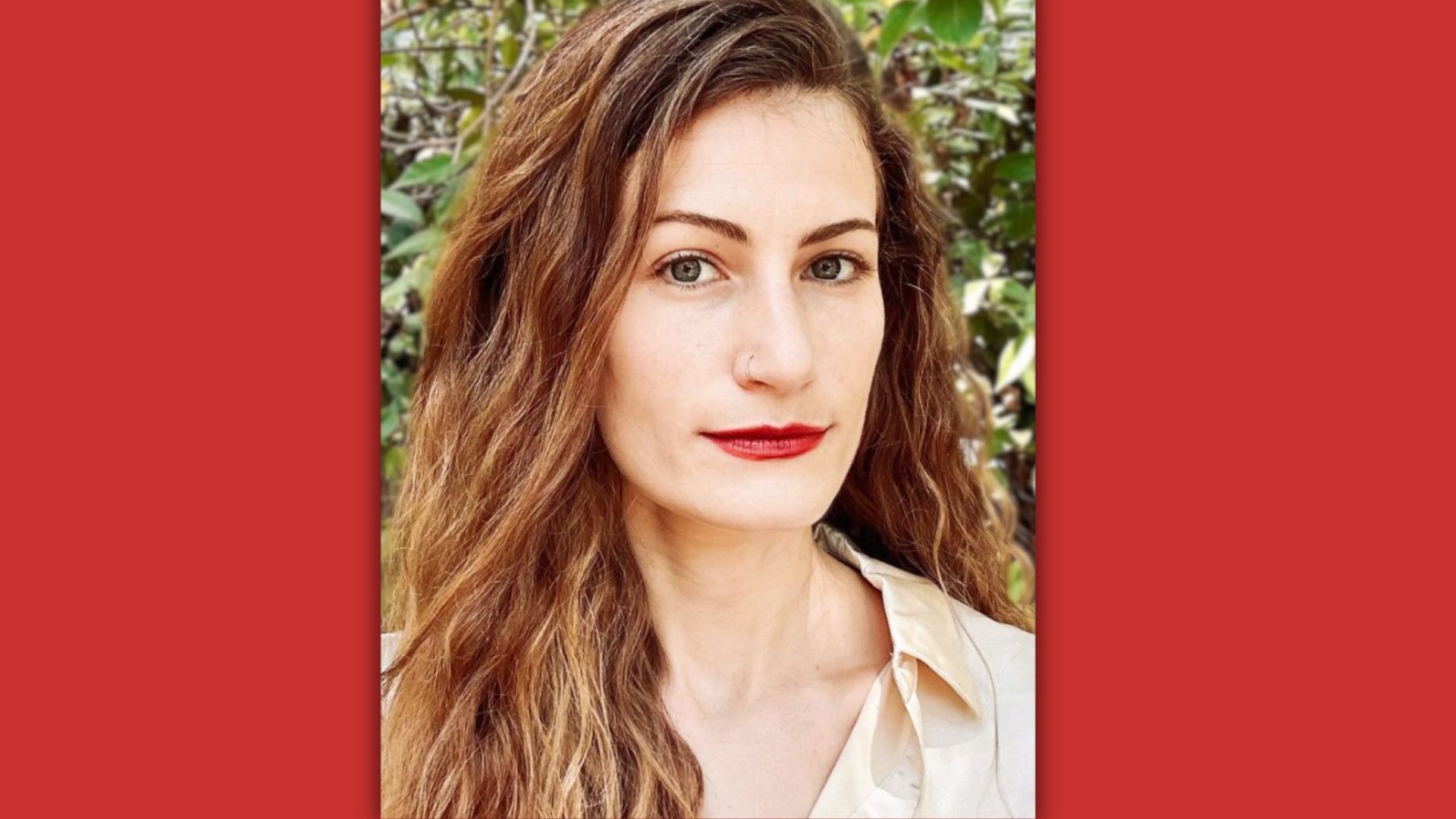
Calculating What the Pentagon’s Waste Is Truly Costing This week’s frontline face: Hanna Homestead, a researcher at the National Priorities Project, an Institute for Policy Studies initiative. What she’s doing to help create a more equal world: Hanna, an expert on understanding U.S. military spending, is helping Americans unravel the intricacies of one of our nation’s most opaque budgets.
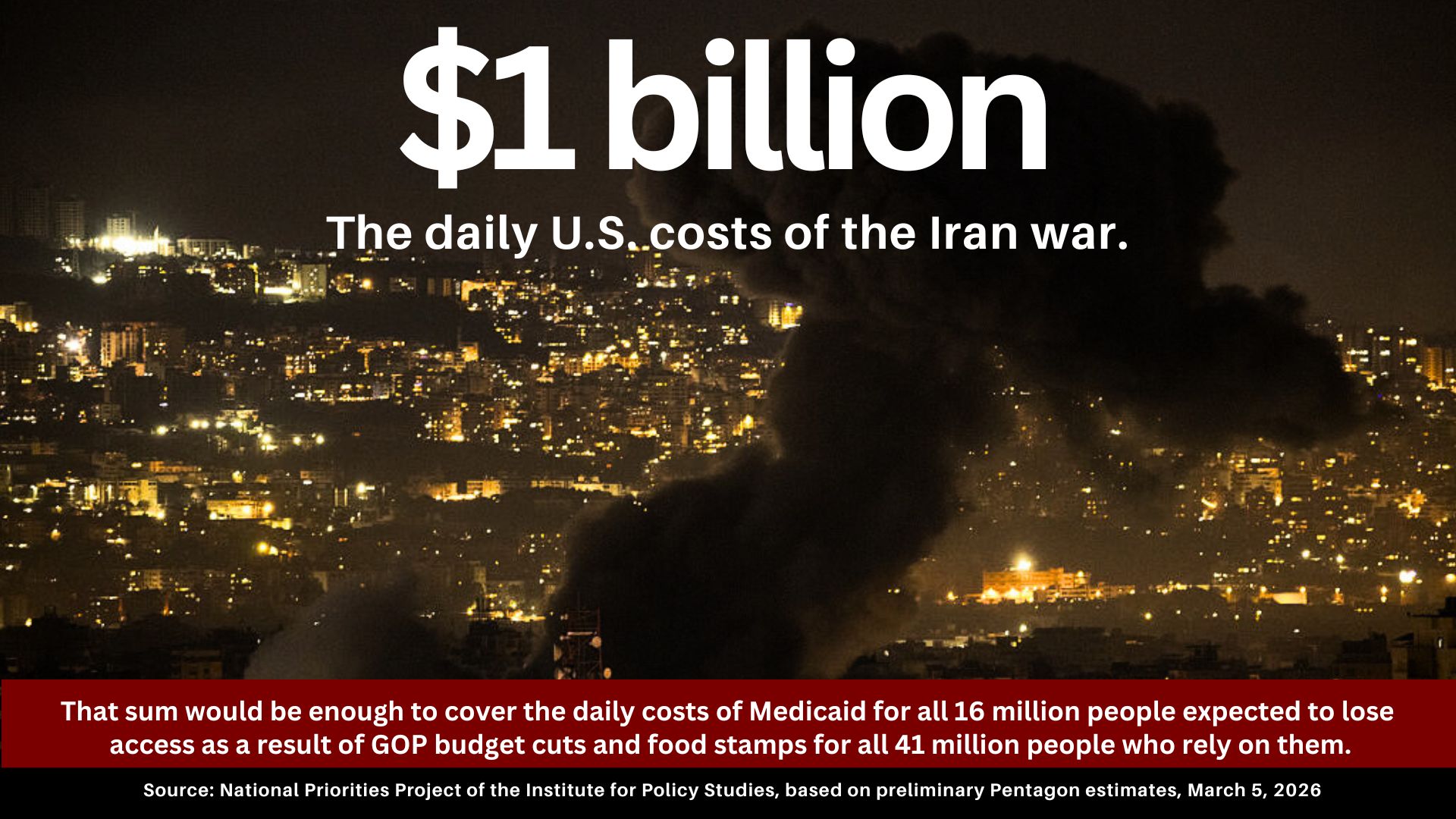
Last month, right after the U.S. and Israeli attack on Iran kicked off a regional conflict that promises to be protracted, Hanna went to work calculating the costs of each bomb dropped and asset deployed to see just how much American taxpayers were contributing to a war that no one voted for.
What makes this fight so important: “The trillion-dollar Pentagon budget sanctions mass violence abroad while siphoning taxpayer dollars into the hands of billionaires and war profiteers,” Hanna notes. “The impact is felt in every issue our communities care about — the economy, environment, education, healthcare, immigration, policing, and more. I’m grateful be part of a team working to reprioritize federal spending to better serve working people, our planet, and our collective future.”
|
|
|
Banding Together Against Agriculture’s Growing Top-Down Mechanization
Our nation’s biggest agri-businesses are pushing hard to automate farming. Corporate giants like John Deere are pledging to go 100 percent robotic by as soon as 2030. This transition, as farmers know well, is not unfolding with the best interest of those working the soil in mind.
Automation often serves as just an excuse for cutting labor costs. Mechanical replacements for humans regularly can’t do the job nearly as well as people can. But we don’t have to see this transition as inevitable, points out farmer and journalist Suzan Erem. By banding together, rural Americans can put up a real fight against mechanization at the expense of workers. More on just how below. |
|
|
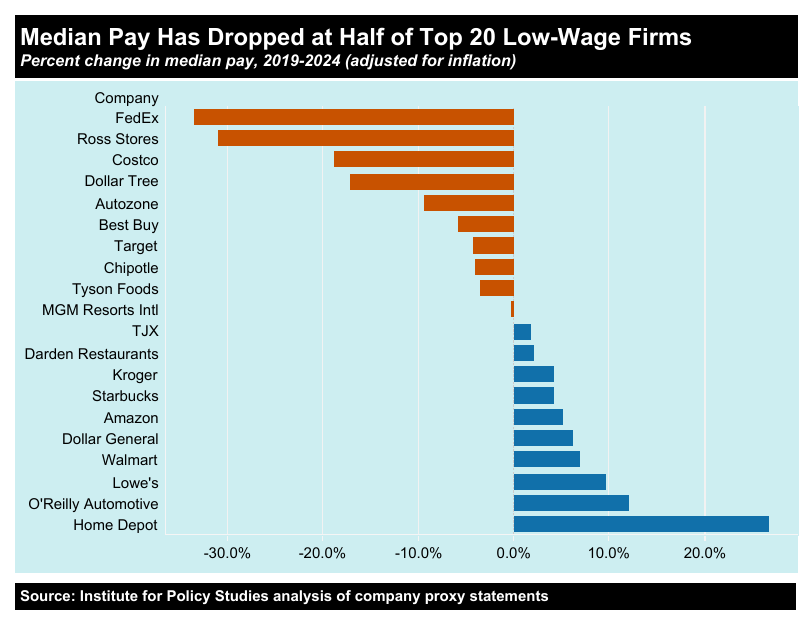
A new Institute for Policy Studies report is highlighting how major U.S. corporations are driving the affordability crisis. Among the 20 largest employers of low-wage U.S. workers, 10 are showing declines in the real value of their median worker pay between 2019 and 2024. Average median pay for the group as a whole has dropped 4.6 percent, to $29,087. During the same period, CEO pay at these companies surged by 17.6 percent, to over $18.5 million.
For an interactive version of this chart and further analysis, click the link below. |
|
|
PETULANT PLUTOCRAT OF THE WEEK |
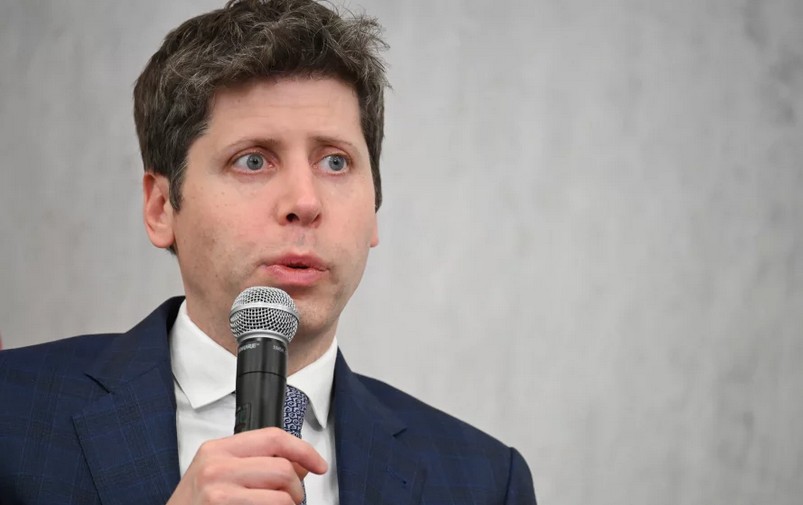
Artificial Intelligence: No Match for a Billionaire’s Natural Greed This week’s dour deep pocket: Sam Altman, the chief exec of OpenAI, the artificial intelligence giant that currently ranks as “the world’s most valuable” not publicly traded company.
What has Altman sour: OpenAI’s ChatGPT, once the world’s hottest AI software, is increasingly taking a backseat — in the hearts and minds of AI’s aficionados — to the Claude software from Anthropic, OpenAI’s top rival.
Anthropic late last month refused to let Team Trump’s Department of Defense use Claude for either domestic mass surveillance or autonomous killer robots. An angry Pete Hegseth, Trump’s secretary of defense, proceeded to yank away Anthropic’s AI federal contract work and hand that work to a far more accommodating Altman.
Altman then went on to claim that his new DoD contract prevents the Department of Defense from “intentionally” using OpenAI for domestic surveillance. But the Pentagon, legal experts are pointing out, can under that contract still “inadvertently” collect data on Americans as it monitors foreigners.
The last word: The “surveillance of Americans without judicial oversight and lethal autonomy without human authorization,” notes Caitlin Kalinowski, a senior OpenAI staffer who resigned after Altman revealed his new Defense Department deal, deserve “more deliberation” than Altman has given. |
|
|
What's new on Inequality.org
Jake Triola, Union Candidates Can Win Back Working-Class Voters. Candidates with union backgrounds can help labor and the Democratic Party, a new report argues, but they are rarely recruited to run.
Chuck Collins, Adios Kristi! Noem’s Long History of Lying to Protect the Powerful. Nearly a decade before she was the public face of DHS, Noem’s tall tales about the estate tax helped gut one of the few remaining checks on elite fortunes. Elsewhere on the web
Sarah Anderson, Taking Aim at Overpaid CEOs, The Nation. Landmark San Francisco and Los Angeles ballot initiatives aim to hike taxes on corporations with huge gaps between CEO and worker pay.
Chuck Collins, The Pork Oligarchs of Iowa Have Local Politicians in Their Pockets, The Nation. Jeff and Deb Hansen spend hundreds of thousands to keep the state friendly to their business.
Hamilton Nolan, The Real Litmus Test for Democratic Presidential Candidates, How Things Work. Only White House hopefuls supporting a wealth tax will be attacking the dynamics that have brought us rule by the rich. Verónica Paz Arauco, How much wealth concentration can democracy withstand? Latinoamérica. Grand private fortunes threaten democracy’s survival by turning political power into a privilege of economic elites.
Eduardo Porter, Tech oligarchs reshape humanity while billionaires of old seem quaint, Guardian. We now have plenty of evidence that our oligarchs’ “contributions” to society often boil down to things society would have happily done without.
Lynn Parramore, Why Chase Taylor Swift? Stop the Corporate Looting That Makes Billionaires, Institute for New Economic Thinking. The United States needs to do more than raise taxes on grand fortunes. Our nation needs to end policies and practices that concentrate wealth among corporate elites while shortchanging workers and their communities.
Dean Baker, A Real Abundance Agenda Starts by Rolling Back Patent and Copyright Monopolies, Patreon. The political changes that would significantly trim the incomes of America’s richest — like radically reducing the importance of government-granted patent and copyright monopolies — don’t get talked about.
Oligarchy or Democracy in Mexico? Equals Bulletin. A new Oxfam analysis offers up a promising way forward for what remains — despite recent moves in the right direction — one of the world’s most unequal countries.
Good For The Economy And The Public Budget: Economist Bjørnstad On Norway’s Successful Wealth Tax, Scoop Independent News. Norwegian labor’s top economist explains how and why unions have led the effort that defeated a campaign by Norway’s wealthy to erase the nation’s over 130-year-old wealth tax.
Justin Brown, The billionaire bunker problem: how the people building AI safety tools are simultaneously buying escape plans from the world those tools are supposed to save, Silicon Canals. The people deciding how much AI risk humanity must accept just happen to be the people with the least personal exposure to that risk.
|
|
|
ON BILLIONAIRES AND THE REST OF US |
This newsletter and the whole Inequality.org project are powered by donations. We’re not raking in cash from the billionaire class, though. We’re counting on people to see why this reporting, research, and advocacy matters, and then to become paid subscribers, by making a recurring monthly donation of any amount. Make a monthly gift as a paid subscriber. Start your paid subscription today. |
|
|
Inequality.org | www.inequality.org | inequality@ips-dc.org Institute for Policy Studies
1301 Connecticut Avenue Ste 600
Washington, DC 20036
United States
Managing Editor: Chris Mills Rodrigo
Co-Editors: Sarah Anderson, Chuck Collins, Bella DeVaan, Reyanna James, and Sam Pizzigati |
|
|
|