A weekly newsletter from the Institute for Policy Studies |
|
|
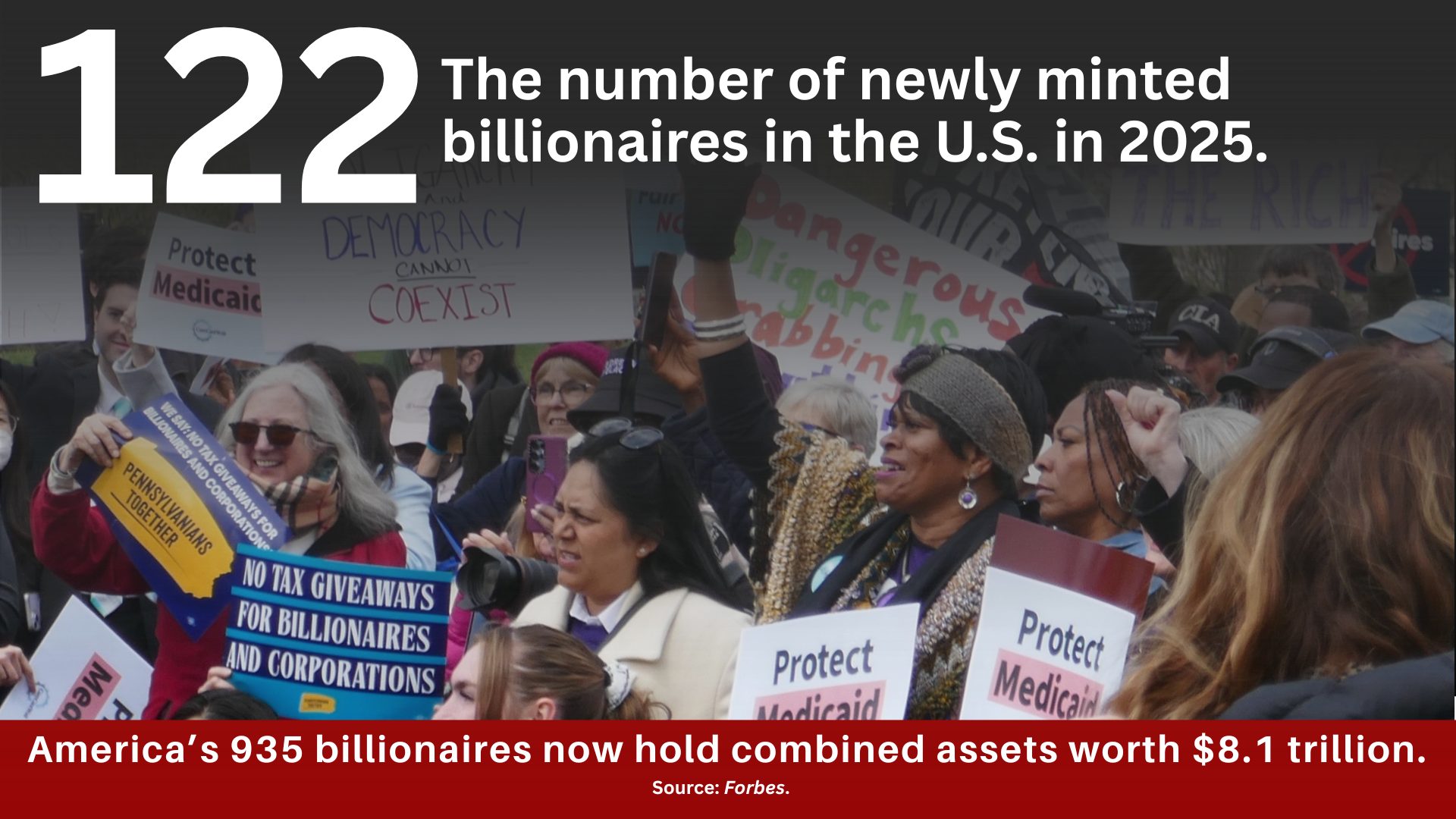
Billionaires didn’t make the presidential guest list for the State of the Union last night. In fact, listening to Trump’s speech, it was almost as if they don’t exist. Over nearly two hours of boasting, Trump made no mention of the big wins he’s delivered for the ultra-wealthy: |
- $1 trillion in tax cuts for the richest 1%
-
Pardons for scores of ultra-wealthy fraudsters like the billionaire Binance founder
- Pro-polluter policies that will enrich wealthy executives while putting communities at risk
- Dismissal of more than 20 cases against companies charged with $3 billion in consumer fraud
- Crypto deregulation that has fueled billionaire wealth, including a $1.5 billion increase in the Trump family fortune
|
Last night the president made a show of recognizing heroes of long-ago wars and recent hockey games. Today, the business-as-usual billionaire agenda continues. Sarah Anderson
for the Institute for Policy Studies Inequality.org team |
|
|
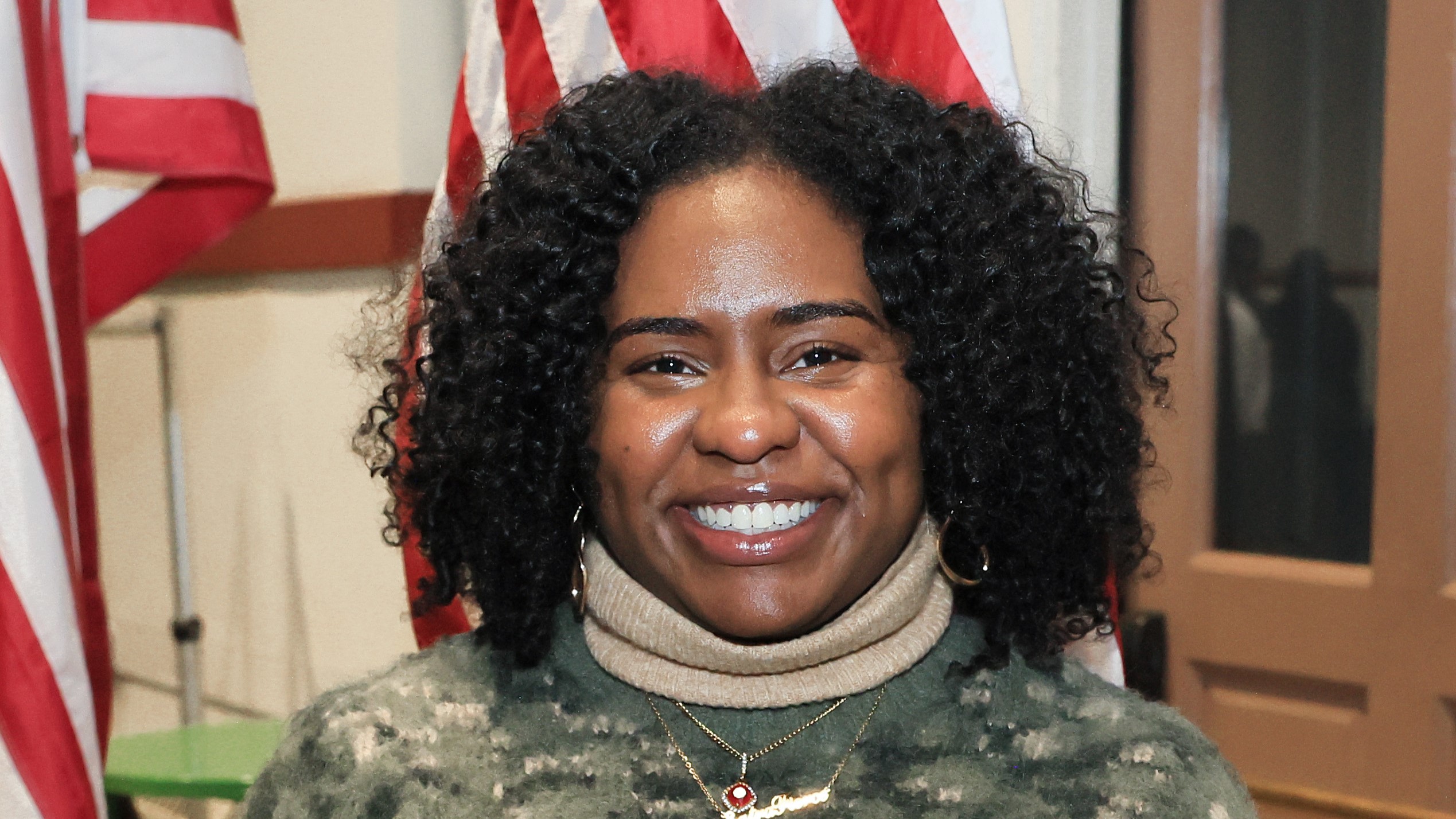
Unlike Trump, This Activist Views Student Aid as Central to the Health of Our Union This week’s frontline face: Satra D. Taylor, a doctoral student studying higher education at the University of Maryland.
What she’s doing to help create a more equal world: Taylor is a student debt activist who denounced the Trump administration’s deep cuts to student aid programs at an alternative State of the Union event organized by the group Families Over Billionaires.
Trump didn’t even mention student aid in his remarks, but for Taylor, this is a central issue for the health of our union. “It’s about whether we as a nation believe working families deserve opportunity — or just survival,” she wrote in an op-ed for Inequality.org. “It’s about whether we as a nation value the futures of our young people — or only the futures of billionaires.”
What makes this fight so important to her: Taylor, a first generation college student, wants other low-income people to have the opportunity she’s had to fulfill their education dreams.
“My hard-working Black family poured everything they had into me because they believed — against every obstacle — that education could be my ladder up,” Taylor explains. “Pell Grants and the Grad Plus subsidized loan program helped me as I struggled up that ladder. It still wasn’t easy. I worked two part-time jobs and still could barely make ends meet. But without that help, I wouldn’t be where I am today.” For more on Taylor’s perspective, click the link below.
|
|
|
Tariff Policy Doesn’t Have to Be Chaotic and Harmful to the Working Class
Last night President Trump berated Supreme Court justices seated in the front row of the House chamber for their recent ruling against his chaotic tariff policies. He also once again falsely claimed that foreign countries pay the tariffs when in reality, U.S. importers pay them and often pass the costs on to consumers.
Since the court ruling last week, Trump’s tariff announcements have become even more erratic — 10 percent on all imports one day, 15 percent the next, and then back to 10 percent. This uncertainty, with no discernible strategy, has turned tariffs into a blunt weapon that harms the working class here and around the world.
Sara Steffens, a labor expert with the group We Build Progress, writes in Inequality.org that tariffs can instead be tools to build a better future for workers and their communities. Well-designed strategic and targeted tariffs can promote high labor standards and support family-sustaining jobs. |
|
|
Trump ran for re-election on a promise of reviving U.S. manufacturing, a sector that has been a vital path to the middle class, particularly for workers without college degrees. In his State of the Union speech, he claimed that his tariffs have delivered on this promise and that factories and jobs "will continue pouring into the United States of America."
But during the first year of Trump’s second term, manufacturing employment actually dropped by 83,000 jobs. The health care sector drove nearly all job growth, driven by an aging population rather than any smart presidential policies. For an interactive version of this chart, click the link below. |
|
|
PETULANT PLUTOCRAT OF THE WEEK |
The CEO Cashing In on Unnecessary Tax Return Complications
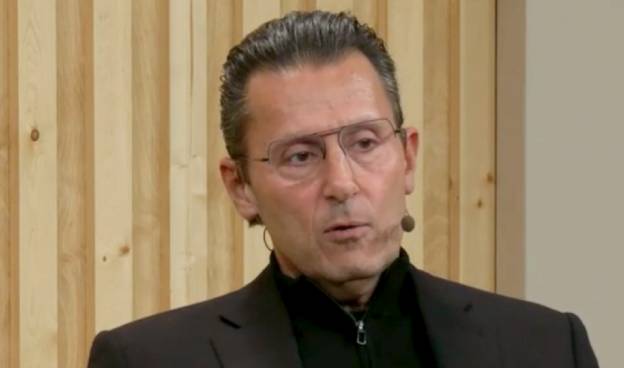
This week’s dour deep pocket: Sasan Goodarzi, the CEO of Intuit, the corporate giant behind TurboTax, the tax-prep product with a lockgrip on 60 percent of the tax software market. That dominance has helped Goodarzí to $36.6 million in 2024 compensation and $36.9 million in 2025.
What has Goodarzi sour: the widespread public support for free electronic tax return filing direct to the IRS. The IRS “Direct File” pilot program launched in 2024 gave taxpayers that option. They loved it. Some 94 percent of the taxpayers participating in the pilot reported a positive experience.
Intuit did not take that positive experience positively. In December 2024, 29 GOP members of Congress — the grateful recipients of $2 million in Intuit campaign contributions — sent the newly re-elected Donald Trump a letter asking for Direct File’s elimination. Trump, after Intuit contributed $1 million more to his inaugural fund, would kindly oblige. His IRS has shut Direct File down.
The last word: “The Trump administration,” notes Roosevelt Institute researcher Noa Rosinplotz, “has gutted the IRS and handed the tax filing system back to the companies that profit from making you waste time and money filing your taxes.” |
INEQUALITY BY THE NUMBERS |
|
|
What's new on Inequality.org
Sarah Anderson, Private Equity Killed My Thrift Store. A treasured 55-year-old secondhand store in the nation's capital has become the latest casualty of the rapacious private equity industry. Bob Lord, The Washington Post’s Owner Really Doesn’t Want You to Know His Effective Tax Rate. If you did, you wouldn’t be buying what the Post’s editorial board is selling.
Alliyah Lusuegro, Target Needs to Kick ICE Out of Its Stores. Immigrant and human rights advocates are calling on the retailer to stop cooperating with abusive federal immigration agencies. Elsewhere on the web
Elaine Coburn, The problem with billionaire power goes far beyond Epstein, LSE Review of Books. How our democratic politics have collapsed into plutocratic rule. Paul Krugman, Billionaires Gone Wild, Substack. Our plutocracy at autocratic play: Billionaires in 2024 accounted for 16.5 percent of U.S. political campaign contributions, up from 0.3 percent in 2008.
Joseph Stiglitz and Jayati Ghosh, Will Democracy Govern Capitalism — or Be Consumed by It? Social Europe. In France, economist Gabriel Zucman’s proposed minimum 2 percent tax on super-rich wealth commands almost 90 percent public support and is dominating the national political conversation.
Brad Reed, Billionaires Are ‘Becoming a Problem for the Economy,’ Declares Wall Street Journal Report, Common Dreams. The American economy has come to depend on the spending habits of its wealthiest households. Overall, Federal Reserve data show, only the top 1 percent of U.S. households have grown their share of the nation’s overall wealth since 1990.
Robert Reich, Memo to Kathy Hochul and Gavin Newsom: Why taxing the rich makes enormous sense, Substack. Yes, Peter Thiel, the billionaire behind JD Vance, has exited California to avoid a possible billionaire tax. Good riddance to him! Higher taxes on our rich could be the disinfectant that finally purges our polities of America’s most noxious.
Taylor Giorno, A New Generation of MAGA Megadonors Is Emerging — And They’re Swamping Democrats, NOTUS. Artificial intelligence execs and cryptocurrency moguls with little history of federal political contributions are pumping millions of dollars into Donald Trump’s flagship super PAC.
Miles Trinidad and Matthew Gardner, Michigan Ballot Proposal Would Boost Public Education While Creating a Fairer Tax System, Institute on Taxation and Economic Policy. Michigan’s top 1 percent currently pay just 5.7 percent of their income in state and local taxes. A proposed 5 percent tax surcharge on Michigan’s richest would raise $1.7 billion a year for public schools.
Marty Hart-Landsberg, AI and the economy: a losing bet for working people, Reports from the Economic Front. Tech billionaires are betting big on artificial intelligence. Their AI investments have become the prime driver of U.S. economic growth.
Alex Halverson, One WA CEO makes 1,794 times his average employee — here’s why, Seattle Times. A corporation that can pay $96 million to its CEO for just four months of work, critics note, can afford to pay its workers a living wage and decent benefits. |
|
|
ON BILLIONAIRES AND THE REST OF US |
This newsletter and the whole Inequality.org project are powered by donations. We’re not raking in cash from the billionaire class, though. We’re counting on people to see why this reporting, research, and advocacy matters, and then to become paid subscribers, by making a recurring monthly donation of any amount. {{if --[[Inequality Sustainer, 60 day gifts]] SavedSearch_523974}}Thank you, {{FirstName}}, for your monthly support of Inequality.org. You can head to our self-service page at any time to see your giving history and make changes to your subscription.{{else}}Make a monthly gift as a paid subscriber. Start your paid subscription today.{{end}}
|
|
|
Inequality.org | www.inequality.org | inequality@ips-dc.org Institute for Policy Studies
1301 Connecticut Avenue Ste 600
Washington, DC 20036
United States
Managing Editor: Chris Mills Rodrigo
Co-Editors: Sarah Anderson, Chuck Collins, Bella DeVaan, Reyanna James, and Sam Pizzigati |
|
|
|