A weekly newsletter from the Institute for Policy Studies |
|
|
Much ink has been spilled over the last year about the "shape" of our economy. The consensus has largely landed on a K — an economic pattern where the rich see their stock-fueled wealth rise dramatically while low-income households slide downward under rising costs and low wages. This shape helps explain why, despite overall economic growth, many U.S. consumers lack confidence in our economy.
An alternative economic picture emerged last week from Bank of America analysts. Instead of a K, we might be looking at more of an E. This projection shows not only a growing gap between the top and bottom of the economic ladder but also a widening chasm between the fabled American middle class and the very rich (our chart below illustrates this phenomenon).
Whatever letter makes most sense to you, the overall picture is clear: the wealthiest Americans are expanding their fortunes so rapidly that they're skewing overall macroeconomic data, making the trends look deceptively positive. The rest of us aren't so lucky. Chris Mills Rodrigo
for the Institute for Policy Studies Inequality.org team |
|
|
INEQUALITY BY THE NUMBERS |
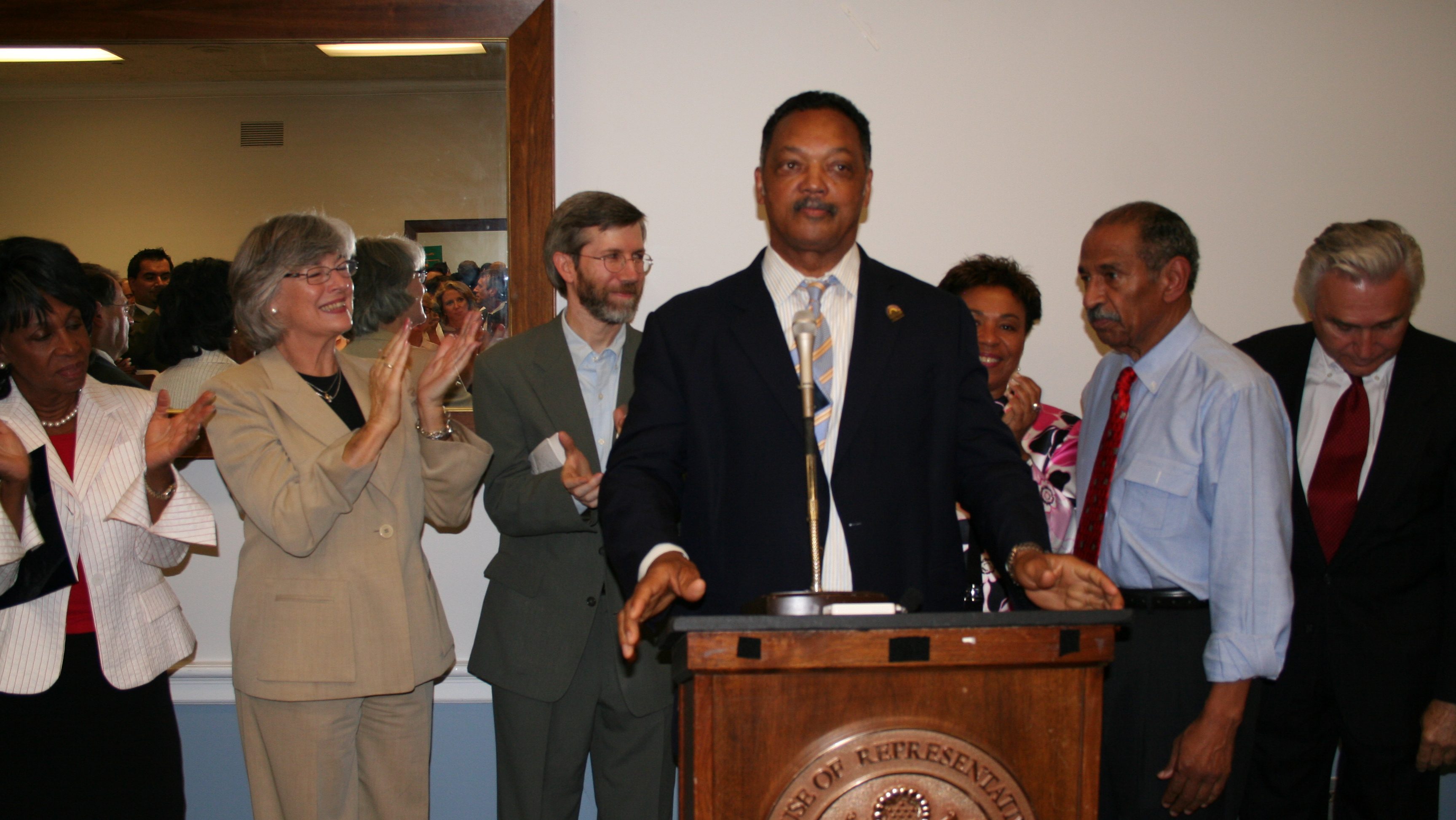
Rev. Jesse Jackson speaking at a 2013 event with members of the Congressional Progressive Caucus and former IPS Director John Cavanagh. A Lifetime of Fighting for Justice of All Kinds This week’s frontline face: Reverend Jesse Jackson, who passed this week at 84 years old.
What he did to help create a more equal world: Jackson was a tireless advocate, starting with his work with Dr. Martin Luther King in the Jim Crow South, through his two presidential campaigns in 1984 and 1988, and then decades more of organizing. His path-breaking election campaigns inspired a surge in voter registration, particularly among Black Americans, and expanded opportunities for Black candidates to win public office.
Jackson’s "rainbow coalition" brought together people across race, gender, and religion to fight what he called "economic violence" and to improve the lives of the working class — in the United States and around the world.
What makes this fight so important: "The greatest testament to Jackson’s brilliance and his greatest legacy is that the mission, strategy, message, and agenda of those campaigns remain directly relevant four decades later," former IPS director and close Jackson advisor Robert Borosage wrote in an obituary for The Nation that you can read below. |
|
|
Counter ICE By Targeting Corporate Collaborators and Shifting Funds to Health Care
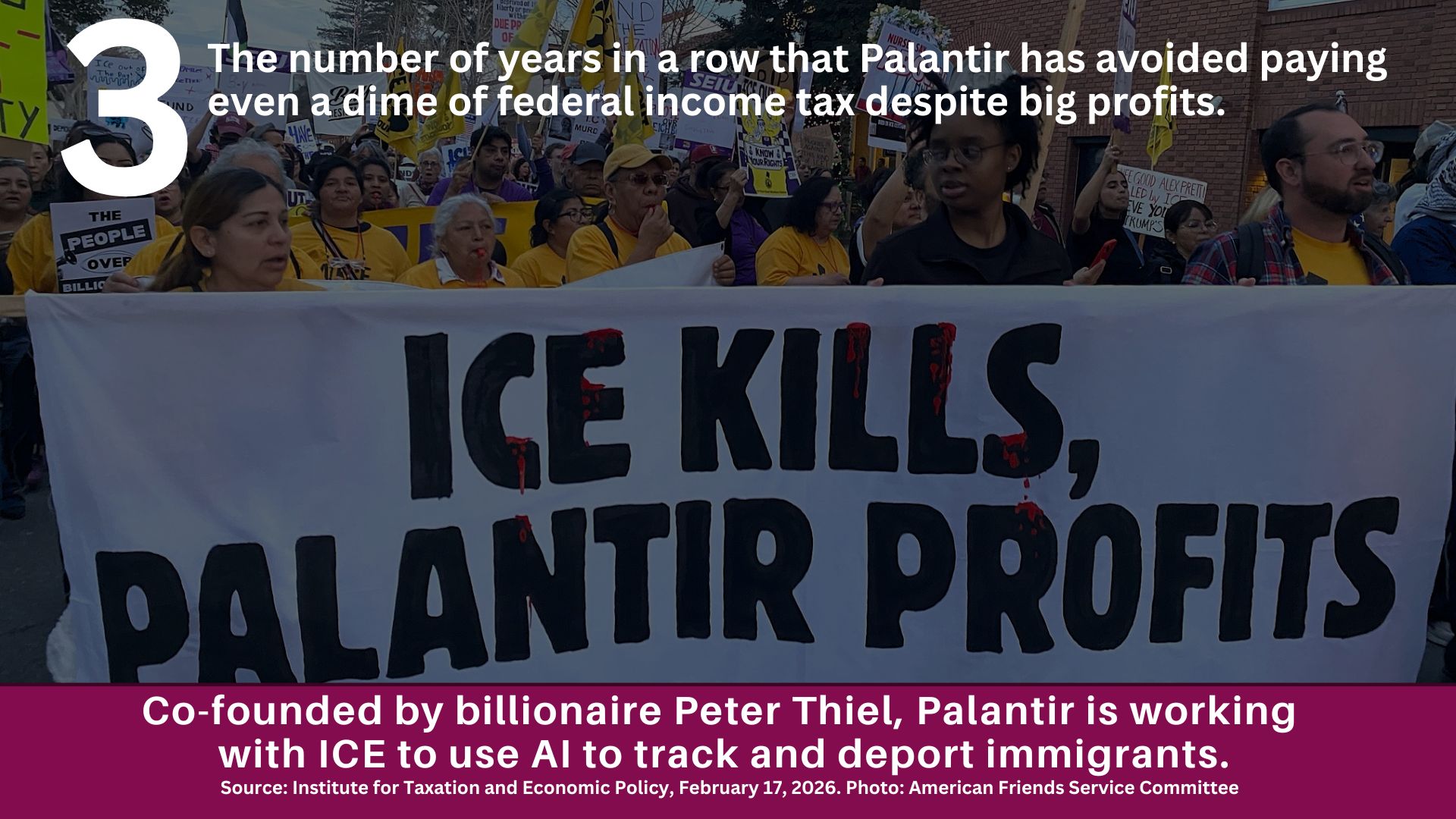
Last month, ICE agents tackled and detained two Target employees who happened to be U.S. citizens while they were working at a suburban Minneapolis store. This violent action turned Target, Minnesota’s fourth-largest employer, into a key focus of anti-ICE protests.
In Minnesota and other states across the country, activists have been protesting at Target stores, demanding that the company stop letting immigration agents onto its property and instead use their clout to help get ICE out of communities.
These protests are unfolding as Congress continues to haggle over ICE funding. Senator Bernie Sanders pushed a measure to put the Republicans’ proposed extra $75 billion for ICE back into Medicaid — where it would have helped 700,000 Americans keep their insurance. The Sanders proposal lost by only a few votes. With sustained pressure, we can turn these priorities around. |
|
|
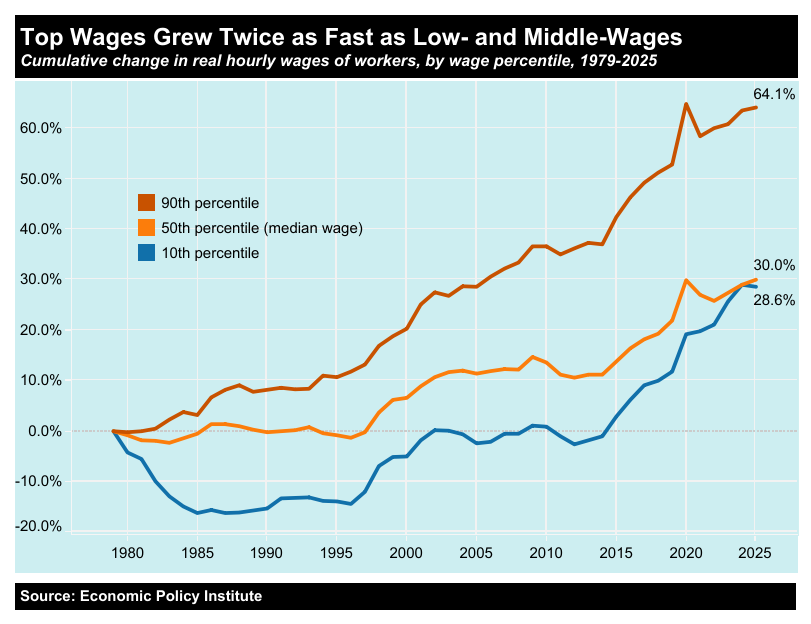
Low- and middle-wage workers have suffered from decades of slow wage growth. In 2025, the 10th-percentile wage — the hourly wage at which 10 percent of workers are paid less and 90 percent of workers are paid more — sat at $14.56, up 28.6 percent from 1979. By contrast, the wage for earners at the top 90th percentile grew 64.1 percent over this same period, according to new Economic Policy Institute analysis.
For an interactive version of this chart and more on income inequality, click the link to our Inequality.org Facts section below. |
|
|
PETULANT PLUTOCRAT OF THE WEEK |
Hockey Hero Gordie Howe Never Tried To Score in Secret
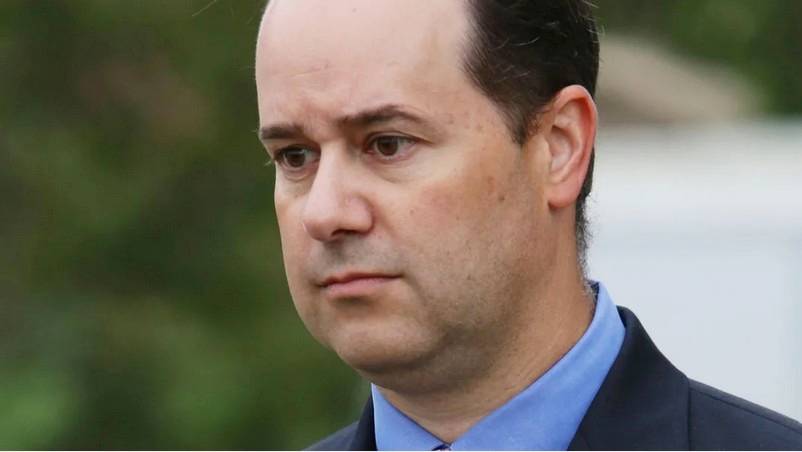
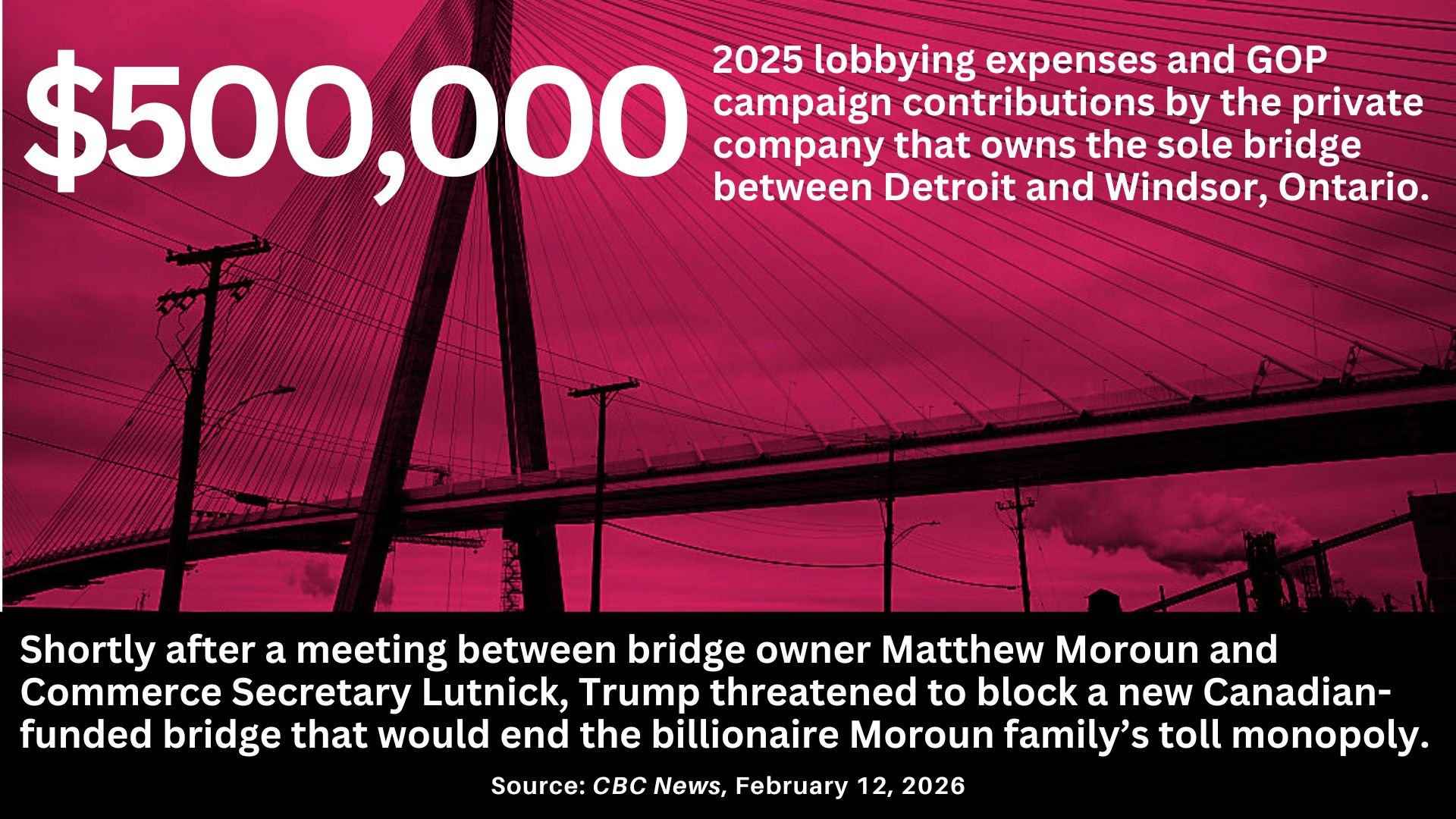
This week’s dour deep pocket: Matthew Mouron, the Michigan transport magnate who’s spent years conniving to block the opening of a new bridge between Detroit and Canada. Mouron’s family has owned the dilapidated century-old Ambassador Bridge — the area’s only current cross-border link open to all traffic — ever since his billionaire daddy bought the span decades ago.
What has Moroun sour: Media revelations that Mouron met personally last week with U.S. commerce secretary Howard Lutnick. Just hours later, Donald Trump threatened to block traffic on the nearly completed Gordie Howe International Bridge, a joint effort between Canada and Michigan that would break the Mouron family stranglehold on hundreds of millions of dollars in annual toll revenue.
Back in 2012, the Mouron clan spent over $33 million on an unsuccessful ballot proposal that would have stopped the Gordie Howe International Bridge’s construction. Mouron subsequently poured $600,000 into the 2020 Trump presidential campaign. The last word: “Every day,” former Michigan governor Rick Snyder charged last week, the Moroun family makes “much more money at our expense.” |
|
|
Before you dive into our articles for the week, watch this C-Span video of our own Sam Pizzigati interviewing our own Chuck Collins about Burned by Billionaires.
Kate Pickett, Why my vision of a Good Society is evidence-based, not utopian, London School of Economics. Imagine you had to design a society without knowing your own place within it. Would you design a system, asks this noted social epidemiologist, where a tiny elite enjoys unimaginable wealth while a third of children grow up in poverty?
Lina Gálvez Muñoz, Back to the Future: Resisting Fascist Capitalism’s Great Reset, Social Europe. Against plutocrats and autocrats, the progressive response must be an active defense of equality — not as a slogan, but as a material condition.
Robert Reich, AI and the Coming Jobless Economy, Substack. AI will make most of us poorer and a few fabulously wealthy — unless we allocate its productivity gains fairly.
Brakeyshia Samms, What Did 2025 State Tax Changes Mean for Racial and Economic Equity? Institute on Taxation and Economic Policy. In 2025, four states — Maine, Montana, New Jersey, and Rhode Island — took steps to increase revenue from owners of expensive homes.
Matthew Martin, Debt Justice to Overcome the Inequality, Climate and Nature Crises, Equals. Some 5.2 billion people today live in nations where debt payments to banks and investors top total social spending. Debt cancellation could fund the green transitions we need to fight extreme inequality and climate change.
Jan Weir, Better Than ‘Tax the Rich,’ Tax the Greedy Executives, Medium. Higher tax rates on our high-income set, notes this veteran attorney, remain the most effective way to redistribute benefits to workers once again.
Lauren Ravon and Emma Davis, Rising wealth inequality, including in Canada, a growing threat to democracy, Windsor Star. We need our world’s best minds working together to battle concentrated wealth. Creating an International Panel on Inequality, a body similar to the UN body fighting climate change, would be a great place to start, argue Oxfam Canada’s executive director and a key player in Patriotic Millionaires Canada.
Scott Roxborough, ‘It’s Time to Burn Down The House’: Karim Aïnouz on Eviscerating the Super-Rich in ‘Rosebush Pruning,’ Hollywood Reporter. An interview with the acclaimed Brazilian director of a new film that challenges the mindset that treats great disparities of wealth as part of our natural order.
|
|
|
ON BILLIONAIRES AND THE REST OF US |
This newsletter and the whole Inequality.org project are powered by donations. We’re not raking in cash from the billionaire class, though. We’re counting on people to see why this reporting, research, and advocacy matters, and then to become paid subscribers, by making a recurring monthly donation of any amount. Make a monthly gift as a paid subscriber. Start your paid subscription today. |
|
|
Inequality.org | www.inequality.org | inequality@ips-dc.org Institute for Policy Studies
1301 Connecticut Avenue Ste 600
Washington, DC 20036
United States
Managing Editor: Chris Mills Rodrigo
Co-Editors: Sarah Anderson, Chuck Collins, Bella DeVaan, Reyanna James, and Sam Pizzigati |
|
|
|