A weekly newsletter from the Institute for Policy Studies |
|
|
Journalism plays an essential tool in the fight against inequality by exposing corporate malfeasance, holding politicians accountable, and integrating local communities into the political process. With media outlets rapidly going out of business across the country, many Americans have understandably pinned their hopes on wealthy benefactors.
But last week’s job cut bloodbath at the Jeff Bezos-owned Washington Post has further cemented what we should have known all along: billionaires are not going to save journalism. Their goals are misaligned and they’re often more concerned with currying the favor of political figures than with challenging them. Below we highlight one promising alternative: worker-led newsrooms.
On a lighter note, you may have heard about the delightful backfiring of the March for Billionaires in San Francisco last weekend. A small group of libertarian techies turned out to express their opposition to a proposed California tax on billionaire wealth, only to have our friends in the satirical resistance, Trillionaires for Trump, crash their party. Decked out in their finest tuxes and tiaras, the spoofers stole media attention with signs like, “Keep California Unequal!” and “Wealthcare, not Healthcare!” This short video captures the glorious chaos. Chris Mills Rodrigo and Chuck Collins
for the Institute for Policy Studies Inequality.org team |
|
|
INEQUALITY BY THE NUMBERS |
A Worker-Run Alternative to Billionaire-Owned News
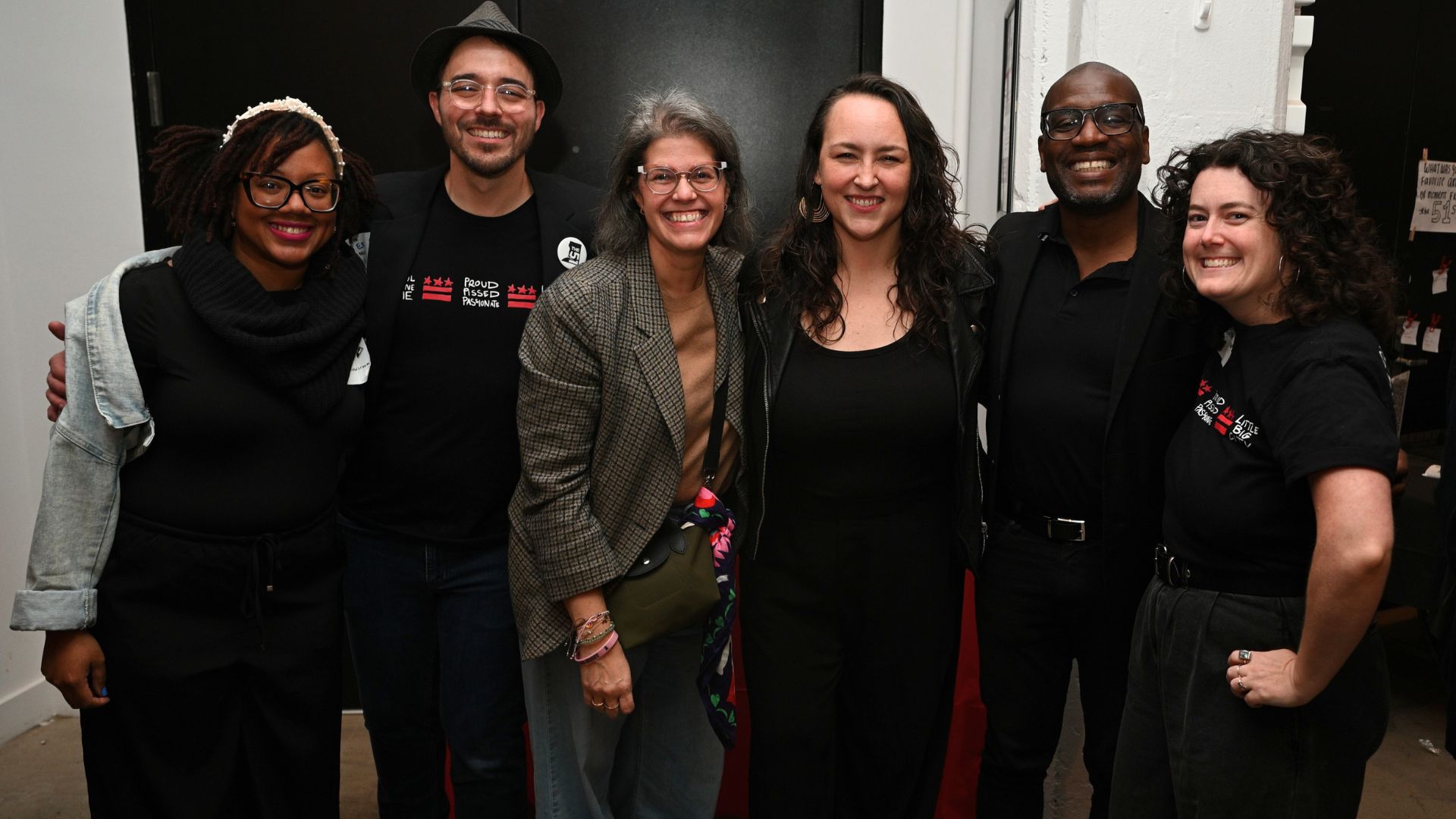
This week’s frontline faces: The journalists behind the 51st, a worker-led nonprofit newsroom providing an alternative model for local news coverage in the Washington, D.C. area.
What they're doing to help create a more equal world: They’re treating journalism as a public service that helps keep residents informed, holds politicians accountable, and brings the community together. Before even formally launching their newsroom, the founders spent hours interviewing residents about what was missing in the local news ecosystem. Just two years later, the paper has more than 14,000 subscribers, with over 4,000 of them paid.
What makes this fight so important to them: "What’s happening at the Post," co-founder Abigail Higgins told Inequality.org, "is happening in tandem with losing two and half local newspapers every week and massive institutions like CBS and the Post not only being dismantled, but being repurposed for the aims of powerful right wing interests to further consolidate money at the top and remove the remaining checks that we have on their power.
Photo credit: Rodney Choice |
|
|
A 'Marshall Plan' for the News Media
Some media ventures might be able to survive the current crisis through subscription revenue alone, but the margins are very fine. Meanwhile, billionaires are running other outlets into the ground, and the digital ad revenue that powered a renaissance of blogs in the mid-2010s has dried up.
One option to stem the bleeding of American journalism: public funding. Even before the Republican gouging of NPR and PBS, U.S. government spending on the media has been a drop in the bucket compared to what other nations dedicate to sustaining the news.
Beyond federal funding, some states and cities have flirted with taxing tech giants or giving businesses vouchers to pay for local news. These initiatives could be the shot in the arm our news media ecosystem desperately needs. |
|
|
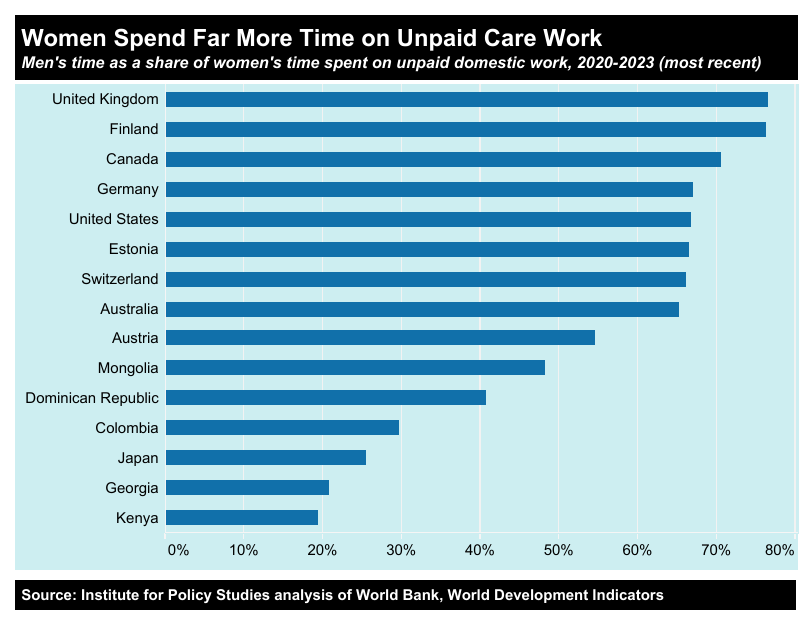
This Valentine’s Day, let’s recognize the labor of love that is childcare, cleaning, and other essential caregiving tasks. Around the world, women and girls carry out the bulk of these often unnoticed and unpaid tasks, with profound effects on gender-based inequality. In the United States, men perform just 67 hours of unpaid care work on average for every 100 hours performed by women.
For an interactive version of this chart and more on inequality and the care economy, click the link to our Inequality.org Facts section below. |
|
|
PETULANT PLUTOCRAT OF THE WEEK |
Why Jeopardize a Grand Fortune for the Sake of a Side Gig? This week’s dour deep pocket: Jeff Bezos, the world’s fourth-richest man with a net worth that started this week at $235 billion.
What has Bezos sour: the near universal disgust at his decision last week to decimate much of what remains of the journalistic glory of the Washington Post, the daily Bezos bought in 2013. This latest Bezos cutback at the Post will cost over 300 staffers their jobs and deny the general public, notes former Post executive editor Martin Baron, the “fact-based reporting” now “needed more than ever.”
Bezos “had a chance,” adds media analyst Margaret Sullivan, “to be something much greater than a billionaire” after he bought the Post. He could have been “the steward of a national treasure, a storied news company with a staff as talented as any in the nation, maybe the world.” He chose instead, with a second Trump term looming, to do his best to keep in Trump’s good graces and make sure that the federal government remained a massive purchaser of services from the Bezos Amazon empire.
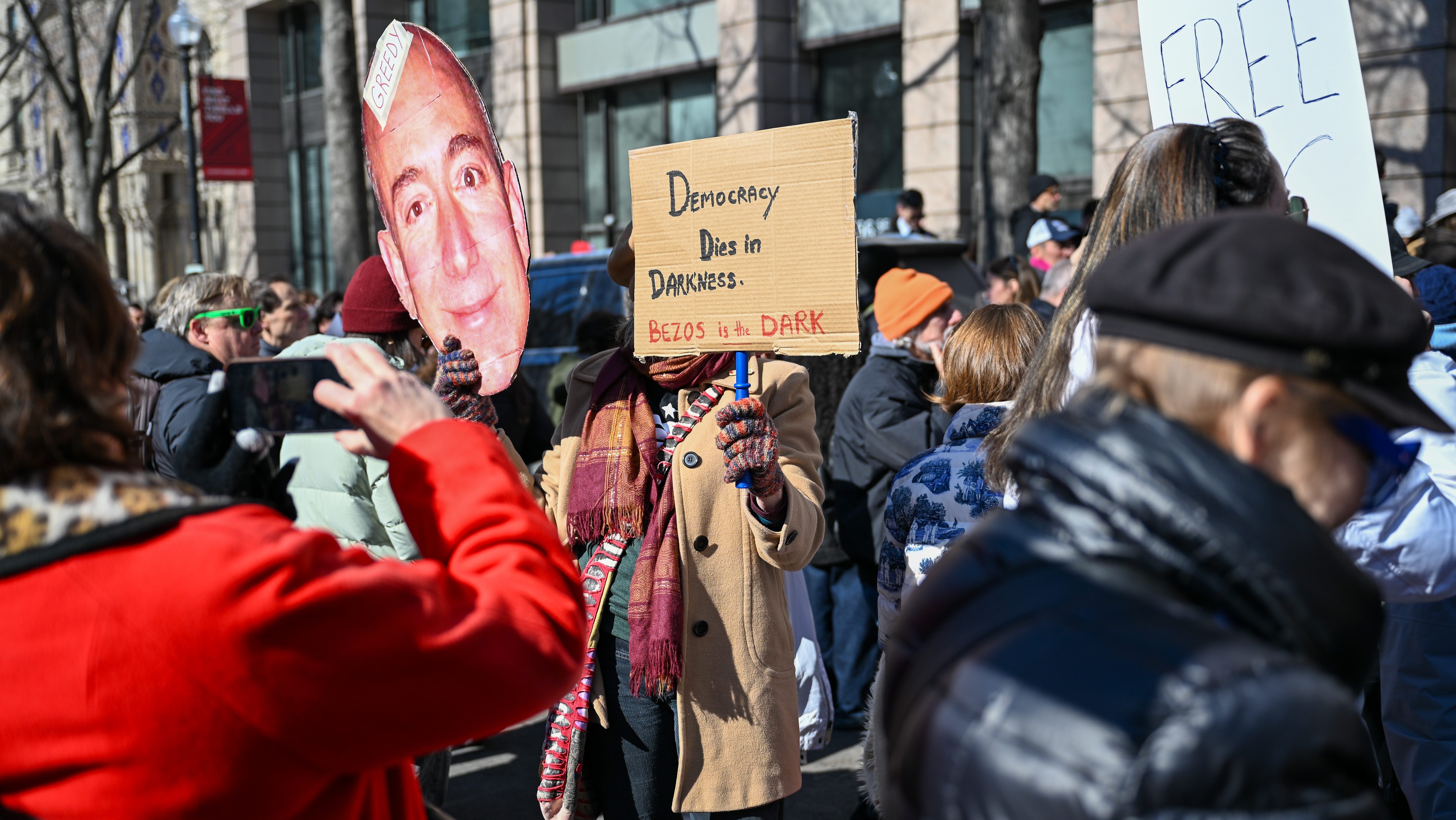
The last word: Since his 2013 purchase of the Washington Post — for a bargain $250 million — Jeff Bezos has watched his overall personal fortune soar nearly ten-fold. Photo credit: Geoff Knowles, American Postal Workers Union |
|
|
Before you dive into our articles for the week, watch this C-Span video of our own Sam Pizzigati interviewing our own Chuck Collins about Burned by Billionaires.
Brakeyshia Samms, How the Wealthy Exploit the Tax Code, Institute on Taxation and Economic Policy. Those among us who depend on paychecks face heavy taxes at the same time those sitting on huge fortunes are avoiding taxes — and enjoying lavish lifestyles — simply by avoiding taxable income.
Otto Barenberg, A Swedish Answer to Labor’s $8 Trillion Question, OnLabor. Diligently pursuing worker ownership of the enterprises where they work, Swedish labor activist Rudolf Meidner posited a half-century ago, could become the most potent path to ameliorating wealth inequality.
Chris Lehmann, Jeff Bezos’s Destruction of the Washington Post Is a Disgraceful Plutocratic Crime, The Nation. Democracy, turns out, doesn’t die in darkness at all. It succumbs to repeated group muggings at the hands of our moneyed power elite.
John Miller, Selling Lies: The Attack on Social Security, Dollars & Sense. Right-wing panic spreaders fail to examine the impact of America’s ever-increasing economic inequality, wage stagnation, and draconian immigration policies on the Social Security trust fund and its future obligations.
John Ripton, Trump, Extreme Wealth Concentration, and Our Societal Crisis, Common Dreams. In 2025’s third quarter, the most current Federal Reserve data show, the richest 1 percent of Americans held 31.7 percent of the nation’s wealth, with the bottom 50 percent holding just 2.5 percent, creating in the process the highest concentration of U.S. wealth in the entire post-WWII era.
Eoin Higgins, The Bloodbath at Washington Post Is All Jeff Bezos’s Fault, The Intercept. The Washington Post has been far from the only newsroom to see its owner’s right-wing politics lead to journalistic disaster. Billionaire media barons nationwide have been currying Donald Trump’s favor to benefit massively from mergers and lucrative government contracts.
Maurice Mitchell, To win back the working class, pick fights with billionaires, NOTUS. Democrats, notes the national director of the Working Families Party, are missing their chance to win working people over. The reason: The party’s leadership isn’t consistently challenging the billionaire class.
David Dayen, Not In Their League, The American Prospect. Billionaire pro sports team owners, by pricing tickets far above what average fans can afford, have denied us the shared piece of community that used to help Americans bridge social and economic divides.
Lidy Nacpil and Farooq Tariq, A message from Islamabad to New York: The demand for tax justice is an unstoppable global tide, Eco-Business. A landmark ruling from Pakistan’s new Federal Constitutional Court on taxing the wealthy — and the corporations they run — provides a “powerful blueprint” for overhauling the international tax system.
|
|
|
ON BILLIONAIRES AND THE REST OF US |
This newsletter and the whole Inequality.org project are powered by donations. We’re not raking in cash from the billionaire class, though. We’re counting on people to see why this reporting, research, and advocacy matters, and then to become paid subscribers, by making a recurring monthly donation of any amount. Make a monthly gift as a paid subscriber. Start your paid subscription today. |
|
|
Inequality.org | www.inequality.org | inequality@ips-dc.org Institute for Policy Studies
1301 Connecticut Avenue Ste 600
Washington, DC 20036
United States
Managing Editor: Chris Mills Rodrigo
Co-Editors: Sarah Anderson, Chuck Collins, Bella DeVaan, Reyanna James, and Sam Pizzigati |
|
|
|