A weekly newsletter from the Institute for Policy Studies |
|
|
Our soon-to-end year has not been anything close to a good one for all of us interested in addressing inequality. How bad has 2025 been? So bad that we even felt tempted to skip our annual Inequality.org year-end round-up of victories on the inequality front. But dark times may be the most important times to highlight rays of light. And many rays did indeed shine in 2025!
This year’s most positive moves, as you might imagine, didn’t originate in Washington, D.C. But grassroots efforts to both resist the federal government’s onslaught and chart a better path forward did sprout all across the country.
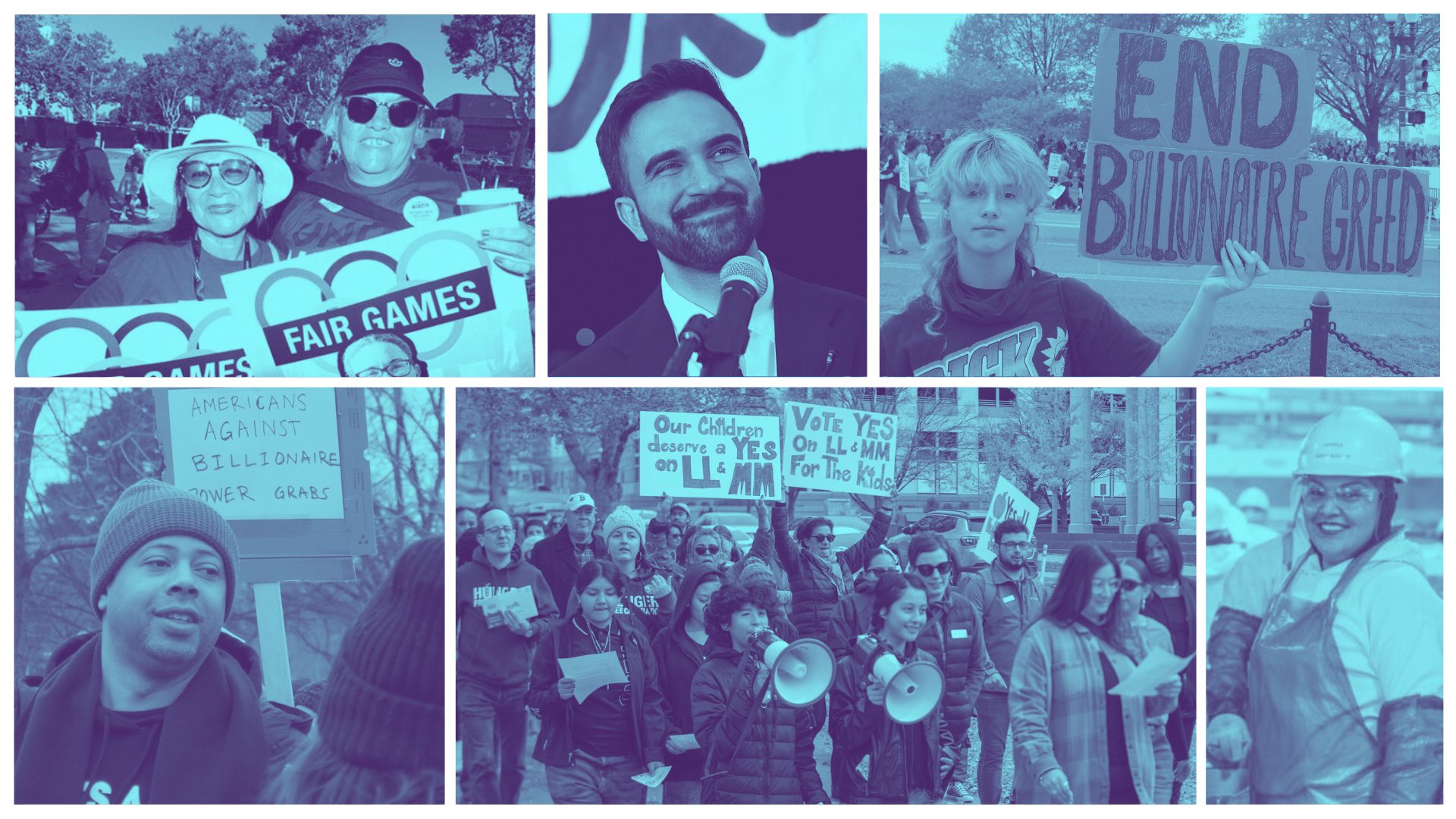
We’ve just highlighted on the Inequality.org website ten of this year’s most encouraging developments, victories ranging from amazing local electoral success and big worker organizing advances to new taxes on the wealthy. Putting this list together has helped us come away from an otherwise bleak year with renewed hope. We hope our top-ten list will have the same impact on you.
This will be our final newsletter of 2025. Thank you all for reading our weekly dispatches! We hope to continue to provide you with valuable insights and analysis on the evolving world of inequality in the new year ahead. Chris Mills Rodrigo
for the Institute for Policy Studies Inequality.org team |
|
|
This year’s most encouraging new face on the frontlines has to be Zohran Mamdani. His mayoral election triumph in New York City, after a campaign that stressed taxing the rich and making the city more affordable for working families, made for an inspiring victory. This political newbie soared above an establishment opponent incredibly flush with billionaire cash.
On the labor front, we tip our hats to the Los Angeles hospitality workers who won a $30-minimum “Olympic Wage,” the immigrant meatpackers who secured their industry’s first worker pension fund since 1986, and the Starbucks workers who pocketed the largest single worker-protection settlement in New York City history.
Our Inequality.org list of 2025’s victories also singles out the cities and states stepping up with new progressive taxes to fill the gaps from federal cutbacks. Colorado, for example, is raising rates on high earners to pay for universal free school lunches. New Mexico is plowing oil tax revenue into universal child care.
Also worth cheering: new moves to put frowns on the faces of wildly overpaid corporate CEOs. Seattle, as we noted above, is even now taxing excessive executive compensation to fund affordable housing. Check out our full list of 2025 inequality victories at the link below. |
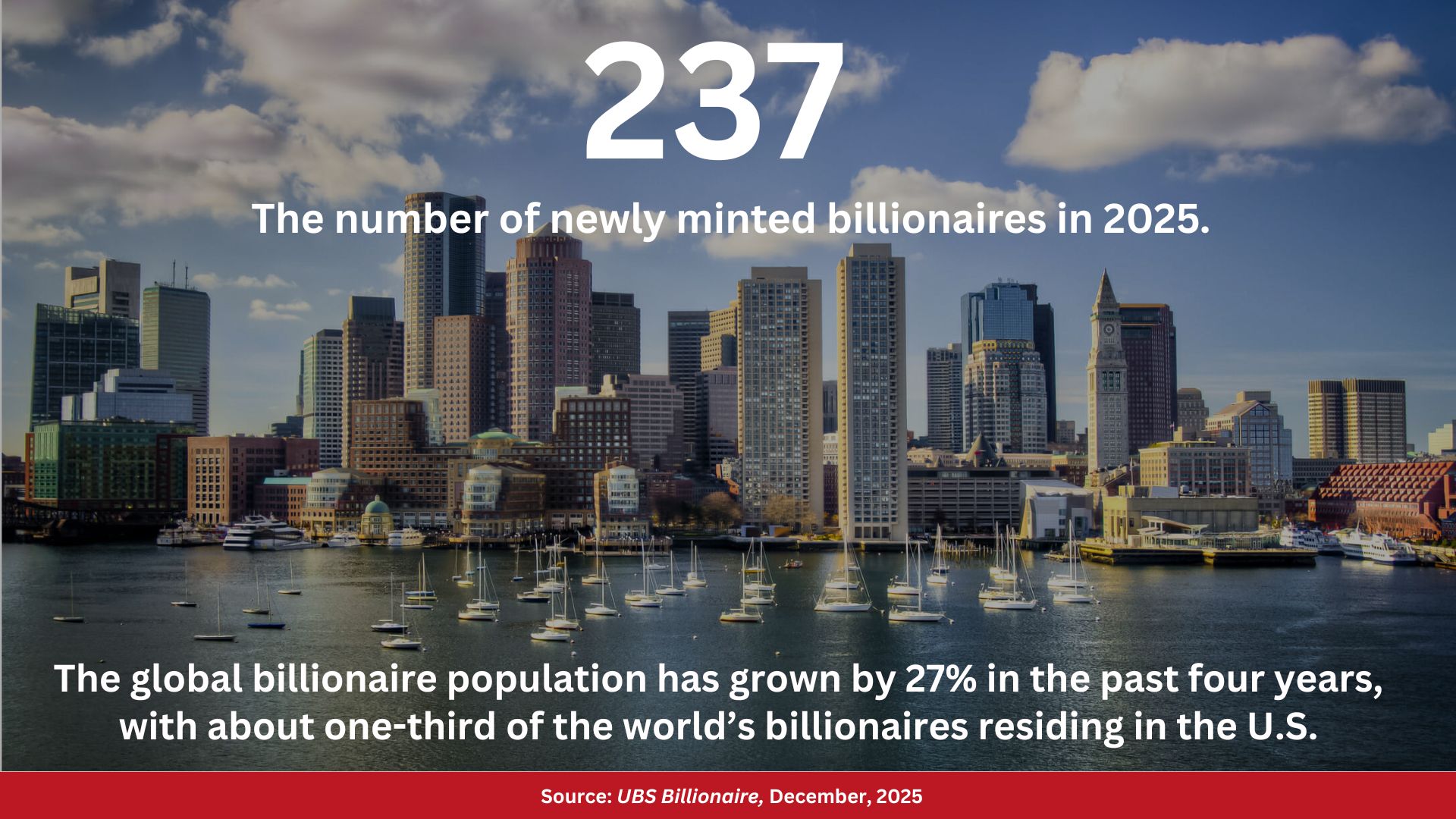
INEQUALITY BY THE NUMBERS |
|
|
The Fight in Chicago for a Budget That Serves the People
Chicago rates as one of the richest cities in America. And yet, before Thanksgiving this year, teacher Sylvelia Pittman had to send her students home with food to ensure they didn’t go home hungry. That crisis didn’t have to happen. Political leaders made resource allocation decisions that put kids at risk. They could have made different decisions.
And those leaders will in the future make different decisions if communities in the city win the campaign they’ve begun for a budget that prioritizes the needs of the people over the interests of the wealthy. A budget that increases taxes on millionaires and billionaires to pay for flourishing schools and social services. Read more from teacher Sylvelia Pittman below. |
|
|
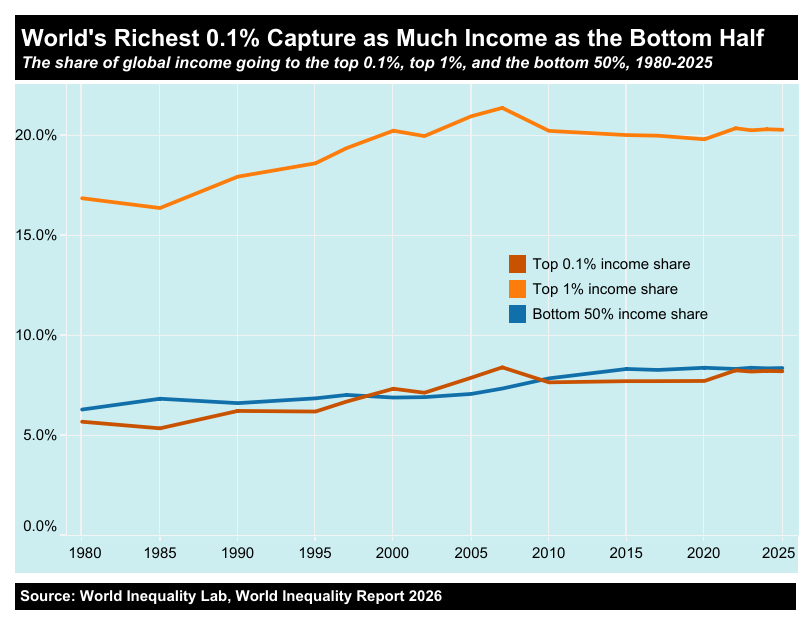
Income concentration at the very top continues to rise. In 2025, the world’s richest 1 percent captured 20.3 percent of global income, an increase of 3.4 percentage points since 1980. Even more striking, the top 0.1 percent now takes in nearly as much income as the bottom half of the world’s adult population combined. For an interactive version of this chart and more on global inequality, click the link to our Inequality.org Facts section below. |
|
|
PETULANT PLUTOCRAT OF THE WEEK |
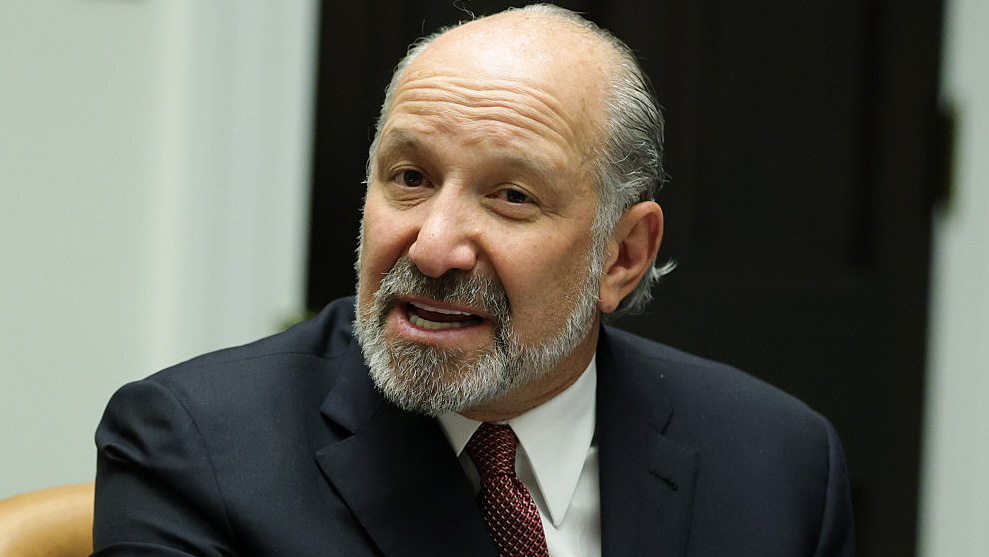
Going for Gold in the World’s ‘Greatest Economy’ Ever This week’s dour deep pocket: Howard Lutnick, the Wall Street billionaire now serving as the Trump administration’s commerce secretary.
What has Lutnick sour: the current widespread negativity about the state of the U.S. economy. Over two-thirds of the American public, polling released last Thursday revealed, see the state of that economy as “poor.” On the same day, in a CNBC interview, Lutnick disputed that assessment.
“We are doing great,” Lutnick declared. “Nothing bad is happening. Greatness is happening.”
To keep that greatness going, Lutnick is managing the new Trump “gold card,” an initiative that Lutnick says will be “raising the value of the people coming into this country.” Current “green card” holders, he explains, earn “one-third less than the average American.” Applicants for gold card status, by contrast, will gain front-of-the-line attention once they pay $15,000 for vetting and gift Commerce $1 million.
The last word: The new gold card has come into existence without any authorization from Congress. Says one member of Congress unhappy about that turn of events, Nebraska Republican Don Bacon: “I just don’t believe the executive branch should arbitrarily change rules.” |
|
|
What's new on Inequality.org
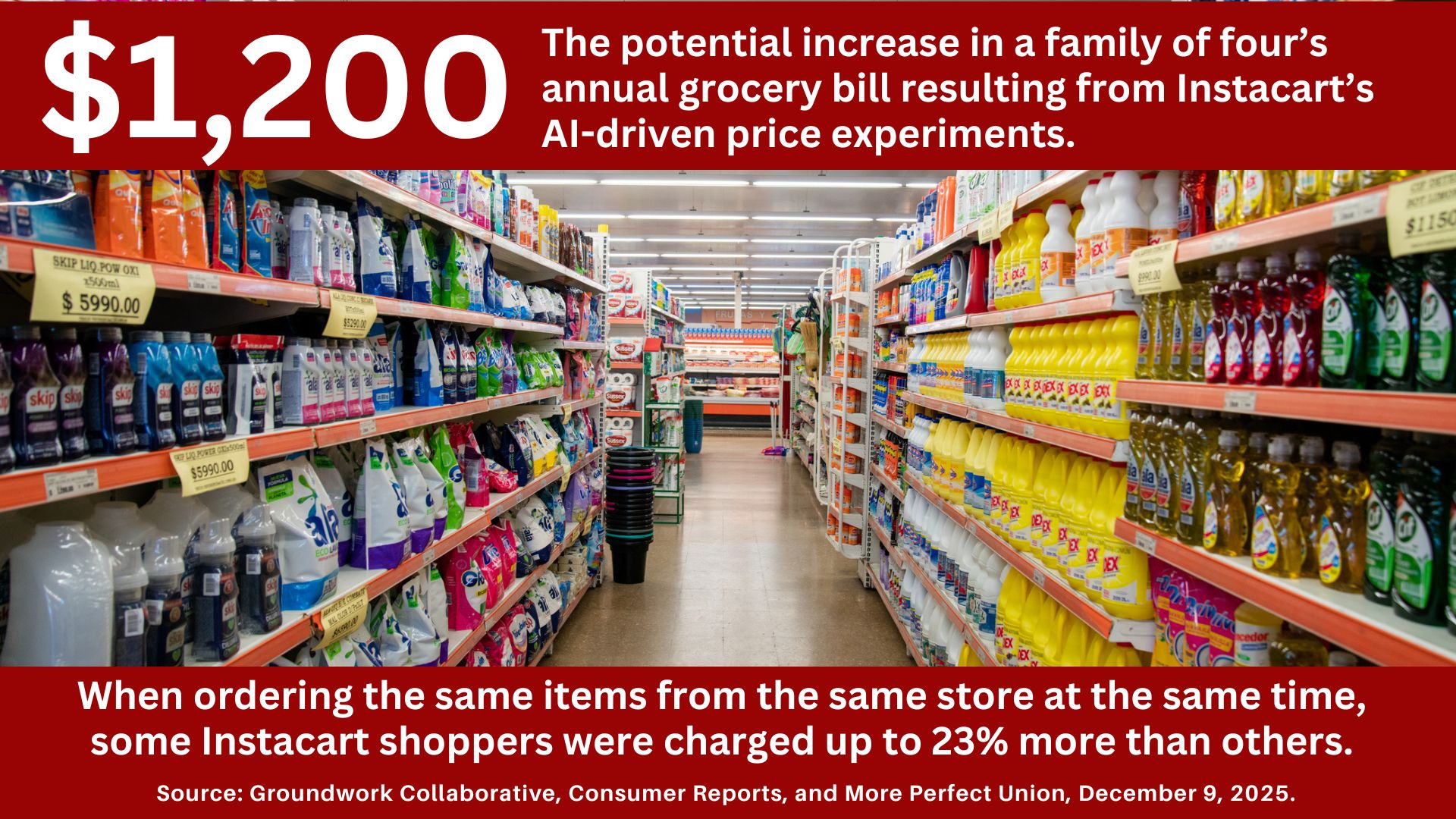
Ganzamungu Zihindula, Kevin Liverpool, and Enam Siddique, Can Radio Save Lives and Reduce Poverty in War-Torn Congo? This inexpensive technology remains an effective tool for ensuring equitable access to vital health and economic information. Michi Trota, The Public Pays the Price for Big Tech’s Data Centers. The relentless push for data centers is raising our power bills and polluting our communities. It doesn’t have to be this way. Lindsay Owens, Instacart’s AI experiments are costing Americans. A hidden price adjustment scheme could cost families up to $1,200 a year.
Elsewhere on the web
Max Page, We’re Making ‘Tax the Rich’ More Than a Slogan, Labor Notes. The Fair Share Amendment voted into the Massachusetts constitution in 2022 ups taxes on the state’s richest by 4 cents on every $1 over $1 million in income. The levy is already funding free community college tuition, free regional buses, and a great deal more.
Paul Delespinasse, America Needs To Tax Its Own ‘Second Estate’: Billionaires, Common Dreams. Americans think that billionaires who pay no federal income tax will at least pay the estate tax when they die. In fact, they are paying neither.
Bob Lord, The Washington Post Wants to Protect Its Owner From a Wealth Tax, Zeteo. The editorial board at this prestigious Jeff Bezos-owned daily is railing against a wealth tax without noting that Bezos stands to benefit massively from the paper’s anti-tax-the-rich policy stances.
Dean Baker, Jeff Bezos Uses the Washington Post to Promote Inequality, Patreon. The Post editorial pages have also become a haven for fanboys of huge corporate CEO windfalls. Hamilton Nolan, Abominations of Capital, How Things Work. Democracy remains simply not possible in the presence of the level of wealth inequality that currently stains the American polity.
Suzanne Blake, Map Shows Where Billionaires Are Planning Private Cities Around the World, Newsweek. Prospera, one such private city on the island of Roatán in Honduras, has garnered $100 million in investments from top high-tech titans.
Jackie Snow, Trump is slashing science funding. Tech billionaires are stepping in with AI, QZ. Billionaire funding for research tends to focus on making quick profits that maximize share prices, not on the patient, open-ended research that leads to fundamental breakthroughs.
Eduardo Porter, Why universal basic income still can’t meet the challenges of an AI economy, The Guardian. UBI can’t fix the core inequalities concentrated tech wealth is driving.
Caleb Ecarma, Led by David Ellison and backed by his centibillionaire father, Larry Ellison, Paramount Skydance is mounting a hostile takeover bid for Warner Bros. Discovery, Oligarchy Watch. The younger Ellison is offering the Trump administration assurances “that if he bought Warner, he’d make sweeping changes to CNN.”
|
|
|
ON BILLIONAIRES AND THE REST OF US |
This newsletter and the whole Inequality.org project are powered by donations. We’re not raking in cash from the billionaire class, though. We’re counting on people to see why this reporting, research, and advocacy matters, and then to become paid subscribers, by making a recurring monthly donation of any amount. Make a monthly gift as a paid subscriber. Start your paid subscription today. |
|
|
Inequality.org | www.inequality.org | inequality@ips-dc.org Institute for Policy Studies
1301 Connecticut Avenue Ste 600
Washington, DC 20036
United States
Managing Editor: Chris Mills Rodrigo
Co-Editors: Sarah Anderson, Chuck Collins, Bella DeVaan, Reyanna James, and Sam Pizzigati |
|
|
|