A weekly newsletter from the Institute for Policy Studies |
|
|
The federal government has now formally shut down after an impasse in congressional budget negotiations. To be honest, the federal government has been shutting down for months now, the victim of Trump cutbacks that have cost tens of thousands of federal employees their jobs and hamstrung deeply essential day-to-day government services.
The new budget shutdown will only deepen the federal government’s already dilapidated state. Federal workers will be missing paychecks. Key federal initiatives like the Supplemental Nutrition Program for Women, Infants, and Children will be at risk of running out of funding. America’s richest, meanwhile, will continue to enjoy their Trump tax cuts.
What’s going to happen next? Lawmakers might, of course, reach a quick agreement that allows the federal government to reopen. But solutions may have to come from off of Capitol Hill.
Remember the last federal shutdown deadlock at the end of 2018? The Association of Flight Attendants — a union of private-sector employees — brought flights across the Northeast to a standstill in solidarity with federal workers. Mere hours later, lawmakers reached a deal that reopened the federal government. Will workers save the day again? Chris Mills Rodrigo
for the Institute for Policy Studies’ Inequality.org team |
|
|
INEQUALITY BY THE NUMBERS |
|
|
Collective Action Can Move a Goliath. It Just Did — at Amazon.
This week’s frontline face: Yackisha Nebot Lopez, an Amazon fulfillment center associate in Staten Island and a member of Amazon Labor Union-International Brotherhood of Teamsters Local 1.
What she’s doing to help create a more equal world: Back this August, Nebot Lopez arrived at work and found herself immediately taken aback by the rotten smell of sewage spewing onto her warehouse floor. Despite the obvious health risks and unbearable stench, managers urged Amazon packers to keep working.
Nebot Lopez and her colleagues, with the power a union behind them, weren't having any of that. They flooded the internal messaging board, staged a walkout on their boss, and, within hours, won a green light to go home with full pay — in just one of the victories unionized Amazon workers have achieved this year.
What makes this fight so important to Nebot Lopez: Unionizing, Nebot Lopez has just noted for Inequality.org, “connects you to a common cause. It reminds you that you’re not alone, even in a place like Amazon that tries to divide us.” |
|
|
‘Free’ AI Tools, We’re Beginning to Understand, Have a Real Cost
ChatGPT first surfaced on America’s computers nearly three years ago. Ever since then, similar AI tools have proliferated across our phone and computer screens. Chatbots, image generators, and other sorts of slop have become commonplace, without users having to pay a dime unless they want premium features. But, as we all know well, “free lunches” seldom turn out to be free.
The surge in AI tools like ChatGPT has required a similar surge in constructing the energy-hogging data centers needed to keep those tools powered up. The new servers in these centers are single-handedly keeping open coal-fired power plants that had been slated for closure, in the process consuming ungodly amounts of water and generating noise that’s driving nearby communities crazy.
But things don't have to be this way. We could be using clean energy for some AI applications. More importantly, we could stop subsidizing incredibly energy-intensive programs that often do little more than generate fan fiction. We can do better than accept an AI that essentially operates to make the already rich richer. |
|
|
Wealth continues to concentrate at an alarming rate in the hands of a small minority who sit at the very top of America’s wealth distribution. Since 1989, the percent of the U.S. wealth pie that our richest 0.1 percent holds has grown by 59.6 percent. The share the bottom 50 percent holds has declined 26.1 percent. For an interactive version of this chart, click the Inequality.org link below. |
|
|
PETULANT PLUTOCRAT OF THE WEEK |
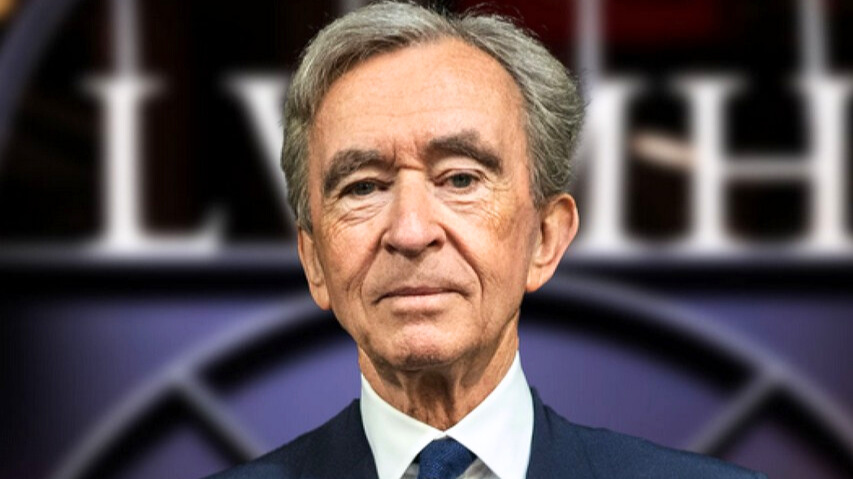
The Ultimate Mega-Billionaire Luxury: Never Having To Tell the Truth This week’s dour deep pocket: The 76-year-old Bernard Arnault, the chairman of LVMH Moet Hennessy Louis Vuitton, the world’s largest provider of luxury goods. Arnault’s personal fortune, the world’s eighth-largest, is currently seething along at $170 billion.
What has Arnault sour: the 2 percent annual tax on the wealth of France’s rich that the French economist Gabriel Zucman has proposed to wide popular acclaim. The tax would apply to all assets — including unrealized capital gains — of French deep pockets worth at least 100 million euros, about $178 million.
Arnault has labeled Zucman, the 2023 winner of the American Economic Association’s prestigious John Bates Clark Medal, as “first and foremost a far-left activist” who’s using “his pseudo-academic expertise” to “destroy the liberal economy, the only one that works for the good of all.”
A whopping 86 percent of the French public, new French Institute of Public Opinion polling shows, supports the “Zucman tax.” Passage of the measure, Zucman calculates, would raise about 20 billion euros, or $27 billion, a year. Over a billion of that euro total would likely come from Arnault himself.
The last word: France’s 500 biggest fortunes have been growing three times faster than the nation’s overall wealth, notes the French magazine Challenges, and now equal 40 percent of the country’s GDP, up from 6 percent in 1996. |
|
|
Bella DeVaan, Billionaires Promised to Give Wealth Away — So Why Are They Richer Than Ever? Katie Couric Media. Fifteen years ago, the Giving Pledge’s launch encouraged billionaires to give away half their fortunes, either during their lives or upon their passing. Many made the pledge. Few have followed through.
Celeste Pepitone-Nahas, Could a “Maximum Wage” Combat Billionaire Power? In These Times. An eye-opening new look on who’s accomplishing what at the income-capping cutting edge.
Margaret Sullivan, The TikTok deal puts even more media in the hands of the super-rich, The Guardian. Our planet’s richest man now owns X. Our second-richest will soon own TikTok. Our third-richest owns Facebook, Instagram, and WhatsApp. Our fourth-richest owns the Washington Post.
Ari Paul, Pro-Trump Billionaires Want to Control What You Watch, FAIR. In truly healthy democracies, billionaires don’t buy up all of the means of cultural consumption. Vittoria Elliott, Tech Billionaires Already Captured the White House. They Still Want to Be Kings, Wired. Our tech elite dream of building cities where they make the rules. Has their moment finally come?
Timothy Workman, Billionaire coup: How extreme wealth is killing the planet, Rainforest Action Network. The rich don’t just over-consume. They’re leading a smash-and-grab at our Earth’s expense. Robert Reich, Why are we so polarized? Why is democracy is such peril? Substack. For an answer, follow the money — to the tsunami of legal bribes flowing into American politics from oligarchic corporate CEOs and their allied billionaire investors.
Timothy Noah, The Financial Sector Was Tottering Even Before Trump, The New Republic. The Trump administration is now trying to help desperate private equity kingpins get America’s grandmas investing in the industry’s increasingly shaky financial products.
Katharina Pistor, Trump Puts America Up for Sale: Everything Now Comes With a Price Tag, Social Europe. From $100,000 work visas to million-dollar “gold cards,” Donald Trump has turned government services into transactions that chase after the highest bidders.
Dean Baker, The “Free Market”: The Fatal Error of the Foundational Myth of Center-Left Politics, Beat the Press. Those who say we just want to leave things to the market may have some amount of integrity. Those who rig the economic deck to give all the money to the rich have none. |
|
|
Our research, editorial, and publishing team depends on hundreds of paid subscribers who make monthly gifts. Some give $3 each month. Others give $200! All told, this support enables our team to stay focused on identifying causes and solutions to our deep economic inequality. Paid subscribers have contributed more than $20,000 in the past year. Ready to become a paid subscriber? Sign up today. |
|
|
Inequality.org | www.inequality.org | inequality@ips-dc.org Institute for Policy Studies
1301 Connecticut Avenue Ste 600
Washington, DC 20036
United States
Managing Editor: Chris Mills Rodrigo
Co-Editors: Sarah Anderson, Chuck Collins, Bella DeVaan, Reyanna James, and Sam Pizzigati |
|
|
|