July 23, 2025                                                         Home   Subscribe  Open in Browser


A weekly newsletter from the Institute for Policy Studies


THIS WEEK

Donald Trump talked a big talk about helping working people during his 2024 campaign, and his recently enacted “Big Beautiful Bill” even includes a handful of pro-worker-sounding policies like an exemption from taxes on tips. But all his talk, once you look closer, is pure bluster. 

This Trump administration has hobbled the National Labor Relations Board, slashed the social-service programs millions of working Americans rely on, and unleashed masked federal agents on immigrant-heavy workplaces. And that no-tax-on-tips piece? That turns out to be way less generous than first appears.

And now Trump and Republicans are busy rolling back some of our most basic workplace protections. The Department of Labor is rewriting or eliminating upwards of 60 so-called “obsolete” protections against worker abuse. Under the ax is everything from the home healthcare worker minimum wage to safety standards for lighting on construction sites.

Only our richest gain from this onslaught on worker rights. We need a revitalized labor movement to lead the fightback on behalf of us all!

Chris Mills Rodrigo
for the Institute for Policy Studies’ Inequality.org team


INEQUALITY BY THE NUMBERS

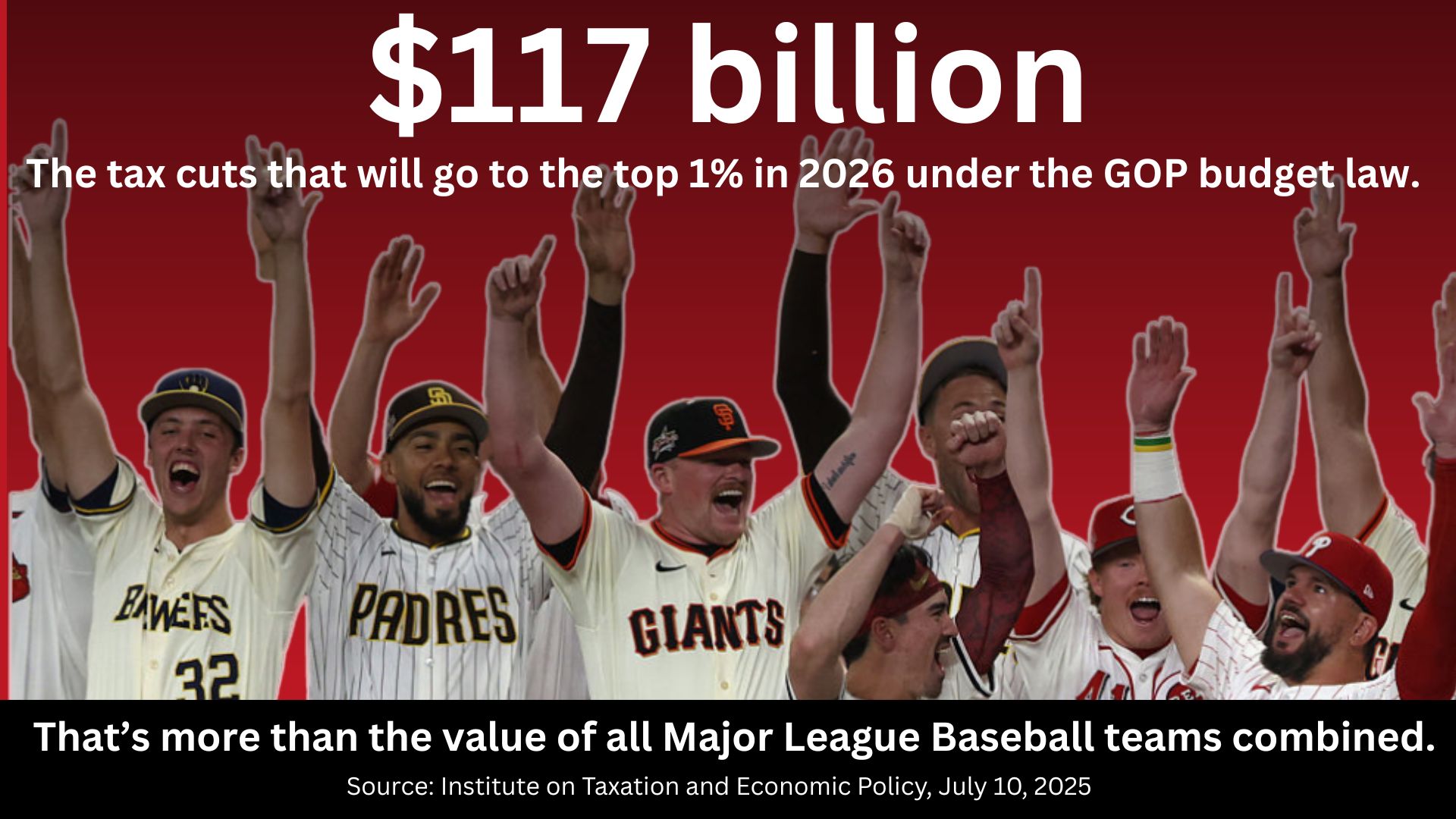
MLB players with the text: $117 billion, The tax cuts that will go to the top 1% in 2026 under the GOP budget law. That's more than the value of all Major League Baseball teams combined. Source: Institute on Taxation and Economic Policy, July 10, 2025
 

FACES ON THE FRONTLINES

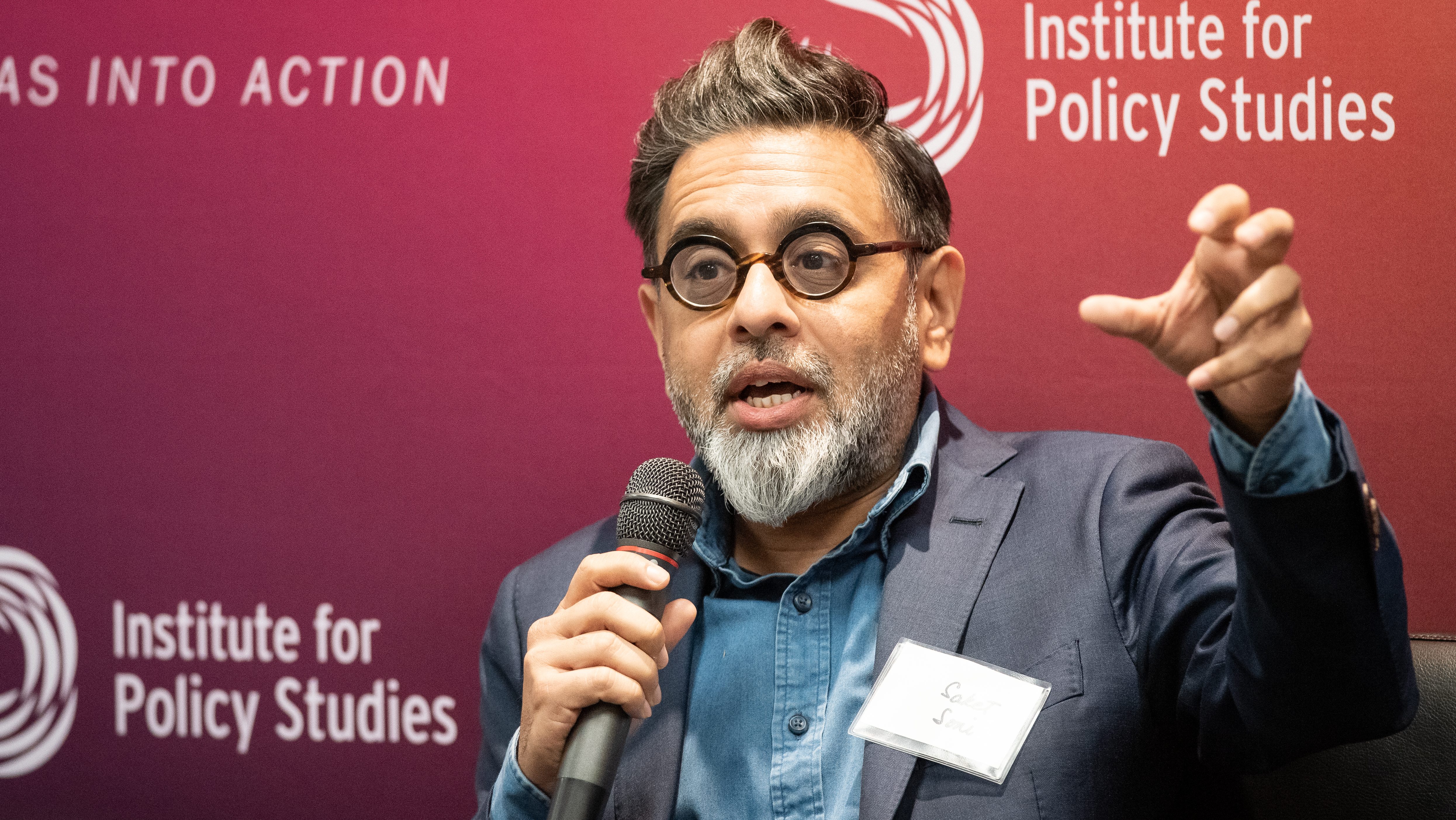
Saket Soni

Bringing Together Entire Communities in Dire Moments of Crisis

This week’s frontline face: Saket Soni, the head of Resilience Force, an initiative to improve conditions for immigrant climate recovery workers.

What he’s doing to help create a more equal world: Soni first started organizing with immigrant disaster workers after Hurricane Katrina. Hundreds of welders and pipefitters had been recruited from India to help rebuild after the catastrophe. But these laborers faced abysmal working conditions, and their employers wielded their immigration status as a cudgel against them.

Soni helped these immigrants break out of their work camps and march all the way to Washington. Now he’s traveling the country with immigrants contracted for ever-more-needed disaster relief efforts.

Why the fight matters to him: “Every time there’s been a flood, fire, or hurricane, immigrant workers have gathered and become the white blood cells of the recovery effort,” Soni noted at the Institute for Policy Studies Henry Wallace Symposium last week. “They’re rebuilding the homes of people who just the week before the hurricane thought of immigrants as the enemy.” 

Your can watch Soni’s panel presentation alongside veteran activists Sarah Anderson, Erica Smiley, and Faiz Shakir below!

EMPOWERING WORKING PEOPLE
 

BOLD SOLUTIONS

Our Nation’s Public Schools Can’t Afford To Rely on Wall Street

School districts nationwide are facing still another financial squeeze now that the Trump administration has decided to withhold $6.8 billion in education funding. Having to deal with budget deficits has, sadly, become standard operating procedure for public schools — and they’ve been increasingly feeling forced to rely on Wall Street debt financing to keep the lights on.

But relying on Wall Street doesn’t have to be the only way to go. Schools could be receiving loans directly from the Federal Reserve, avoiding much of the risk and cost that comes with private debt financing for major investments. Occidental College's Claire Cahen lays out the history of school debt reliance — and how we can change course — in a new piece for Inequality.org linked below.

DEBT STRESSED
 

CHART OF THE WEEK

A chart comparing the estate tax exemption before and after the Republican bill.

The amount the wealthy can inherit without paying tax was set to revert to $14 million this year, but the recently passed GOP budget bill hikes that exemption to $30 million. Wealthy heirs will enjoy a one-time tax savings of $6.4 million, while 99.8 percent of American families will not get a single penny from this tax cut. For more charts on the big ugly budget bill, click the link below. 

DIVE DEEPER
 

PETULANT PLUTOCRAT OF THE WEEK

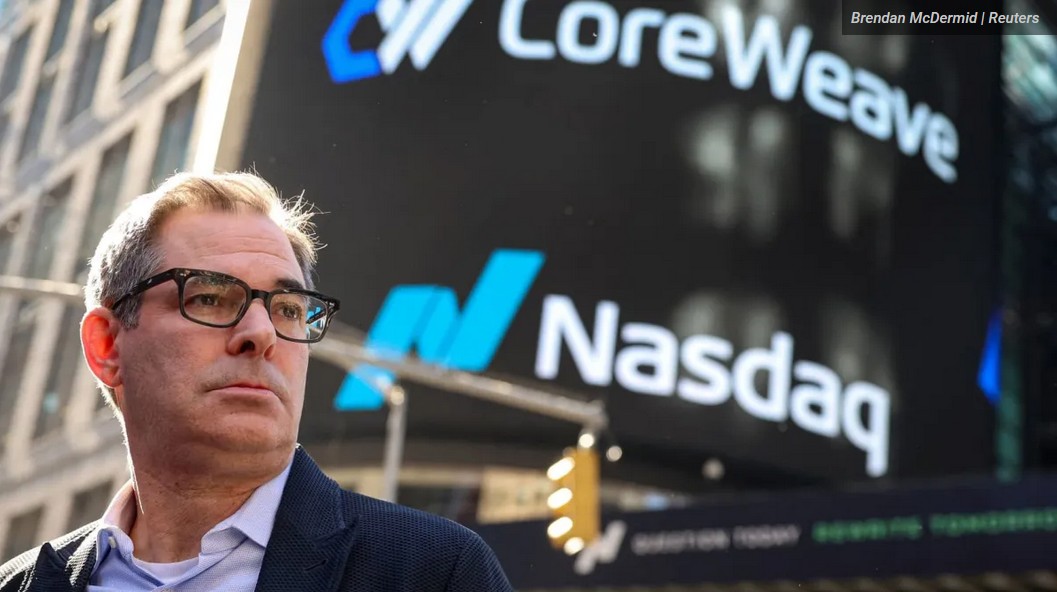
Michael Intrator

No Bubbles Lurk Behind My Artificial Intelligence Billions!

This week’s dour deep pocket: Michael Intrator, the billionaire CEO of CoreWeave, a one-time crypto startup that’s now partnering with artificial intelligence giants like Nvidia and Microsoft.

What has Intrator sour: any suggestion that he owes his fortune to the AI bubble — or that the AI source of his fortune poses a significant environmental risk. 

This past spring, the 56-year-old Intrator — a former hedge fund operative with “zero tech background” — saw his personal, CoreWeave-centered fortune double to $10 billion in just 12 days. But Intrator sees no bubble in AI, just “relentless demand” for “more compute” and “large compute.”

The latest sign of that demand: CoreWeave last week announced plans for a new $6 billion AI data center. CoreWeave last year claimed that 90 percent of its data centers were running on renewables. Claims like that are no longer impressing climate experts. Natural gas, the Deep Decarbonization Project’s David Victor notes, has become “the default” for meeting AI’s exploding demand for power.

The last word: “Whether or not the AI bubble bursts,” sums up Heated World’s Arielle Samuelson, “data centers have in the short term tipped the scales in favor of fossil fuels.”


GREED AT A GLANCE

A photo of two people cheersing a run glass with the text: $2 billion, The cost of a tax break in the GOP budget bill for the rum industry in Puerto Rico and the U.S. Virgin Islands. Senator Bill Cassidy secured the sweetheart deal to benefit Louisiana producers of sugarcane, the basis for rum. Source: Politico, July 4, 2025
 

MUST READS

What's new on Inequality.org?


Sean Mason, Democrats Can Win Back the Working-Class with Economic Populism. New research from the Center for Working-Class Politics shows that progressive economic policies can bring working-class Trump supporters back into the Democratic Party.

Juan Montecino, Mary Hansen, and Ignacio González, Republican Tax and Spending Law Is Economically Misguided and Deeply Unfair. Cutting taxes for the wealthy and businesses and paying for it with Medicaid cuts will not have a positive impact on growth but will deepen the deficit and widen inequality.


Elsewhere on the web


Chuck Collins, Ralph de la Torre: The Making of a Healthcare Oligarch, The Nation. The first of Chuck's new column series, this time focused on the disgraced former CEO of Steward Health Care.


Fred Glass, What California history has to say about the New York mayor’s race, Stansbury Forum. Back in 1911, the richest of Los Angeles faced a mayoral candidate who threatened the dominance of wealth much like Zohran Mamdani does today in New York. Those L.A. rich triumphed. Can Mamdani win in a city where top 1 percenters have tripled their share of local income since 1980, from 12 to 36 percent?


Robert Frank, Mamdani’s millionaire tax sparks fear of New York wealth flight, Inside Wealth. CNBC’s wealth editor explains why Zohran Mamdani’s proposed wealth tax, even if enacted, will spur no grand exodus of New York’s wealthy to lower-tax jurisdictions.


Caroline O'Donovan and Naomi Nix, The Chan-Zuckerbergs stopped funding social causes. 400 kids lost their school, The Washington Post. What happens when we depend on deep pockets to “solve” social problems? Far too many eventually lose interest in their once “pet projects.” 


Anand Giridharadas, Billionaire do-gooding is out. Naked oligarchy is in, The Ink. Notes on the Bezos wedding and Trump's cruel budget.


Daniel Mandell, The Founders Knew Great Wealth Inequality Could Destroy Us, Time. Among the influencers who shaped America’s founders: the historians who traced Rome’s decline to a widening gap between rich and poor, the radical Protestants who wanted to redistribute wealth in Great Jubilees, and a novel describing an island nation that placed explicit limits on income and wealth.


Paul Buchheit, 5 Facts That Show the Enormity of US Inequality, Common Dreams. The entire poorer half of the U.S. people hold only 2.5 percent of America’s wealth. And that stat only begins to tell our nation’s inequality story.


Dara-Abasi Ita, Not Just Yachts — Billionaires Love to Buy Elections Too, Investopedia. The $2.6 billion that 100 billionaire families invested in the 2024 elections doubled the amount billionaire big donors spent on elections in 2020.


Avi Bryant, I’m a Millionaire. Tax Me More, Please, Maclean’s. Entrepreneurs, says this Canadian veteran of Silicon Valley, start businesses in places people want to live. But the basic building blocks of places where people want to live — good schools and solid infrastructure — take the sorts of significant tax revenue that only taxing our richest can provide.


Spencer Althouse, Billionaires Shouldn't Exist, And To Prove It, Here's What $1,000,000,000 Can Actually Buy You, Yahoo. The average American tenant spends $1,635 per month on rent. If you had $1 billion dollars, that would cover your rent for the next 50,968 years.


Michael Hiltzik, Does America need billionaires? Billionaires say ‘Yes!’ Los Angeles Times. Many of today’s media outlets have been feeding on spoon-fed pap from the rich and powerful for so long that they — as the great press critic A.J. Liebling once put it — need to relearn how to chew.