A weekly newsletter from the Institute for Policy Studies |
|
|
Hundreds of thousands of New Yorkers took to the ballot box this week to send a clear message: We need bold solutions to make our city affordable. Late Tuesday night, disgraced former Governor Andrew Cuomo conceded the New York City Democratic primary to State Assemblymember Zohran Mamdani.
Pundits have already started crediting Mamdani’s victory to his unique charisma and his vivid social media presence. Be skeptical of these day-afters. Policies and people power, not charm and clever messaging, drove Mamdani’s upset victory.
Mamdani offered principles and plans that speak directly to our need to tackle inequality head-on. A rent freeze for stabilized tenants, fast and free buses for all, and universal childcare from six months to five years are all proposals that meet the moment. We can tax the rich, he pledges, to make New York liveable for all.
New Yorkers backed that vision. Over 50,000 volunteers knocked on north of 1.5 million doors after Mamdani’s campaign launched last October. Volunteers on one side, $25 million of billionaire and corporate cash on the other. Mamdani’s campaign has provided a blueprint. Can the rest of the nation follow?
A quick note: the Institute for Policy Studies, alongside The Nation and Public Citizen, is hosting its annual Wallace Symposium on July 17. Speakers will include Faiz Shakir of More Perfect Union, progressive House members Greg Casar, Pramila Jayapal, and Jamie Raskin, and many more. Check back here later this week for details and registration information.
Chris Mills Rodrigo
for the Institute for Policy Studies’ Inequality.org team |
|
|
INEQUALITY BY THE NUMBERS |
|
|
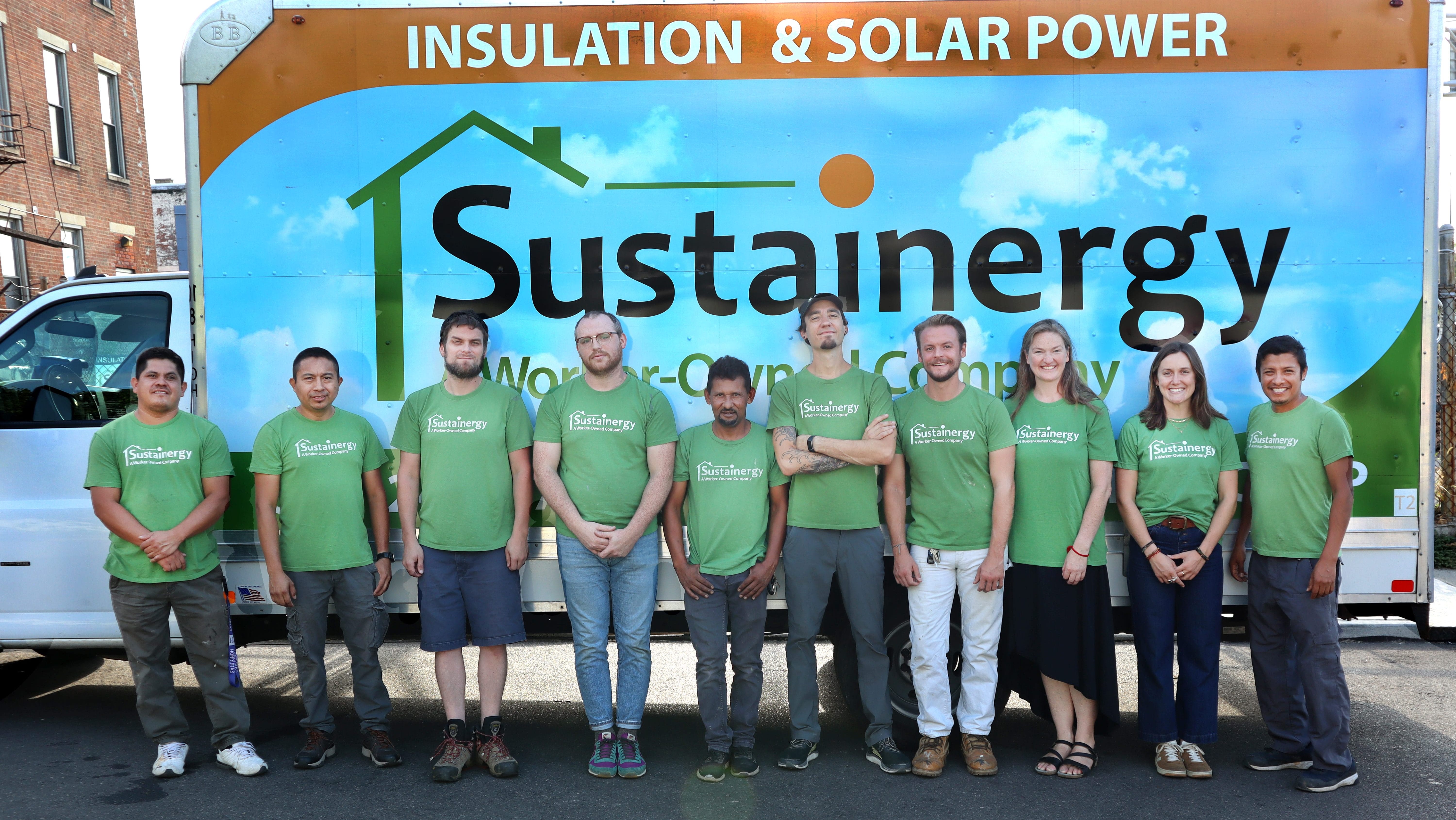
Building a Cleaner Future — And Family-Sustaining Jobs This week’s frontline face: Flequer Vera, one of the co-founders of the Sustainergy worker co-op and Co-op Cincy.
What he’s doing to help create a more equal world: Vera always had dreams of starting a business. But his experience as an undocumented worker in America made him worried about recreating the conditions for labor exploitation he saw in traditional corporate workplaces.
Vera found an alternative to that exploitation in a visit to the massive worker cooperative federation Mondragon in Spain. Just a few years later, he and friends from Cincinnati would launch the green construction business Sustainergy. They’ve since then helped retrofit thousands of local homes. The even bigger win for Vera: the good worker-owner jobs he’s helped create.
Why the fight matters to him: “When Yovany, a worker-owner at Sustainergy and another first-generation immigrant, recently had his car stolen, our co-op’s revolving loan fund helped him avoid extractive payday lenders,” Vera has just noted on Inequality.org. “Additionally, thanks to his yearly paid dividends as a worker-owner, he was able to afford to buy a home.”
To read more about how Vera came to create this worker co-op, click below! |
|
|
Making Sure Our Energy Transition Brings Everyone Along
A realistic solution to our climate crisis demands huge changes in our energy system. But tens of millions around the world depend deeply on the fossil fuel economy. How can we abandon that extractive system without leaving those workers and communities behind?
J. Mijin Cha has been working to answer that question for years, and her recent book, A Just Transition For All: Workers and Communities for a Carbon-Free Future, provides the best answer yet. Inequality.org spoke recently with Cha about the book and the future of energy transitions. Read the conversation below. |
|
|
If the U.S. federal minimum wage had risen at the same rate as average Wall Street bonuses since 1995, that minimum would today stand at $20.87 instead of $7.25. Trump Treasury Secretary Scott Bessent made clear in his confirmation hearing that he would oppose any raise in the federal minimum wage.
Bessent appears to have trouble relating to Americans at the bottom of our nation’s wage scale. One possible reason: As a former hedge fund executive, he holds a personal net worth of more than $500 million. For an interactive version of this chart and more on income inequality, click the link to our Inequality.org Facts section below. |
|
|
PETULANT PLUTOCRAT OF THE WEEK |
A Commitment to Keeping Our Skies Friendly — for Profits This week’s dour deep pocket: Bryan Bedford, the 63-year-old Republic Airways CEO Donald Trump has nominated to become the Federal Aviation Administration’s next top administrator.
What has Bedford sour: the FAA’s continuing insistence that all flight school graduates must undergo 1,500 hours of training to gain a commercial pilot’s license, a standard that enjoys strong support from groups that include the 79,000-member Airline Pilots Association.
“We have concerns about the nominee’s past efforts to lower pilot training and safety standards,” the APA announced after Bedford’s nomination.
Bedford feels commercial pilots need only 750 training hours — and has also argued against the FAA’s two-pilot-in-the-cockpit requirement, even blasting Congress for not having the “courage” to strike that rule down.
The last word: Bedford, once confirmed, will collect a $225,000 annual FAA salary. At Republic, he drew an annual salary just under $1 million and, over the last two years, collected an additional $9 million in bonuses. Bedford, the National Law Journal estimates, will also be pocketing as much as $25 million in severance from Republic. |
|
|
What's new on Inequality.org?
Sarah Anderson, Look Out for the ‘Stop the Billionaire Giveaway’ Bus Tour, A Q&A with Fair Share America leader Kristen Crowell about a 14-state road trip to mobilize opposition to the GOP budget plan.
Elsewhere on the web
Timothy Noah, How the Billionaires Took Over, New Republic. The United States has always hosted rich people. But never before have our rich amassed money and power on the scale they have today.
Gabriel Zucman, How Trump’s Tariff Regime Fuels Global Oligarchy, Social Europe. The top 0.00001 percent’s share of U.S. wealth took four decades, from 1982 to 2023, to grow from 0.1 to 1.2 percent. But in just one year, 2024, that share jumped to 1.8 percent — and Trump’s second term hadn’t even begun yet.
Holly Frew, Study reveals companies may be massaging CEO pay ratios without changing actual pay, Phys.org. A new academic study has uncovered how U.S. corporations are exploiting federal regulation loopholes to make their CEO-to-worker pay ratios appear more equitable.
Robert Reich, The Most Dangerous Corporation in America, Substack. Billionaire Peter Thiel is helping build a super database of Americans’ private information that the Trumpistas can use to punish critics and find and detain immigrants.
Trump’s Corporate Oligarchs: Billionaires Cash In While Working People Pay the Price, Popular Democracy in Action. A new report takes a close look at six of Donald Trump’s most notorious corporate oligarchs.
Surya Gowda, What Makes A Democracy A Democracy? Tech Policy Press. The immense political influence the tech elite now holds demonstrates how free and fair elections may coexist with — and even foster — a political system that privileges the policy preferences of a select few.
Mike Sivier, What if…your boss didn’t earn 200 times more than you? Vox Political. Imagine a company where the CEO could earn no more than 20 times the pay of the firm’s lowest-paid worker. This imaginary exercise has become, in some firms, a working reality.
Paul Buchheit, Blaming the Poor While the Rich Sneak Off With the Welfare, Common Dreams. Some 70 percent of federal spending on housing comes in the form of tax-based deductions that largely benefit the rich.
Tilman Wörtz, Economic inequality increases risk of civil war, says study, Phys.org. In the United States, a new study out of Germany’s University of Tübingen contends, increased inequality over the past 30 years has raised the danger of civil war from 10 to 21 percent. |
|
|
Our research, editorial, and publishing team depends on hundreds of paid subscribers who make monthly gifts. Some give $3 each month. Others give $200! All told, this support enables our team to stay focused on identifying causes and solutions to our deep economic inequality. Paid subscribers have contributed more than $20,000 in the past year. Ready to become a paid subscriber? Sign up today. | |
|
Inequality.org | www.inequality.org | inequality@ips-dc.org Institute for Policy Studies
1301 Connecticut Avenue Ste 600
Washington, DC 20036
United States
Managing Editor: Chris Mills Rodrigo
Co-Editors: Sarah Anderson, Chuck Collins, Bella DeVaan, Reyanna James, and Sam Pizzigati |
|
|
|