A weekly newsletter from the Institute for Policy Studies |
|
|
All eyes were on Los Angeles this weekend, as police, National Guard officers, and even Marines were deployed to violently quell demonstrations over the Trump administration's mass deportation campaign. Immigration and Customs Enforcement (ICE) has launched very public raids in America's second-largest city, targeting majority-immigrant workplaces. These are not only assaults on the rights of immigrants, but also the rights of workers.
That connection could not be clearer than in the administration's targeting of labor leaders. David Huerta, the president of Service Employees International Union California, was arrested — and injured badly enough to require a hospital visit — by federal agents Friday while acting as a community observer during an ICE raid. Now released on bond, Huerta is still facing federal charges.
Farmworker organizing leader Alfredo “Lelo” Juarez, meanwhile, has been held in detention since March. Machinist union member Maximo Londonio was arrested in May despite holding a green card.
How do we fight back against this Trump assault? By building coalitions that link the struggles of all those the Trump administration is targeting, from workers and immigrants to members of the LBTQIA+ community. Only plutocrats are gaining from this latest and most threatening Trump offensive. Chris Mills Rodrigo
for the Institute for Policy Studies’ Inequality.org team |
|
|
INEQUALITY BY THE NUMBERS |
|
|
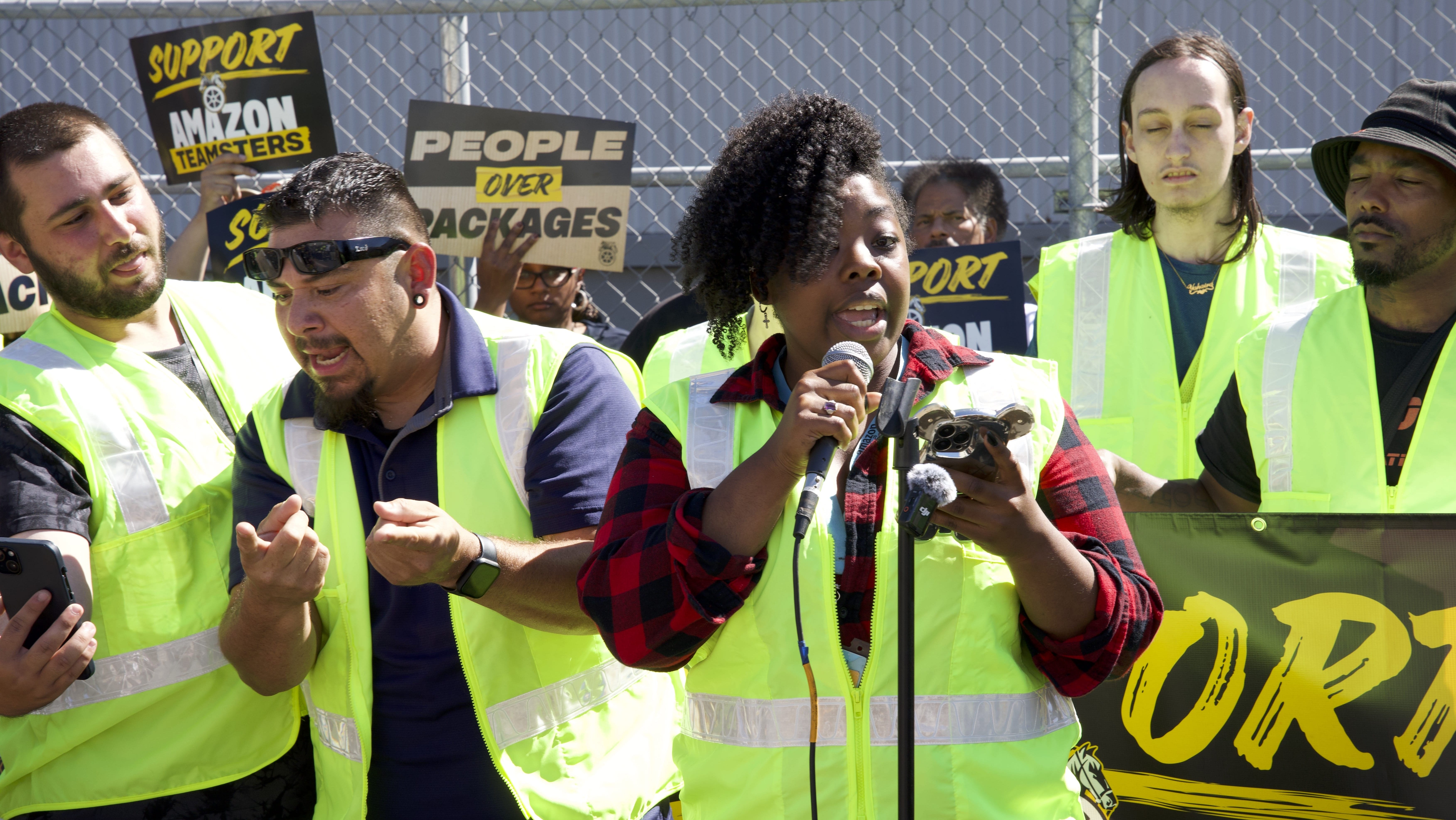
Organizing at Amazon for Working Families Across America This week’s frontline face: Janeé Roberts, a flex associate and Teamster at Amazon’s DCK6 facility in San Francisco.
What she's doing to help create a more equal world: Roberts first encountered Amazon’s disregard for workers when her mother suffered an aneurysm on the job and given no help before getting shamelessly fired mid-recovery. Roberts has now become a leader in the fight for a union at America's second-largest employer, a battle that’s seeking to get workers treated as more than numbers on a ledger.
This union effort did get a boost recently when the National Labor Relations Board filed a complaint against Amazon for delaying negotiations over a contract. The company is challenging that ruling in court, but workers feel they’re going to prevail in the long term.
What makes this fight so important: “We are fighting to ensure that Amazon employees like me, my mom, and my co-workers at DCK6 no longer have to worry about how we will provide for our families,” Roberts notes on Inequality.org. “We want the wages and benefits that we earn every day by sacrificing our labor.” |
|
|
We Need One Fair Wage for All Workers — Tipped Workers Included
Back in 2018, Washington, D.C. residents voted to raise the minimum wage for tipped workers to the same baseline guaranteed for everyone else. But the D.C. Council chose to overrule voters.
In 2022, voters again supported a similar measure. Initiative 82 passed with a whopping 74 percent “yes.” Local lawmakers then relented. But Mayor Muriel Bowser and local officials are now getting cold feet and pausing the gradual increases in tipped worker wages.
Their justification — that increased payroll costs have shoved D.C. restaurants into crisis — just doesn’t reflect the actual numbers, as DC Jobs With Justice’s Elizabeth Falcon pointed out in a new piece. In the wake of Initiative 82, service industry jobs have increased, and new restaurants are opening. Raising the minimum wages for tipped workers — just $2.13 per hour federally — remains a critical labor fight. |
|
|
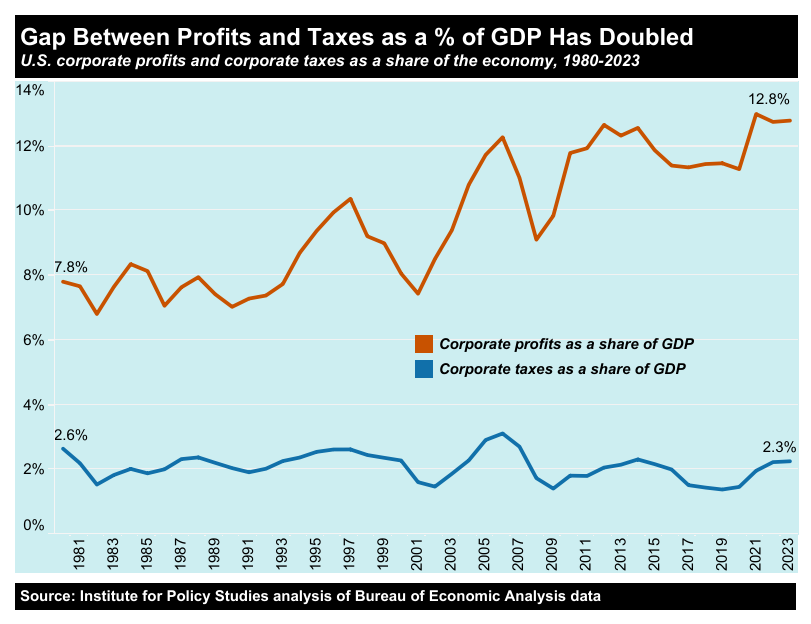
Higher profits should lead to higher tax revenue, but they haven’t — because of corporate tax cuts and loopholes. In fact, between 1980 and 2023, the gap between U.S. corporate profits and corporate taxes as a share of GDP doubled. The recent House-approved budget reconciliation bill would widen this gap. The bill includes tax breaks that would reduce corporate tax bills by more than half a trillion dollars in coming years. For an interactive version of this chart and more on taxes and inequality, click the link to our Inequality.org Facts section below.
|
|
|
PETULANT PLUTOCRAT OF THE WEEK |
This CEO’s Bold Discovery: Top Corporate Execs Can Do No Wrong This week’s dour deep pocket: the 65-year-old David Zaslav, the president of Warner Bros. Discovery, the troubled entertainment industry colossus that has just announced plans to undo the 2022 merger that gave the firm colossus status.
What has Zaslav sour: Public attacks on his moves to lay off thousands of workers and produce fewer movies and TV shows. At Warner Bros. Discovery, Zaslav likes to insist, “we have no sacred cows.”
Well, maybe one sacred cow: executive compensation. Zaslav last year enjoyed a pay package worth $51.9 million, on top of $49.7 million in 2023 and $39.3 million in 2022, the year Discovery and WarnerMedia merged. In 2024, Warner Bros. Discovery shares fell some 7 percent in value, as the company, Variety notes, “posted a staggering $11.5 billion net loss."
Those numbers have left Warner Bros. Discovery shareholders, the Financial Times reported last week, distinctly displeased. At the firm’s 2025 annual meeting, shareholders voted overwhelmingly against Zaslav’s pay package. But the company’s board remains free to ignore that non-binding balloting. The last word: Entertainment industry companies “plead poverty, that they’re losing money left and right” while they give “hundreds of millions of dollars to their CEOs,” actor union president Fran Drescher has noted. Adds the labor leader: “It is disgusting.” |
|
|
Viet Nguyen-Tien, Tariffs, automation and inequality: why US jobs won’t return but developing countries will still lose, LSE Inequalities. Rather than restoring American jobs, Trump's tariffs may accelerate automation, undermining the export-led industrialization model that has lifted millions out of poverty.
Robert Langreth, Tanaz Meghjani, and Rachael Dottle, Cancer Drugs Cost More Than Ever. They Often Don’t Extend Lives, Bloomberg. The incredibly high prices for cancer drugs are creating enormous personal fortunes — at grieving family and taxpayer expense.
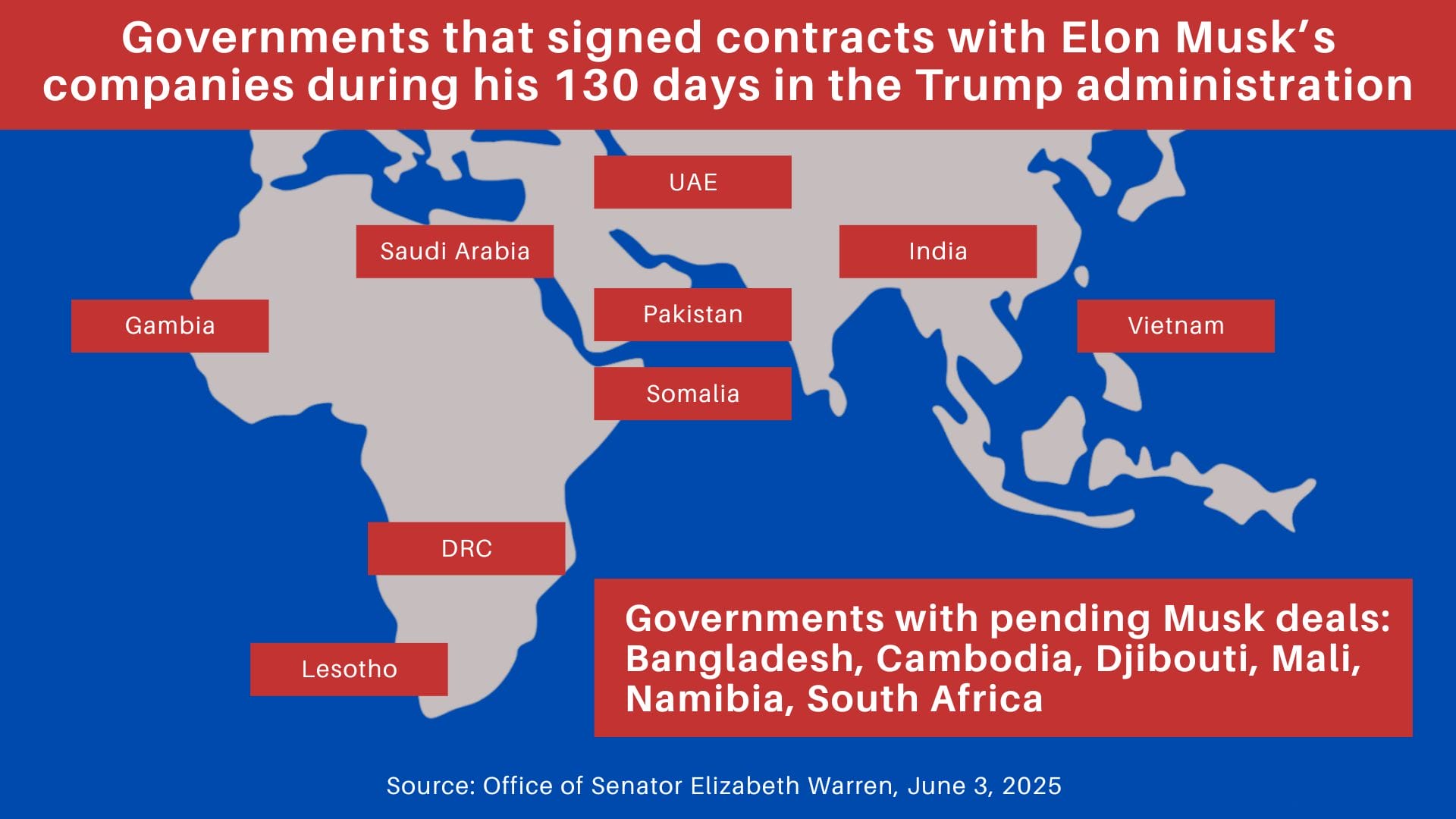
Hamilton Nolan, Private Equity Vampires Suck, How Things Work. An eye-opening interview with the author of the newly published Bad Company: Private Equity and the Death of the American Dream. Peter Hart, Elon Musk Got What He Paid For, Center for Economic and Political Research. Musk’s $300-million investment in electing Donald Trump has paid off handsomely.
Jim VandeHei and Mike Allen, Behind the Curtain: A white-collar bloodbath, Axios. The CEO of a leading artificial intelligence software creator fears that AI, as currently unfolding, could lead us to a massive new concentration of wealth and “scary” inequality.
Yessenia Funes, Fossil fuel billionaires are bankrolling the anti-trans movement, Heated. The billionaire opposition to climate action is using anti-trans rhetoric to build its base. Greg LeRoy, Incentives to Reduce Inequality, Good Jobs First. A new national survey shows “local development officials believe that tax-dollar incentives for corporations should serve a higher public purpose than merely servicing businesses.” Artificial Intelligence: Hype for the few, harm for the many? Equals Bulletin. The core problem with today’s AI: “not the robots, but who owns the robots.”
Steve Burns, Are You Rich? The Net Worth It Takes to Be Considered Wealthy in 2025, New Trader U. Statistically, entry into America’s top 1 percent demands a net worth of $11.6 million. The net worth of the typical U.S. household: $192,000.
Stephen Kinsella, ‘High tax could mean higher rates of happiness, which is why I’m happy to pay more,’ Independent. A member of Patriotic Millionaires UK punctures the media hysteria over the projected “millionaire flight” out of the country should taxes on Britain’s rich rise. Alex Hemingway, The Overwhelming Case for a Wealth Tax, The Tyee. Even a small tax on the super rich could transform Canada. |
|
|
Our research, editorial, and publishing team depends on hundreds of paid subscribers who make monthly gifts. Some give $3 each month. Others give $200! All told, this support enables our team to stay focused on identifying causes and solutions to our deep economic inequality. Paid subscribers have contributed more than $20,000 in the past year. Ready to become a paid subscriber? Sign up today. | |
|
Inequality.org | www.inequality.org | inequality@ips-dc.org Institute for Policy Studies
1301 Connecticut Avenue Ste 600
Washington, DC 20036
United States
Managing Editor: Chris Mills Rodrigo
Co-Editors: Sarah Anderson, Chuck Collins, Bella DeVaan, Reyanna James, and Sam Pizzigati |
|
|
|