A weekly newsletter from the Institute for Policy Studies |
|
|
How much does freedom cost? For former nursing home executive — and massive tax-fraud enjoyer — Paul Walzack, freedom has cost $1 million.
Walzack, found guilty in April of stealing $10 million from the paychecks of the nurses and doctors who worked for him, was supposed to spend 18 months in prison, with two more years of supervised release, and have to pay $4.4 million in restitution. Then his mother attended a dinner. But not just any dinner: a $1 million-per-person fundraising dinner at President Trump's Mar-a-Lago.
A few weeks later, Walzack found himself pardoned. Coincidence? You tell us. We’re now living in a nation where fealty — and financial contributions — to the billionaire sitting in the White House can enable any deep pocket to skirt the law, evade any significant penalty, and proceed to enjoy plutocratic life to the fullest. Chris Mills Rodrigo
for the Institute for Policy Studies’ Inequality.org team |
|
|
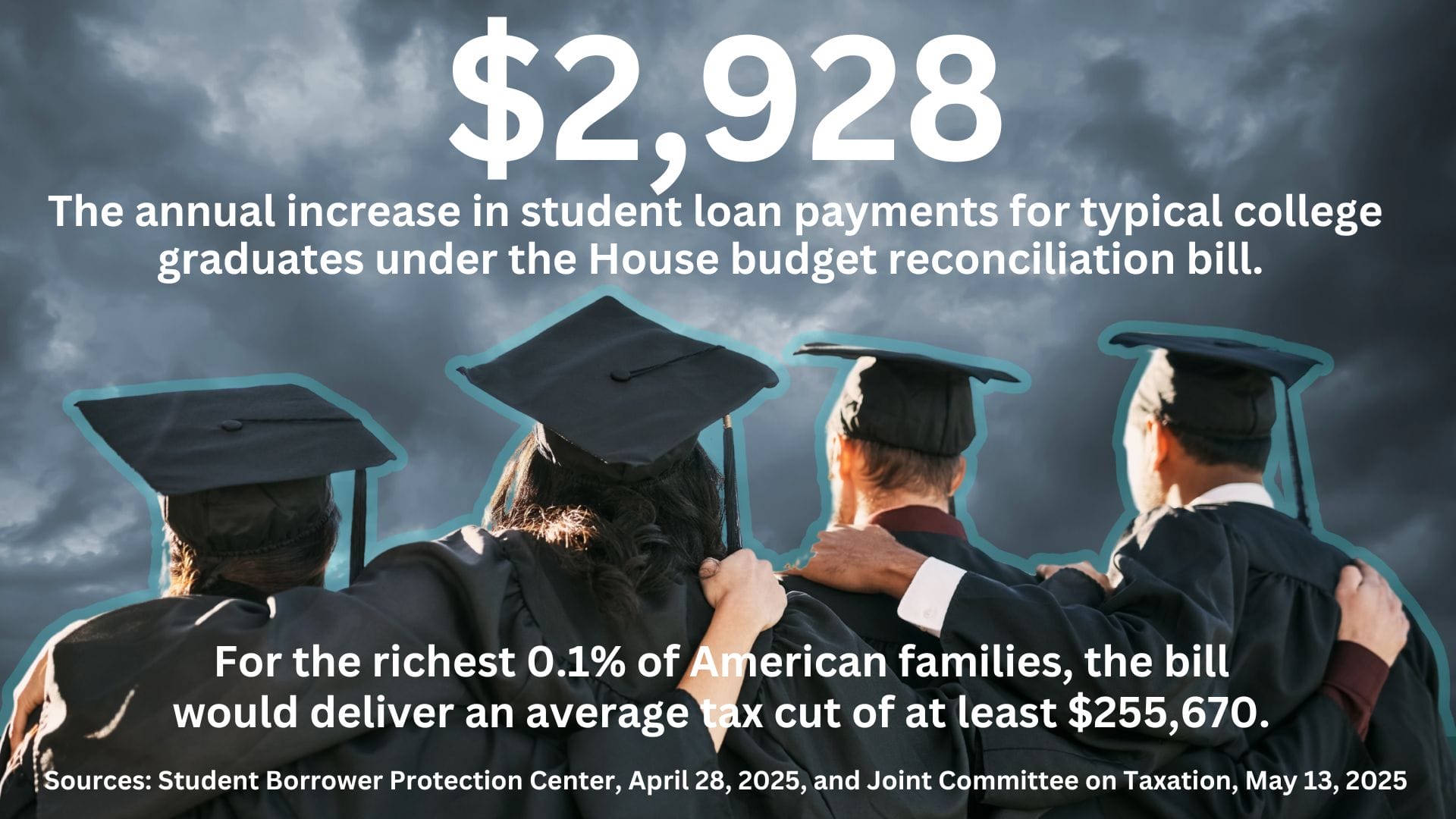
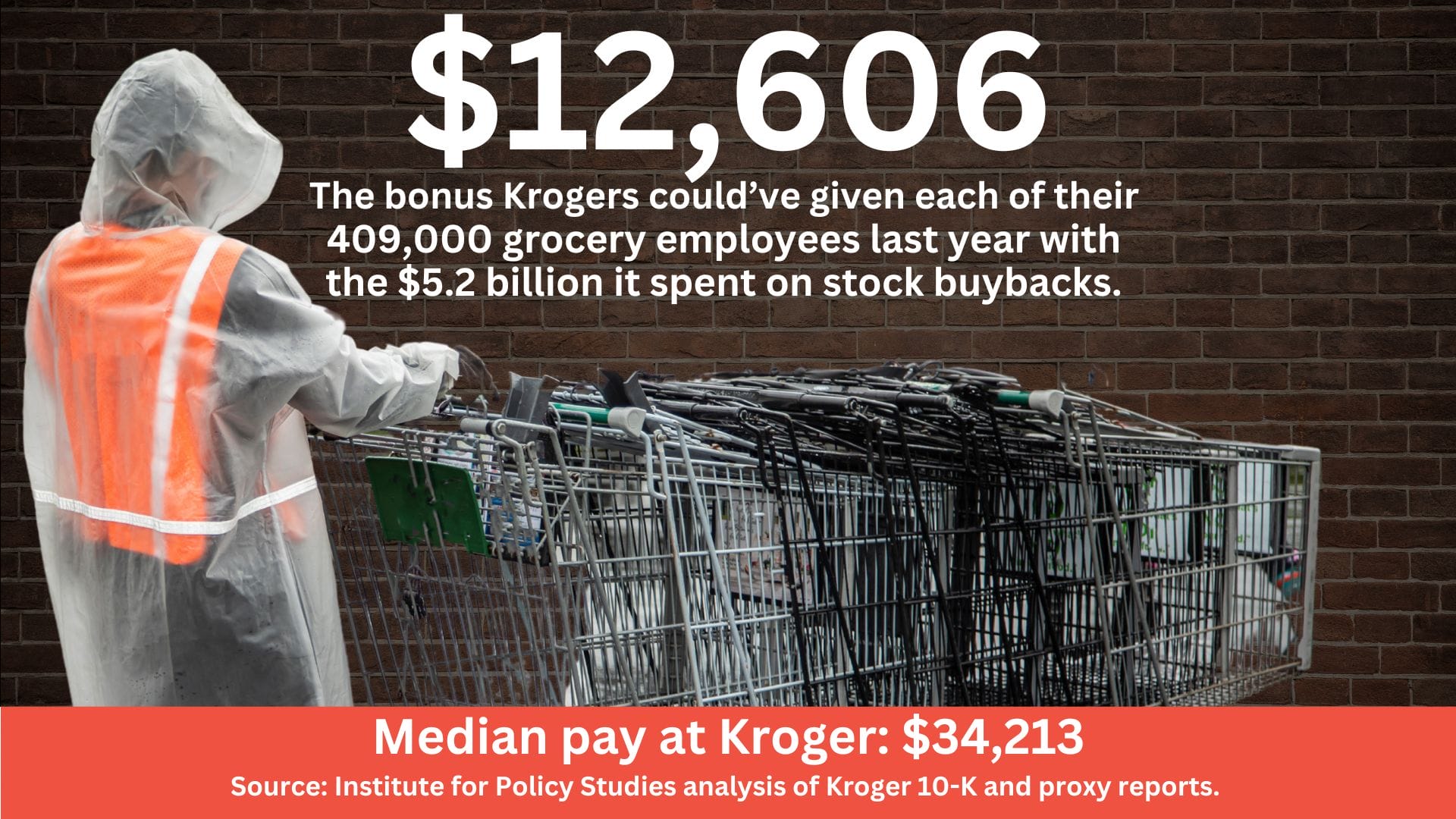
INEQUALITY BY THE NUMBERS |
|
|
Building a Better, More Equal Economy in Cincinnati This week’s frontline faces: Members of Co-op Cincy’s growing network of worker- and community-owned businesses.
What they're doing to help create a more equal world: This Cincinnati-based organization has helped get several businesses off the ground in the last decade-plus, creating over 150 excellent jobs. Our Harvest, for example, grows healthy food across two urban farms and connects other local farmers with customers, helping the community eat well and creating good jobs along the way.
Another supported business, Sustainergy, is helping remodel homes to improve efficiency at costs that working people can afford. What makes this fight so important: “Ultimately, we want to see a real shift in wealth inequality, the elimination of poverty,” explains Kristen Barker, Co-op Cincy co-founder. “That’s what we’re going for.” |
|
|
Some Real Hope for Ridding the Gig Economy of Precarity
The ever-growing economy of gig work — think outfits like Amazon Flex, DoorDash, Instacart, Lyft, Shipt, and Uber — rests on the back of worker exploitation. These enterprises treat drivers as if they were operating as totally independent contractors, a maneuver that lets them rob workers of basic protections that range from minimum wages to paid sick leave.
A recent Human Rights Watch survey has found that gig workers in Texas are making on average just $5.12 an hour, after expenses and including tips. Gig companies? They're making out like bandits. But gig workers aren’t taking this exploitation sitting down. The upcoming International Labour Conference will be debating a binding treaty on decent work in the platform economy. Human Rights Watch's Lena Simet has details below. |
|
|
A federal appeals court has just given President Trump a green light to deny union rights to about two-thirds of federal workers. What makes this such a huge deal? Workers with collective bargaining agreements tend to have a stronger voice in decision making — and larger paychecks. Typical unionized workers make about $200 more per week than their non-unionized counterparts. For an interactive version of this chart and more on income inequality, click the link to our Inequality.org Facts section below.
|
|
|
PETULANT PLUTOCRAT OF THE WEEK |
At Verizon, No Room for Diversity Whenever Avarice Beckons
This week’s dour deep pocket: Hans Vestberg, the telecom giant Verizon CEO.
What has Vestberg sour: anything that connects Verizon to policies that smack of “diversity, equity, and inclusion.” In a May 15 letter to the Federal Communications Commission, Verizon announced that — “effective immediately” — the company would be “ending its DEI-related policies.”
The rationale? The Supreme Court and the president of the United States, Verizon has declared, now “require” this move. But, as a Popular Information analysis notes, no Supreme Court ruling bans Verizon from including “diversity” and “inclusion” in its public outreach or employee training.
So why did CEO Vestberg suddenly kill off all DEI at Verizon? One obvious reason: He needed FCC approval of Verizon’s acquisition of the Fronter Communications broadband powerhouse. The day after Vestberg’s Verizon officially disavowed DEI, the FCC approved the acquisition.
The last word: This past March, the Verizon board of directors raised Vestberg’s annual incentive pay to $25 million. Verizon’s CEO compensation, Simply Wall Street observed last year, continues to be “out of sync with company performance.”
|
|
|
New on Inequality.org
Michael Chameides, Six Ways Trump’s Budget Will Hurt Rural America. Republicans in Congress are jamming through a sweeping bill to fund handouts to the rich — at the cost of jobs, health care, and food in rural America. Elsewhere on the web
Sarah Anderson and Lauren Jacobs, Why Jeff Bezos Loves Trump’s Big, Ugly Bill, The Nation. The legislation contains massive giveaways to the oligarch class.
Max Lawson, Cruel and Unusual Punishment: The Firm Discipline of the Rich, Equals. A thought experiment: substitute “rich people” for “market” in the economic analyses you read. “Markets punish nation for social spending plans” becomes “Rich people punish nation for social spending.” Depersonalized “market” talk disguises plutocracy.
Emma Burleigh, Hundreds of billionaires pledged to give away $600 billion to charity — but the Bill Gates and Warren Buffett era of philanthropy may be over, Fortune. Billionaire MacKenzie Scott’s “stealth giving” — giving money directly to nonprofits, letting them use the funds as they see fit — is “shifting common sense towards trust-based philanthropy,” says Institute for Policy Studies analyst Bella DeVann.
Eileen Appelbaum, Private Equity Wins in Trump’s ‘Big Beautiful Bill,’ Center for Economic and Policy Research. The tax legislation that Donald Trump is eagerly waiting for Congress to send him to sign includes a loophole sure to enrich the private equity kingpins who force the firms they buy into debt.
Max Abelson and Annie Massa, The Trump Family’s Money-Making Machine, Bloomberg. No U.S. president has ever positioned his family to make as much money as Donald Trump. Since announcing his 2024 campaign, Trump has more than doubled his net worth to about $5.4 billion.
Connor Gibson, Koch Fleet of Organizations Invests More Than Ever in Expanding Its Influence, Center for Media and Democracy. Organizations bankrolled by billionaire Charles Koch have long backed efforts to funnel money away from public to private schools.
James Marriott, Flaunting wealth only fuels this age of envy, Times of London. Social media has integrated the once discreet super rich into our lives. How long will we tolerate their excesses?
Simon Kuper, Meet the insurgent economists promoting a global wealth tax, Financial Times. The wealth of America’s 400 richest now equals 20 percent of U.S. GDP, up from 2 percent in 1982. A first step toward ending this stark inequality: making sure all billionaires pay annual taxes equal to at least 2 percent of their wealth.
Zack Beauchamp, By the People, Vox. In 2015, the prominent right-wing intellectual Charles Murray published a book calling on America’s super rich to bankroll a rebellion against the “regulatory state.” They did.
Dean Baker, A Big Beautiful Tax for the Financial Industry (and Crypto Too), Beat the Press. America’s financial sector is now grabbing five times the share of national GDP it grabbed 50 years ago. A mere 0.1 percent tax on sales of stock and a 1 percent tax on crypto transactions could easily raise $150 billion a year in revenue — and leave the financial industry’s super rich a little less super.
Take a reading break
And sign this petition from the Patriotic Millionaires calling for common-sense taxes increases to address our cost-of-living crisis. |
|
|
Our research, editorial, and publishing team depends on hundreds of paid subscribers who make monthly gifts. Some give $3 each month. Others give $200! All told, this support enables our team to stay focused on identifying causes and solutions to our deep economic inequality. Paid subscribers have contributed more than $20,000 in the past year. Ready to become a paid subscriber? Sign up today. | |
|
Inequality.org | www.inequality.org | inequality@ips-dc.org Institute for Policy Studies
1301 Connecticut Avenue Ste 600
Washington, DC 20036
United States
Managing Editor: Chris Mills Rodrigo
Co-Editors: Sarah Anderson, Chuck Collins, Bella DeVaan, Reyanna James, and Sam Pizzigati |
|
|
|