A weekly newsletter from the Institute for Policy Studies |
|
|
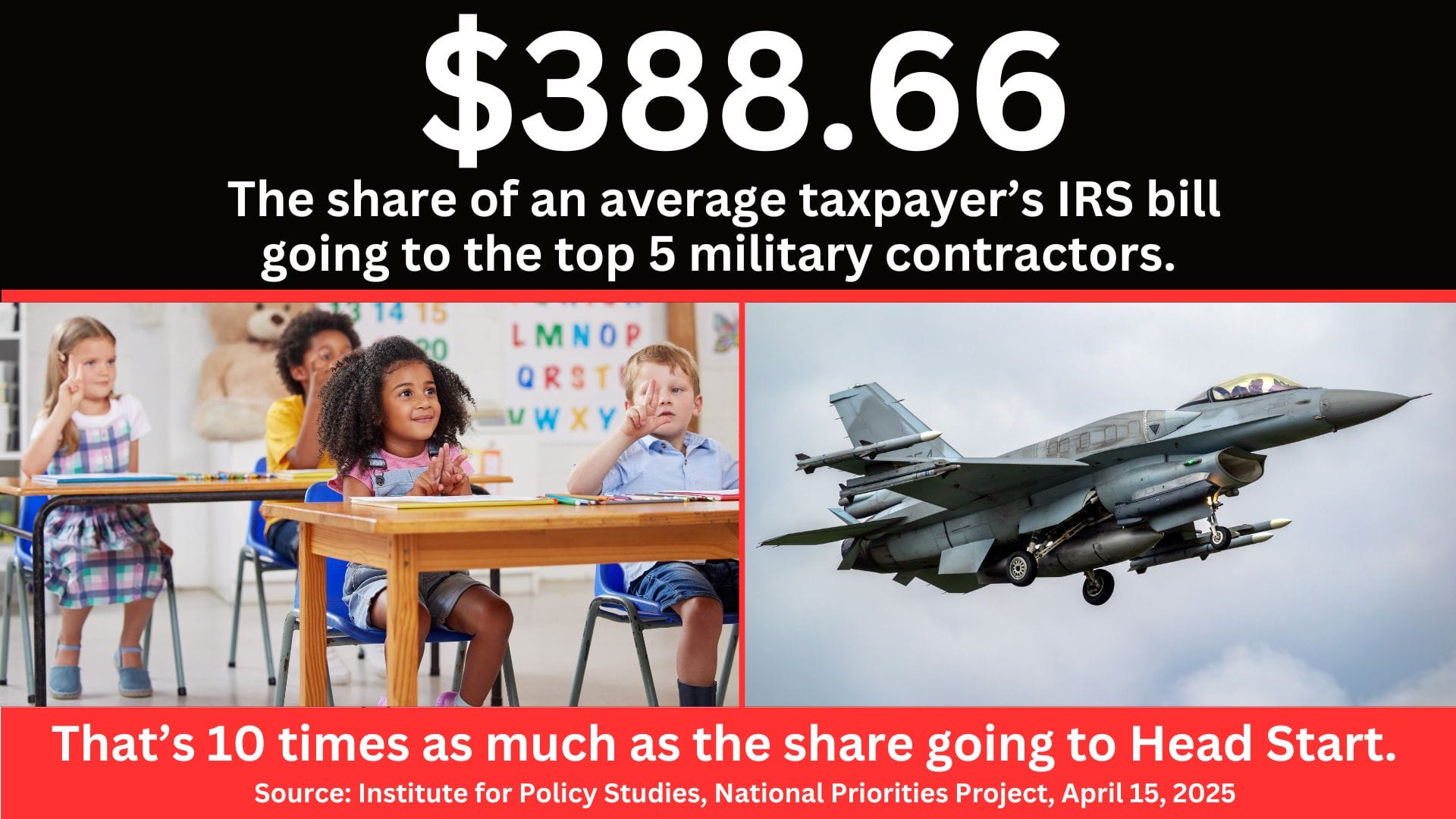
To celebrate this year’s Tax Day, our colleagues at the Institute for Policy Studies National Priorities Project have just released a damning new comparison of where all our federal tax dollars are going.
One eye-opening stat from this new report: In 2024, the average U.S. taxpayer shelled out $3,707 for weapons and war. That sum included $388 for the top five Pentagon contractors. In contrast, only $149 of every average person’s tax dollars went to the National Institutes of Health and its life-saving medical research.
The lesson from numbers like these? We clearly need to be doing more, as a nation, to make sure our rich are paying their fair tax share. But ensuring that our collective resources are improving all our lives remains equally essential.
A pause: Our co-editor Sam Pizzigati has for years been writing a Too Much column for Inequality.org. He’s also now working on a new book with Institute for Policy Studies analyst Bob Lord, a look into the future enticingly entitled The Last Billionaire. To help Sam finish that work, Too Much will be going on a brief hiatus starting next week. We look forward to a Too Much return this summer!
Chris Mills Rodrigo
for the Institute for Policy Studies’ Inequality.org team |
|
|
INEQUALITY BY THE NUMBERS |
|
|
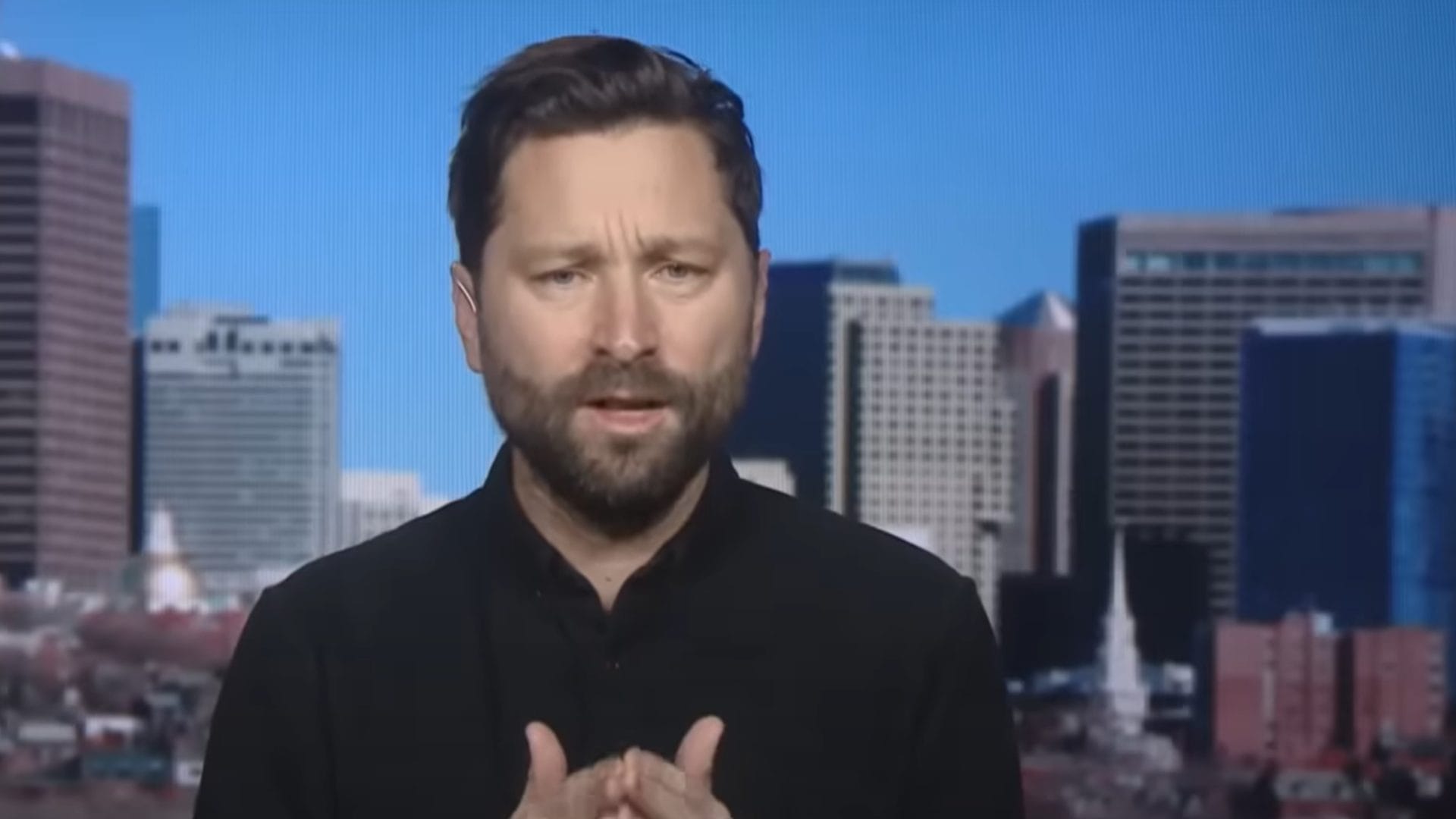
This week’s frontline face: Quinn Slobodian, a professor of international history at Boston University and author of Hayek’s Bastards, a new analysis out this week from Zone Books.
What he’s doing to help tell the story of this moment: Slobodian, a historian of neoliberalism’s forces and faces, has traversed the troubling worlds and archives of outfits ranging from anti-statist think tanks and race “scientists” to Silicon Valley techno-feudalists and online fearmongers.
Slobodian’s work has helped explain how “many of the prominent leaders of the far right” actually amount to “radicalized capitalists” who seek “to accelerate” our world’s “dynamics of competition and rivalry in a new way.”
What makes this work so important: An accurate history of ideas equips us to find coherence in the chaos of the news — and to fight back against forces that strive to see our state “sleek, shackled, or shattered.” |
|
|
Don’t Privatize the Postal Service — Expand It To Meet Today’s Needs
President Trump and Elon Musk have expressed interest in selling off the U.S. Postal Service to for-profit corporations, at a time when FedEx and UPS package delivery rates are regularly running 25 to 60 percent higher than USPS rates. Without competition from the public Postal Service, these private carriers would be able to jack up their rates even more — or deny services altogether to people who live on less profitable routes. A new Institute for Policy Studies report analyzes the ZIP codes where UPS and FedEx are already charging extra for deliveries and where rates will likely skyrocket if Trump succeeds in privatizing USPS. More than 100 million people live in these areas, places that range from rural towns to many suburbs.
We shouldn’t be selling our public postal treasure off to the highest bidder. We should be strengthening USPS by investing in new services that also raise revenue. USPS, for example, could provide low-fee ATMs and check cashing and could also be contracting with local governments to gather public safety and environmental risk data through monitors on delivery vehicles.
Letter carriers, for their part, could be providing check-in services for elderly and disabled residents, as they do in other nations. Read more at the link below. |
|
|
Our richest 1 percent now own 50 percent of U.S. stock and mutual funds, up from 40 percent in 2002. The recent financial market chaos is no doubt giving this elite group heartburn. But shed no tears for our richest. Most of them remain wealthier today than a year ago. For an interactive version of this chart and more on wealth inequality, click the link to our Inequality.org Facts section below. |
|
|
A Welcome New Perspective on America’s Federal Tax Future Since the late 1970s, as the Economic Policy Institute has detailed, only Americans of substantial means have been sharing in Corporate America’s economic bounty. How can we change this top-heavy state of affairs?
Last week, at an unusual conference in Washington, D.C., activists highlighted a detailed agenda for making America start working for all Americans, not just the wealthiest among us. What made this confab so unusual? The people who put it together all just happen to rate as wealthy themselves. Inequality.org co-editor Sam Pizzigati has more. |
PETULANT PLUTOCRAT OF THE WEEK |
For This Massively Paid Media Mogul, a Trump-Time Fizzle
This week’s dour deep pocket: David Zaslav, the top exec at media giant Warner Bros. Discovery.
What has Zaslav sour: Certainly not his compensation. Zaslav’s CEO pay, we learned last week, totaled $51.9 million in 2024, up from $49.7 million the year before and a whopping 398 times the pay going to his corporate empire’s median employee. His latest windfall has come at the same time that his empire’s cable outlets — most notably, CNN — are showing sinking ratings and ad revenue.
Last November, Zaslav welcomed Donald Trump’s election victory. That triumph, he announced, could speed “deregulation” and help bring a “consolidation” in the entertainment industry that could bring “a real positive and accelerated impact.” The actual Trump impact on Zaslav’s empire has been anything but. Zaslav last week ordered, “effective immediately,” the cancellation of all employee travel “not business-critical,” blaming “market volatility and reduced consumer confidence” for the belt-tightening.
The last word: Warner Bros. Discovery’s share price ended last week under $8, down 37 percent from its most recent 52-week high. |
|
|
New on Inequality.org
Sulma Arias, What Will It Take for the Resistance to Win? Expressing resistance would make for an important start. We have to, simply put, organize!
Chris Mills Rodrigo, How Can The Left Tackle the Climate Crisis? In his new book, writer Malcolm Harris considers the tools in our arsenal for stopping the worst-case scenarios of climate change.
Bob Lord, Oligarchy Has Arrived in America. Will We Confront It? Why we need a return to truly progressive taxation.
Elsewhere on the web
Hamilton Nolan, Unions Without Strikes, In These Times. Today’s labor movement has been built to rely on forms of power that are all going away.
Naomi Klein and Astra Taylor, The rise of end times fascism, The Guardian. Peter Thiel and like-minded billionaires are championing the carving up of the world into democracy-free havens under the control of our supremely wealthy.
Jesse Eisinger, No, President Trump, the Income Tax Wasn’t A Mistake. But It Was an Accident, ProPublica. A readable brief history on how rich people-friendly lawmakers in Congress outsmarted themselves into the 1913 enactment of a federal income tax on America’s richest.
Nora Waitkus, How to think about wealth inequality from a class perspective, London School of Economics. We need to see wealth as more than a collection of assets. Taking a class-based approach helps us better understand the power dynamics that underpin wealth’s accumulation and distribution.
Layla Law-Gisiko, As Billionaires Grow Wealthier, Where Does That Leave the Rest of Us? Chelsea News. U.S. billionaires have a combined wealth of $6.8 trillion, about the same wealth as the globe’s third wealthiest nation.
Oliver Bullough, A crypto government for a crypto nation, Coda. A terrible irony: Cryptocurrencies — an idea born amid the public anger sparked by the deregulation and greed that fueled the 2007-2008 financial crisis — are becoming a new nexus for deregulation and greed.
Dean Baker, Fun With Numbers: Who Got Rich Over Trump’s Tariff Cave? Beat the Press. Musk and Trump have fired just about anyone in a position to investigate whether any insider trading took place before Trump lifted his tariff blitz last week.
Riya Alex, ‘Not Bad!’ Donald Trump claims market crash made billionaires richer, Mint. April 9 turned out to be the “best day ever” for billionaires as the world’s richest added $304 billion amid the day’s market surge.
Sam Stebbins, In These U.S. Cities, Income Inequality Is Getting Worse. 24/7 Wall St. Economic inequality, concludes a new University of Chicago study, now rates as one of the strongest predictors of eroding democracy.
Meagan Day, Elon Musk’s Goal Isn’t Efficiency — It’s a Liquidation Sale, Jacobin. DOGE isn’t bumbling through an ill-advised reform effort. It’s deliberately sabotaging federal agencies to make way for privatization. |
|
|
Our research, editorial, and publishing team depends on hundreds of paid subscribers who make monthly gifts. Some give $3 each month; others give $200! All told, this support enables our team to stay focused on identifying causes and solutions to our deep economic inequality. Paid subscribers have contributed more than $20,000 in the past year. Ready to become a paid subscriber? Sign up today. | |
|
Inequality.org | www.inequality.org | inequality@ips-dc.org Institute for Policy Studies
1301 Connecticut Avenue Ste 600
Washington, DC 20036
United States
Managing Editor: Chris Mills Rodrigo
Co-Editors: Sarah Anderson, Chuck Collins, Bella DeVaan, and Sam Pizzigati |
|
|
|