A weekly newsletter from the Institute for Policy Studies |
|
|
With last week’s nasty fight over short-term government spending now behind us, Congress is turning to the far bigger battle over a federal tax and spending plan for the next decade. Prepare for an even uglier fight.
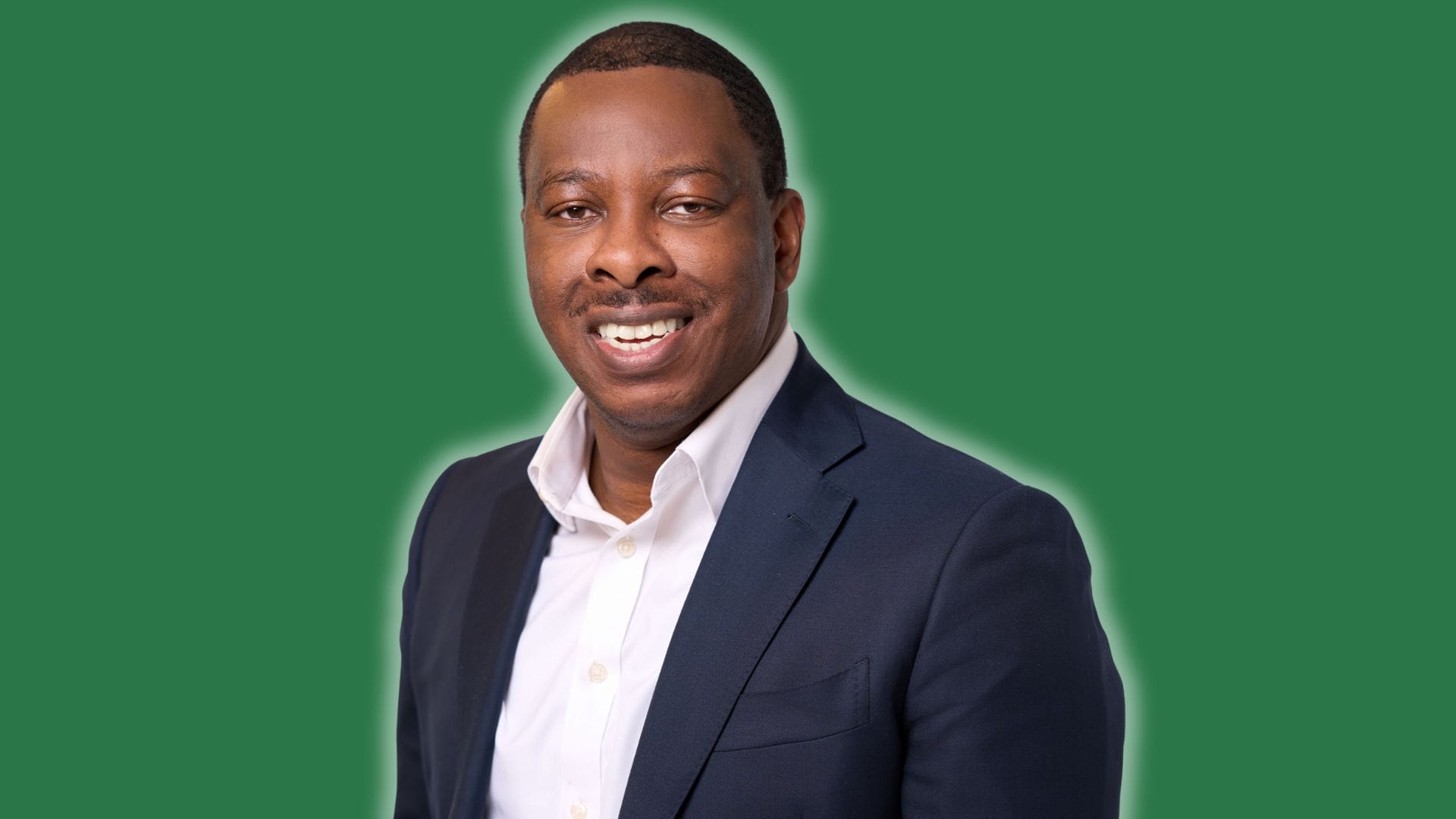
At a press conference today with Bishop William Barber II, Institute for Policy Studies executive director Tope Folarin shared stats from a dramatic new report on the high moral stakes in the budget debate.
One alarming stat from this study: The pending Senate proposal would add $86 billion in new spending each year for mass deportations and the war machine, funds that will line the pockets of military and private prison contractors. With that $86 billion, we could instead provide Head Start for 3.6 million children, health insurance for 4 million children — and public housing for 3.9 million families. Sarah Anderson
for the Institute for Policy Studies’ Inequality.org team |
|
|
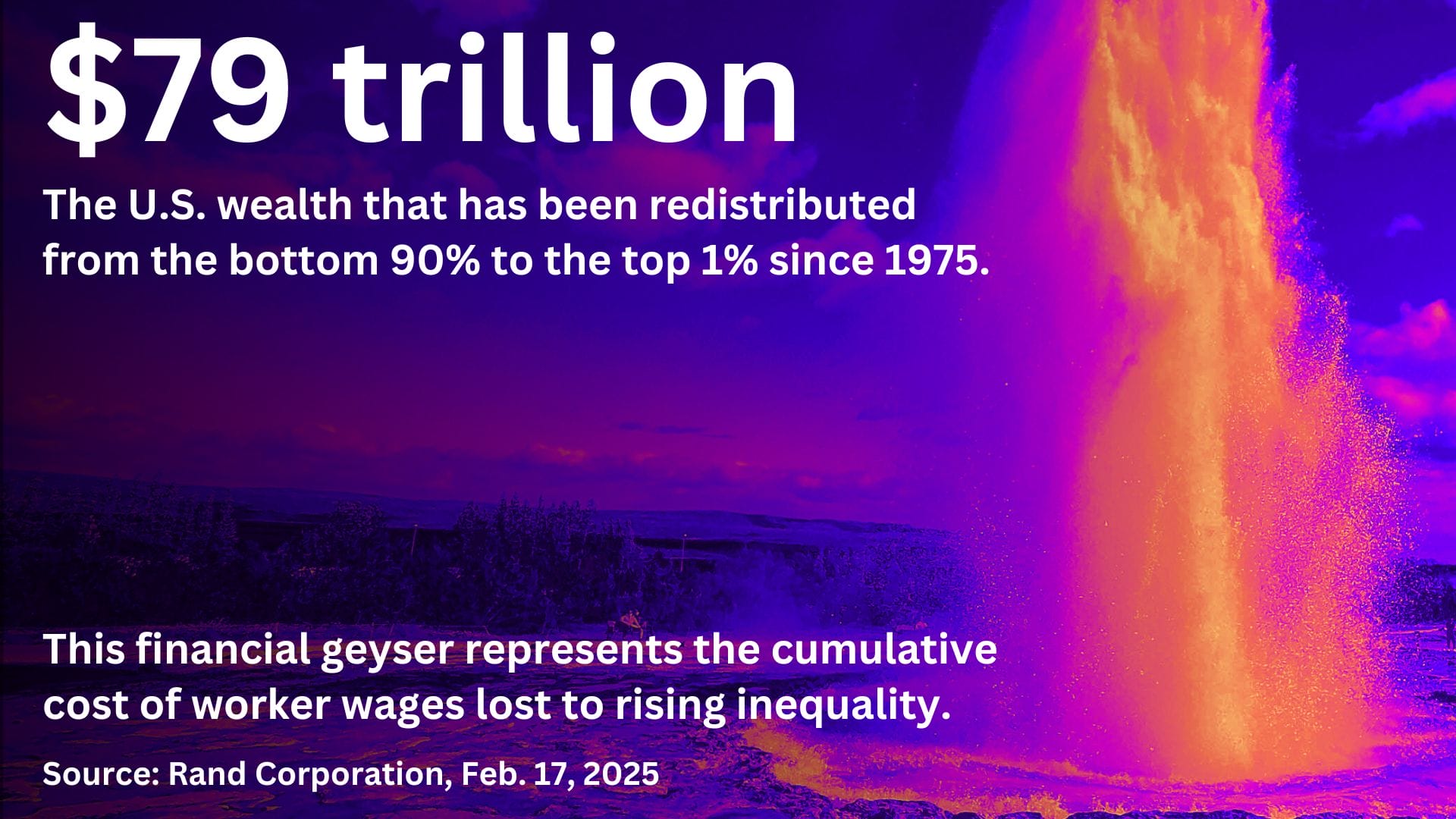
INEQUALITY BY THE NUMBERS |
|
|
Speaking Out for Federal Workers and the Indispensable Work They Do This week’s frontline face: Paul Osadebe, a federal worker, a union steward with AFGE Local 476, and an organizer with the Federal Unionists Network.
What he's doing to help create a more equal world: Osadebe has been facing the Trump-Musk assault on federal workers head-on, working hard to dispel myths about them. Only a small percentage of these workers, he explains, work in Washington. Many of them are sacrificing higher earnings they could be making in the private sector.
And because these workers are not operating to maximize corporate profits, adds Osadebe, they’re able to provide services to those communities — rural Americans, veterans, Black and brown communities — that private enterprises routinely throw by the wayside.
What makes this fight so important to him: "At a time when the cost of living has increased for working people, we know that people are angry and looking for someone to blame," Osadebe writes for Inequality.org.
"But federal employees aren’t the root of our problems. We are a necessary part of the solution. Government services are often some of the most efficient institutions because they’re operated to benefit everyone, not turn a profit. We’re serving the public, not minting millionaires." |
|
|
Don’t Let Trump Cut Social Security. Let’s Fight To Expand It!
President Trump and Republican lawmakers seem dead-set on hollowing out the Social Security Administration — to expand existing tax breaks for their billionaire buddies. How can we best blunt this attack on such a critical part of our social safety net? We need to do more than resists cuts, advocates for Social Security are arguing. We need to work aggressively to expand Social Security.
Making more Americans eligible for Social Security, growing the program’s benefits, and securing long-term funding should all become the priorities of any political party seeking to improve the living situation of working families.
"America’s historic retirement security program has survived world wars, pandemics, and recessions," Social Security Works president Nancy Altman points out. "But without a rapid course correction, it may not survive Donald Trump and Elon Musk." |
|
|
President Trump has floated a plan to create so-called “gold cards,” an option that would let emigres to the United States purchase a pathway to citizenship for the low, low price of $5 million. Various nations around the world have been hawking similar “migration by investment” programs for years.
But the tide has been turning against such programs of late, with several countries, especially in Europe, rescinding their pay-to-stay plans. Why? Because importing rich foreigners distorts domestic housing markets and does little to expand national tax bases. Inequality.org managing editor Chris Mills Rodrigo has more detail about these schemes and the problems they create. |
|
|
Why CEOs Are Increasingly Thanking Their Lucky Stars for the Donald Every day’s headlines now seem to bombard us with ever more outrageous Trumpian antics. Who could have possibly imagined, for instance, that a president of the United States would have the nerve to turn the White House lawn into a Tesla auto showroom?
But Trump’s antics actually do serve a useful social and political purpose — for America’s corporate CEOs. Trump’s kleptocratic arrogance and audacity have shoved the institutionalized thievery of Corporate America’s ever-grasping top execs off into the shadows. Inequality.org co-editor Sam Pizzigati has more. |
PETULANT PLUTOCRAT OF THE WEEK |
Time for This New Trump Official To ‘Turn Over’ a New Leaf? This week’s dour deep pocket: Stephen Feinberg, the billionaire cofounder of the powerhouse Cerberus Capital Management private equity firm and the just-confirmed Trump pick to serve as the Defense Department’s second-in-command.
What has Feinberg sour: During his Senate confirmation hearing last month, this Wall Street veteran dodged questions about how he would implement the Trump White House plan to trim the Pentagon civilian workforce by up to 8 percent and apply the savings elsewhere in the military budget.
“Without some turnover,” Feinberg did tell the Senate panel, “you can’t become an efficient organization.”
Mass layoffs — the “turnover” that Cerberus has consistently incubated over the years — helped earn the firm an “F” in the inaugural Private Equity Labor Scorecard that the Private Equity Stakeholder Project published in 2023.
The last word: Opponents of Feinberg’s Senate confirmation included Jim Baker, the Private Equity Stakeholder Project’s executive director. Noted Baker: “How are we to trust a private equity billionaire whose firm looted a national hospital system, owned a contractor accused of defrauding the government, and whose portfolio companies have high levels of safety violations and layoffs?”
|
|
|
New on Inequality.org
Carey Wallace, Inside the Campaign to Win Universal Healthcare in Washington State. With lessons learned from previous campaigns and new momentum in 2025, advocates believe this year’s effort will be different. But the road ahead remains challenging. Helen Flannery, DAFs Gave $17 Billion… to Other DAFs. Billions of charitable dollars took the scenic route from 2020 to 2023.
Elsewhere on the web
Paul Glastris and Nate Weisberg, The Meager Agenda of Abundance Liberals, Washington Monthly. What the Democratic Party’s most buzzed-about policy movement gets right — and wrong.
Algernon Austin, Crypto: The Rich and the Criminal Get Richer, Center for Economic and Policy Research. The Trumpistas are working to create a federal “Strategic Bitcoin Reserve,” a boondoggle that would enrich the crypto industry — and the Trump clan’s already hefty crypto profits. Zachary Shahan, The 3 Things Tech Billionaires Get from DOGE, CleanTechnica. How Musk’s antics are helping tech billionaires at the expense of the rest of us.
Elena Patel, 199A’s sunset: A golden opportunity to rethink business taxation, Brookings. A little-known but significant provision of the 2017 tax cut Donald Trump signed into law has been funneling 74 percent of its benefits to America’s most affluent 5 percent.
Eliana Golding and Daniella Zessoules, Taxes Explained: Taxing Income versus Wealth, Demos. The U.S. tax system privileges wealth accumulation over income earned from work, allowing the ultra-rich to exponentially grow their wealth and then pass that wealth on without ever paying taxes.
Alí Bustamante, Income Inequality Is Accelerating Inflation, Barron’s. Top 10-percent U.S. households, after taxes, are sitting on $271,600, over triple the typical U.S household take-home. These affluents are bidding up prices for the goods and services that the rest of us need.
Robert Reich, Trump’s tariffs will be paid by the poor — while his tax cuts help the rich, Guardian. Trump says revenue from his tariffs will “offset” his big pending tax cut. That tax cut will mostly benefit wealthy Americans. But revenue from tariffs will be coming disproportionately from average working people.
James Gruber, Why the $5.4 trillion wealth transfer is a generational tragedy, FirstLinks. In nations ranging from Australia to the United States, the mammoth upcoming transfer of generational wealth will be shoving existing levels of economic inequality considerably higher.
Timothy Noah, Trump’s Plutocratic Pals Are the Nation’s Biggest Cowards, New Republic. What really motivates Trump’s tariff mania? His crackpot ambition to replace the progressive income tax with tariff revenue. Michael Mayalo, Why South Africa needs a wealth tax: challenging economic inequality, The Star. Wealth tax foes are attempting to protect existing structures of wealth and privilege while leaving the majority of South Africans in poverty. |
|
|
Our research, editorial, and publishing team depends on hundreds of paid subscribers who make monthly gifts. Some give $3 each month; others give $200! All told, this support enables our team to stay focused on identifying causes and solutions to our deep economic inequality. Paid subscribers have contributed more than $20,000 in the past year. Ready to become a paid subscriber? Sign up today. |
|
|
Inequality.org | www.inequality.org | inequality@ips-dc.org Institute for Policy Studies
1301 Connecticut Avenue Ste 600
Washington, DC 20036
United States
Managing Editor: Chris Mills Rodrigo
Co-Editors: Sarah Anderson, Chuck Collins, Bella DeVaan, and Sam Pizzigati |
|
|
|