A weekly newsletter from the Institute for Policy Studies |
|
|
I'm happy to eat crow on this one: Since last week's edition of the newsletter, several major protests against the Trump administration have begun shredding that post-election apathy that so many of us have been decrying. In Los Angeles, for instance, thousands of protestors demanding an end to forced deportations stopped traffic on a major highway for a full five hours.
And in the nation’s capital, as you'll read below in a dispatch from our own Sarah Anderson, lawmakers and the public alike rallied outside of the Treasury Department to call out what some observers are labeling Elon Musk's naked attempt at a coup. Expect more protest actions to come.
Of course, just protesting will never be enough. The Democrats are still failing to operate as an effective opposition party. They’re not even showing a united front against the billionaires and their flunkies that Donald Trump has nominated for our highest federal offices. But a sense of outrage is now building nationwide. We need to focus that outrage to where it belongs: against our ultra-wealthy. Chris Mills Rodrigo
for the Institute for Policy Studies’ Inequality.org team |
|
|
INEQUALITY BY THE NUMBERS |
|
|
Telling Billionaires To Get Their ‘Grubby Little Hands’ Off Our Democracy
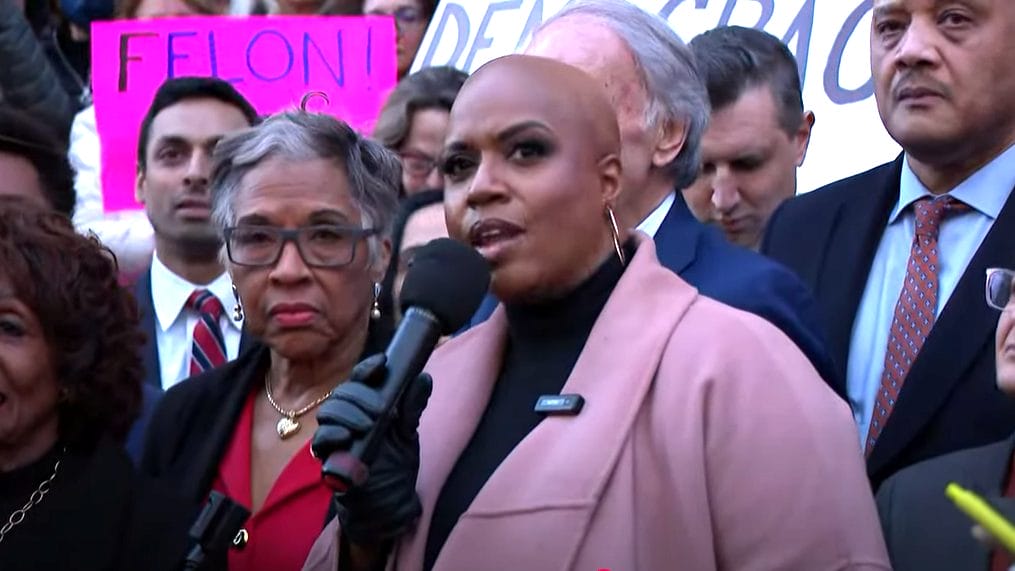
This week’s frontline face: Ayanna Pressley, a U.S. representative from Boston and a member of the House Oversight Committee.
What she’s doing to help create a more equal world: Pressley and several other members of Congress spoke last night at a rally outside the Treasury Department after security prevented the lawmakers from entering the building. The protest centered on billionaire Elon Musk's tightening grip over our political system, including his access to the Treasury Department payments operation.
“I'm so tired of these billionaire boys and their grubby little hands grabbing at everything,” Pressley told the crowd of several thousand protestors who blocked traffic outside the Treasury headquarters. “Hands off our bodies,” Pressley demanded. “Hands off our data. Hands off our tax refunds. Hands off our Social Security checks. Hands off our Constitution. Hands off our democracy. HANDS. OFF!”
Lawmakers have begun seeking a Government Accountability Office investigation of Musk’s machinations and Public Citizen, SEIU, and other groups have filed a lawsuit over the Musk team’s unprecedented access to the federal payment process, a huge affair that includes personal data about millions of Americans who receive Social Security checks, tax refunds, and other federal outlays.
Many fear that Musk and his rogue henchmen will soon be exploiting sensitive information and cutting off payments for political purposes.
What makes this fight so important to Pressley: At the rally, she compared the current moment to key turning points in America’s social justice history, including the Seneca Falls women’s rights conference of 1848, the Selma civil rights marches of 1965, and the Stonewall demonstrations for LGBTQ+ rights in 1969.
“Elon, this is the American people,” Pressley said, gesturing towards the crowd. “This is not your trashy cybertruck that you can just dismantle, pick apart, and sell the pieces of. And the power of the people has always been greater than the people in power.” |
|
|
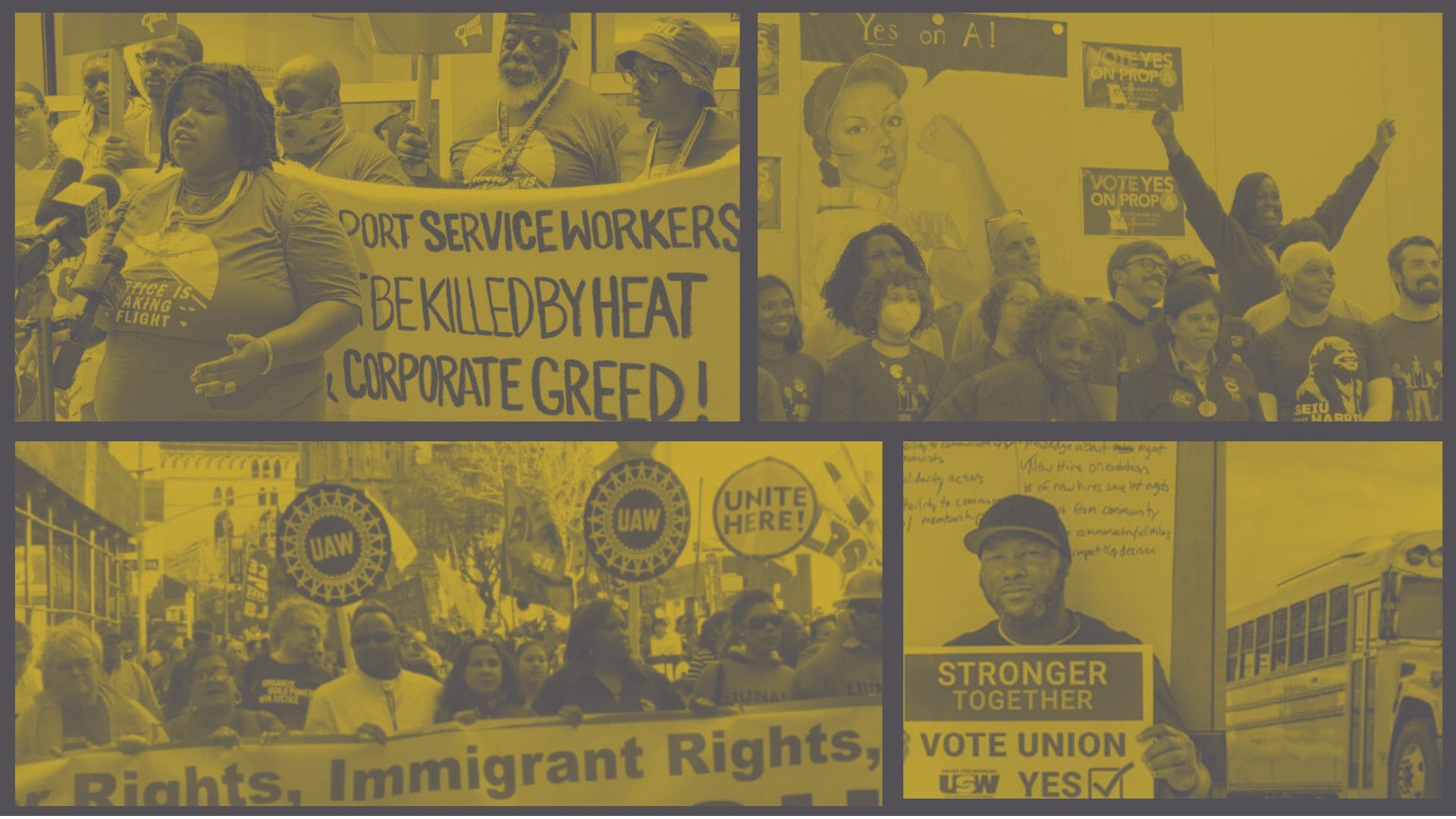
Eight Ways States Can Fight Inequality and Build Worker Power
In the face of the billionaire takeover of our nation’s capital, state governments now need to step up. States have wide-ranging powers, on everything from increasing local wage floors and guaranteeing paid leave to protecting workers from dangerous heat — all policies Republicans are blocking at the federal level.
With the Trump team moving to slash social programs to pay for new tax cuts for billionaires, states can take the opposite approach. Massachusetts, for example, is using new revenue from a millionaire surtax to cover the cost of free community college tuition. For more, see Inequality.org co-editor Sarah Anderson’s list of eight ways states can fight inequality and build worker power in this perilous time. |
|
|
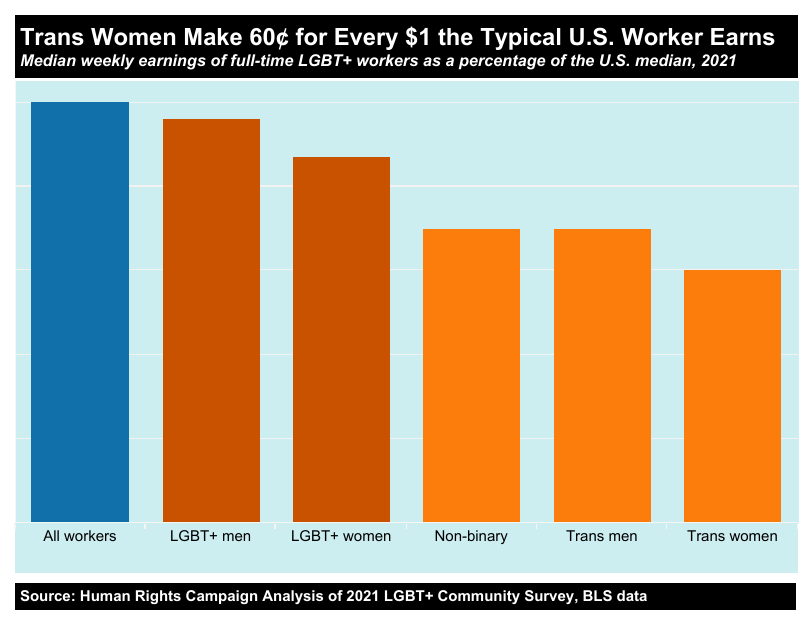
The current wave of assaults on trans people is building a culture war — and a class war as well since these individuals face enormous economic disadvantages. Transgender women earn only 60 cents and trans men earn just 70 cents for every $1 the typical U.S. worker earns. By attacking trans people and immigrants, right-wingers are pursuing a divide-and-conquer approach aimed at weakening opposition to proposed new tax cuts for the ultra-wealthy. For more, see the article below by our researchers Reyanna James and Sarah Anderson.
|
|
|
The Super Bowl and Our Nation’s Super Rich: True Partners in Slime
The number of U.S. billionaires, thanks to the Reagan Revolution, soared from only 13 in 1982 to 298 in 2000 and then to over twice that, 614, by 2020. All these billionaires desperately needed new high-profile playthings. Many found them in NFL franchises. In quick order, pro football teams that had been selling in the tens of millions began going for hundreds of millions — and then for multiple billions.
Have these sorts of billionaire outlays amounted to just an innocent deep-pocket hobby? Or something not nearly as innocuous? On the eve of this year’s Super Bowl, Inequality.org co-editor Sam Pizzigati has some answers. |
PETULANT PLUTOCRAT OF THE WEEK |
A Billionaire Pol Takes the Lead on Advancing Trump’s Drill-Baby-Drill
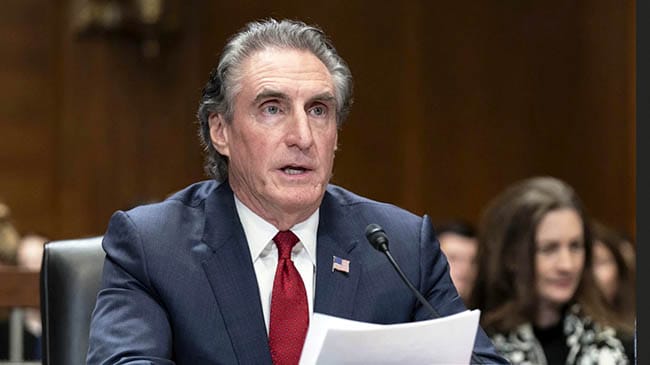
This week’s dour deep pocket: Doug Burgum, the wealthy former governor of North Dakota and, after his Senate confirmation last week, the Trump administration’s new U.S. secretary of the interior. What has Burgum sour: anyone who either opposes moves to make drilling on public lands easier and cheaper for America’s oil and gas corporate powers or fears easing any limits on air and water pollution.
During last year’s Trump bid for the White House, the New York Times notes, Burgum helped gather Big Oil execs for the infamous Mar-a-Lago dinner where Trump urged the assembled fossil-fuel powers to raise $1 billion for his political campaign. At Burgum’s confirmation hearing, the former Microsoft exec said he would cut incentives for “intermittent” power efforts like wind and solar projects.
The last word: “It’s alarming that so many Senate Democrats were duped into voting for an oligarch who is now charged with stewarding the nation’s public lands and wildlife,” the Center for Biological Diversity’s Kierán Suckling noted after Burgum’s confirmation. “If Democrats want to know why so many people are disillusioned, they need to look no further than this vote.”
|
|
|
New on Inequality.org Bob Lord, Buy, Hold for Decades, Sell! The tax loophole that’s concentrating America’s wealth — and political power — at the top.
Bella DeVaan and Chris Mills Rodrigo, ‘Symbolic and Contagious’: Union Documentary Captures Amazon Labor Breakthrough. A new documentary, Union, lifts the veil on the winning organizing campaign at Amazon’s JFK8 warehouse. Elsewhere on the web
Ed Pilkington, Charles Koch’s network launches $20m campaign backing Trump tax breaks, Guardian. The billionaire is promising a “herculean undertaking” to help renew and extend the Trump tax cuts for the rich originally enacted in 2017.
Chad Bolt and Brendan Duke, 4 Ways House Republicans’ Emerging Tax Package Would Put Billionaires Over Families, American Progress. Under proposed GOP plans, most Americans would receive smaller tax cuts than America’s wealthiest and end up paying more for housing, health, and education.
Niko Lusiani and Ira Regmi, Taxing Excessive Profits: Designing a Pro-Competition Corporate Tax System, Roosevelt Institute. We can put in place a corporate income tax that targets excess profits — and boosts competition, equality, and democracy in the process.
Kate Pickett, How Inequality Fuels the Cosmetic Surgery Boom, Social Europe. Rising inequality is driving a global surge in cosmetic procedures, reshaping beauty standards and social competition. Helen Santoro, Wall Street Is Jacking Up the Cost of Your Doctor Visits, Lever. A groundbreaking study finds doctors affiliated with private equity firms are charging far more annually than independent general practitioners.
Anne Applebaum, Europe’s Elon Musk Problem, Atlantic. During a U.S. election, the rich can hand out $1 million checks to voters and use secret “dark money” nonprofits to donate unlimited sums anonymously for super PAC ad blitzes. Democracy has become a political Las Vegas: Anything goes.
Anne Grefkens, Capitalism and the wealth gap: why does inequality make us unhappy? Univers. Our unequal societies deem "success" the result of hard work, note the philosophers Alfred Archer, Bart Engelen, and Alan Thomas, while luck and chance regularly play a far more important role.
Michael Roberts, AI going DeepSeek, Next Recession. What enrages tech oligarchs “sucking up to Trump”: China leaping ahead in AI despite export controls, more evidence that state-led planned tech investment “works so much better than relying on huge private tech giants led by moguls.” |
|
|
Our research, editorial, and publishing team depends on hundreds of paid subscribers who make monthly gifts. Some give $3 each month; others give $200! All told, this support enables our team to stay focused on identifying causes and solutions to our deep economic inequality. Paid subscribers have contributed more than $20,000 in the past year. Ready to become a paid subscriber? Sign up today. |
|
|
Inequality.org | www.inequality.org | inequality@ips-dc.org Institute for Policy Studies
1301 Connecticut Avenue Ste 600
Washington, DC 20036
United States
Managing Editor: Chris Mills Rodrigo
Co-Editors: Sarah Anderson, Chuck Collins, Bella DeVaan, and Sam Pizzigati |
|
|
|