A weekly newsletter from the Institute for Policy Studies |
|
|
Our nation’s plutocrats have never looked particularly kindly on federal employees. Many of these employees, after all, staff the agencies that safeguard the interests of average Americans against the greed grabs of our richest. And the cost of adequately staffing these agencies keeps up the pressure to make sure the richest among us are paying, not dodging, their fair tax share.
But we’ve never seen until Trump II an attack on federal workers as ferocious and enormous as what we’re seeing now. When I heard about the administration's plan to cut probationary federal employees, my first instinct was to assume that the term meant newly hired staff. That, unfortunately, is not the case. The new president's latest broadside against the federal workforce affects both new hires and longer-term employees who have either changed departments or gotten promotions — together that means hundreds of thousands of employees could be dismissed.
Firing 300 staffers at the Federal Aviation Administration sure isn't going to make flying safer. And dismissing 1,300 workers at the Center for Disease Control and Prevention will leave us all more exposed to future pandemics. And firing 1,000 National Park Service employees will limit access to nature for millions of us.
Federal workers are fighting back against these dismissals. Several unions representing public servants have already sued to stop and even reverse firings, and federal employees have taken to the streets in protest. It's in all of our best interests to fight with them every step of the way. Chris Mills Rodrigo
for the Institute for Policy Studies’ Inequality.org team |
|
|
INEQUALITY BY THE NUMBERS |
|
|
Fighting for Justice and Greater Equality in Global Supply Chains
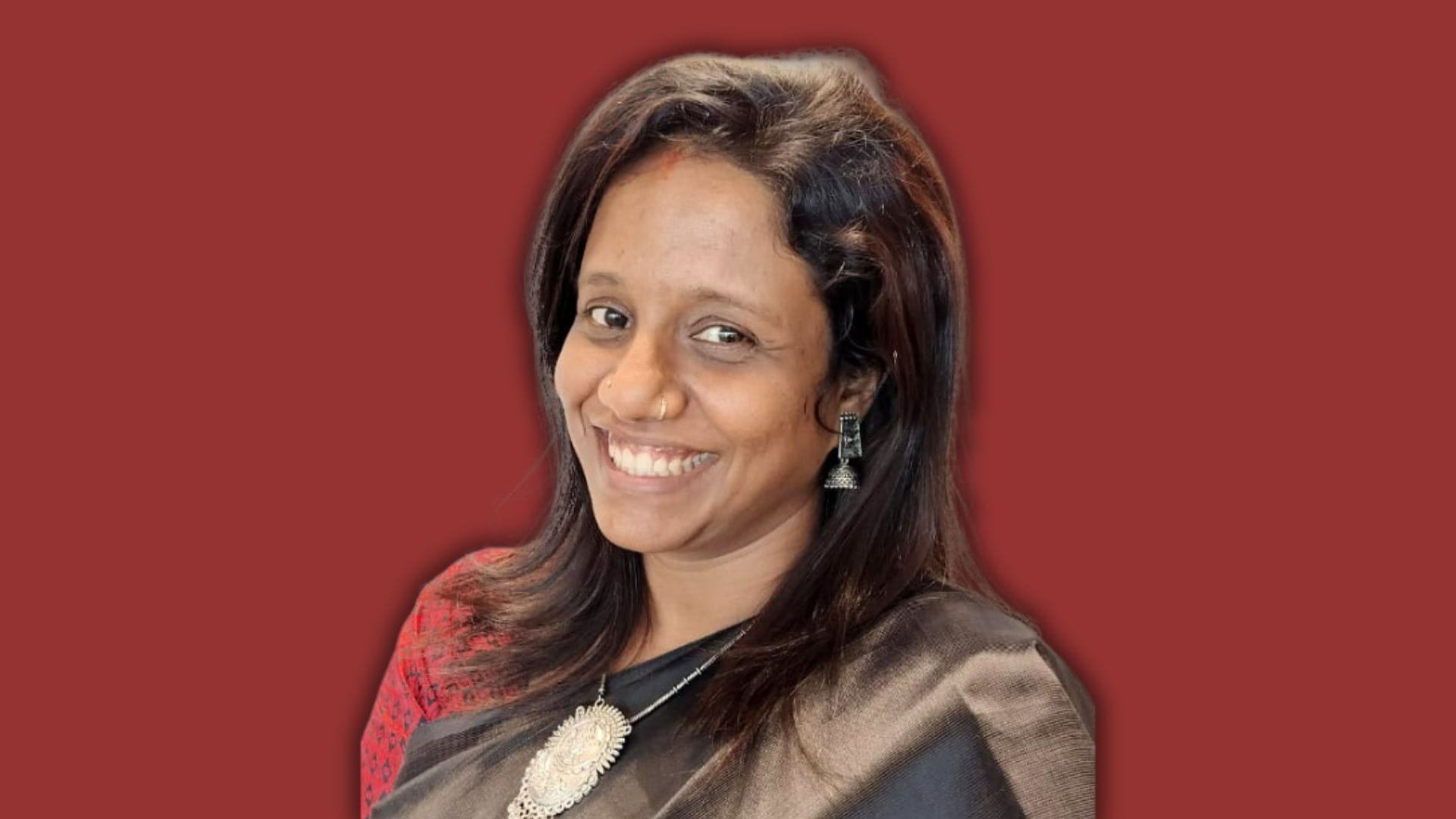
This week’s frontline face: Abiramy Sivalogananthan, the South Asia coordinator for the Asia Floor Wage Alliance.
What she's doing to help create a more equal world: Sivalogananthan is working on a campaign dubbed “Fight the Heist” that’s focusing on holding Nike accountable for the well-being of the million workers in its global supply chain.
The campaign has brought together unions and independent workers across South Asia to demand better wages and safer working conditions. Nike, meanwhile, has been spending billions on stock buybacks and absurdly inflated corporate executive salaries.
What makes this fight so important: “I want the world to understand the truth of workers’ lives behind these products,” Leni, a worker in Indonesia, recently told Sivalogananthan.
“I had a baby and another small child when COVID hit in 2020,” the worker continued. “The factory slashed our wages and offered no support. We couldn’t even put basic food on our families’ tables. As we learned that Nike made record profits during the pandemic but offered us no relief, we were furious. There is no Nike and no profits without us.” |
|
|
Seattle Activists Win Excessive Compensation Tax to Fund Social Housing
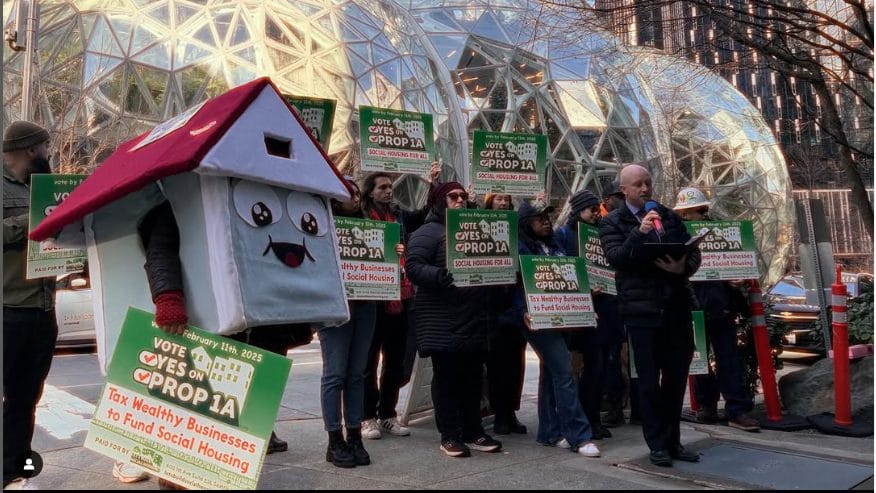
Seattle voters have just beat the oligarchs at Amazon and Microsoft and their local Chamber of Commerce deep pockets and greedy real estate developers. How? Through a ballot measure that’s going to impose a tax on excessive executive compensation to fund affordable housing. Businesses that dole out more than $1 million annually to Seattle-based executives or other employees will now owe a 5 percent tax on compensation exceeding that $1 million threshold.
In an Inequality.org exclusive, veteran Seattle-based economic policy expert John Burbank describes how the advocacy group behind the ballot campaign, House Our Neighbors, prevailed over a conservative city council, a mayor focused on toadying to Amazon, and a well-funded opposition.
“We have succeeded in jumpstarting the campaign to Trump-proof Seattle and our state,” Burbank writes. “We can create our own commonwealth of economic security… one city, one state, one ordinance, one law, one multi-state compact at a time.” |
|
|
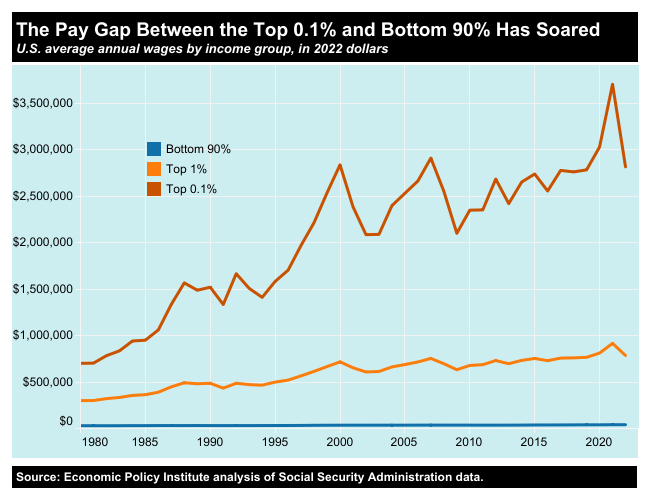
Between 1980 and 2022, the bottom 90 percent of U.S. earners saw their wages grow just 36 percent, compared to a 162 percent uptick for the richest 1 percent and 301 percent for the top 0.1 percent, an Economic Policy Institute analysis of Social Security Administration data shows. Those in the top income groups did experience a decline in 2022, a drop that reflects the year’s weak stock market. That market decline reduced top income figures since the Social Security Administration’s wage data includes income from stock options, a common form of compensation for corporate elites. But the market surges in 2023 and 2024 have no doubt made this dip a short-term affair for America ’s richest. For an interactive version of this chart and more on inequality, click the link below.
|
|
|
A Bold New Plan from Germany To Create a World Without Elon Musks Nearly half of Americans, Harris polling found last summer, would like to see a limit on the size of billionaire fortunes. Among Gen Z’ers, that support runs all the way up to 65 percent. Our super rich, some 58 percent of Americans agreed in that same Harris poll, “are becoming more like dictators.”
The share of Americans equating billionaires with dictators — given Elon Musk’s current dominant role in the new Trump White House — is most likely running even higher today.
The best way to counter our ongoing billionaire coup? We might want to look east for some answers. In the run-up to Germany’s February 23 parliamentary elections, that nation’s Left Party, Die Linke, has proposed a detailed five-step set of initiatives designed to cut the super rich down to democratic size. Inequality.org co-editor Sam Pizzigati has more. |
PETULANT PLUTOCRAT OF THE WEEK |
The Fracking Billionaire Busy Whispering into Donald Trump’s Ear
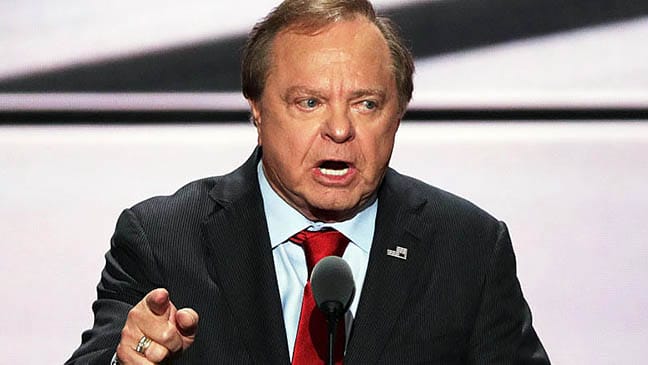
This week’s dour deep pocket: Harold Hamm, the mega-rich oil tycoon who organized last April’s fossil-fuel industry “round table” dinner at Mar-a-Lago with then-candidate Donald Trump.
What has Hamm sour: any federal regulations that have Big Oil frowning. At last year’s Mar-a-Lago fossil-fuel summit, Trump promised to roll back any and all federal regs that fit that bill — if Big Oil coughed up $1 billion for his campaign.
Since then, as president, Trump has named Hamm’s close friend and fellow billionaire, Doug Burgum, to lead the Department of the Interior. Another Hamm-selected oilman, Chris Wright, now heads the Department of Energy.
The last word: “The president and his supporters love to frame Trump’s pro-fossil fuel policies as some sort of benevolent act for ordinary Americans — simply a means to lower inflation,” notes energy analyst Emily Atkin. “The primary goal of Trump’s energy policies is to drive profits for Hamm and the other oil billionaires who donated lavishly to his campaign. Let’s keep our eye on the oligarchical ball.”
|
|
|
New on Inequality.org
Bob Lord, What Income Tax Rate Are Rich Investors Really Paying on Their Capital Gains? For an answer, we need to understand the incredibly powerful loophole of “buy-hold for decades-sell.”
Omar Ocampo, Expanding Union Density Must Be the Priority. Unions have become more popular than ever, and some 60 million workers now stand ready ready to join the labor movement. It's past time to organize them. Elsewhere on the web
Marshall Steinbaum, A Real Post-Neoliberal Agenda, The Boston Review. Bidenomics foundered on ten years of Democratic Party reluctance to declare a real war on inequality.
Heather Cox Richardson, February 12, 2025, Letters from an American. Trump’s most sweeping executive order yet has placed an operative from Elon Musk’s “Department of Government Efficiency” in charge of every agency’s hiring and firing, a move, this historian observes, that has essentially put the world’s richest man in charge of the U.S. government.
Nick Robins-Early, Who is helping Elon Musk gut the US government? Guardian. The billionaire’s cost-cutting “DOGE” includes wealthy execs, far-right ideologues, and young engineers. Pam and Russ Martens, Donald Trump Gives the Greenlight to Goldman Sachs and JPMorgan Chase to Return to Bribing Foreign Officials, Wall Street on Parade. Trump appears to be on a mission to Make Corruption Great Again.
Patricia Blanco, Amitabh Behar: ‘We are moving from a scenario of inequality to one of global oligarchies,’ El País. Oxfam’s top exec explains how our world economic system is consolidating inequality. Well over a third of billionaire wealth now comes directly from inheritances.
Sarah Lazare, Political Philosopher Explains How Being a Corporate Boss Is the Perfect Training Ground for Authoritarian Rule, Workday. Democracy rests on muscle memory. We lose that memory in our government, Elizabeth Anderson explains, when mega-rich top execs dominate our workplaces.
Attiya Waris and Ben Phillips, Tax the Super-Rich. We have a World to Win, Inter Press Service. Spain has successfully introduced a wealth tax on it richest 0.5 percent. The world could raise $2.1 trillion by copying Spain’s example.
Ishan Mehta, In politics, billionaires get what they pay for, Las Vegas Sun. The Supreme Court’s 2010 Citizens United ruling opened the floodgates to unlimited political spending by America’s richest. In the 2024 elections, the top five mega-donors each donated over $100 million to shift the outcomes.
Paul Kane, This senator says Democrats need to invoke villains, namely Elon Musk, Washington Post. Senator Chris Murphy of Connecticut is calling on his party to be more aggressive in going after Trump’s billionaire allies.
Lucas Kunce, The Myth of Meritocracy, Substack. To support an ownership class tired of government getting in its way, billionaire tech bros are extracting every last drop of sweat and blood from those of us who work for a living. Take a reading break
Watch Chuck Collins discuss his work fighting plutocracy in conversation with Bartimaeus Cooperative Ministries here. |
|
|
Our research, editorial, and publishing team depends on hundreds of paid subscribers who make monthly gifts. Some give $3 each month; others give $200! All told, this support enables our team to stay focused on identifying causes and solutions to our deep economic inequality. Paid subscribers have contributed more than $20,000 in the past year. Ready to become a paid subscriber? Sign up today. |
|
|
Inequality.org | www.inequality.org | inequality@ips-dc.org Institute for Policy Studies
1301 Connecticut Avenue Ste 600
Washington, DC 20036
United States
Managing Editor: Chris Mills Rodrigo
Co-Editors: Sarah Anderson, Chuck Collins, Bella DeVaan, and Sam Pizzigati |
|
|
|