December 4, 2024                                                         Home   Subscribe  Open in Browser


A weekly newsletter from the Institute for Policy Studies


THIS WEEK

This week marked our nation’s annual Giving Tuesday, a key fundraising day for nonprofits originally launched a dozen years ago as a counter to the exorbitant consumption we see every Black Friday and Cyber Monday. But a new report just released by our Charity Reform Initiative has just revealed that our ultra-rich are actively exploiting Giving Tuesday to hide and grow their grand fortunes.

So how can we be sure, given this new reality, that money flowing into the charitable sector is going for good? Our charity reform team has proposed a few common-sense solutions that range from closing existing tax loopholes to adopting new regulations on how long money can sit in donor-controlled intermediaries that generate generous fees for money managers.

We are very happy to share that our research got a primetime slot over the Thanksgiving weekend in CBS's report on greenwashing in the aviation sector. We highly recommend watching the segment yourself to get a peek at our own Chuck Collins' garlic growing process, but the TL;DW is that efforts by the jet industry to sell "sustainable" aviation fuels as a fix to the climate crisis are at best misguided and at worst actively undermining the kind of reforms we need.

Chris Mills Rodrigo
for the Institute for Policy Studies’ Inequality.org team


INEQUALITY BY THE NUMBERS

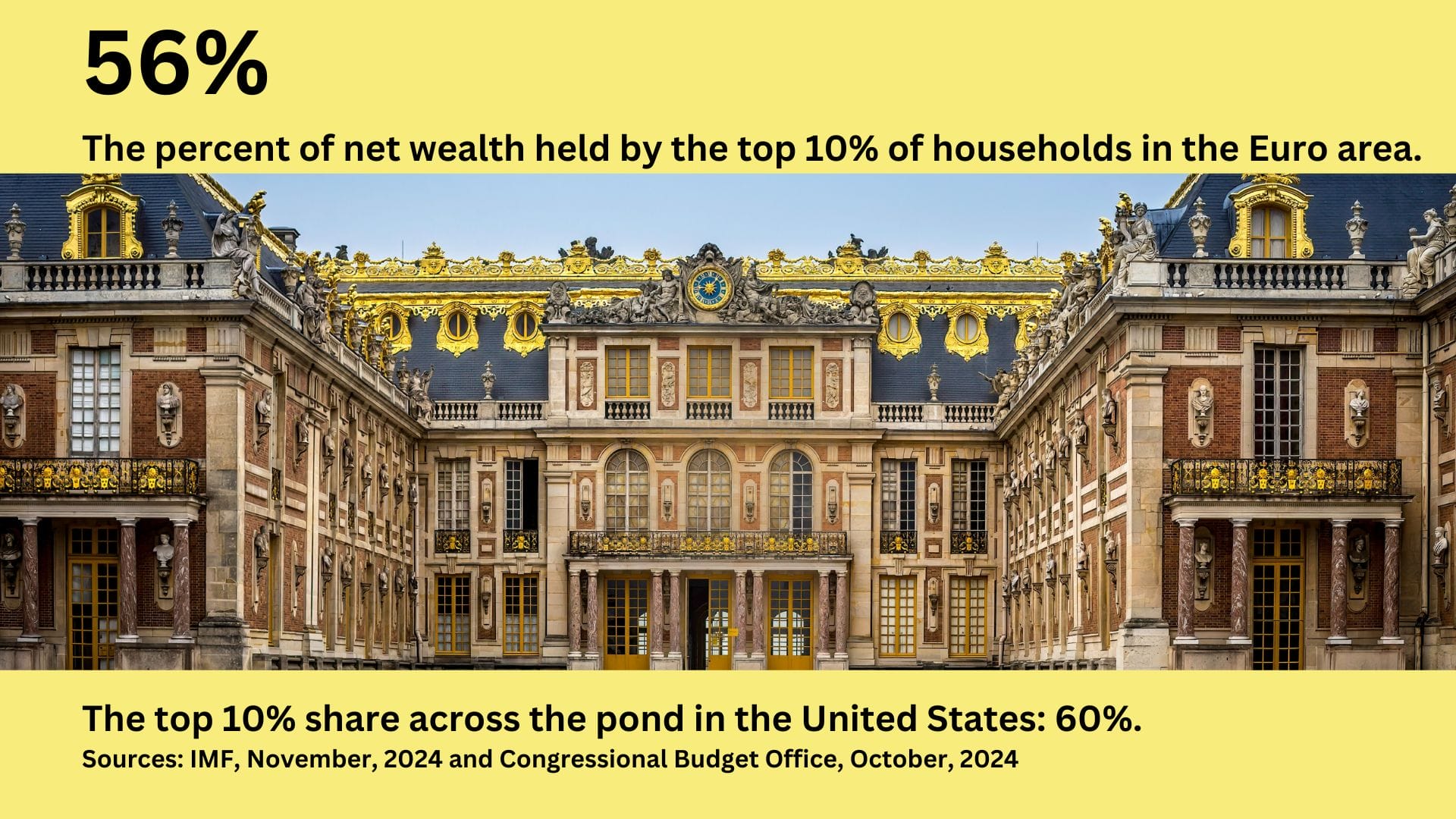
A photo of the White House with seven Trump picks and the text: Trump nominees who are billionaires: 7. The combined net worth of these 7 picks for cabinet posts, the UK ambassadorship, and the new Department of Government Efficiency: at least $341 billion. Sources: Bloomberg and Forbes, Nov. 27-Dec. 3, 2024
FacebookTwitter Custom

The number of billionaires in Trump’s second administration could continue to grow as he fully staffs up. After all, he has nearly 800 additional U.S. billionaires to choose from. Inequality.org co-editor Sarah Anderson has a quick rundown of the “original seven” members of the Trump administration’s nine-figure club at the link below.

BILLIONAIRE BONANZA
 

FACES ON THE FRONTLINES

Victims of the Bhopal Disaster

Marking 40 Years Since the Bhopal Chemical Disaster

Forty years ago this week, a Union Carbide pesticide factory leak across the city of Bhopal in India unleashed the deadliest chemical disaster in human history. Some 10,000 people died in just three days, and the leak ended up poisoning half a million more. Toxic chemicals remain buried around the abandoned Bhopal plant, and children born in the city are still suffering the tragedy’s legacy.

The disaster’s anniversary continues to remind us how much we need far more stringent chemical safety measures — and also illustrates how multinationals like Union Carbide can escape any significant accountability for perpetuating so much harm. The people of Bhopal are poorer than ever; Carbide was acquired by Dow Chemical for over $10 billion.

To honor the 40th anniversary of the disaster, Representatives Pramila Jayapal  and Rashida Tlaib and Senator Jeff Merkley introduced a resolution to mark December 3 as National Chemical Disaster Awareness Day.

The Institute for Policy Studies hosted two survivors of the Bhopal tragedy earlier this year for an event that you can watch here. For more on the resolution, follow the link below.

COMMEMORATION DAY
 

BOLD SOLUTIONS

Don't Let Historical Inequities Replicate Themselves

Over the next few decades, our Baby Boomers will be passing billions of dollars down across generations. This “Great Wealth Transfer” will, according to new Urban Institute research, unfortunately be exacerbating existing economic and racial disparities.

But we still have time to change course, as researchers Linna Zhu and Amalie Zinn outline in a new Inequality.org piece that shows how policy reforms could stop the coming wealth transfer from reifying inequities and harness that transfer instead to create more wealth building opportunities for historically marginalized groups.

UNLOCKING HOMEOWNERSHIP
 

CHART OF THE WEEK

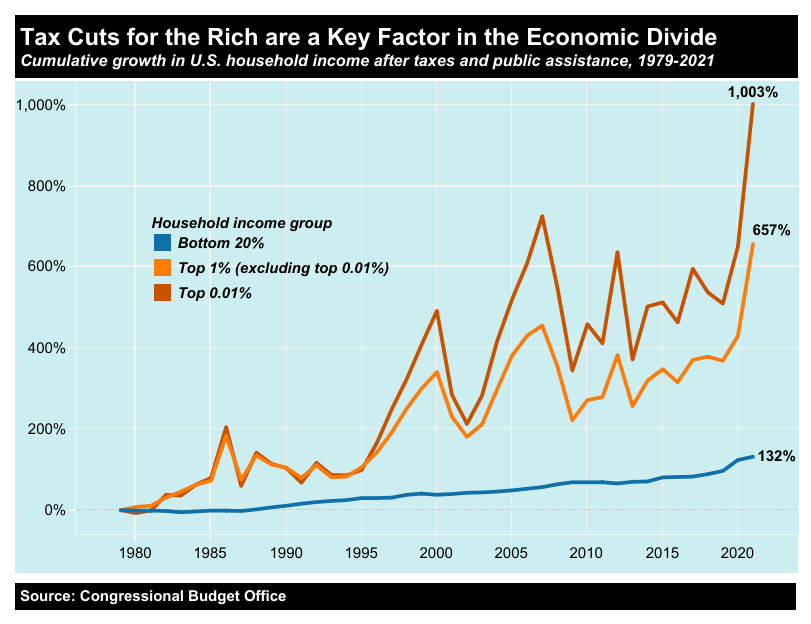
A chart showing how tax cuts have helped concentrate extreme wealth.

Between 1979 and 2021, after accounting for taxes and public assistance, the richest 0.01 percent of U.S. households saw their incomes grow 1,003 percent. The growth rate for the bottom 20 percent: 132 percent.

Tax cuts for the rich are driving much of this rising inequality. The top U.S. marginal tax rate has dropped from 70 percent in 1979 to just 37 percent in 2021. And pandemic programs that boosted after-tax incomes for poorer families in 2021 have long since expired.

For an interactive version of this chart and more on income, gender, and race inequality, click the link to our Inequality.org Facts section below.

DIVE DEEPER
 

TOO MUCH

On Our Burning Planet, Our Plutocrats Have Plenty To Burn

Our world’s 16 richest individuals would still be billionaires, a top Oxfam analyst has observed, even if 99 percent of their wealth vanished overnight. Two key global conferences that addressed our world’s climate crisis could have taken that reality seriously into account last month. Neither conference did.

Inequality.org co-editor Sam Pizzigati has more on November’s lost climate change opportunities. 

MONEY TO BURN
 

PETULANT PLUTOCRAT OF THE WEEK

Scott Bessent

A Pick for Treasury Sure To Keep Wall Streeters Smiling

This week’s dour deep pocket: the billionaire hedge fund owner Scott Bessent, the Donald Trump nominee to become America’s 79th treasury secretary.

What has Bessent sour: any hint that he might not put “America first.”

The hedge fund that Bessent founded in 2015, Key Square Capital, ended 2023 with nearly two-thirds of its portfolio invested in Chinese stocks. By the end of March this year, the high-finance watchdog Wall Street on Parade points out, Bessent’s hedge fund had switched its investment focus to betting against U.S. corporate values.

The last word: Bessent’s “expertise is helping rich investors make more money,” notes U.S. senator Elizabeth Warren from Massachusetts, “not cutting costs for families squeezed by corporate profiteering.”


GREED AT A GLANCE

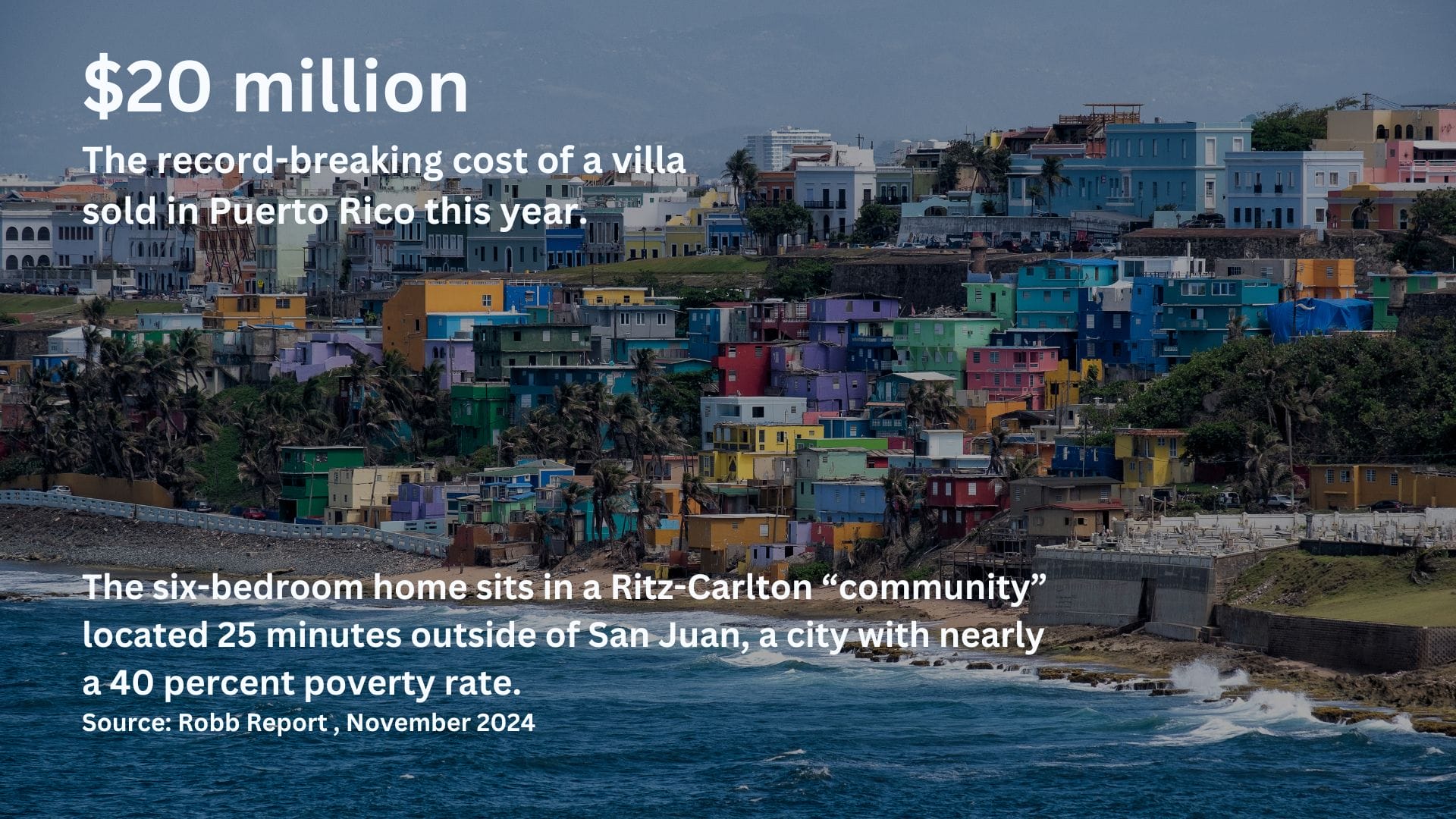
A photo of La Perla with the text: $20 million, The record-breaking cost of a villa sold in Puerto Rico this year. The six-bedroom home sits in a Ritz-Carlton ''community'' located 25 minutes outside of San Juan, a city with nearly a 40 percent poverty rate. Source: Robb Report, November 2024
FacebookTwitter Custom
 

MUST READS

What's new on Inequality.org


Chris Bohner and Eric Blanc, Labor’s Resurgence Can Continue Despite Trump. The second Trump administration will seek to undermine unions. But the labor movement has momentum and plenty of opportunities to fight back.


Bob Lord, Oops! A Rich-People-Friendly Think Tank Confirms Our Richest Pay Under 1 Percent of Their Wealth Annually in Tax. A new Tax Foundation analysis also inadvertently shines a light on the uselessness of “adjusted gross income” as an indicator of actual billionaire economic income.


Helen Flannery, As More Donations Pour into Donor-Advised Funds, Which Charities Will Get Left Behind? As DAF wealth continues to rocket skyward, organizations that meet acute social needs — like homeless shelters, food banks, and health clinics — may suffer.


Jon Golinger, Shareholders Unite! Opportunities Ahead in 2025 to Increase Corporate Lobbying Transparency and Accountability. The success of shareholder proposals promoting lobbying transparency offers an encouraging avenue for positive change.


Connie Choi, We Need a Care System That Treats Patients With Dignity. A daughter’s experience trying to get her father adequate care shows just how broken our health system has become.


Elsewhere on the web


Peter Turchin, The deep historical forces that explain Trump’s win, The Guardian. What happens when societies become appreciably more unequal? They start to rot from within.


Robert Reich, The wrecking-ball crew and the looting of America, Substack. History guarantees that Trump’s billionaires will overreach. The more power in billionaire hands, the less power in everyone else’s.


Jake Johnson, ‘By and For the Ultra-Wealthy’: Here Are the Billionaires Set to Run Trump’s Administration, Common Dreams. Donald Trump has wasted no time working to fill his incoming administration with ultra-rich individuals poised to benefit from the GOP agenda of tax cuts for the wealthy and large-scale deregulation.


Melissa Finucane, What’s Wrong with Billionaires Dictating the US Science Agenda? The Equation. Plenty, says the vice president for science and innovation at the Union of Concerned Scientists.


Jeet Heer, The Democrats Will Keep Losing Until They Solve Their Plutocracy Problem, The Nation. Both political parties have become beholden to wealthy donors. The result has been particularly disastrous for Democrats.


Terry Schwadron, President Elon Musk? DCReport. The world’s richest person has extraordinary influence over Donald Trump and has indisputably become America’s most powerful private citizen.


Chuck Marr, Policymakers Should Reject Trump, Republican Tax Agendas That Would Double Down on Failures of 2017 Tax Law, Center on Budget and Policy Priorities. Ending the 2017 tax cuts for households with incomes over $400,000 would avoid 41 percent of the $3.9 trillion cost of extending the 2017 law in the decade ahead.


Dean Baker, The Mainstream Media’s Big Lie Never Stops, Patreon. That lie, this noted economist points out, insists that the unavoidable “natural workings” of free markets — not realities like corporate governance rules that promote sky-high CEO pay — drive inequality.   


Christopher Pollard, Is inequality a natural phenomenon? Thomas Piketty argues it isn’t — and proposes a way forward, The Conversation. A look at a new book from the world’s most noted scholar on maldistributed income and wealth that makes an accessible case for a more equal world.


 

HOW WE MAKE THIS WORK

Our research, editorial, and publishing team depends on hundreds of paid subscribers who make monthly gifts. Some give $3 each month; others give $200! All told, this support enables our team to stay focused on identifying causes and solutions to our deep economic inequality. Paid subscribers have contributed more than $20,000 in the past year. Ready to become a paid subscriber? Sign up today.


Inequality.org | www.inequality.org | inequality@ips-dc.org

Institute for Policy Studies
1301 Connecticut Avenue Ste 600
Washington, DC 20036
United States 

Managing Editor: Chris Mills Rodrigo
Co-Editors: Sarah Anderson, Chuck Collins, Bella DeVaan, and Sam Pizzigati

FacebookTwitter