A weekly newsletter from the Institute for Policy Studies |
|
|
Less than a month remains until this year’s general election. Voters won’t just be filling out ballots to pick the next president and shape the next Congress. They’ll also be voting on dozens of state-level initiatives that will help determine how unequal our nation will continue to be.
Voters in at least three states — California, Missouri, and Alaska — have the opportunity to raise the minimum wage to something more closely resembling a living wage. In Arizona, on the flip side, a Republican-led initiative would actually lower the floor for tipped-wage workers.
Trying to make progress at the federal level, with its warped facsimile of democracy, can sometimes feel like we’re bashing our heads into a wall. State and local politics, by contrast, can sometimes offer an arena where meaningful change faces fewer roadblocks.
So if you're feeling frustrated with how things are going federally, take a close look at the initiatives on your state ballot — and get out there and get involved with people fighting for a more just society in your local community! Chris Mills Rodrigo
for the Institute for Policy Studies’ Inequality.org team |
|
|
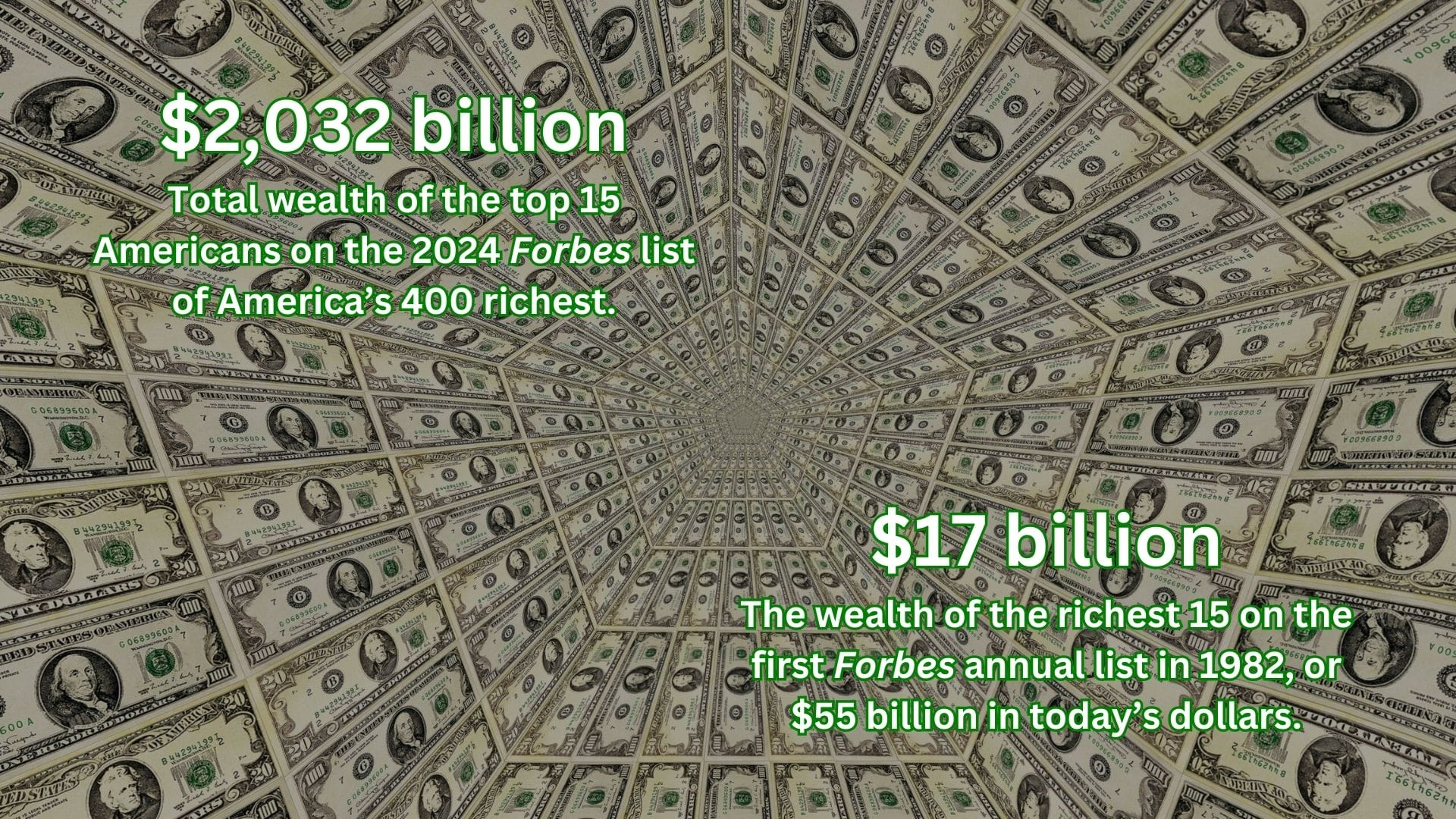
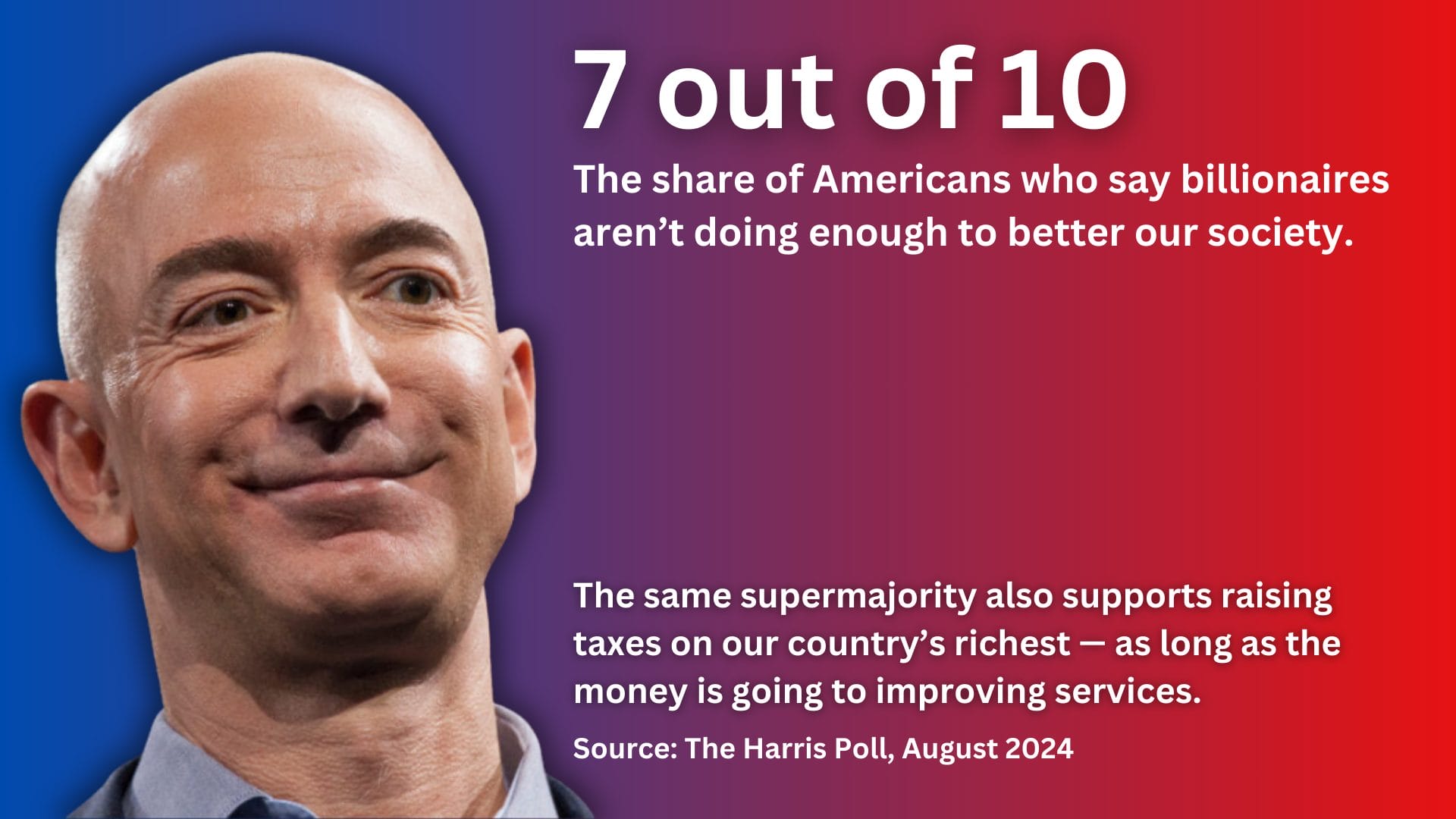
INEQUALITY BY THE NUMBERS |
|
|
Fighting for the Rights of People Experiencing Homelessness This week’s frontline face: Annabelle Ortiz, a New Hampshire activist with the advocacy group RESULTS . What she's doing to help create a more equal world: Ortiz has worked with people experiencing homelessness for a long time, helping them stay safe and get the services they need. She herself has been the victim of domestic abuse and had to flee home. That experience left her amazed at how the pandemic had knocked out the social safety net.
Now Ortiz is advocating for policies — like expanding health care access and rental assistance before crises strike — that would help people stay in their homes.
What makes this fight so important: “Here’s what I’ve learned from the people I’ve ministered to — and my own bad luck: There are precious few services that help prevent homelessness,” Ortiz has just noted in Inequality.org. “You must be destitute to receive help, and as soon as you begin to get back on your feet, that critical assistance can be pulled away.” |
|
|
Expanding Our Nation’s Health Care Protections into Our Homes
Few elements of our health care system have gone as underappreciated as the work of caregivers do in homes after patients get discharged from hospitals. Taking care of a loved one can be taxing — emotionally and financially — as Christina Keys, an advocate and caregiver, learned caring for her late mother.
Our current system covers only a small portion of the costs associated with taking care of someone at home. Medicare, for example, will only pay for one medical device, such as a wheelchair or home hospital bed, every five years.
A new proposal from Vice President Harris would ameliorate the costs of these situations by expanding Medicare to help cover the costs of home health care aides for seniors. That's a good first step, but our whole system needs to be realigned to put care, not profits, at the center of our health care infrastructure. |
|
|
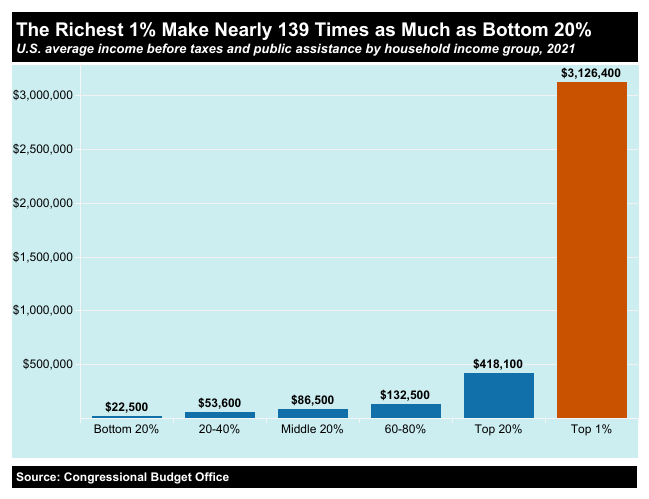
New data reveal that the richest 1 percent of Americans averaged $3.1 million in annual income in 2021, 42 times as much as the bottom 90 percent of earners, and roughly 139 times as much as the bottom 20 percent. The richest 1 percent enjoyed an astounding 31 percent increase in inflation-adjusted earnings over 2020, largely due to a surge in their investment income. For an interactive version of this chart and more on income inequality, click the link below. |
|
|
Must Higher Education Genuflect Before Our Highest Incomes? The cost of attending a top-ranked U.S. university — now nearing about $500,000 over four years — has, of course, never posed any sort of problem for America’s wealthiest families. What has been a concern for our richest: making sure their offspring can gain admittance onto the world’s most highly selective campuses.
The “cure” to that uncertainty? That’s been, ever since the 1920s, “legacy admissions,” a welcome card that elite universities regularly offer our nation’s most affluent, especially those affluents who’ve happened to bestow upon their alma maters serious chunks of their fortunes. But that “cure” has hit a rough spot. Inequality.org co-editor Sam Pizzigati has more. |
PETULANT PLUTOCRAT OF THE WEEK |
In High Finance, Stab-in-the-Back Tops Scratch-My-Back
This week’s dour deep pocket: Dan Arnold, the CEO of one of America’s largest wealth management firms, LPL Financial Holdings — until last week.
What has Arnold sour: The LPL board has just fired the 59-year-old “for cause,” a move that will cost the exec tens of millions in severance and equity awards he had coming his way. Arnold pulled down $17 million in CEO pay last year.
The LPL board, just last March, had lauded Arnold’s contribution to the firm’s “strategic vision and cultural evolution.” So why did the board suddenly ax Arnold six months later? The CEO, the board charged, had violated company policies that require “every employee, no matter their title, to foster a supportive and professional workplace and show respect to each other, our stakeholders, and the broader community.”
The last word: Arnold himself has not responded to media requests for his take. LPL, a senior industry source notes, has a “culture built on driving employees through anxiety and stress.” |
|
|
What's new on Inequality.org
Indivar Dutta-Gupta, Tax Cuts for the Rich Create Debt, Division, and Despair — Not Jobs. Growing inequality undermines our democracy and turns Americans against each other. A fairer tax system could bring us back together.
A.J. Schumann, Who’s Really a ‘Populist’? Henry Wallace Set the Standard. True populism means confronting the forces that keep everyday folks down — hardship, inequality, and war.
Elsewhere on the web
Chuck Collins and Corinne Doud, Massport must cancel private jet expansion, The Boston Herald. Simply indefensible: expanding the private jet hangar at Hanscom amid the climate crisis.
Aaron Timms, Cold, ravenous and predatory, private equity is slouching towards the NFL, Guardian. The world’s richest sports league, the long-time preserve of super-wealthy individuals, is now welcoming in private equity’s bullies and money grubbers.
Chaunie Brusie, Revealed: The Eye-Popping Compensation of 5 High-Paid Hospital CEOs, Nurse.org. Hospital chief execs rarely have any direct patient care experience. Last year’s top-paid hospital CEO pulled down 267 times the pay of average registered nurses.
Darrell Hofheinz, Trump back on Forbes 400 with at least 37 other Palm Beach billionaires, Palm Beach Daily News. The recently announced Forbes 400 list for 2024 requires billionaires to have fortunes of at least $3.3 billion, a Forbes 400 record high.
Institute on Taxation and Economic Policy, A Distributional Analysis of Donald Trump’s Tax Plan. In 2026, under the Trump tax proposals, America’s top 1 percent would average a tax cut of about $36,300, and the next richest 4 percent would receive save an average $7,200. All other groups would see a tax increase.
Nick Romeo, Progressives Weigh In on Kamala Harris’ Economic Proposals — and Share Some of Their Own, Capital and Main. Policies like higher taxes on the wealthy and expanded child care, progressive economists note, would be both effective and popular.
Amanda Gordon, Rush of Billionaire Cash Poised to Topple Democrats’ Key Senator, BNN Bloomberg. The cash influx into this year’s Montana U.S. Senate race has made the contest the most expensive per vote in Senate history, with ad spending about to top $250 million in a state of about 1 million people.
Les Leopold, 135,900,000 Reasons Why the Working Class is So Angry, Wall Street's War on Workers. American workers have learned that jobs start disappearing whenever a private equity firm buys up the company where they work.
Jake Johnson, Analysis Shows Trump Tax Plan Would Make Rich People Richer, Working People Poorer, Common Dreams. Under the GOP nominee’s proposal, the national income share of the top 5 percent would increase by around 1.6 percent. The bottom 50 percent share would drop by roughly 4.8 percent.
Ava Kofman, A Pair of Billionaire Preachers Built the Most Powerful Political Machine in Texas. That’s Just the Start, ProPublica. Billionaires Tim Dunn and Farris Wilks have built a network of think tanks, political action committees, and nonprofits that have purged the state legislature of Republicans whose votes they can’t rely on.
Take a reading break
BBC, Runaway CEO Pay Is Bad for Our Economy, Bad for Democracy, and Bad for Business. Inequality.org co-editor Sarah Anderson explains why taxing corporate bad actors "would absolutely be a vote winner" across the political spectrum.
Moms Rising, Breaking Through. John Foti of Americans for Tax Fairness speaks about much-needed social programs that taxes help fund and what’s at stake next year as we fight to make our tax code fairer and invest in our communities |
|
|
ON BILLIONAIRES AND THE REST OF US |
This newsletter and the whole Inequality.org project are powered by donations. We’re not raking in cash from the billionaire class, though. We’re counting on people to see why this reporting, research, and advocacy matters, and then to become paid subscribers, by making a recurring monthly donation of any amount. Make a monthly gift as a paid subscriber. Start your paid subscription today. |
|
|
Inequality.org | www.inequality.org | inequality@ips-dc.org Institute for Policy Studies
1301 Connecticut Avenue Ste 600
Washington, DC 20036
United States
Managing Editor: Chris Mills Rodrigo
Co-Editors: Sarah Anderson, Chuck Collins, Bella DeVaan, and Sam Pizzigati |
|
|
|