A weekly newsletter from the Institute for Policy Studies |
|
|
The 2024 Nobel prize in economics was awarded this week to three economists who have traced how colonialism and its aftermath have shaped today’s global inequities.
The work of these three scholars, notes the Royal Swedish Academy of Sciences, helps us understand why “societies with a poor rule of law and institutions that exploit the population do not generate growth or change for the better.”
This marks the second straight year that the prestigious Nobel award has gone to economists studying inequality. And let’s not forget that the 2019 Nobel winner in economics, Esther Duflo, earlier this year called on our world’s richest nations to raise taxes on our globe’s super rich and move the proceeds raised directly to those the climate crisis is hurting the most.
How can the work of economists like these better inform policy making? How can we turn their ideas into action? These have become questions for all of us committed to tackling inequality. Chris Mills Rodrigo
for the Institute for Policy Studies’ Inequality.org team |
|
|
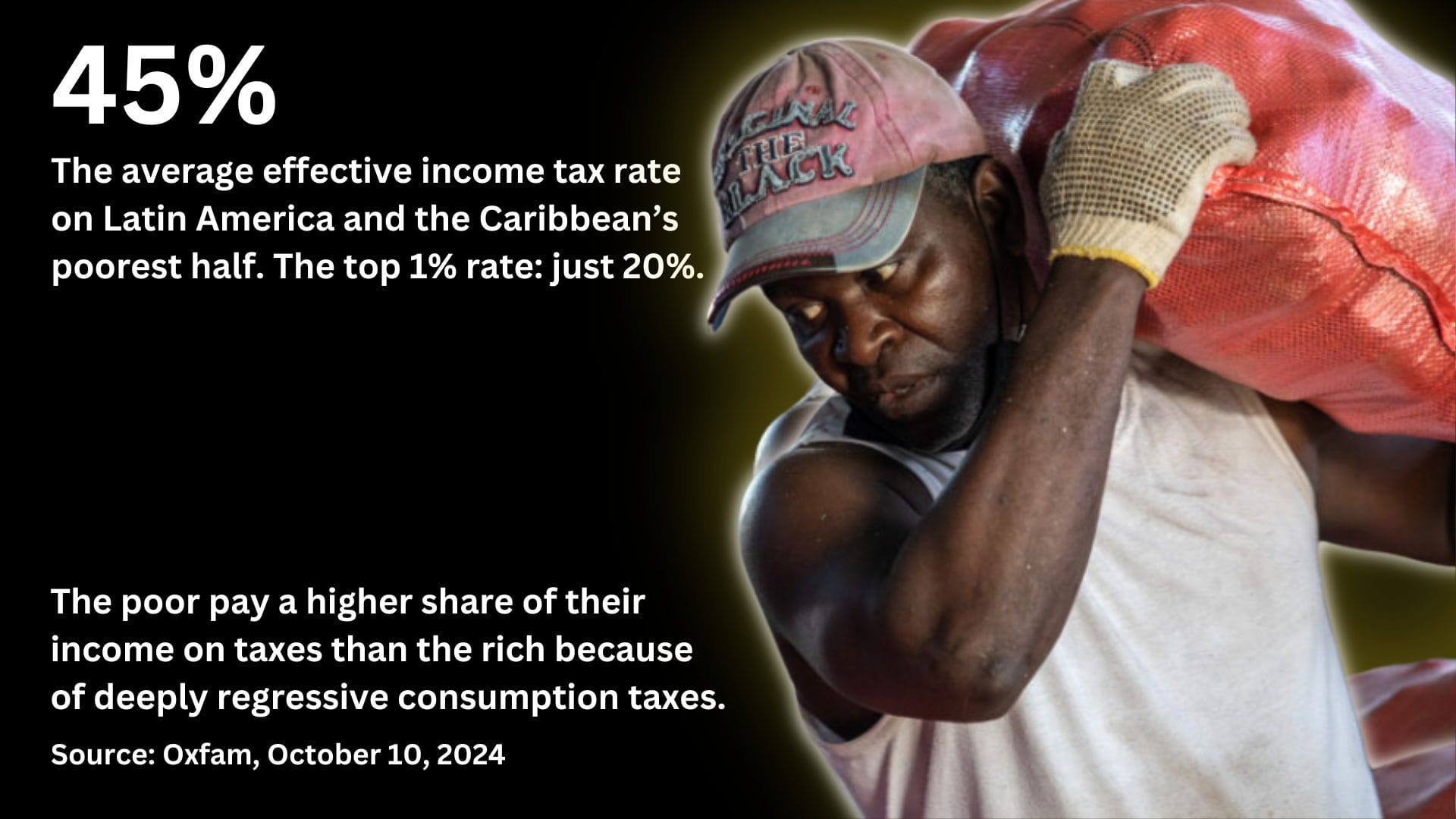
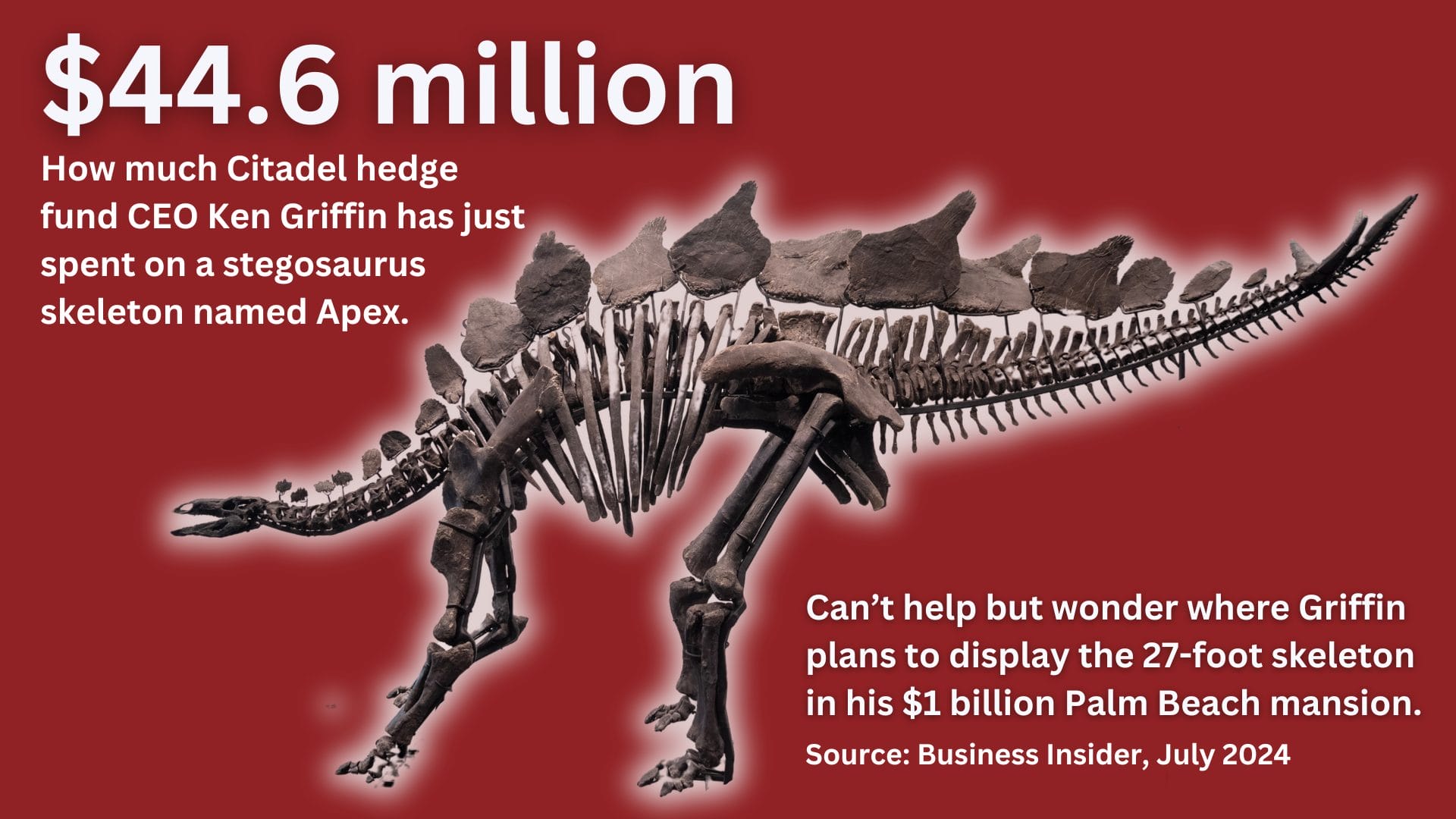
INEQUALITY BY THE NUMBERS |
|
|
A Living Wage for All Workers, No Matter Where They Happen To Work
This week’s frontline face: Red Schomburg, a former Boston bartender and a current leader with the One Fair Wage campaign. What she's doing to help create a more equal world: Schomburg has experienced firsthand how the current federal subminimum wage for tipped workers — a mere $2.13 an hour — leaves bartenders, waiters, and servers exposed to abuse and factors out of their control. Both candidates for president have talked about the problems tipped workers face, but their solution — removing taxes on tips — leaves a lot to be desired. Most tipped workers, Schomburg notes, “don’t earn enough to have to pay federal payroll taxes.” The much better solution: A decent minimum wage for all workers.
What makes this fight so important: “It’s great that politicians are talking about tipped workers,” Schomburg notes online at Inequality.org. “We’re a powerful voting block and we’re invested in voting for meaningful change. Tipped workers see beyond the lies and the pandering and know that one fair wage is the change we need to put more dollars in our pockets.” |
|
|
How Fair Taxation Can Significantly Strengthen Our Democracy
Slashing taxes on the wealthiest Americans increases inequality and hurts our democracy. Just how? The less the rich and the corporations they run pay in taxes, the more dollars they have to spend influencing elections through campaign contributions and policy decisions through massive lobbying efforts.
This concentration of power allows a small elite to sideline the broader public interest. How can we end that sidelining? Drawing from his recent Senate testimony, Georgetown University’s Indivar Dutta-Gupta shares recent research on how progressive taxes can be a powerful tool for strengthening our democracy and reducing social polarization and conflict. |
|
|
This chart vividly illustrates the declining power of workers in an increasingly unequal America. During the decades after World War II, worker productivity and wages rose at approximately the same rate. But since the 1970s, workers have no longer reaped the same rewards from productivity gains. From 1979 to 2024, productivity grew at a rate 2.7 times as fast as worker pay, after adjusting for inflation, according to the Economic Policy Institute. For more on income, gender, and race inequality, click to our Inequality.org Facts section below.
|
|
|
Two Words That So Haunt Hurricane Victims: ‘Claim Denied’ In hurricane-plagued Florida, State Farm last year denied 46.4 percent of homeowner claims, refusals that directly impacted over 76,000 households. To add injury to that insult, Florida governor Ron DeSantis had just before last year signed into law legislation that makes policyholder lawsuits against insurers incredibly difficult.
For recently retired State Farm CEO Michael Tipsord, insurance industry lobbying victories along that Florida line have helped him pocket some stunning personal rewards. Tipsord pulled down $24.4 million two years ago, almost $4 million more than his industry’s second-highest-paid CEO. Inequality.org co-editor Sam Pizzigati has more. |
PETULANT PLUTOCRAT OF THE WEEK |
A CEO Who’s Seeking a Really Sweet Fadeaway into the Sunset
This week’s dour deep pocket: David Burritt, the CEO of U.S. Steel since 2017.
What has Burritt sour: the growing pushback against the deal he’s cut with Nippon Steel that would make the Japanese firm the owner of U.S. Steel and leave Burritt with a golden parachute worth a potential $72 million. Among the critics of the deal: U.S. senators Elizabeth Warren of Massachusetts and Sherrod Brown of Ohio. Burritt’s deal with Nippon, the pair are charging, amounts to “a repulsive conflict of interest” that will enable U.S. Steel execs to “enrich themselves” at the expense of U.S. Steel workers.
Burritt’s counter to the deal’s critics? He’s threatening, a Financial Times analysis points out, “to close three Pittsburgh-area plants that employ more than 3,000 people if the deal is not approved.”
The last word: “This proposed deal isn’t about pursuing the promise of America — it’s about pursuing a quick buck,” Steelworkers president Dave McCall recently noted. “It’s clear that executives at Nippon and U.S. Steel view the union members who actually create U.S. Steel’s wealth as expendable pawns.” |
|
|
What's new on Inequality.org
Christina Keys, There’s a Looming Care Crisis in Our Country. Our Safety Net Isn’t Ready. Eventually, we’ll all need care or will be caregivers ourselves. Now’s the time to start investing in a stronger care infrastructure. Elsewhere on the web
Norman Stockwell, Who’s Going to Defend Our Communities Against Billionaire Wealth Extractors? The Progressive Magazine. A wide-ranging interview with Inequality.org's Chuck Collins well worth a read.
Michael Podhorzer, The Roberts Majority: Dictators Since Day One, Substack. All six GOP-appointed justices on the current Supreme Court have links to the Federalist Society, an enterprise right-wing billionaires have sponsored for the explicit purpose of imposing by fiat agendas so unpopular they could never be enacted through democratic means.
Imane El Atillah, The top tech billionaires are on track to become the first trillionaires: Who will get there first? Euro News. Leading the list: Elon Musk. With a net worth value “growing at an average 110 percent every year, Musk could become the first trillionaire by 2027.
Kim Scott, ‘Founder Mode’ Explains the Rise of Trump in Silicon Valley, New York Times. Coercive leaders can appear to get lots done in the short run. But in the long run, argues this former Google and Apple exec, they damage lives, firms, and even democracies.
Hannah Levintova, Newport was used to billionaires. Then Stephen Schwarzman came to town, Mother Jones. Schwarzman, the 77-year-old CEO of private equity giant Blackstone, has outraged his affluent neighbors with his Marie Antoinette level of disregard for their community norms.
Avi Asher-Schapiro and Diana Baptista, In Data: What does Kamala Harris’ wealth tax mean for America’s richest? Context. Harris is backing, among other proposals, president Biden’s call for a 25 percent minimum tax on America’s wealthiest 0.01 percent, those worth over $100 million.
Carl Gibson, GOP rep complains it’s ‘ridiculous’ for Harris to ask billionaires to ‘pay their fair share,’ Alternet. But if Trump ends up able to renew his 2017 tax cuts, now due to sunset next year, the U.S. treasury will lose some $10 trillion over the next decade.
Josh Eidelson and Max Chafkin, Lina Khan Is Just Getting Started (She Hopes), Bloomberg. The current Federal Trade Commission chair has toughened merger oversight and driven billionaires crazy. She hints more to come, if she’s given the chance.
Dean Obeidallah, Trump-supporting billionaires are enabling his white supremacist rantings, MSNBC. Some of Trump’s wealthiest backers say they like his economic policies, reason enough to keep quiet about his racism and xenophobia.
Stephen Machin and Lee Elliot Major, Sliding down the Great Gatsby curve in search of the Scandinavian dream, London School of Economics. Why more equal societies tend to show more social mobility.
Joe Hughes, Fifteen Companies Each Avoided More than $1 Billion in Taxes from a Single Trump Tax Cut, Just Taxes. That Trump tax measure, the deduction for Foreign-Derived Intangible Income, has so far saved Alphabet, the Google corporate umbrella, just shy of $12 billion over the past six years.
|
|
|
ON BILLIONAIRES AND THE REST OF US |
This newsletter and the whole Inequality.org project are powered by donations. We’re not raking in cash from the billionaire class, though. We’re counting on people to see why this reporting, research, and advocacy matters, and then to become paid subscribers, by making a recurring monthly donation of any amount. Make a monthly gift as a paid subscriber. Start your paid subscription today. |
|
|
Inequality.org | www.inequality.org | inequality@ips-dc.org Institute for Policy Studies
1301 Connecticut Avenue Ste 600
Washington, DC 20036
United States
Managing Editor: Chris Mills Rodrigo
Co-Editors: Sarah Anderson, Chuck Collins, Bella DeVaan, and Sam Pizzigati |
|
|
|