A weekly newsletter from the Institute for Policy Studies |
|
|
Hard to believe that this summer is already nearing an end! We hope that all of our readers will be able to get some rest this coming holiday weekend — and take a moment to celebrate the progress that the American labor movement has been making over the last few years in everything from reenergizing major union to organizing entire new economic sectors.
In this week’s issue, we’re highlighting a new study on working conditions in semiconductor manufacturing. With the Biden-Harris administration about to disburse billions of public dollars into semiconductors, those of us who worked on this new report are calling for strong guardrails to help ensure that all the new CHIPS Act jobs turn out to be good jobs.
My favorite part of the time I spent working on this new report: speaking with semiconductor workers. In every discussion we had, I felt their excitement about organizing in what has been an overwhelmingly unorganized industry. When we organize together, they reminded me, we can transform our workplaces and, in time, our entire country. Happy Labor Day! Chris Mills Rodrigo
for the Institute for Policy Studies’ Inequality.org team |
|
|
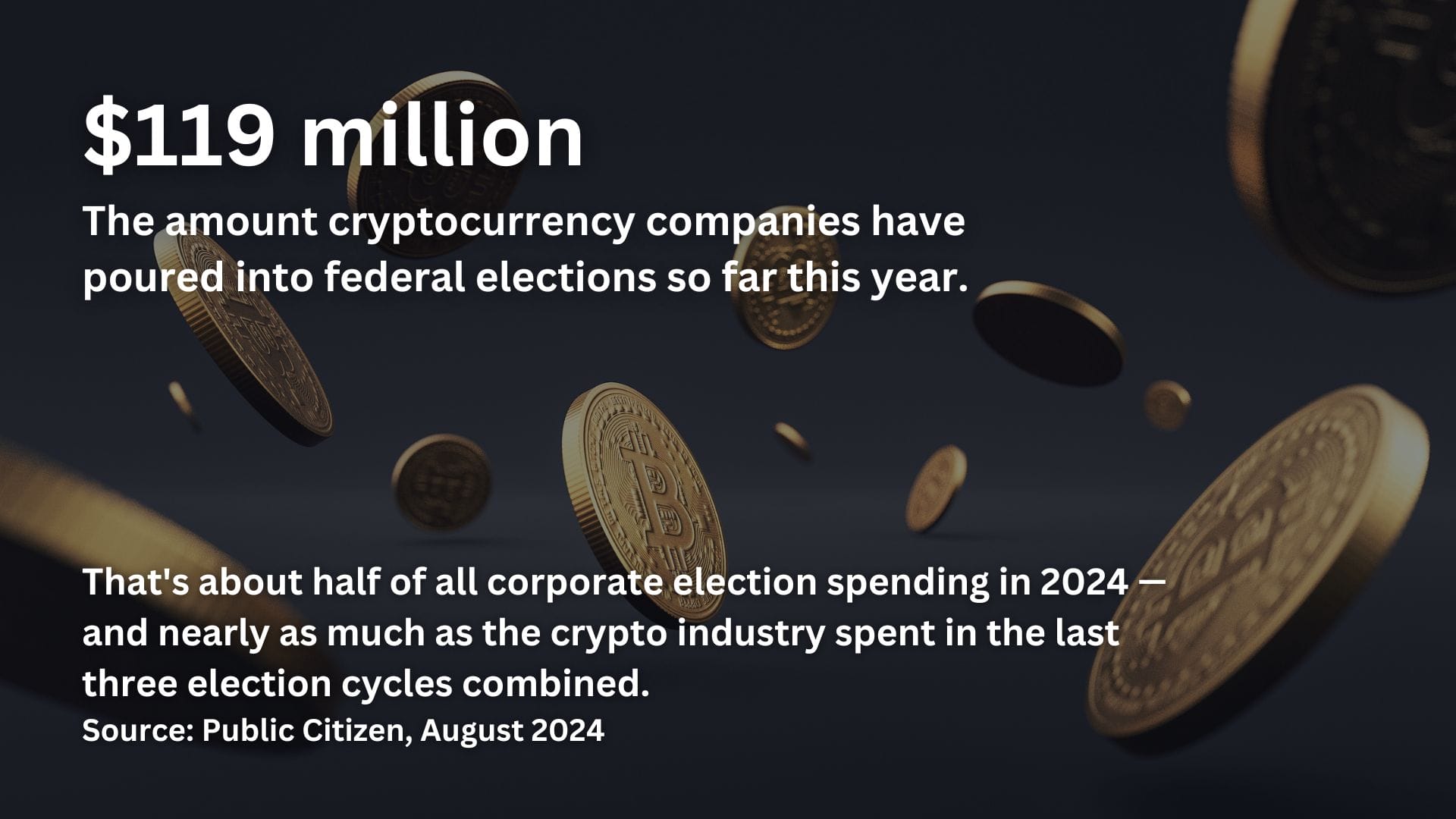
INEQUALITY BY THE NUMBERS |
|
|
At New York’s Con Ed, Demanding A Fair Share of Huge Profits This week’s frontline faces: Contract cleaners at the New York City facilities of the Con Edison electrical utility. What they're doing to help create a more equal world: Cleaners and their fellow union members protested outside of Con Ed’s downtown Manhattan headquarters last week demanding family-sustaining wages.
Con Ed clearly has the resources to provide just that. The utility last year pocketed $2.5 billion servicing New York City and Westchester County — and spent $1 billion in stock buybacks. Con Ed cleaners contracted through Nelson Service Systems earned as little as $16 an hour. With home energy bills rising, Con Ed should at the least be making sure all its workers can afford to pay for the electrical service it provides.
What makes this fight so important: “My last Con Ed electricity bill was $194,” notes Sergio Centeno, who works for Nelson cleaning Con Ed’s headquarters. “They make billions of dollars off customers, but essential workers like me have to work two jobs just to support our families. Our utility bill — all our bills — go up every year, but our wages don’t.” |
|
|
Making Sure All Those CHIPS Act Billions Support Good Jobs
Billions of public dollars are about to start flowing to domestic manufacturers of semiconductors, the minuscule computer components that make almost all modern electronics tick. The Biden-Harris administration has promised that this new effort will be creating thousands of good new jobs. But a look under the hood raises some questions about that promise.
A just-released report from the Institute for Policy Studies has found that serious workplace issues are plaguing the semiconductor industry, from low pay and grueling schedules to exposure to dangerous chemicals. Interviews with workers at semiconductor factories revealed that much more has to be done to make jobs in the industry truly good jobs.
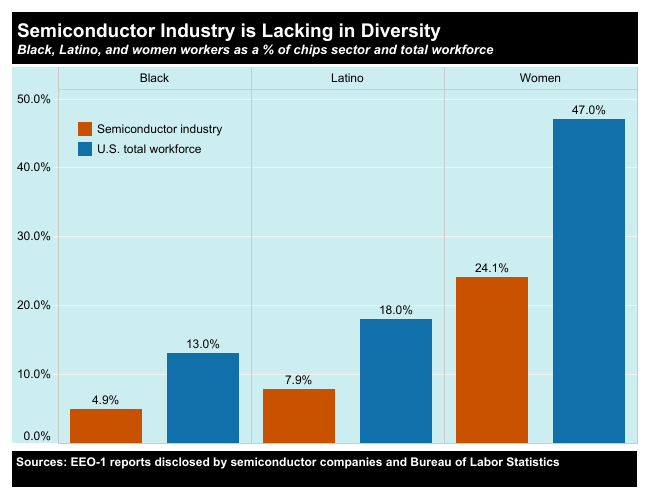
The new IPS report is proposing several guardrails that the Commerce Department ought to be putting in place to ensure better semiconductor job quality. Holding semiconductor firms to much higher standards on working conditions, transparency, and labor law compliance could transform the industry. Read this new IPS report at the link below — and take a look just below that link at a graph that details another big problem in the semiconductor industry: the lack of diversity.
|
|
|
To maximize the benefits of federal CHIPS Act subsidies, the industry will need to raise pay for manufacturing workers and create opportunities for a more diverse workforce. Currently, Latino, Black, and women workers remain significantly underrepresented and concentrated in lower-paying and more dangerous jobs. |
|
|
Can We Envision a World Without Art That Auctions Off for $80 Million?
For our world’s ultra-wealthy, the ongoing run-up in fine-art prices amounts to no big deal. These rich can, after all, easily afford most anything that tickles their souls. Anything, they would have us believe, with one exception: taxes on their fortunes. But the case against taxing grand fortune may finally be wearing a little bit thin. One encouraging sign of the times: The current Spanish government now actually has in place a new tax on concentrated wealth. Inequality.org co-editor Sam Pizzigati has more.
|
PETULANT PLUTOCRAT OF THE WEEK |
A Wall Street Schemer Still Stewing After Getting Off Easy
This week’s dour deep pocket: the 88-year-old billionaire Carl Icahn, the iconic corporate raider who has just agreed to pay $2 million in civil penalties to the federal Securities and Exchange Commission.
What has Icahn sour: the Hindenburg Research report, released last year, that put the SEC on Icahn’s trail. Hindenburg’s researchers charged that Icahn had engaged in “Ponzi-like” scheming that used “money taken in from new investors to pay out dividends to old investors.”
“Hindenburg’s modus operandi,” Icahn fumed Monday, “is to publish scurrilous and unsupported allegations.”
Icahn’s company, Hindenburg responded, “rightly got charged” and “is still operating a Ponzi-like structure, as we originally alleged.”
The last word: The SEC fine levied against Icahn, notes Fortune analyst Greg McKenna, amounts to a mere 0.01 percent of his personal net worth. For an average American making about $75,000, adds McKenna, “the equivalent fine would be roughly $7.50.” New York State’s minimum fine for driving 10 miles over the speed limit runs $90. |
|
|
What's new on Inequality.org
Susan Harley, The United States Needs a ‘Robin Hood Tax’. A tiny Wall Street sales tax could fund huge improvements for the rest of us.
Elsewhere on the web
Paris Marx, Sam Altman doesn’t care about you, Disconnect. The OpenAI CEO wants to extend his life by 10 years — and shows no sign of worrying that America’s poor on average die 15 years earlier than America’s rich. Scott Ploof, The Rise and Decline of America’s Middle Class: A Tale of Policy, Purchasing Power, and Inequality, Big Easy. From the late 1940s into the 1970s, the American Dream seemed more attainable than ever before. And then…
Michelle Goldberg, Billionaire Donors Have It Out for This Legal Prodigy, but President Harris Will Need Her, New York Times. Under Lina Khan, the Federal Trade Commission has challenged corporate chiefs on a variety of fronts.
Helen Santoro, Will Harris Finally Kill Wall Street’s Infamous Tax Break? The Lever. People working 60-hour shifts shouldn’t be paying more in taxes than deep pockets happily checking investment returns on their laptops.
Sarah Boden, CEOs earn big bucks at nonprofit hospitals. But does that benefit patients? NPR. Big salaries, a new study suggests, may be incentivizing nonprofit hospital CEOs to make decisions that undermine patient progress.
Carla Treloar, Ariadne Vromen and Rachel Ong ViforJ, Inequality is about more than just who has the money, Pearls and Irritations. Democracies with high levels of inequality also have high levels of distrust in their governments and precarious social cohesion.
Steve Burns, The New Definition of Wealth in 2024, New Trader U. True wealth lies in the freedom to pursue passions, spend time with loved ones, and engage in meaningful activities without the constant pressure of financial constraints. Toby Helm, Unite calls for 1% wealth tax on super-rich to fund UK public sector pay rises, Guardian. The demand comes from Britain’s second biggest union.
Sahibzada Riaz Noor, Poor government, rich inegalitarian society, Express Tribune. Pakistan’s wealthy are routinely avoiding taxes while 40 percent of the population lives below the poverty line, with 30 percent of school-age children not even going to school. |
|
|
ON BILLIONAIRES AND THE REST OF US |
This newsletter and the whole Inequality.org project are powered by donations. We’re not raking in cash from the billionaire class, though. We’re counting on people to see why this reporting, research, and advocacy matters, and then to become paid subscribers, by making a recurring monthly donation of any amount. Make a monthly gift as a paid subscriber. Start your paid subscription today. |
|
|
Inequality.org | www.inequality.org | inequality@ips-dc.org Institute for Policy Studies
1301 Connecticut Avenue Ste 600
Washington, DC 20036
United States
Managing Editor: Chris Mills Rodrigo
Co-Editors: Sarah Anderson, Chuck Collins, Bella DeVaan, and Sam Pizzigati |
|
|
|