A weekly newsletter from the Institute for Policy Studies |
|
|
We lost a tremendous friend of workers and Inequality.org with the passing earlier this week of Jane McAlevey.
I first met Jane years ago when we were both in our 20s. Back then, she had already become a sparkplug of a campaigner on environmental justice issues. But Jane would go on to make her most lasting mark in the labor movement — as an apostle of “deep organizing,” going beyond superficial “mobilization campaigns” with a commitment to more meaningful relationship building.
Jane liked to talk about “whole worker organizing,” transcending the focus on wages and benefits to look at affordable housing and other broader workplace and community issues facing working people. Jane always had tenacity and a twinkle in her eye. We miss her already. For more, check this appreciation.
A quick housekeeping note: We'll be taking a break the next two weeks — July 17 and 24 — so please don’t panic if you don’t find us in your inbox. We wish everyone a restful summer, and we’ll be back with more inequality insights and inspiration at the end of the month.
Chuck Collins
for the Institute for Policy Studies’ Inequality.org team |
|
|
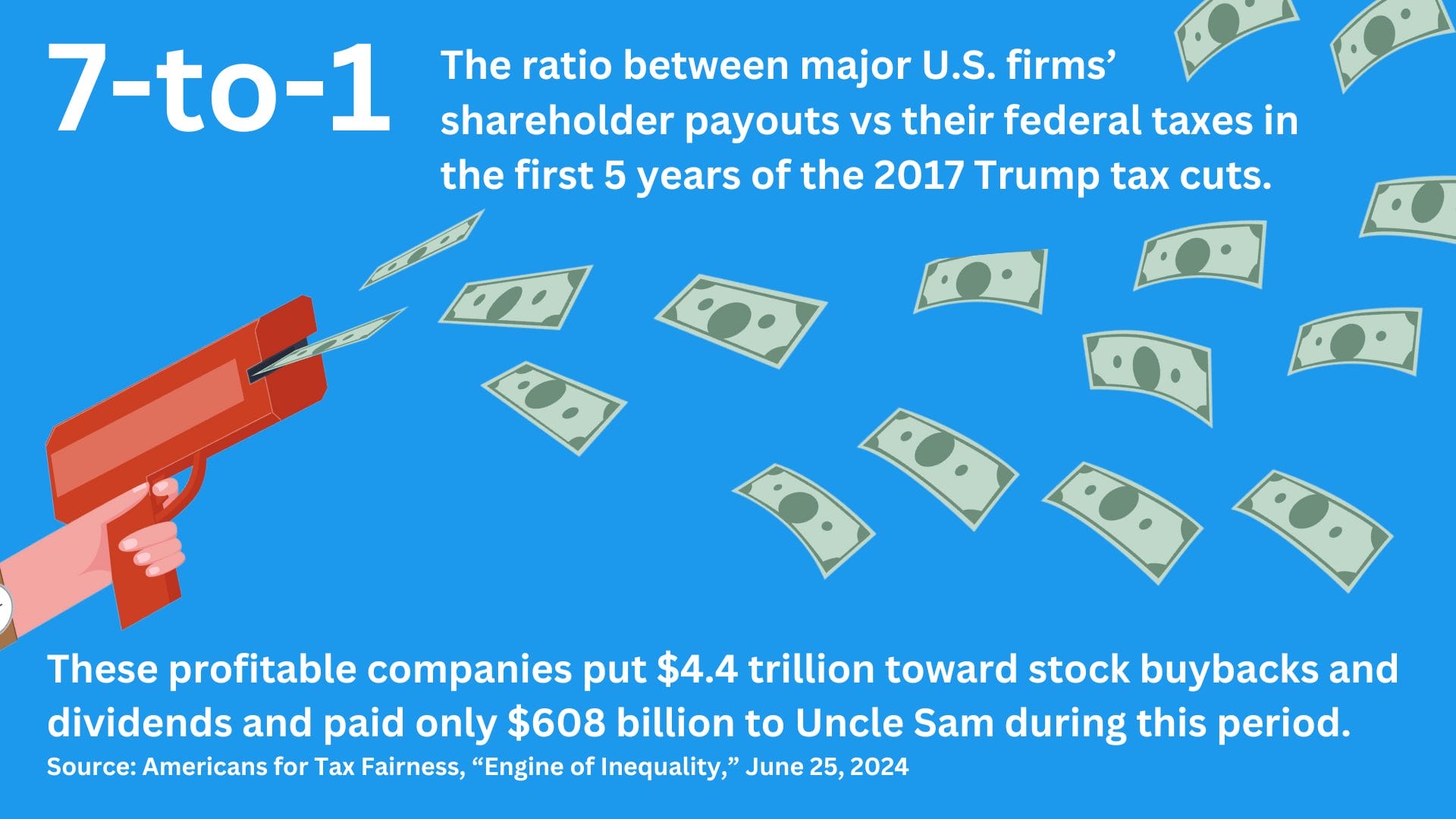
INEQUALITY BY THE NUMBERS |
|
|
A Champion of the Global Wealth Tax Our World So Desperately Needs
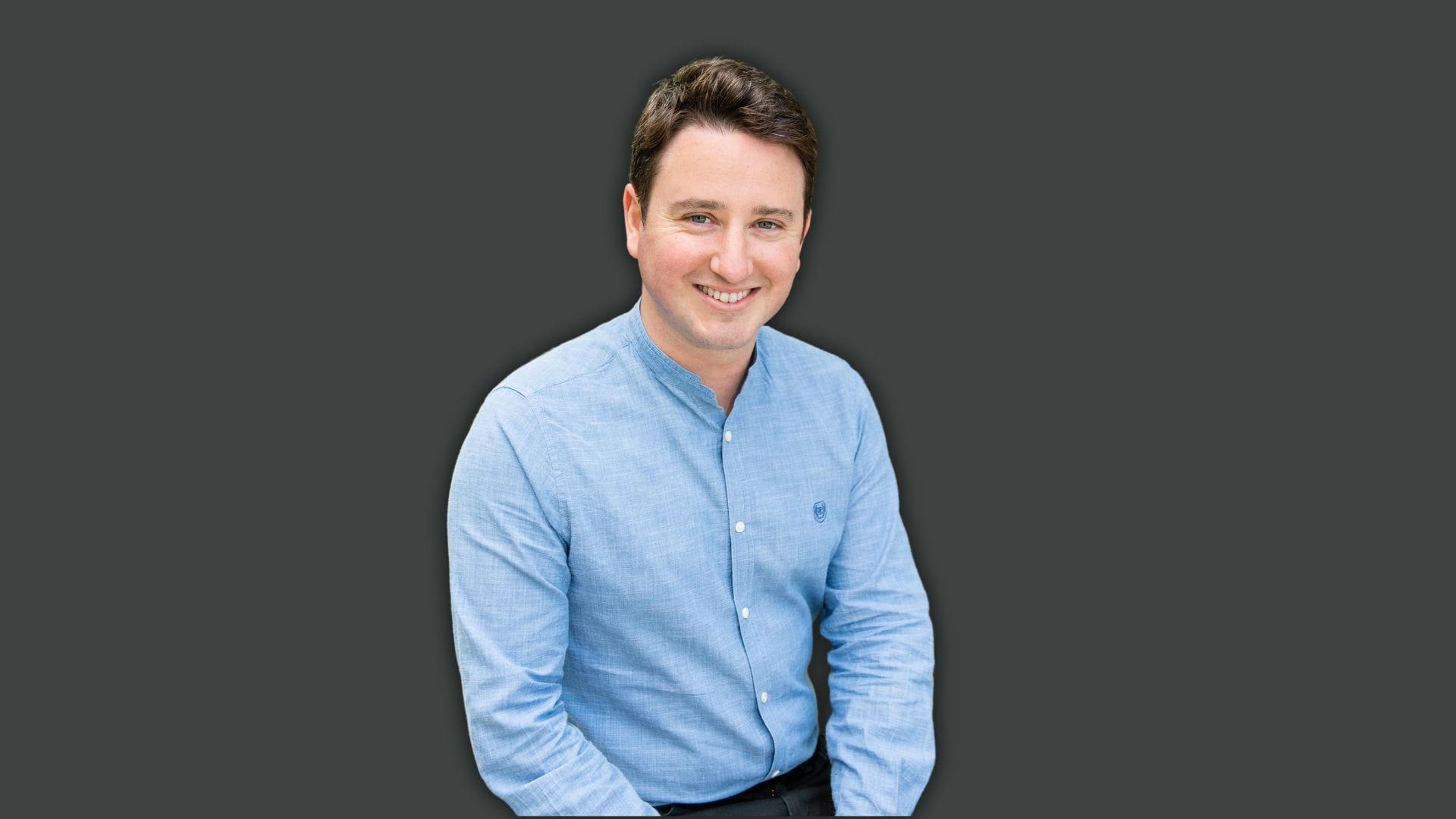
This week’s frontline face: Gabriel Zucman, a French economist and the founding director of the EU Tax Observatory.
What he’s doing to help create a more equal world: Zucman recently authored a report that advocates for a two percent minimum wealth tax on the world’s “ultra-high-net-worth individuals.”
Brazil, the current president of the G20, requested the report and will push the plan with finance ministers from these 20 countries in Rio de Janeiro later this month. The tax could generate as much as $250 billion annually from a mere 3,000 billionaires.
What makes this fight so important to him: In a speech to G20 finance ministers back in February, Zucman argued that progressive taxation remains a “key pillar of democratic societies” that “strengthens social cohesion and trust in governments.” “A progressive tax system is critical to fund the public goods — education, healthcare, infrastructure — that are engines of economic growth,” Zucman would go on to add. For more information about the feasibility and logistics of this bold proposal, check out an analysis from Inequality.org co-editor Sam Pizzigati. |
|
|
The Time Has Come To End Forced Prison Labor Nationwide
California may be on the verge of taking an important step toward ending carceral slavery. The state’s constitution — and those of 15 other states — allows the practice of involuntary servitude as punishment for a crime, but the state’s legislature has recently passed a bill that takes the issue of whether to end the practice of forced prison labor to the voting booth.
Prisoners have none of the protections that workplace safety regulations and other labor laws offer. They often must labor amid dangerous conditions. In California, for instance, incarcerated workers are fighting the state’s worsening wildfires. Prison labor can also be incredibly profitable for private companies. But the workers who do this labor can make less than $1 an hour — or nothing at all.
In November, California voters will have the choice to amend their state’s constitution to remove the “slavery exception.” Other states, ranging from Alabama and Oregon to Tennessee and Vermont, are beginning to take up the prison labor issue as well. But the fight to eradicate the last vestiges of slavery in American society figures to be a long one. |
|
|
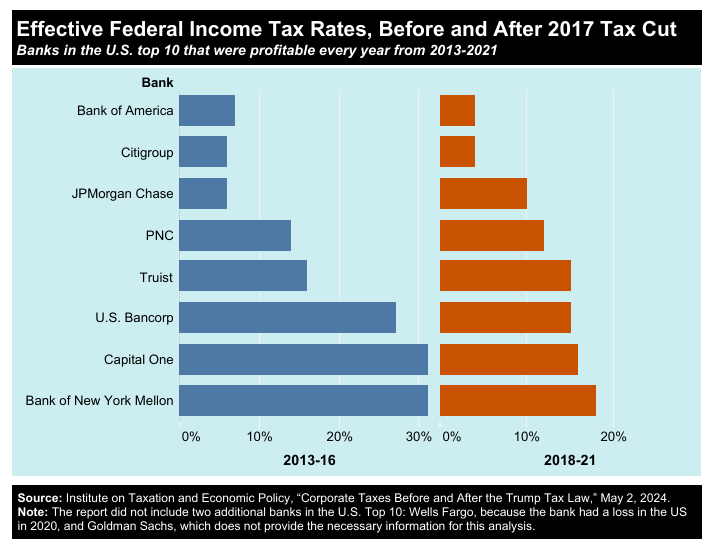
The 2017 Tax Cuts and Jobs Act slashed the corporate tax rate from 35 percent to 21 percent. The biggest winners? Count Wall Street banks as among them. Two of the country’s top four banks, Citigroup and Bank of America, paid just a 4 percent effective tax rate during the first four years after the tax cut. These global mega-banks have access to a wide array of tax avoidance strategies, including subsidiaries in notorious tax havens such as the Bahamas and the Cayman Islands. For an interactive version of this chart and more analysis, check out Sarah Anderson’s recent Senate Budget Committee testimony.
|
|
|
To Best Understand Inequality, Think Class, Not Generation
How much does the generation we belong to define the comfort of the lives we lead? Just about nothing impacts our comfort, suggests a recent spate of major media news analyses, more than our generation. Demographers typically define millennials as those Americans born between 1980 and 1994. Gen Z covers the cohort that came on the scene between 1995 and 2012. The millions of Americans in both these generations, the standard analysis goes, enjoy precious little of the good life that has blessed America’s baby boomers.
But millions of boomers today are not doing well economically, and significant numbers of millennials and Gen Z’ers are annually raking in millions. We’re not suffering through a generational war. We’re continuing to live through a clash of economic classes. Sam Pizzigati has more below. |
PETULANT PLUTOCRAT OF THE WEEK |
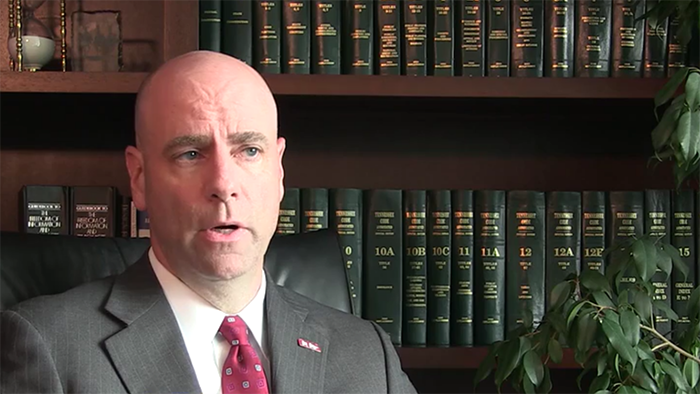
Prison Contracting’s Simple Math: More Inmates, More Profits This week’s dour deep pocket: Damon Hininger, the long-time CEO of the Tennessee-based CoreCivic, one of the world’s largest corporations that specialize in operating prisons for local, state, and national governments.
What has Hininger sour: The ongoing revelations that a rash of new “tough on crime” state sentencing laws is paying off big for CoreCivic and other corporate prison contractors. The latest of these laws, notes a just-published Lever analysis, would end the use of “sentence reduction credits” that let people imprisoned in Tennessee “serve shorter sentences as a reward for a clean record in prison.”
Higher occupancy rates in CoreCivic-managed prisons, Huninger gushed earlier this year in an earnings call with investors, have set the stage for “strong financial results” — and enabled CoreCivic to buy back as many of its shares in 2024’s first quarter as the company bought back all last year. Huninger has personally pocketed nearly $11 million in compensation over the past two years.
The last word: “The expansive use of incarceration as a solution to social failures,” notes Bianca Tylek of Worth Rises, an advocacy group that focuses on prison profiteers, “is driven by greed.” |
|
|
What's new on Inequality.org
Georgia Jensen, We Need Our Public Libraries, and Now They Need Us Too. Our public libraries are already doing amazing work combating inequality. We just need to make sure they have the funds to keep doing that work. Peter Certo, Extreme Inequality Is a Threat to Free Speech. If money is speech, then speech isn’t free.
Rory Ellison, Is Australia’s ‘luck’ running out? Inequality today has Australians hearing ever fewer references to their nation’s “lucky country” status.
Elsewhere on the Web
Alex Press, We’re in a Class War. Jane McAlevey Actually Acted Like It, Jacobin. An obituary of Jane McAlevey, an organizer, strategist, and writer, who has left an indelible mark on the labor movement.
Amy Hanauer and Taifa Smith Butler, Tax the Wealthy and Reject Austerity for a More Just and Thriving Democracy, Common Dreams. Our extreme inequality that supercharges the power and wealth of the uber-rich and their corporations.
The EU Commission admits taxing wealth is gaining ground, Oxfam. The Commission’s new Annual Report on Taxation notes both the recent G20 discussions around taxing the super rich and the European Citizens Initiative for a wealth tax.
Magdalena Sepúlveda, Tax on billionaires: a political vaccine against the extreme right, Times (Nigeria). Decades of privatization have undercut public services and exacerbated inequality. Global cooperation on taxing the planet’s wealthiest, as advocated by Brazil at the G20 and the African Union at the UN, can turn the tide.
Jason Collins, Can You Guess How Much Billionaires Contribute To Charitable Causes? It’s Less Than You Think, Yahoo Finance. Despite the surging of the stock market post-pandemic, the wealthy have slowed down on charitable giving.
Emma Beddington, I want to survive the apocalypse – but not if it’s just me and some terrible billionaires, Guardian. New Zealand has become lousy with Silicon Valley types buying tracts of fertile land and access to pure water.
Jeffrey Steele, So-Called ‘SuperHomes’ Are Redefining Luxury For America’s Ultra Rich, Forbes. Today’s ginormous estate residences could leave some folks mistaking the McMansions of yesterday for garden sheds. |
|
|
SUBSCRIBERS MAKE THIS POSSIBLE |
Did you know that Inequality.org is a nonprofit project, part of the Institute for Policy Studies’ Program on Inequality? We depend on donations and paid subscriptions to keep this project free and available to all readers. Small monthly gifts are a huge part of that, whether you can donate $3 or $300 a month. If you’re ready to become a paid subscriber, sign up today. |
|
|
Inequality.org | www.inequality.org | inequality@ips-dc.org Institute for Policy Studies
1301 Connecticut Avenue Ste 600
Washington, DC 20036
United States
Managing Editor: Chris Mills Rodrigo
Co-Editors: Sarah Anderson, Chuck Collins, Bella DeVaan, and Sam Pizzigati Production: Chris Mills Rodrigo and Georgia Jensen |
|
|
|