A weekly newsletter from the Institute for Policy Studies |
|
|
This week we’re sharing a new report on worker injuries at Amazon, an issue I used to report on closely.
I've spoken to dozens of Amazon workers about their experiences at warehouses where they repeat the same rote operations hundreds and hundreds of times to make sure that Americans can get their packages ever more quickly.
Some of those workers have told me about how Amazon keeps track of any “time off task,” a measure often used to discipline or even fire workers. Almost all of the workers I’ve interviewed have mentioned, unprompted, the fears they have that they could be permanently damaging their bodies on the job.
How do these issues tie into our focus on inequality? Well, for starters, Amazon’s workers — despite making so little working full-time that some have had to resort to living in cars — are making their execs outrageously wealthy. Amazon has become our nation’s second-largest private employer. Amazon’s workers could hardly be more central to our labor movement’s struggle for a fairer society.
As always, if you have any thoughts, criticisms, or compliments, please don’t hesitate to get in touch with me by responding directly to this email. Chris Mills Rodrigo
for the Institute for Policy Studies’ Inequality.org team |
|
|
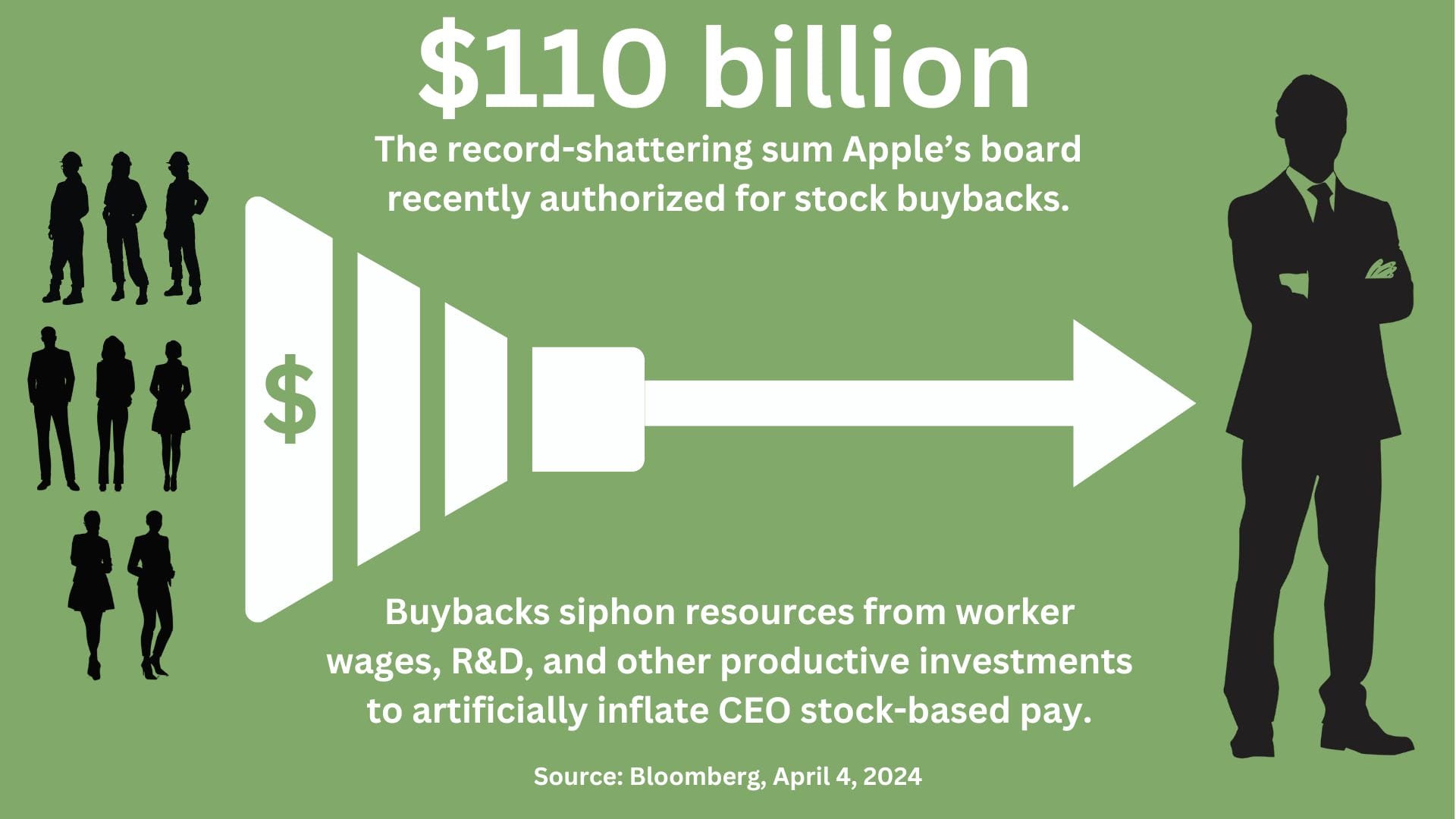
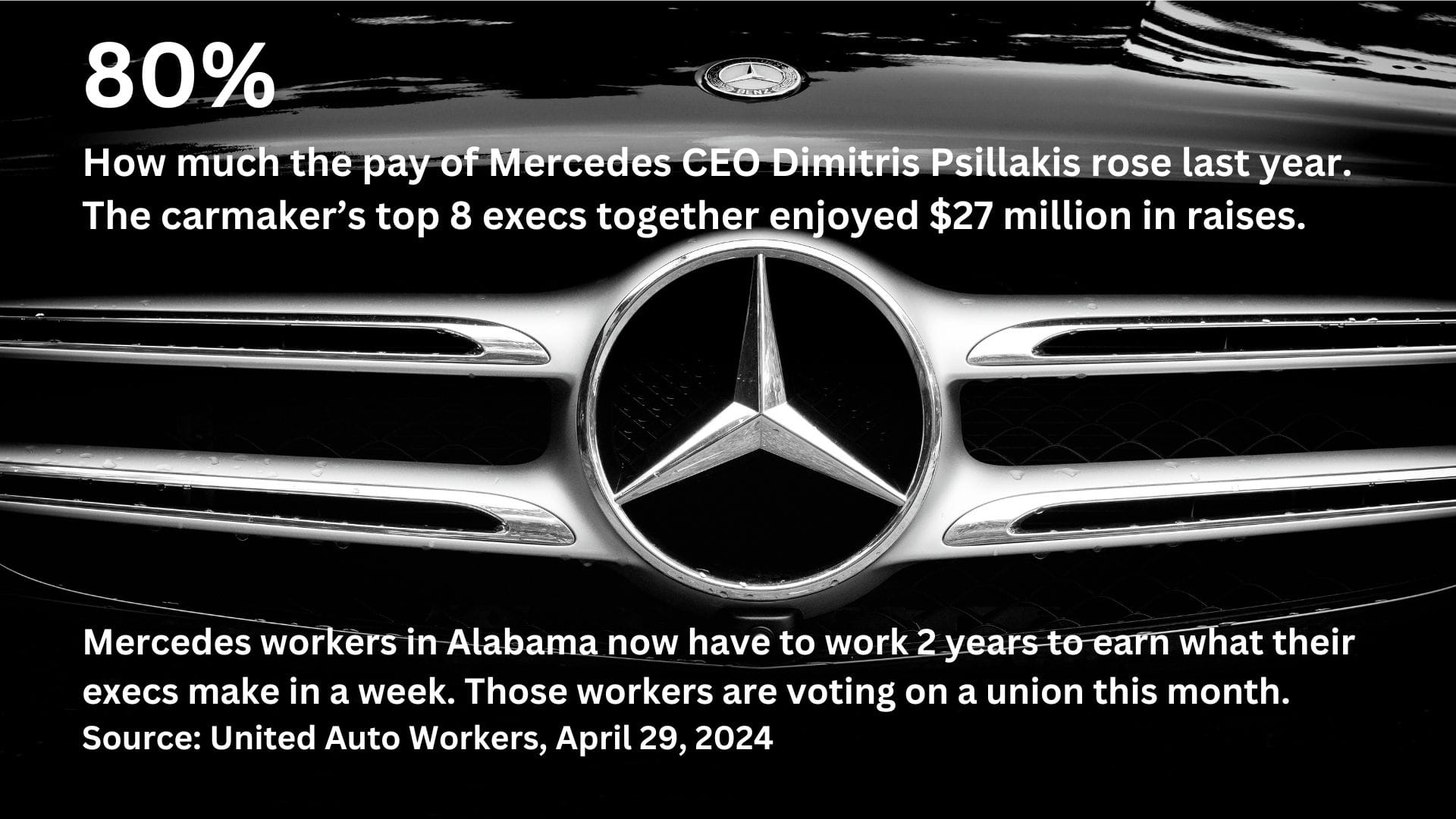
INEQUALITY BY THE NUMBERS |
|
|
Fighting to Keep Fellow Amazon Workers Safe on the Job
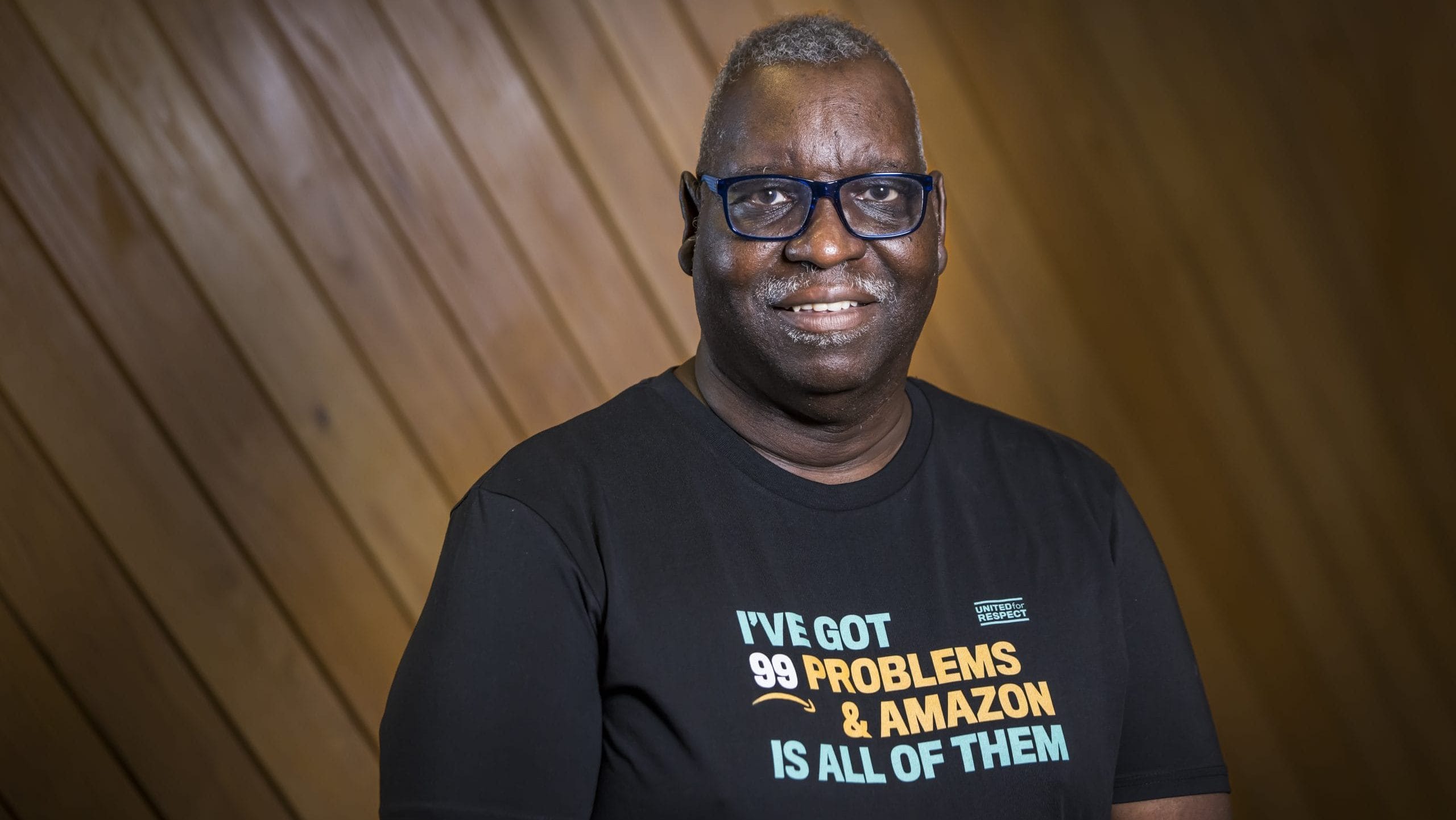
This week’s frontline face: Ron Sewell, an Amazon warehouse associate in East Point, Georgia. What he’s doing to help create a more equal world: Sewell has been organizing with United for Respect, an organization dedicated to reforming the retail industry. The group has recently collaborated on a National Employment Law Project report that highlights the grueling conditions at Amazon warehouses.
In 2023, over six of every hundred Amazon workers suffered an injury on the job. Most of those injured needed time off to recover or a new task assignment. Pressure from advocates like Ron Sewell, who teaches safety at his facility, has led to a congressional push to restrict the onerous work quotas that result in Amazon employees pushing themselves past their limits.
What makes the issue so important to him: “It’s part of my job to teach safety and ensure warehouse associates follow safety rules,” says Sewell, “but management is more concerned with speed and reaching unreachable quotas — what they call ‘making rate.’ That’s their #1 priority, and that has management and workers bypassing safety rules and working in the danger zone.” |
|
|
Let’s Tie Industrial Policy to Care Policy to Help Fix the Child Care Crisis
Millions of American families today are struggling to pay for child care, what with the average price for licensed providers now running nearly $11,000 a year. Prices this high can be a huge barrier for workers, particularly women, forcing many of them to cut back on hours or drop out of the workforce entirely.
A new federal program is aiming to help break down these barriers by requiring firms getting government subsidies to submit plans to meet workers’ child care needs. So far, only firms taking in over $150 million in subsidies via the 2022 CHIPS and Science Act have to submit these plans. But this start could become a model for using the power of the public purse to expand child care options.
The Century Foundation’s Lea Woods and Julie Kashen have been closely monitoring two CHIPS grantees, Intel and Micron, and they see some hopeful signs for the future. Read their analysis for Inequality.org below. |
|
|
Our Well-Heeled and Our Personal Well-Being: A New Take
Just what exactly happens when a society becomes substantially more unequal, when a few become fabulously richer than the many? Defenders of our deepest pockets have a ready answer. What happens when wealth starts concentrating at a society’s summit? Nothing, they assure us, that we need worry about. But new, cutting-edge psychological research is offering up plenty of reasons for worrying about escalating inequality. Inequality.org co-editor Sam Pizzigati has more. |
PETULANT PLUTOCRAT OF THE WEEK |
From North Dakota, a Champion of Billionaire Solidarity Emerges
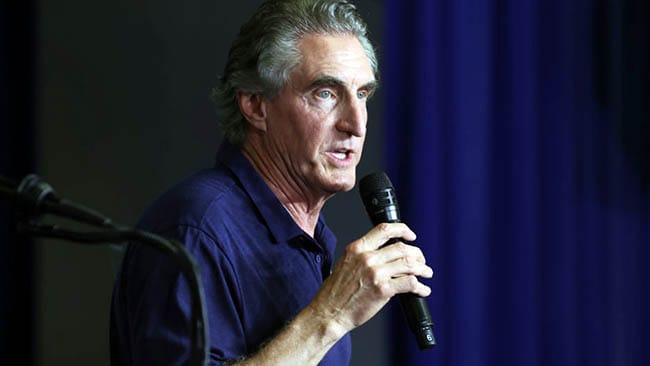
This week’s dour deep pocket: Doug Burgum, the billionaire governor of North Dakota and a possible 2024 vice-presidential running mate for Donald Trump. What has Burgum sour: The reality that not every U.S. billionaire is supporting Trump’s 2024 presidential bid. “If you’re a billionaire and you care about your shareholders, you care about your family, you care about your grandkids,” Burgum declared last week in a Fox News interview, “you should be voting for someone that’s going to bring prosperity to America and peace to the world.”
Burgum, Forbes notes, has dumped at least $4.6 million into a super PAC working to unseat GOP opponents of his state agenda. That agenda’s latest centerpiece?
“It is time for us to say goodbye to the state income tax once and for all,” Burgum announced in his 2024 “state of the state” address.
The last word: Last July, after Burgum went on Meet the Press and blasted the “Red Tape Ideology” of America’s trade unions, four North Dakota union leaders wasted no time responding: “We see things as working people and Burgum sees things as a billionaire businessman.” |
|
|
What's new on Inequality.org
Claude Cummings Jr., Our Best Tool to Close the Digital Divide is Expiring. We can’t let Congress undo our gains under the Affordable Connectivity Program.
Helen Flannery, 10 of America’s 20 Top Public Charities Are Donor-Advised Funds. The three highest-earning DAF sponsors each take in more than double the donations of the highest-earning operating charity. Elsewhere on the Web
Chuck Collins, Developers greenwashing private jet expansion, The Boston Herald. Contrary to what boosters may say, expanding a private jet hangar will not reduce carbon emissions. Gabriel Zucman, It’s Time to Tax the Billionaires, New York Times. In 2018, for the first time in the history of the United States, billionaires paid taxes at a lower effective rate than working-class Americans.
Shawn Fain, Get Ready. Working Class Will Reclaim May Day in 2028, In These Times. To reshape the economy into one that works for the benefit of everyone — not just the wealthy — we need to reclaim our country’s history of militant trade unions.
Chuck Collins, Developers greenwashing private jet expansion, Boston Herald. Private jet consumption in the United States mirrors the growing concentration of wealth in the hands of our richest 0.1 percent. The median wealth of private jet owners: $190 million.
David Moscrop, What If Labor Owned Its Workplaces? Jacobin. An interview with Canadian Centre for Policy Alternatives senior economist Alex Hemingway on how employee-owned firms generate less inequality and greater job security. Robert Reich, Stock buybacks are lethal, literally, Substack. And they’re widening inequality. We need to make them illegal — as we once did. Sarah Kerr and Michael Vaughan, Changing the narrative on wealth inequality, Joseph Rowntree Foundation. Wealth inequality could — and should — become the entry point for confronting the intersecting crises we are currently living through. Peter Mares, The case for banning billionaires, Inside Story. Should nations limit how rich their richest can be? Two new books make a powerful case for “yes.”
Michael Sainato, We deserve more’: US workers’ share of the pie dwindles, Guardian. The Bureau of Labor Statistics has released new stats showing that the labor share of national income has dropped from 64.1 percent in 2001 to 55.8 percent in 2024’s first quarter.
Jean Drèze, Who Is Afraid of Redistribution? Economic & Political Weekly. Wealth inequality in India defies imagination. A hundred minimum-wage workers would have to labor close to a million years to accumulate as much wealth as India’s richest business leader currently holds.
Jamelle Bouie, The Price We Pay for Having Upper-Class Legislators, New York Times. Our legislatures have become places packed with people of more than ample means interested in pursuing their own agendas and not much else. |
Lindsay Koshgarian and Alliyah Lusuegro, Where Your 2023 Taxes Went: A People’s Briefing, Institute for Policy Studies. Every April many people in the U.S. file tax returns. Eventually they get to know whether they’re getting a refund or will be made to pay more. But how many of us know where our tax dollars really go? |
|
|
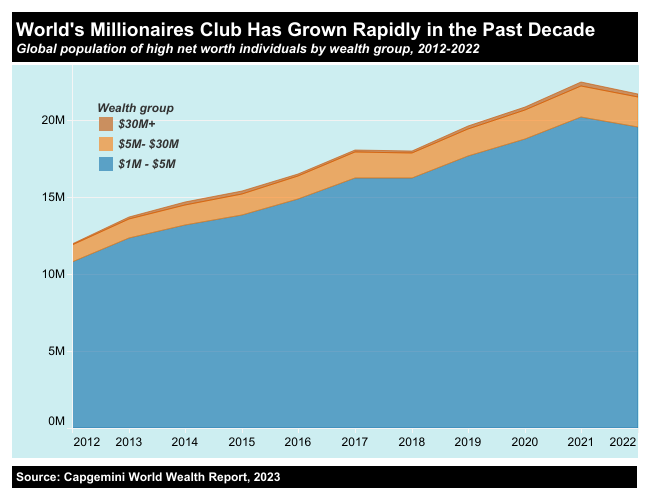
The world millionaires club shrunk slightly in 2022 because of high interest rates and inflation. But the number of people with net worths of at least $1 million — not including their primary residence — still sits up 81 percent since 2012. The growth rate for the total global population over the same time period: 11 percent. For an interactive version of this chart and more on inequality, check out the link below. |
|
|
Inequality.org runs on the loving labor of a small team of researchers, writers, and advocates. More than anything, all of us involved believe deeply in the power of everyday people to come together to accomplish something big! We’ve built this operation around our weekly newsletter, and our paid subscribers make this newsletter possible with monthly donations. Join the ranks of our paid subscribers: Start today. |
|
|
Inequality.org | www.inequality.org | inequality@ips-dc.org Institute for Policy Studies
1301 Connecticut Avenue Ste 600
Washington, DC 20036
United States
Managing Editor: Chris Mills Rodrigo
Co-Editors: Sarah Anderson, Chuck Collins, Bella DeVaan, and Sam Pizzigati |
|
|
|