A weekly newsletter from the Institute for Policy Studies |
|
|
Not so long ago, our planet’s wealthiest did most all their grand touring via cruise ships and private rail cars. Today’s rich zip around on their own private jets.
Our Inequality.org team has been closely tracking just how much this luxury private jet travel has been costing the rest of us, and we’ve just released a new report — Greenwashing the Skies: How the Private Jet Lobby Uses ‘Sustainable Aviation Fuels’ as a Marketing Ploy — on our work.
This new research comes as Congress is considering a reauthorization of the Federal Aviation Administration budget that could well allocate significant tax-dollar funding to developing new alternate private jet fuels. Our report’s take on that prospect: Any new moves to subsidize private jet travel on a warming planet would be absolutely indefensible.
“We should bring a high level of skepticism,” as the report notes, “to the claims that alternative fuels will be a timely substitute for kerosene-based jet fuels.” Hopes for “sustainable” jet fuel, highlights the Guardian coverage of our report, will always be “magical thinking.”
Meanwhile, on the other side of the wealth spectrum, we're closely watching the union election at Mercedes in Alabama this week. For more on that pivotal campaign, read the joint IPS-Alabama Arise op-ed we've published in newspapers across the country over the past week. Chuck Collins
for the Institute for Policy Studies’ Inequality.org team |
|
|
INEQUALITY BY THE NUMBERS |
|
|
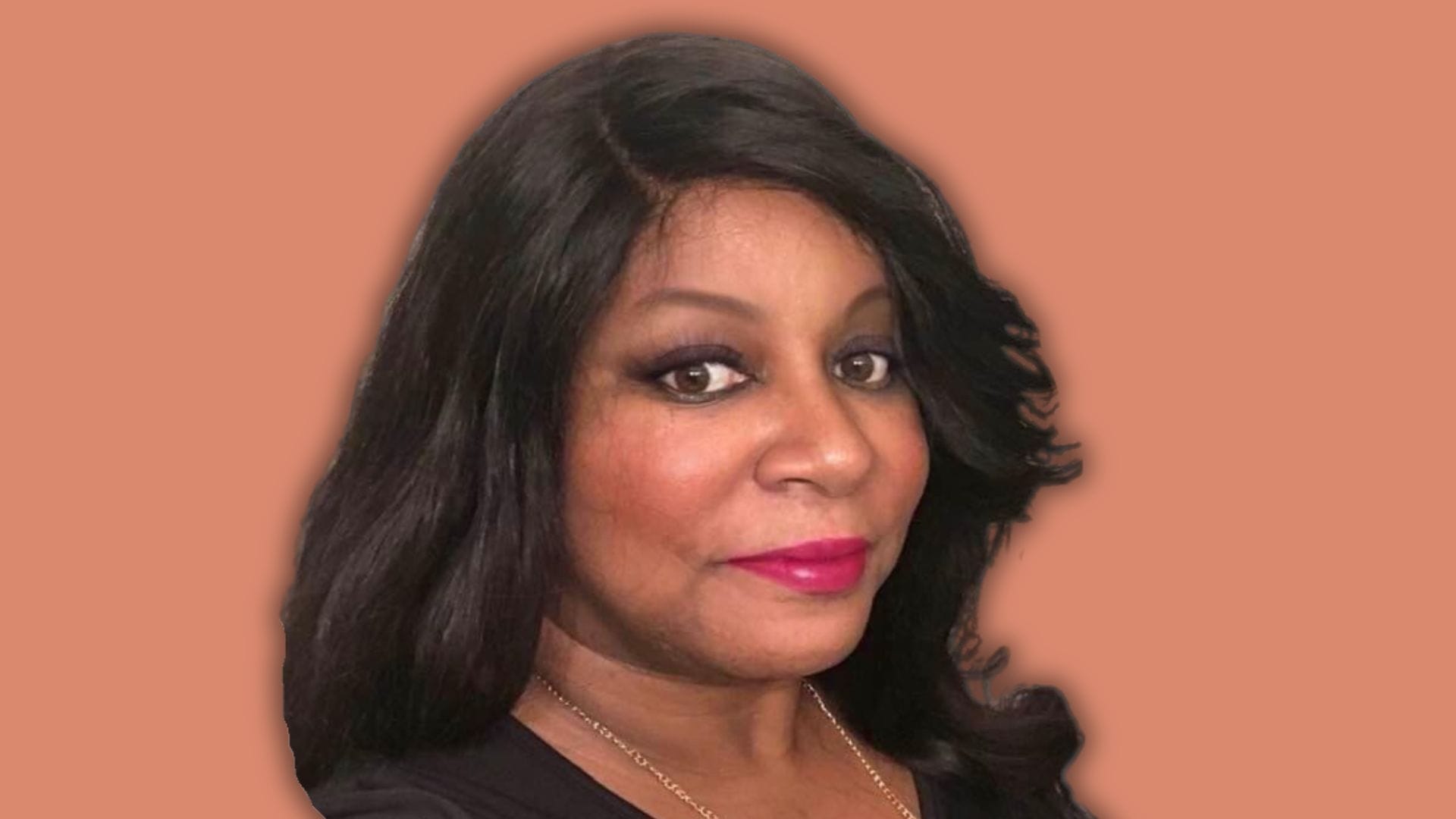
In South Carolina, Working to Ensure Everyone Has Enough to Eat This week’s frontline face: Carla Ventura, an organizer with RESULTS who runs a food pantry in Columbia, South Carolina.
What she’s doing to help create a more equal world: Along with running her pantry, Ventura is fighting to make sure the public — and Congress — knows just how transformative government food assistance programs can be.
Ventura grew up in a family that depended on the Supplemental Nutrition Assistance Program, or SNAP. Today this program is preventing nearly a quarter of all U.S. children from going hungry. Ventura says she knows countless families who rely on SNAP food vouchers to be able to afford medication and pay rent.
Congressional Republicans, for their part, are now proposing to cut this essential anti-poverty program by $30 billion over the next decade. At the same time, they’re vowing to extend the 2017 tax cuts for the rich set to expire next year.
What makes equality so important to her: “I run a food pantry. I’m proud of the work we do,” Ventura notes. “But if lawmakers passed a livable minimum wage or invested more in programs like SNAP, people wouldn’t need to rely on pantries like mine.” |
|
|
Letting Workers Choose Their Own Destinies
Workers, our society tends to assume, can always move to a better job — or at least threaten to do so — to improve their situations. Unfortunately, companies have been restricting that right to choose for years through contract stipulations called “non-compete clauses.”
These clauses limit what workers can do for a set amount of time after leaving their jobs and have for years served to artificially reduce wages and lock workers into difficult situations.
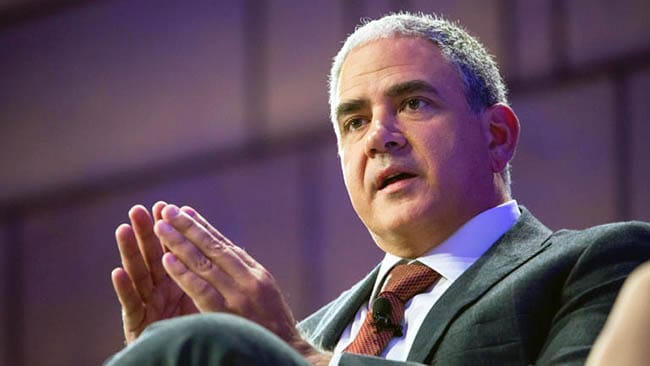
But that might soon be changing. The Federal Trade Commission recently announced a rule banning most new non-competes and invalidating active ones. The ruling gives workers back a crucial point of leverage, Heidi Shierholz of the Economic Policy Institute has just noted in an Inequality.org analysis.
“Noncompetes are bad for workers, bad for consumers, and bad for the broader economy,” Shierholz says. “By banning them, the FTC’s rule will help raise wages for workers and take an important step toward creating an economy that is not only strong but also works for working people.” You can read the rest of Shierholz's analysis below. |
|
|
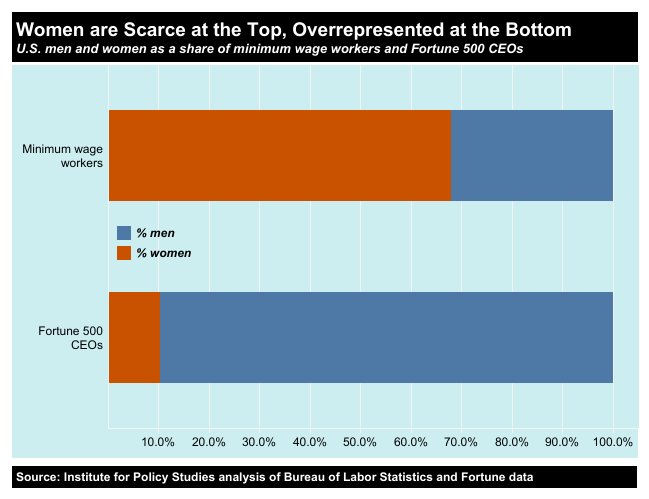
Fortune 500 CEOs include 52 women, just 10.4 percent of an elite group that earned $16.7 million on average in 2022. By contrast, women make up 67.9 percent of workers earning the federal minimum wage, a rate stuck at $7.25 since 2009. For an interactive version of this chart and more on gender inequality, check out the link below. |
|
|
Could the UN Actually Lead a Charge to Tax the World’s Rich?
Our world does not lack for international agreements. The United Nations, the official depository for global pacts, currently has well over 500 on file. On one front, regrettably, the world’s nations have made precious little progress. We have no international pact in place that promotes fair and effective taxation. We have instead a global incoherence that royally benefits the world’s rich — and the lawyers, accountants, and lobbyists so eager to do their bidding. Could any of this change? Advocates for tax justice now certainly think so. What has them so hopeful? Inequality.org co-editor Sam Pizzigati has that story.
|
PETULANT PLUTOCRAT OF THE WEEK |
This Hospital CEO’s Greed Enough to Make Anyone Sick
This week’s dour deep pocket: Ralph de la Torre, the mega-millionaire CEO of Stewart Health Care, a Boston-born, Dallas-headquartered hospital chain that filed for bankruptcy last week.
What has de la Torre sour: The press and public ridicule that has greeted his claims that his for-profit hospitals do not “expect any interruptions” in their “day-to-day operations.”
That ridicule should come as no surprise. Day-to-day operations at Stewart’s hospitals have been a growing disaster ever since de la Torre and the private equity giant Cerberus joined to start buying up local hospitals in 2010. That avaricious team, the American Prospect has detailed, proceeded to mortgage its “assets to the hilt” and stiff suppliers, patients, and staff to make the interest on those loans and “pay De La Torre’s inflated salary,” about $16 million a year.
By 2021, Cerberus had extracted at least $800 million from Stewart’s operations, and de la Torre had paid himself a $100 million dividend from his stake in Cerberus. He now owns a 190-foot, six-bedroom yacht that runs him $6 million a year to operate. The last word: U.S. Senator Elizabeth Warren is calling Steward’s bankruptcy “a direct consequence of Wall Street private equity vultures looting our health care system.” Regulators, she adds, need “to claw back the riches” de la Torre and his private equity pals have “sucked out” of the hospitals they’ve pillaged. |
|
|
What's new on Inequality.org
Helen Flannery, 10 of America’s 20 Top Public Charities Are Donor-Advised Funds. The three highest-earning DAF sponsors each take in more than double the donations of the highest-earning operating charity. Elsewhere on the Web
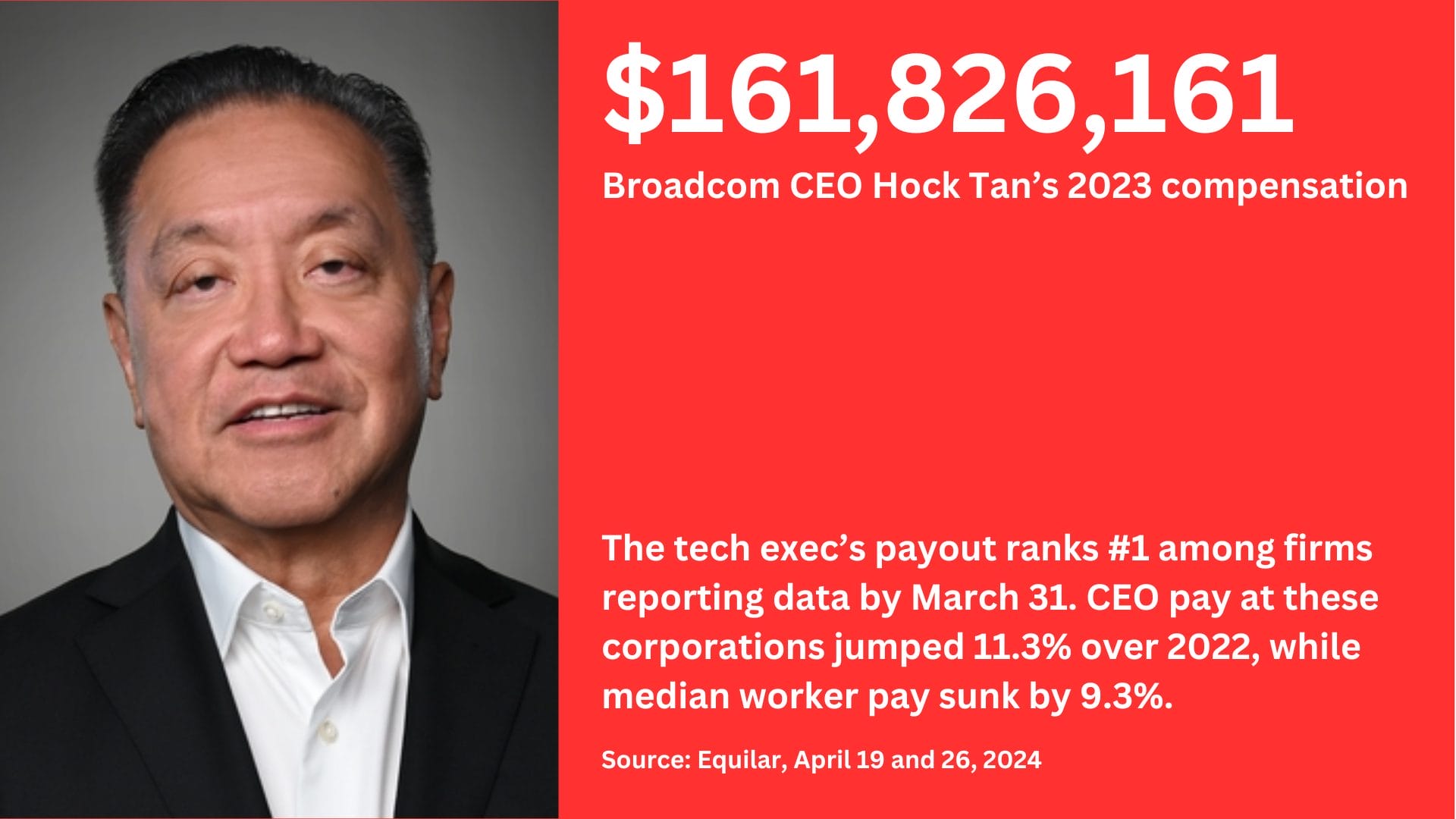
Chuck Collins, Cracks in the Wealth Extraction System, Kosmos Journal. A look at how dissenters among the politically and wealthy powerful could change the system. Lucas Chancel, How rich is too rich? Nature. Where should society draw the line on extreme wealth? A fresh account sets out a logical answer. Les Leopold, Why Wall Street Wants You to Fear AI, Substack. The same Wall Street firms that want us to marvel at the shock and awe of AI are destroying jobs the old-fashioned way — through stock buybacks. Lucy Dean Stockton and Helen Santoro, CEOs Got Raises As They Cut Workers’ Pay, The Lever. New data show the corporate pay gap is widening — and now lawmakers are proposing a crackdown.
Mark Thomas, Taxing the super rich: would they really just up sticks and leave? Should we just shrug if they do? West Country Voices. A British activist’s counter to the claim that the rich will simply exit en masse any nation that dares to seriously tax them. Frances Moore Lappé, America — Democracy or Plutocracy? Common Dreams. What happened to the middle class in the United States? The rich ate it.
Judd Legum, Elon Musk’s piggy bank, Popular Information. Musk is now demanding more Tesla shares. Just 31 percent of Americans now say they would consider buying a Tesla, down from 70 percent in 2021. Nadeem Qureshi, Private equity’s greed threatens prosperity, The Express Tribune. Private equity’s extractive approach, says the chair of Pakistan’s top reform party, tilts the economic balance to wealthy investors, stifling innovation and hollowing out the middle class.
Thom Hartmann, Are Billionaires Simply Money Addicts — Like Scrooge McDuck? The Hartmann Report. Acquiring wealth, studies demonstrate, stimulates the pleasure/reward circuits in the brain’s ventromedial prefrontal cortex. Even anticipating money lights up this region. |
|
|
Our research, editorial, and publishing team depends on hundreds of paid subscribers who make monthly gifts. Some give $3 each month; others give $200! All told, this support enables our team to stay focused on identifying causes and solutions to our deep economic inequality. Paid subscribers have contributed more than $20,000 in the past year. Ready to become a paid subscriber? Sign up today. |
|
|
Inequality.org | www.inequality.org | inequality@ips-dc.org Institute for Policy Studies
1301 Connecticut Avenue Ste 600
Washington, DC 20036
United States
Managing Editor: Chris Mills Rodrigo
Co-Editors: Sarah Anderson, Chuck Collins, Bella DeVaan, and Sam Pizzigati |
|
|
|