A weekly newsletter from the Institute for Policy Studies |
|
|
Welcome to April, also known as tax month. This time of year we pay particularly close attention to who’s pulling down the big bucks in the United States. The hottest new figure along that line out so far this month: 813, the number of American billionaires as per the latest annual figures from Forbes.
Our own Omar Ocampo has just taken a closer look at how that total stacks up against previous years. His read: Our rich just keep getting fabulously richer.
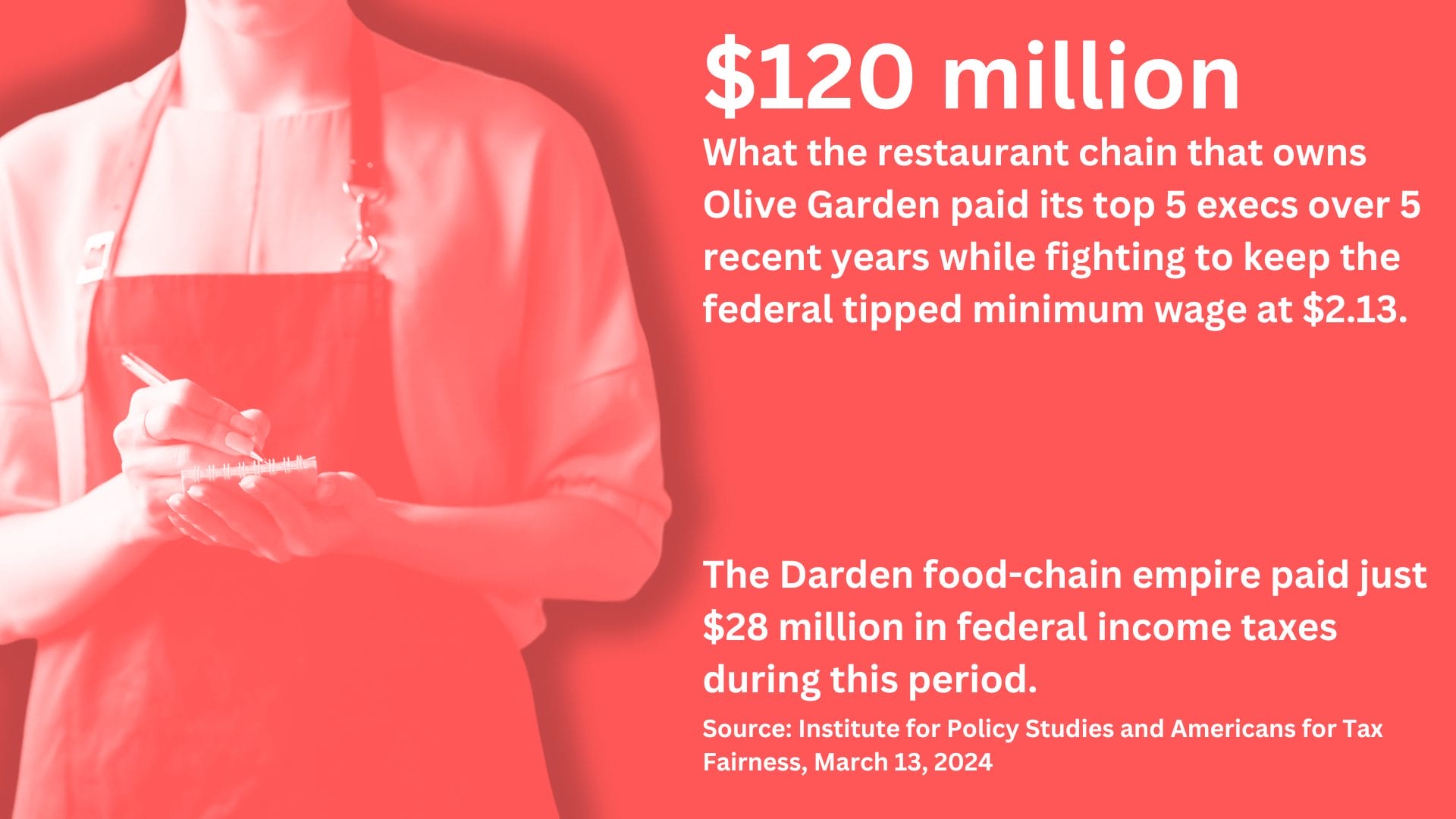
We're also keeping a close eye on this year’s corporate tax payments. Our recent report, co-published with Americans for Tax Fairness, identifies 35 U.S. corporations that actually pay their top execs more than they pay in federal taxes.
On the brighter side, this year may very well turn out to be the last one that many of us are compelled to use for-profit tax preparation systems like TurboTax. The IRS is piloting its own direct filing system in a dozen states and could be extending the service to more Americans in our next federal tax cycle.
One last note before your dive into the content of this week's newsletter: This Friday is the deadline for applying for one of the new Institute for Policy Studies Henry Wallace Fellowship grants. Interested in joining our team this summer? Learn more about the program and applying here. Chris Mills Rodrigo
for the Institute for Policy Studies’ Inequality.org team |
|
|
INEQUALITY BY THE NUMBERS |
|
|
Fighting Back Against the Scourge of Private Equity Greed
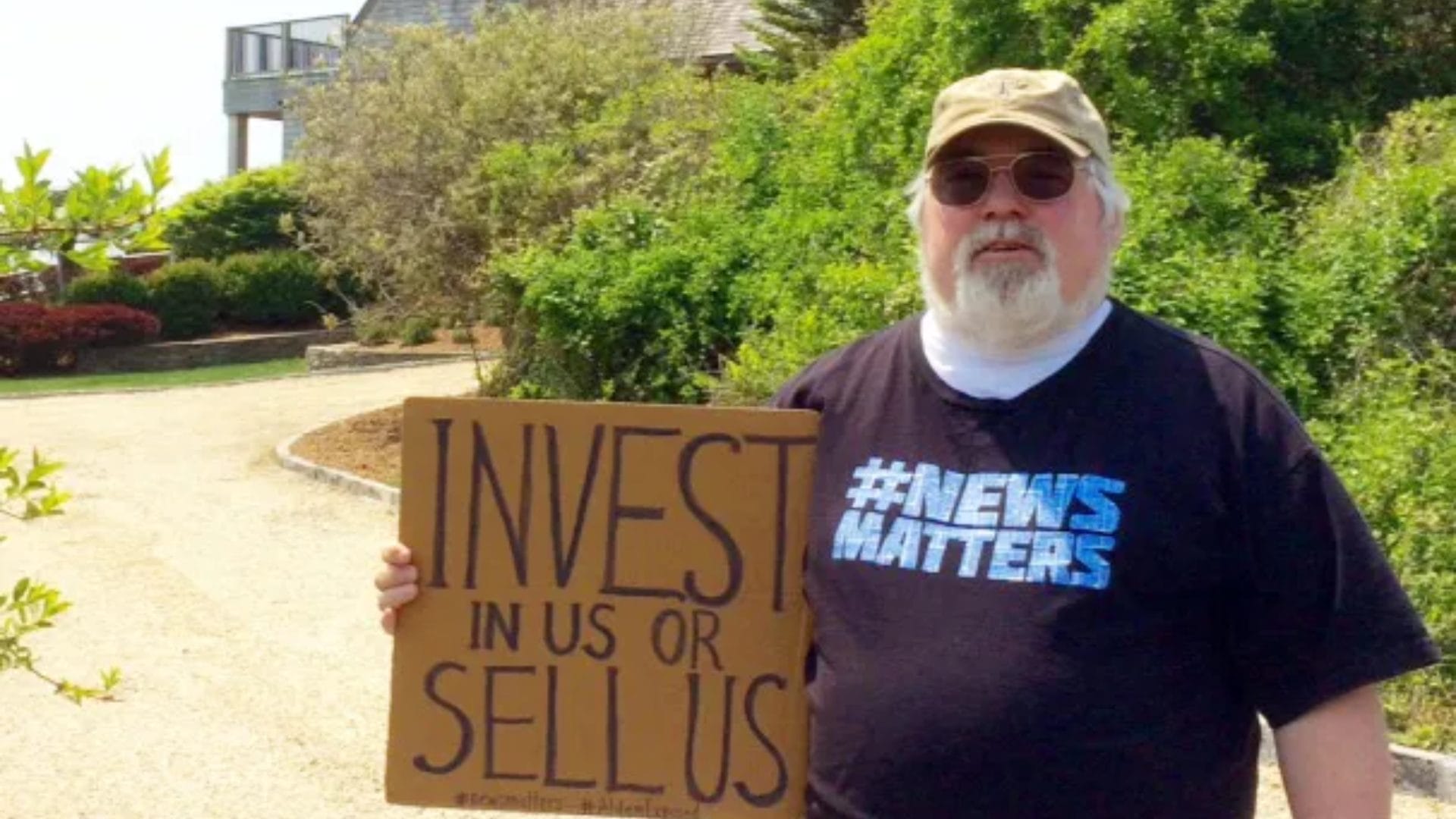
When Evan Brandt started working at the Mercury, the daily newspaper of Pottstown, Pennsylvania, in 1997, the paper had more than 20 editorial staffers. Brandt’s reporting would go on to help lead to the ouster of a corrupt local politician and the shutdown of a toxic worksite.
Today, with the Mercury down to just two reporters, Brandt says he sometimes has to try to cover three community meetings at the same time. In-depth coverage of this year’s local political races? Forget it.
The gutting of the Mercury began after a major Wall Street firm, Alden Global Capital, bought the paper in 2011 and promptly began following what has become the standard private equity playbook. Alden loaded the Mercury up with debt and then started slashing jobs.
The same outfit that sucked the value out of the Mercury also bought the mobile home park where Valeria Steele lives in West Virginia. At a recent virtual event hosted by Americans for Financial Reform and the NewsGuild union, Steele explained how Alden hiked rent by 150 percent and started mass evictions. Learn more from Steele and Brandt about the real-life impact of private equity — and what we can do about it — at the link below. |
|
|
A New Effort to Help Us Understand How Inequality Impacts Economics
Economics departments at major American universities have long tended to celebrate “free markets” and show next to no interest in wealth concentration and what the government can do about it. At American University’s new Institute for Macroeconomic & Policy Analysis, analysts are taking a different path. They’re incorporating inequality and market power into their calculations.
One of the Washington, D.C.-based Institute’s first pieces of research focuses on a trio of proposals to repeal credits for clean energy and clean vehicles that were included in the Inflation Reduction Act. The group found that eliminating these incentives, despite being pitched as a way to reduce spending and improve the economy, would actually reduce the U.S. gross domestic product.
This new Institute will be celebrating its first anniversary later this month with a colloquium on inequality, tax policy, and macroeconomics, and Inequality.org co-editor Sarah Anderson will be moderating one of the session’s panels. Interested in attending? This April 17 event features a virtual option. You can register below! |
|
|
Shouldn’t Every American Be Able To Enjoy the Luxury of a Roof?
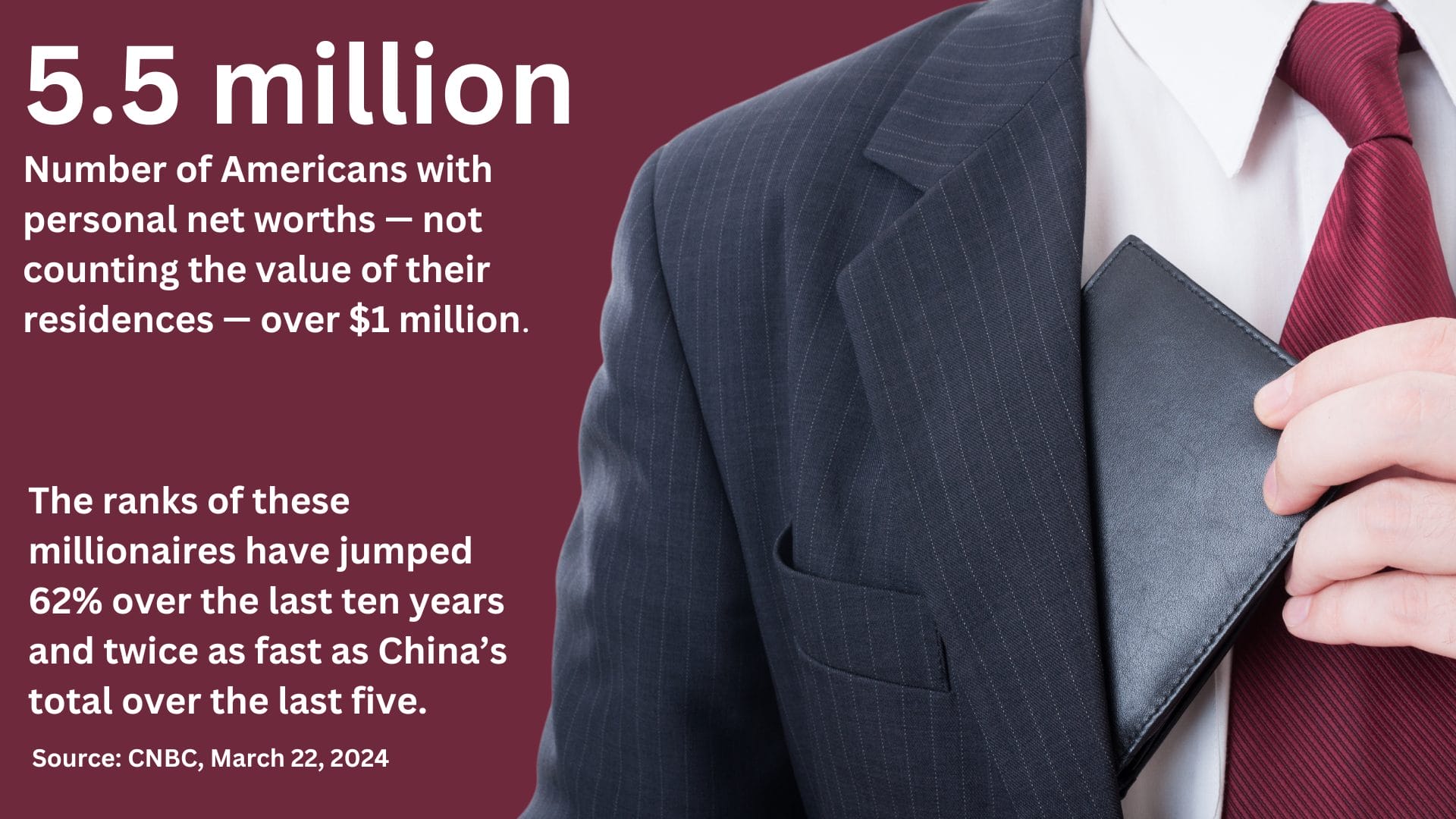
Over 5.5 million Americans now hold liquid assets worth over $1 million, a total up 62 percent over the past decade. Rich people-friendly observers of America’s economic scene, naturally enough, see stats like these as cause for nothing but celebration. A rising tide, they like to quip, lifts all boats. But we are, in fact, witnessing no significant rising of any sort for working families. We are witnessing instead stunning increases in what America’s rich are spending on luxury for themselves. For America’s poorest, meanwhile, “luxury” has come to mean keeping a roof over your head. Inequality.org co-editor Sam Pizzigati has more.
|
PETULANT PLUTOCRAT OF THE WEEK |
Standing Up for the Right to Raze As Many Houses As You Want
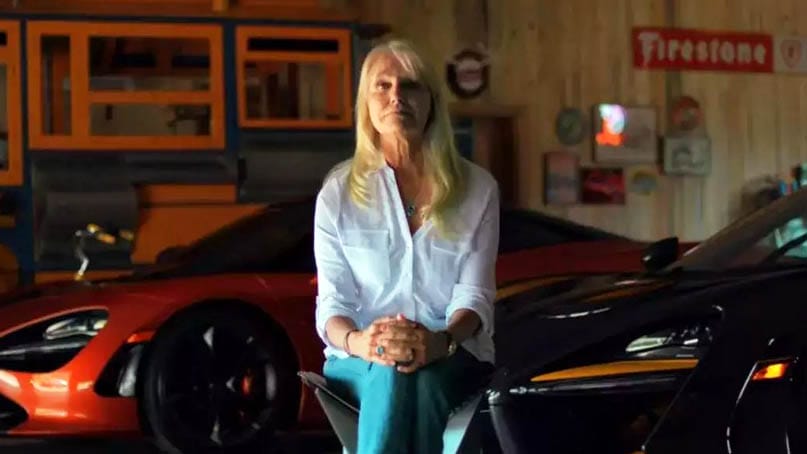
This week’s dour deep pocket: Kathy Cargill, a married-in heir to the mega-billion fortune of Minnesota’s Cargill family, the owner of America’s largest privately held corporation.
What has her sour: The perplexed and hostile public reaction to her buying up over 20 single-family homes on the picturesque sandbar that juts out from downtown Duluth into Lake Superior — and then having the homes razed without offering any rational explanation why.
Cargill did say that she “couldn’t imagine living” in any of the homes, residences she called “pieces of crap.”
The global environmental group Mighty Earth has labeled the source of Kathy Cargill’s wealth, the agribusiness giant Cargill, the “Worst Company in the World” for its decades of — among other sins — exploiting child labor, hawking contaminated meat, and deforesting huge swatches of the planet.
The last word: Kathy Cargill, writes the Minnesota magazine editor Jay Boller, “apparently never considered the social consequences” of her real-estate bulldozing because of the “titanic chasm” between the daily concerns of Duluthians and the world where Cargill, an avid luxury-car collector, can snap up “six-figure” McLarens “like packs of gum.” |
|
|
What's new on Inequality.org
Omar Ocampo, Billionaire Wealth Is Soaring. We Need Progressive Taxation Now. The United States now hosts 813 billionaires. They hold $5.7 trillion in wealth, a total that makes our billionaire club even more powerful economically and politically. We need a progressive taxation system to reverse inequality. Elsewhere on the web
Sarah Anderson, William Rice, and Zachary Tashman, Wealthy Corporations Are Paying Their CEOs More Than They Pay in Taxes, In These Times. Top CEOs are reaping enormous paydays from a system that rewards the super rich and punishes the rest of us.
Joel Zivot, Charitable misgiving: The modern billionaire philanthropist, The Hill. A look at why most billionaires give so little money away, even though they can easily afford to give away billions with no impact on their standard of living. Kenny Stancil, Why Biden Should Pardon the IRS Whistleblower Who Leaked Trump’s Taxes, Slate. A pardon would help make billionaire corruption a defining issue of the 2024 presidential race.
Spencer Woodman, New data shows IRS’s 10-year struggle to investigate tax crimes, International Consortium of Investigative Journalists. After years of minimal enforcement on wealthy tax cheats, the IRS is beginning an unprecedented effort to strengthen its ability to take on the ultra-rich.
Scott Santens, The Billionaire-Fueled Lobbying Group Behind the State Bills to Ban Basic Income Experiments, UBI Guide. A Florida-based lobbying group funded by top 1 percenters is working to get state legislators to ban experiments in providing a basic income for America ’s poorest households.
Thor Benson, Biden’s Bid to Tax the Rich Could Be the 2024 Lift the President Needs, Common Dreams. New polling finds a majority of Americans — across party lines — support raising taxes on billionaires.
The height of stacking $12.2 trillion U.S. dollars, WallStreetZen. Need help visualizing the wealth of our wealthiest? Stacking enough $1,000 packs of $10 bills to equal the wealth of our world’s five richest would create a pile 244 times as high as the distance from the Earth to Elon Musk’s Starlink satellite. Ali Bekhtaoui, Tax the rich: slow progress on the international front, AFP News. A round-up on who’s now trying to do what.
Andy Mukherjee, ‘Billionaire Raj’ Is Pushing India Toward Autocracy, Bloomberg. Prime Minister Narendra Modi and his right-wing party have left India with a gap between the haves and have-nots even starker than rich-poor divides in the United States.
Rupert Neate, US-style executive pay packets in UK would ‘risk higher inequality,’ Guardian. Rising executive pay at British corporations, say leading UK social scientists in an open letter to their nation’s top investment firms, is inviting “much worse” levels of overall “happiness, health, and well-being.” |
Tim Schwab, Amy Schiller, and Bella DeVaan, Reading Philanthropy: A Conversation with Authors Amy Schiller and Tim Schwab. How our philanthropic system allows richer-than-ever donors to exert enormous influence, launder their reputations, and preserve their wealth at the expense of solutions that address the root causes of inequality that necessitate philanthropy in the first place.
|
Sonali Kolhatkar and Sarah Anderson, Tax Day Injustice,YES! Presents: Rising Up With Sonali. A discussion of solutions to unfair corporate tax rates in light of our new Inequality.org report on executive pay outpacing taxes. |
|
|
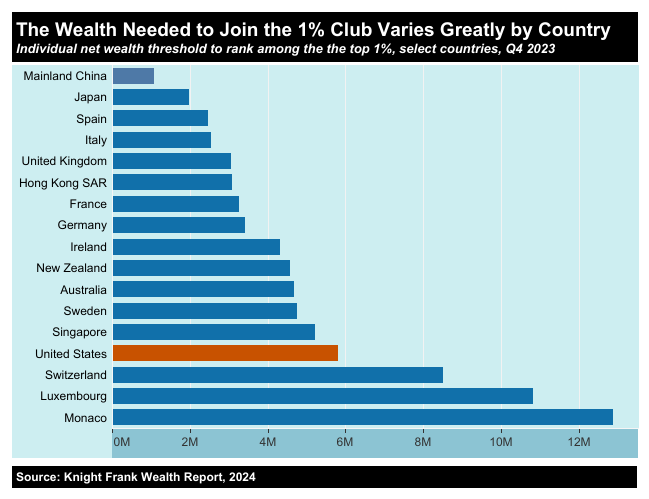
Wealth is increasingly concentrating in nearly every nation. But the amount of wealth necessary to make the top 1 percent within individual nations varies widely. According to the latest Knight Frank Wealth Report, an American needs to be sitting on at least $5.8 million to join this elite club, 5.4 times as much as the minimum needed to enter the top 1 percent in China, the world’s second-largest economy after the United States. For an interactive version of this chart and more on global inequality, check out the link below.
|
|
|
Inequality.org runs on the loving labor of a small team of researchers, writers, and advocates. More than anything, all of us involved believe deeply in the power of everyday people to come together to accomplish something big! We’ve built this operation around our weekly newsletter, and our paid subscribers make this newsletter possible with monthly donations. Join the ranks of our paid subscribers: Start today. |
|
|
Inequality.org | www.inequality.org | inequality@ips-dc.org Institute for Policy Studies
1301 Connecticut Avenue Ste 600
Washington, DC 20036
United States
Managing Editor: Chris Mills Rodrigo
Co-Editors: Sarah Anderson, Chuck Collins, Bella DeVaan, and Sam Pizzigati
Production: Chris Mills Rodrigo |
|
|
|