A weekly newsletter from the Institute for Policy Studies |
|
|
Here at Inequality.org we’re constantly advocating for raising tax rates on — and closing loopholes for — our nation's wealthiest. But increasing tax revenue from our richest won’t help us much unless those dollars are going to programs that make the lives of the vast majority of us significantly better and more secure.
The National Priorities Project, a venture of the same Institute for Policy Studies that hosts Inequality.org, recently released an analysis of where our tax dollars went in 2023. The results are concerning — the average tax payer payed over $5,000 toward militarism, including nearly $1,800 to private defense contractors.
Instead of funding already wealthy corporate execs and shareholders, that money could be going to programs like food stamps or child tax credits, underfunded efforts that keep Americans afloat in difficult times.
Making our tax system more equitable has to go hand-in-hand with reforming how our government chooses to use its vast resources. We can have a better future. Chris Mills Rodrigo
for the Institute for Policy Studies’ Inequality.org team |
|
|
INEQUALITY BY THE NUMBERS |
|
|
Making Rents Affordable: A Housing Credit for Renters Ashley Dines, like a lot of Americans, used to be able to afford her rent, but just barely. Then three household crises hit Dines at the same time.
“The next thing I know,” Dines writes, “the constable was at my door — forcing me, my two kids, and my disabled mother out of the apartment and down the stairs.”
Over half of us Americans, the stats show, now can’t pay for an unexpected emergency of over $1,000. That reality, Dines believes, ought to have our government expanding our social safety net instead of hanging people out to dry in difficult times. One step toward that goal: establishing a new credit for renters now having to fork out over 30 percent of their paychecks for housing.
A “Renter’s Tax Credit” along that line, Dines notes, would help renters stay in their homes, keep their jobs, and support their families. Read on for more. |
|
|
Stopping the First Trillionaires Before They Start Appearing Among Us
The latest Forbes annual list of America’s 400 richest has confirmed a deeply worrying trend: The nation’s wealthiest just keep getting fantastically wealthier. A landmark that once seemed incomprehensible — the appearance of the world’s first trillionaire — has now become, Institute for Policy Studies associate fellow and frequent Inequality.org contributor Bob Lord calculates, a near certainty.
If current trends continue, Lord details in a just-published Mother Jones analysis, “T-Day will be upon us — drumroll — circa 2040.”
But constraining our ongoing wealth concentration, Lord adds, remains “eminently achievable.” A good first step toward that goal would be passing legislation that taxes unrealized capital gains, accumulated wealth, and inheritances.
Could our existing political system pass those sorts of reforms? Our current “partisan impasse doesn’t bode well for staving off the arrival of America’s first trillionaire,” Lord writes, adding that the mere “existence even of multibillionaires — with all the power such wealth engenders — runs counter to the notion of the American Dream, wherein everyone is granted an opportunity to thrive.” |
|
|
How To Trim Our Richest Down to Democratic Size: Start Small!
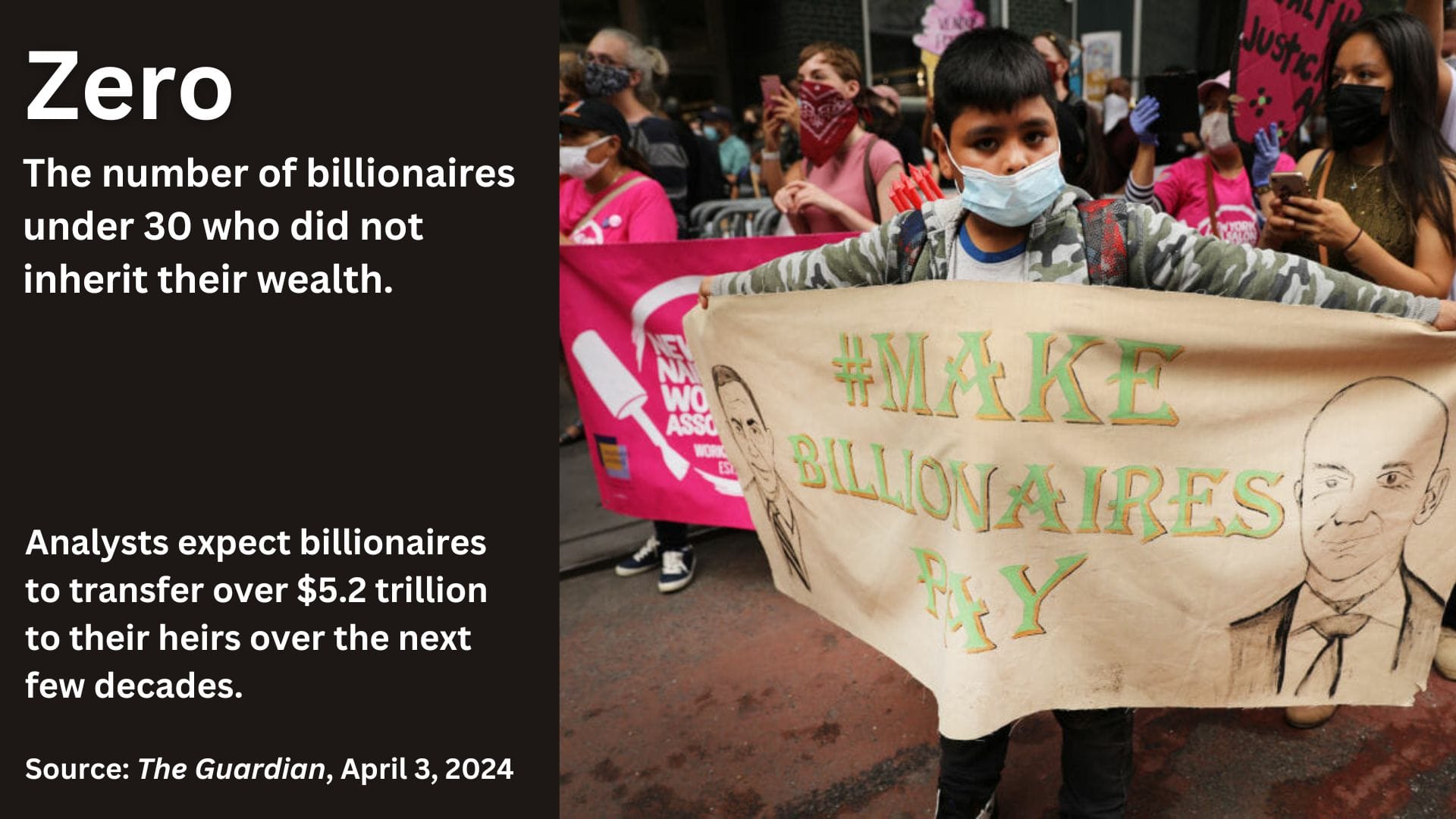
Some 813 billionaires now call the USA home. These billionaires — and the mere centi-millionaires so yearning for billionaire status — aren’t just prospering. They’re exerting an unmatched influence on our politics. Americans of modest means, back in the early 1900s, confronted an eerily similar political situation. They did their best to de-concentrate wealth at the top — and made some serious progress. But that progress has evaporated. America’s 400 richest today are paying a minuscule 8.2 percent of their annual actual incomes in federal taxes. Can we turn that 8.2 percent into something more like 82 percent? We do have a route. Inequality.org co-editor Sam Pizzigati has that story.
|
PETULANT PLUTOCRAT OF THE WEEK |
Tough Talk from a Ford-Tough Exec in a Really Foul Mood
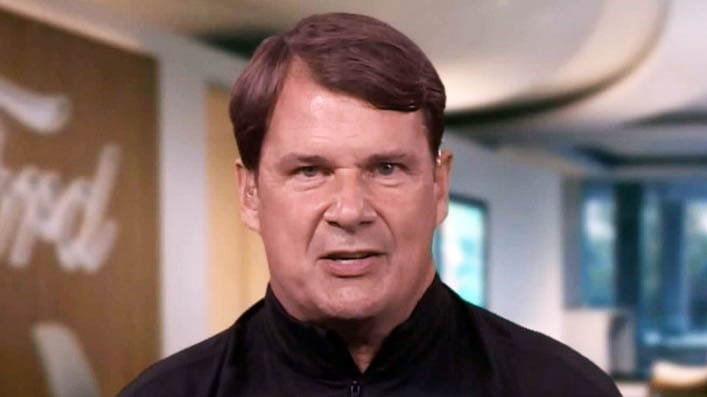
This week’s dour deep pocket: Jim Farley, now in his fourth year as the CEO of Ford, the first U.S. corporate automaking giant.
What has him sour: last year’s successful auto workers strike against Detroit’s “Big Three.” Farley essentially sees that walkout as a betrayal of a company — Ford — that has “prided itself on not having a strike since ’70.” Ford, Farley noted this past February, now needs to “think carefully” about where in the world the company chooses to build cars in the future.
Two weeks ago, Ford Motor Company pay data filings revealed that Farley’s total personal compensation jumped substantially last year, despite the CEO, as one press report noted, “falling short” of his own pay contract’s bonus target.
The last word: “Just a few weeks ago,” United Auto Workers president Shawn Fain noted just after the release of Ford’s latest CEO pay stats, “Farley was crying to the press about how the UAW’s record contracts were forcing the company to rethink where they build their vehicles, but now they have no problem finding the money to give him a 26 percent pay raise to $26.5 million a year.”
|
|
|
Bob Lord, Who Wants to Be a Trillionaire? Mother Jones. Don’t laugh. That’s exactly where America’s oligarchic policies are taking us.
Tom Clark, Class dismissed: the economic mystery of the 21st century, The Prospect. Inequality, once a central concern of economics, had by the late 1990s essentially vanished from the discipline’s standard lexicon. But a new book is refocusing attention on the profession’s inequality-sensitive classics.
Laura Delle Femmine, Next stop: a global tax on the super-rich? El País. From wealthy heirs asking to pay more in taxes to proposals in multilateral forums, the push for significantly taxing the world’s wealthiest is gaining momentum. Michael Roberts, Bitcoin 24, The Next Recession. We need to do more than ”regulate” speculative schemes like crypto. Banking ought to be a public service where households and small firms can make deposits and get loans, not a massive financial casino that enriches swindlers.
Patralekha Chatterjee, Why isn’t rising inequality turning into a poll issue? Deccan Chronicle. In India, the glaring cleavage between the distressed and the dazzling has not become a potent issue as India heads for a general election. Why not?
Gerry Warner, It’s time to do away with wealth inequity, e-know.ca. In deeply polarized societies, says this Canadian columnist, support for a maximum wage ought to be a slam dunk. Linette Lopez, New York City's new Gilded Age, Business Insider. For Wall Street’s elite, dining out is suddenly louder and more extravagant than ever.
Hiba Haroon and Shaun Harrison, U.S. economic mobility trends and outcomes, Washington Center for Equitable Growth. A look at the links between high economic inequality and low levels of social mobility, the well-being of children compared to the well-being of their parents at a similar life-cycle point.
Dave Zirin, Oakland Has Two New Baseball Heroes — and a Billionaire Owner Ruining Everything, The Nation. The Gap clothing heir John Fisher would rather become a national punchline than spend one more moment in Oakland.
Ryan S., ‘The People Took on the Billionaires, The People Won’: Kansas City Rejects Billionaire Stadium Tax in Historic Victory, Kansas City Defender. Kansas City voters have delivered a powerful blow against billionaire sports franchise owners, rejecting a 40-year stadium tax in a decisive vote for community interests and democratic values over corporate greed.
|
Patriotic Millionaires, How To Fix Everything, A symposium on how to move the country through this period of instability and into a bright, prosperous future.
More Perfect Union, What Billionaires Don't Want You To Know About AI. There’s a war brewing between a handful of billionaires to seize control of AI. They want you to think their tech will make the world better for all of us.
|
|
|
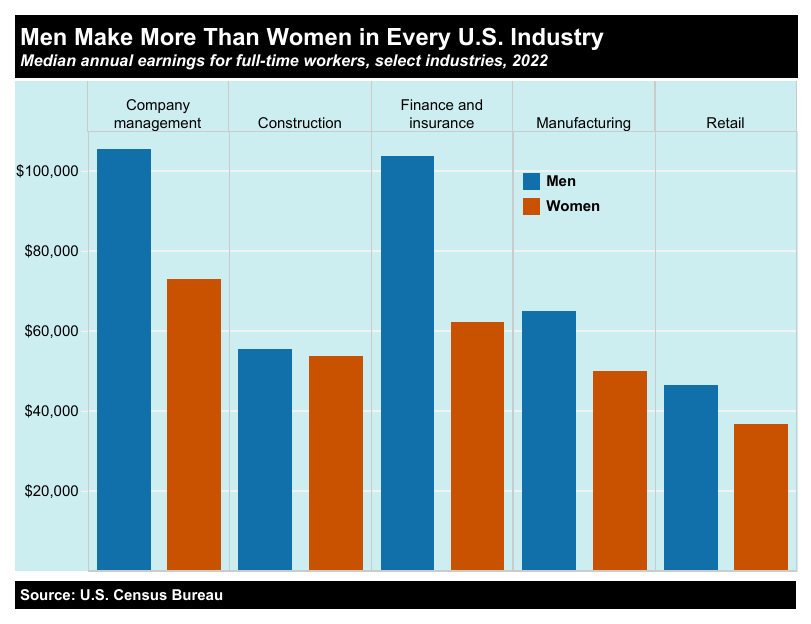
American women earn less than men in all industries. The largest pay gaps sit in financial and insurance positions, where median earnings for men stood at $103,707 in 2022, compared to just $62,214 for women. The smallest gap appears in the construction sector, but women make up only 10.8 percent of workers in this industry. For an interactive version of this chart and more on gender inequality, check out the link below.
|
|
|
Inequality.org runs on the loving labor of a small team of researchers, writers, and advocates. More than anything, all of us involved believe deeply in the power of everyday people to come together to accomplish something big! We’ve built this operation around our weekly newsletter, and our paid subscribers make this newsletter possible with monthly donations. Join the ranks of our paid subscribers: Start today. |
|
|
Inequality.org | www.inequality.org | inequality@ips-dc.org Institute for Policy Studies
1301 Connecticut Avenue Ste 600
Washington, DC 20036
United States
Managing Editor: Chris Mills Rodrigo
Co-Editors: Sarah Anderson, Chuck Collins, Bella DeVaan, and Sam Pizzigati |
|
|
|