A weekly newsletter from the Institute for Policy Studies |
|
|
Hello readers! My name is Chris Mills Rodrigo, and I’m beyond excited to be taking over the reins as the new managing editor here at Inequality.org.
Fans of Bella DeVaan, this newsletter’s excellent steward, can rest easy. She’s going to continue pitching in on Inequality.org while she takes on a new Institute for Policy Studies role focused on charity reform.
A quick word about me: Before coming to IPS, I covered the tech industry for The Hill newspaper. That beat’s biggest story? The ongoing, staggering concentration of wealth and influence at the tippy-top of Silicon Valley, a wealth and influence essentially amassed at the expense of tech workers and users alike.
Thankfully, I had plenty of company challenging high tech’s most exploitative habits. I had the privilege of profiling myriad advocacy efforts to wrest a fair share of corporate earnings back from execs and reported on everything from union drives at Amazon to campaigns aiming to reclassify rideshare drivers.
Now on the Inequality.org team, I’m hoping to keep shining a spotlight on the worst excesses of our wealthiest — and keep elevating the activists so dedicated to ushering in a more just society for us all. Need to reach me with a comment or a question? Just drop me an email at chris@ips-dc.org. Working together, we can forge a more equal world. Chris Mills Rodrigo
for the Institute for Policy Studies’ Inequality.org team |
|
|
INEQUALITY BY THE NUMBERS |
|
|
One Researcher’s Take on the Vital Child Tax Credit
Clara Moore knew all too well — from her personal experience in 2008 — how an economic downturn could send her back into the poverty she had grown up in. But during the Covid pandemic, that poverty didn’t repeat. A new safety net helped Moore keep her family above water.
“The expanded and enhanced Child Tax Credit in President Biden’s American Rescue Plan not only helped me pay my rent and monthly bills — it helped me be a better mom,” says Moore, a researcher based in New Jersey. “Relieved of some financial anxiety, I could spend more time with my daughter and commit to the post-graduate job search, ultimately getting the good job that I have today.”
Congressional lawmakers recently advanced a proposal that would enhance the Child Tax Credit to better aid multi-child families and marginally increase the overall credit amount. The new framework doesn’t go as far as many advocates hoped and comes with corporate tax breaks. But the move still represents a win for the program that cut child poverty in half before expiring at the end of 2021. Learn more about the impact of the new Child Tax Credit in Moore’s story below.
|
|
|
Lessons from Our Hemisphere’s Largest Social Movement at Forty
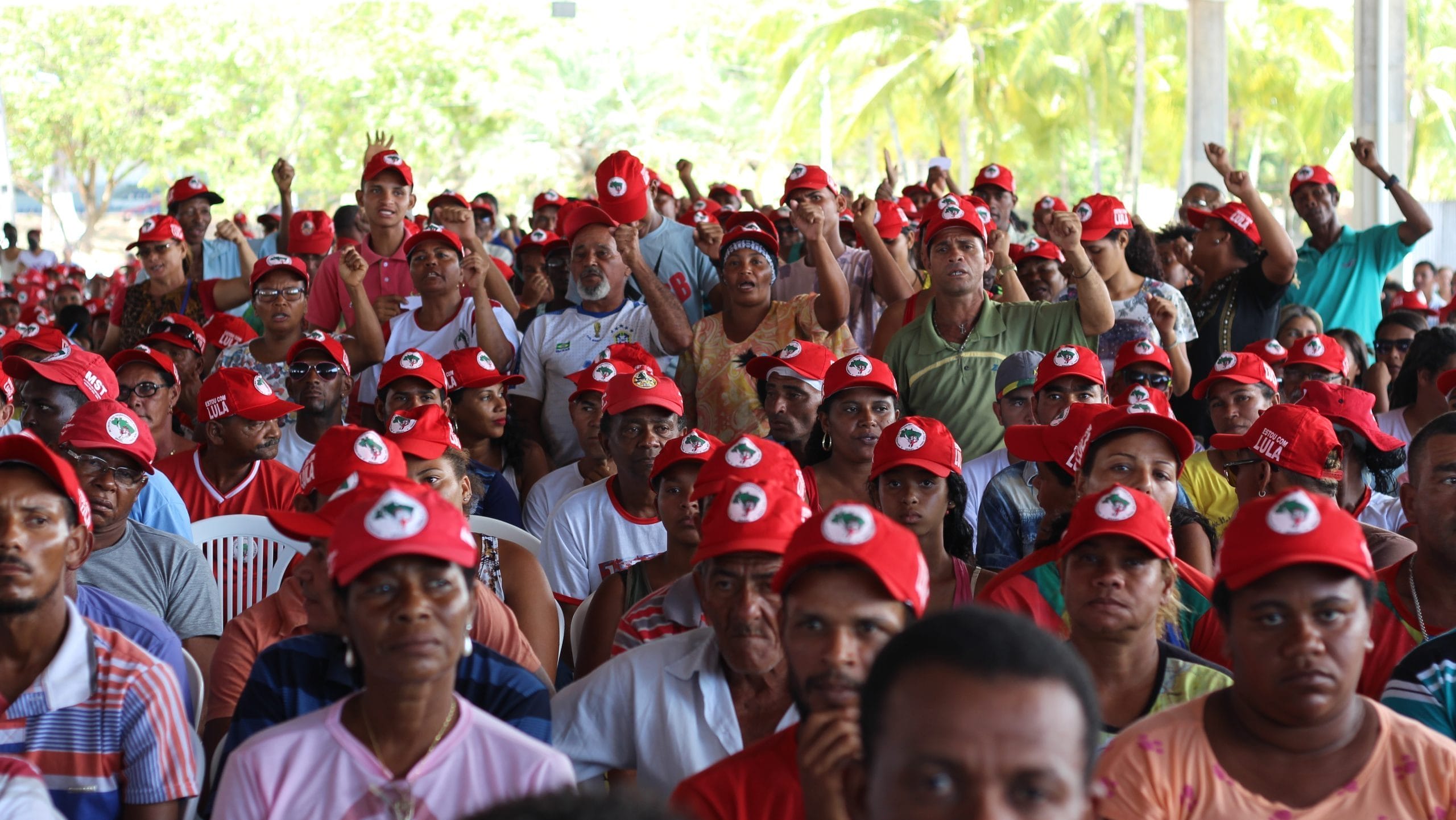
This month marks the 40th anniversary of the largest social movement in the Americas: Brazil’s Landless Workers’ Movement, or MST for Movimento dos Trabalhadores Rurais Sem Terra in Portuguese.
What began as a group of displaced farmers has evolved over decades into a mass movement, millions strong. The MST today ranks as the largest producer of organic food in Brazil and the largest producer of organic rice in Latin America. Over the past four decades, the MST has helped hundreds of thousands of formerly landless Brazilians gain land titles, literacy, and the means to food sovereignty. And during the Covid pandemic, the MST donated more than 7,000 tons of food, distributed 50,000 face masks, and trained 2,000 first responders.
This impressive track record has prompted praise from figures ranging from Pope Francis to Brazil’s own minister of agrarian development. Brazil does remain one of our world’s most unequal nations, but the MST’s success can inspire efforts to reduce rural inequality in the United States and elsewhere.
Read more from our Liam Crisan at the link below. |
|
|
Has the United States Really Become Vastly More Unequal?
Back in the 1950s, after years of egalitarian struggle, America’s richest faced a 91 percent federal tax on their top-bracket income. But those rich never accepted that state of affairs and eventually undid the tax rates that made for a more equal America. So points out the progressive economist take on our recent economic history. But this take has now come under challenge from a pair of economists who contend that today’s rich are not grabbing an appreciably larger share of the nation’s income than they did during our tax-the-rich years — and that claim is gaining traction. What’s going on here? Inequality.org’s Sam Pizzigati has more.
|
PETULANT PLUTOCRAT OF THE WEEK |
A Fantasy Empire’s CEO Expects His Workers To Remain ‘Realistic’
This week’s dour deep pocket: Bob Iger, the long-time chief exec of the Disney empire who retired in 2022 only to return as the Magic Kingdom’s CEO in November 2022.
What has him sour: Union wage demands, Iger told CNBC last summer, are threatening his entertainment industry’s long-term post-COVID recovery. Workers, he explained, “have to be realistic about the business environment and what this business can deliver.”
And how realistic do CEOs in that environment have to be? Iger personally pocketed $31.6 million in Disney’s fiscal 2023, a year that saw his popular-culture empire lay off some 7,000 employees.
The last word: “Millions of workers are still not being paid in line with inflation or have simply been laid off,” human resources industry analyst Benjamin Broomfield noted last week in a commentary on Iger’s 2023 compensation. “There can be no doubt that executive remuneration has spiraled out of control.” |
|
|
This week on Inequality.org
Dan Petegorsky, Ranting Billionaire Makes Unwitting Case for Charity Reform. Bill Ackman’s antics reveal a huge flaw in donor-advised fund regulation.
Jenny Ricks, Davos Elites Talk About Rebuilding Trust. The People Talk of System Change. We will win economic justice when people power becomes stronger than those driving and benefiting from the status quo. Elsewhere on the Web
Elise Gould and Josh Bivens, Why a new study gives a misleading view of inequality in America, CNN. Two Economic Policy Institute economists have identified data that powerfully rebuts new claims that inequality has not indeed risen enormously over recent years.
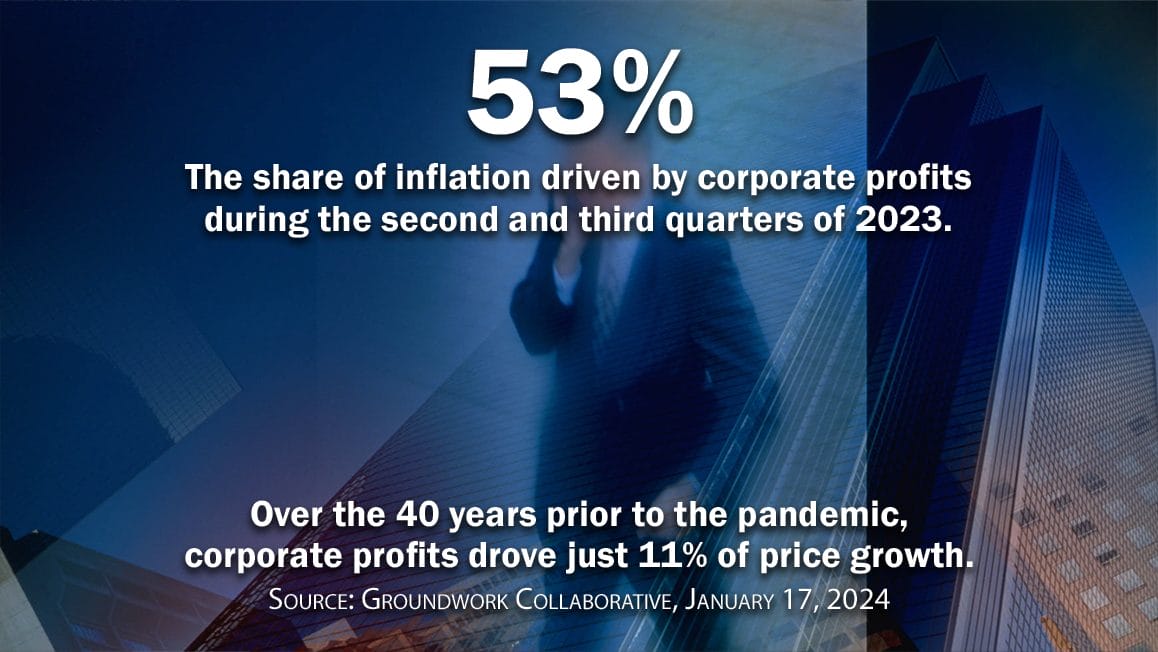
Whizy Kim, How do you become a billionaire? Try having billionaire parents, Vox. The great billionaire wealth transfer means people born very, very rich are going to stay very, very rich. Our Chuck Collins weighs in. Tim Murphy, The Rise of the American Oligarchy, Mother Jones. What targeting Russia’s wayward billionaires revealed about our own. Tom Perkins, Half of recent US inflation due to high corporate profits, report finds, Guardian. Behind our recent inflation: the grasping of corporate chiefs. Hamilton Nolan, The Real A.I. Fight Is About Who Gets the Gains, In These Times. The artificial intelligence policy battle boils down to progress versus inequality. Marta Balaga, In Sundance Satire ‘Veni Vidi Vici’ the Super-Rich Continue to Get Away With Murder: ‘There Is More Than One Jeffrey Epstein Out There,’ Variety. A powerful new cinematic look at a wealthy clan where “family is everything,” but human life means nothing.
Steve Wamhoff, Ongoing Use of Offshore Tax Havens Demonstrates the Need for the Global Minimum Tax, Institute on Taxation and Economic Policy. Top U.S. corporate execs are claiming profits in tax havens like Bermuda that more than quintuple the size of the jurisdictions’ entire economies. Chiara Putaturo, Taxing wealth to break billionaire dominance, Social Europe. We now stand much closer to seeing the world’s first trillionaire than ending poverty. Robert Reich, Davos duplicity, Substack. Few if any Americans have done more to destroy public trust than America’s top corporate execs. Liz Dye, Elon Musk's scheme to gut worker protections nationally, Public Notice. The world’s richest man has taken to suing people who say mean, true things about his companies.
Paul Buchheit, Make America Mad Again — Mad About the Trillions of Dollars Taken From Them by the Very Rich, Common Dreams. Just a 2 percent tax on total national financial wealth would generate enough revenue to provide an $18,000 annual stipend to every American household. Liam Byrne, ‘I’ve spent years working out how we fix wealth inequality. Here’s what I’ve found,’ LabourList. This British tale begins, in all places, at the White House. |
The charitable tax deduction, Planet Money. A whirlwind 90-second skit explaining the good, the inefficient, and the ugly of tax-deductible philanthropy.
I build cars for a living and I can’t afford to buy one, More Perfect Union. Toyota used to promise workers would “retire as millionaires.” Now Toyota workers can’t even afford the cars they make, while the company’s profits have doubled over the past 40 years. |
Simon Jack and Zing Tsjeng, Rupert Murdoch: The Succession Prequel, BBC Sounds’ Good Bad Billionaire. How a young man inherited an Australian newspaper and turned it into a global media empire. |
|
|
Most state governments rely heavily on sales taxes and other regressive levies to pay for public services. This pattern leaves our poorest families paying a larger share of their income on state and local taxes than our richest. According to the Institute on Taxation and Economic Policy, the poorest 20 percent now face an average effective state and local tax rate of 11.3 percent, while the top 1 percent’s average rate runs just 7.2 percent. For an interactive version of this chart and other charts on taxes and inequality, check out the link below.
|
|
|
Inequality.org runs on the loving labor of a small team of researchers, writers, and advocates. More than anything, all of us involved believe deeply in the power of everyday people to come together to accomplish something big! We’ve built this operation around our weekly newsletter, and our paid subscribers make this newsletter possible with monthly donations. Join the ranks of our paid subscribers: Start today. |
|
|
Inequality.org | www.inequality.org | inequality@ips-dc.org
Managing Editor: Chris Mills Rodrigo
Co-Editors: Sarah Anderson, Chuck Collins, Bella DeVaan, and Sam Pizzigati
Production: Bella DeVaan, Kufre McIver, and Chris Mills Rodrigo |
|
|
|